
Anti-blasphemy laws don’t work in Muslim countries, and they won’t work here

In the wake of the violence sparked around the world by the anti-Islam video entitled Innocence of Muslims, the debate about the need for anti-blasphemy laws has re-emerged. The Organisation of Islamic Cooperation (OIC), a peak body for Islamic countries which comprises 56 member states, has renewed…

Qjnhn7mk-1349659839
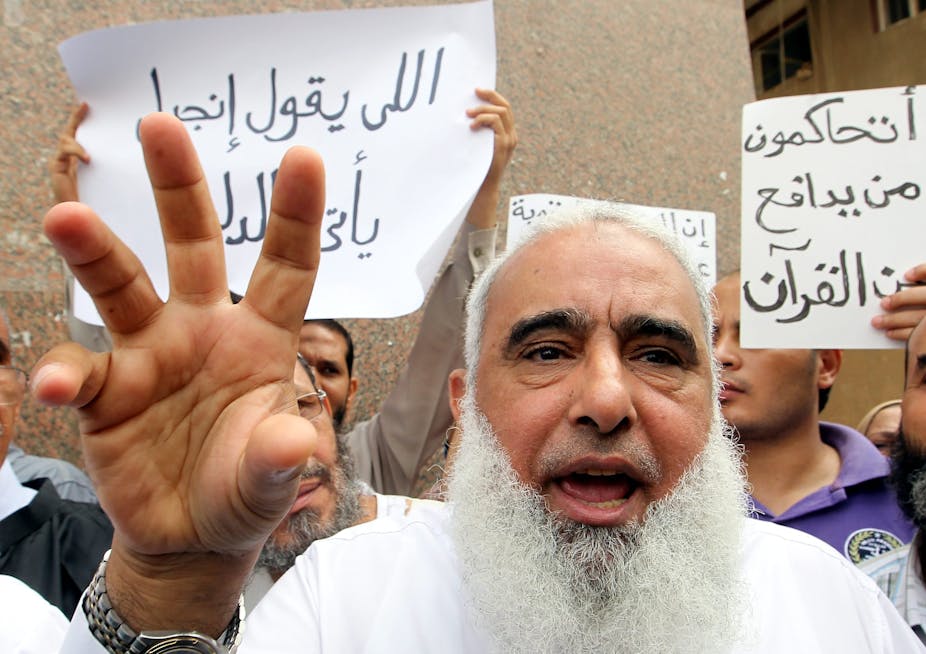
Egyptian Muslim preacher Ahmed Mohamed Abdullah stands accused of blasphemy charges after burning a copy of the Bible during last month’s protests by Muslims against a film depicting the Prophet Muhammad. EPA/Khaled Elfiqi

In the wake of the violence sparked around the world by the anti-Islam video entitled Innocence of Muslims, the debate about the need for anti-blasphemy laws has re-emerged.

The Organisation of Islamic Cooperation (OIC), a peak body for Islamic countries which comprises 56 member states, has renewed its call for such laws. In his recent address to the UN Assembly last week Indonesian President Susilo Bambang Yudhoyono – whose country is a member of the OIC – demanded that Western countries criminalise blasphemy, and the call has resonated with some in the Muslim community in Australia. Islamic Association of Australia president Muhammad Wahid was reported as backing the need for laws that prevent the “mocking of religion”.

But how could such a law function if it were introduced in Australia? This question is particularly pertinent given that Australia is a religiously plural country, which has more than 200 different nationalities. These are split between at least five different major religions in Islam, Buddhism, Judaism and Christianity (of which the ABS records eight denominations) which all have their own claims to immutable truth.

The simple answer: it could not function at all. Why? There are two fairly instructive reasons.

First, there are a number of examples in countries that have such laws that illustrate they simply do not work, in that they are subject to manipulation and abuse that often disadvantages minorities.

Just over a month ago in Pakistan, a 14 year-old mentally-impaired Christian girl, Rimsha Masih, was charged under the country’s blasphemy laws for allegedly burning several pages of the Qur’an for fuel. Subsequently, she was imprisoned in an adult prison. The charge was levelled against her by a neighbour. However, it was later claimed by a witness that a local Imam planted the pages in the girl’s bag, fuelled by a desire to drive the local Christian population out of town. The case is ongoing and continues to divide the community, but thankfully the young girl has been released from custody.

Further, in an intriguing twist, a group of Muslim rioters that were directed to protest against the anti-Islam video and subsequently ransacked a Hindu temple in the district of Hindu Goth in Karachi on September 21 have had a case brought against them using the same blasphemy law. The victims filed a case under Section 295A, which covers the “outraging of religious feelings”. However, at present the authorities are reported as “simply considering the case” and none of the rioters have been apprehended. Justice it seems is not as swift for those who are in the minority.

Indonesian President Susilo Bambang Yudhoyono renewed calls for blasphemy laws at the UN General Assembly last month. EPA/Jason Szenes

Similarly in Egypt, a prominent Muslim television preacher last month burnt a copy of the Bible as part of a protest against the anti-Islam video outside the American Embassy in Cairo and was charged with blasphemy. Rather than express remorse for his actions and concern over being charged, the preacher explained that he would do it again, effectively positioning himself as a martyr.

It’s clear that such laws, rather than prevent insensitive activities, encourage bad behaviour as they take a momentary incident and drag it out over a long time to the detriment of the entire community.

Second, creating “niche laws” also comes with other attendant problems. A good example of this is the burqa ban implemented in France. Several individuals who were protesting over a month ago against the incarceration of the Russian anti-Putin rockers Pussy Riot were detained in Marseille for wearing balaclavas, as the law bans all face coverings in public. This is an unintended outcome of a reactionary law that targeted Muslims, but has ultimately curtailed everyone’s freedom of expression.

We cannot afford to legislate for every perceived injustice. We already have vilification laws that include religion which should be used judiciously or we run the risk of tying ourselves in knots like the French.

Indeed, as the late Indonesian President and scholar Abdurrahman Wahid said of blasphemy laws:

[They] narrow the bounds of acceptable discourse in the Islamic world and prevent most Muslims from thinking ‘outside of the box', not only about religion, but also about vast spheres of life, literature, science, and culture in general.

This is good advice. Not just for Muslims, but for all of us.

Sign in to Favourite

Want to follow The Conversation?

Sign up to our free newsletter to get the day's top stories in your inbox each morning, with a special wrap on Saturday.

Become a friend of The Conversation and donate

Join the conversation

29 Comments sorted by

  1. Mike Swinbourne

    logged in via Facebook

    There is another reason why blasphemy laws would not work here. Blasphemy is a nonsensical concept, because religion itself is a nonsensical concept.

    You might as well talk about laws against the vilification of astrology, homeopathy or seances. All are foolish superstition best left in the dark ages.

    Religion deserves to be mocked and ridiculed. And there is a huge difference between discriminating against or villifying someone for their religious beliefs, and criticising or mocking the religion itself. The first is unjust. The second is justified.

    report
    1. Mike Swinbourne

      logged in via Facebook

      In reply to John Phillip

      In what way John? Could you please elaborate on what about my post you think is either inflammatory or self righteous.

      I'm just stating facts.

      report
    2. Janet Holmes

      PhD student

      In reply to Mike Swinbourne

      Any law that makes telling the truth illegal is a very bad idea. Religion is unable to defend itself in a rational discourse so it wants to make questioning and pointing out the nonsense of it illegal, so that it can continue to tell lies to people for the purpose of controlling their behaviour and accruing power to itself. Religion is all about power. Making it illegal to point this out would turn our country into a police state where people were afraid to speak their opinion. The purveyors of religion already have more power than is good for us, we should be diminishing their hold over us, not offering them more.

      report
    3. Clifford Chapman

      Retired English Teacher

      In reply to Mike Swinbourne

      Mike, I'm 100% with you on this nonsensical topic. I've had to say more than once to believers, when accused of blaspheming, that being an atheist, I can't blaspheme.

      It's a totally meaningless word that testifies to the enormous success of the confidence trick that is religion.

      We actually have a word in the dictionary - blaspheme - where the definition presupposes and implies the existence of a completely made-up entity. Is that not evidence of inanity, if not insanity?

      report
  2. Chris Aitchison

    logged in via Twitter

    Everyone should just chill - surely any God that is offended by blasphemy will dish out the punishment themselves.

    report
    1. Clifford Chapman

      Retired English Teacher

      In reply to Chris Aitchison

      So as an atheist, are you suggesting that 'God' might be smacking my bottom for eternity?

      Maybe I should 'butt' out - boom, boom.

      report
    2. Debra Joan Smith

      Account Executive

      In reply to Clifford Chapman

      Well, in for a penny.............

      I think that the best way societies deal with contentious issues is through our comedians. This witty Irishman is long dead and someone sent me this youtube clip the other day. We have to be able to laugh at ourselves first, I think to have a valid comment on another way of doing things. I laughed until I cried at this one because I remember how easy it is for kids to take our very serious rituals and innocently pick them up even if they make only so much sense…

      Read more
    3. Clifford Chapman

      Retired English Teacher

      In reply to Debra Joan Smith

      Debra, if 'God' did smack my bottom for eternity, I'd still put it behind me.

      I never could understand why the talk of this 'God' had to be serious all the time. If you hear believers talking about 'God' and eternal life, everyone seems to be walking around in heaven looking for all the world as if they'd just died. Doesn't anyone crack any jokes up there?

      report
    4. Clifford Chapman

      Retired English Teacher

      In reply to Debra Joan Smith

      Thank you, Debra, and I had a good laugh watching it - I like Dave Allen and, as you know, despite the laughs in it, there's a lot of truth, too.

      report
  3. Guy Curtis

    Senior Lecturer at School of Psychology and Exercise Science, Murdoch University

    The inability of people to openly question religion gave us the 1000-year stagnation of all progress called the dark ages. Anti-blasphemy laws should be opposed wherever they are proposed.

    "There are two great powers, and they've been fighting since time began. Every advance in human life, every scrap of knowledge and wisdom and decency we have has been torn by one side from the teeth of the other. Every little increase in human freedom has been fought over ferociously between those who want us to know more and be wiser and stronger, and those who want us to obey and be humble and submit." - Philp Pullman

    report
  4. Gavin Moodie

    logged in via LinkedIn

    The Middle Ages was not a period of stagnation, people were allowed to question religion during the Middle Ages, and economic fortunes were determined by factors other than religion such as climate, voyages of discovery, disease and inventions.

    This piece fails to consider the obvious example of Australia's laws against racial and religious vilification. Have they failed?

    report
    1. Michael Shand

      Michael Shand is a Friend of The Conversation.

      Software Tester

      In reply to Gavin Moodie

      "This piece fails to consider the obvious example of Australia's laws against racial and religious vilification. Have they failed?"

      Blasphemy is not the same as persecution or vilification though is it? I mean really, criticising someone's religion is not the same as shunning people based on their religion is it?

      I think you have confused two entirely seperate ideas here, to conflate criticism with persecution or vilification is inherently dishonest

      Can we criticise politic positions that people hold - Yes
      Can we refuse to hire them based on politic positions - No

      Thats the difference, blasphemey is not persecution, Our current descrimination laws do cater for descrimination on any grounds but blasphemy isnt by definition descrimination. Blasphemy can be part of descrimination but in and of itself it is not descrimination nor is it vilification

      report
    2. Clifford Chapman

      Retired English Teacher

      In reply to Gavin Moodie

      Really, Gavin, with all due respect, it simply is not the case that religion has ever really encouraged freedom of thought, much less allowed it.

      The very word 'blaspheme' itself, surely points to contradicting that view anyway.

      A friend of mine was in Primary school in Victoria, and one time his religious fanatic teacher told the class that 'God made everything'.

      On immediately asking - and he was no older than in Year 6 - 'Who made God?', he was called a heathen and sent outside the class to stand in the corridor..

      That little anecdote, for me, well sums up the 'freedom of thought' that these daft theories countenance.

      report
  5. Phil Dolan

    Viticulturist

    I think blasphemy laws were introduced to stop questioning. Let's face it, under serious questioning, religion has no answers so it was made illegal.
    The idea of religion before education was a good one, a few basic laws to help ignorant people live a better life. Do not eat an animal unless you kill it yourself is really saying don't eat a dead animal you find. Any dietary laws before refrigeration were probably advisable. But there is a vast amount of weird stuff that is so remote from reality that it needs questioning.

    report
  6. Debra Joan Smith

    Account Executive

    Anti-blasphemy laws are simply a way around human rights in every case and are normally directed at women and other minorities in a society where they exist- like Pakistan. They are the scariest face of so called "religion "today.

    report
  7. Gavin Moodie

    logged in via LinkedIn

    I didn't claim that religion encouraged freedom of thought, but that people were allowed to question religion during the Middle Ages. There were numerous religious disputes during the Middle Ages, and arguably assessment in medieval universities was based on these disputations.

    Prohibition of blasphemy is obviously different from prohibiting religious vilification, but surely they are just as obviously related. For example, the article opens by recounting the demonstrations against the anti Islam video entitled Innocence of Muslims. While the video may be blasphemous it surely also vilifies a religion. So some of the aims of a law against blasphemy may be met by a law prohibiting religious vilification.

    report
    1. Clifford Chapman

      Retired English Teacher

      In reply to Gavin Moodie

      Well, sorry, but I don't even accept it generally 'allowed it', and since most people did not receive an education and only a few went to university, learned 'debate' about the existence of this 'God' is problematical in my view.

      All I know is that being force-fed this gibberish when I was a child, in daily school assemblies, compulsory religious education classes, and seemingly interminable Sunday Morning and Afternoon Church attendances, all 'tricky' questions were invariably met with the blanket poultice, 'It's God's will', which is one hell of a euphemism for 'We haven't a clue, either.'

      report
  8. John Harland

    bicycle technician

    Surely, if we had a law agqinst blasphemy, courts of law would be forbidden the blasphemy of demanding that people swear oaths on the Bible in which Jesus instructs his followers not to swear oaths.

    report
    1. Gavin Moodie

      logged in via LinkedIn

      In reply to John Harland

      Blasphemy is the act of insulting or showing contempt or lack of reverence for a religious deity or the irreverence towards religious or holy persons or things (Wikipedia). I don't know whether Jews during Jesus' time swore oaths on the Torah, but even if they didn't, it surely isn't blasphemous.

      report
  9. Joseph Grieboski

    logged in via LinkedIn

    It is important to note that a few points mentioned in this article are not fully incorrect and need clarification. While some voices are calling for international anti-defamation/blasphemy legislation, it is not accurate to assert that the OIC is one of them. The OIC has been at the forefront of advancing UN Resolutions 16/18, 66/167, and the Istanbul Process which fundamentally changed the approach of the Organization on defamation of religion and re-affirmed its support for the values of free…

    Read more
  10. wilma western

    logged in via email @bigpond.com

    Can I ask for some respect for others' beliefs instead of condescending and self-congratulatory statements from the proud atheists out there?
    The article wasn't about whether religions are based on reason, evidence etc but were pointing out that blasphemy laws are not likely to be contemplated in pluralistic cultures and when they are attempted can have bizarre outcomes. Where they exist they can actually be used to defend an individual who does not belong to the majority religion though this…

    Read more
    1. Clifford Chapman

      Retired English Teacher

      In reply to wilma western

      Being an atheist, I guess I'm one of those you're taking an unchristian swipe at.

      So tell me, why so often do I find in hotel bedrooms I'm paying for, unsolicited, unwelcome and unwanted copies of the Gideon Bibles?

      No respects for my beliefs then, is there?

      report
    2. Judith Olney

      Ms

      In reply to wilma western

      I would respect the right of people to believe what ever nonsense they choose, but what I will not show any respect for are people who want to push their nonsense onto others. If the religious kept their beliefs to themselves this would go a long way in preventing the sort of violence we see today, all over the world from religious fanatics and bigots.

      I respect your right to believe, but I refuse to show deference to your beliefs.

      report
  11. Roque Mcdonald

    logged in via email @live.vu.edu.au

    Anti-blasphemy Laws would not only give the dominant religions more power, but also further isolate the minorities from having a voice. This would definitely be a dangerous step backwards in Western society.

    report