

Australia’s commercial kangaroo industry: hopping to nowhere

Australia’s commercial kangaroo industry is the world’s largest consumptive mammalian wildlife industry. Calculated on a ten-year period, an average of three million adult kangaroos are killed each year in the rangelands for pet meat, meat for human consumption and hides. But pressures on the industry…

V859dh32-1348189047
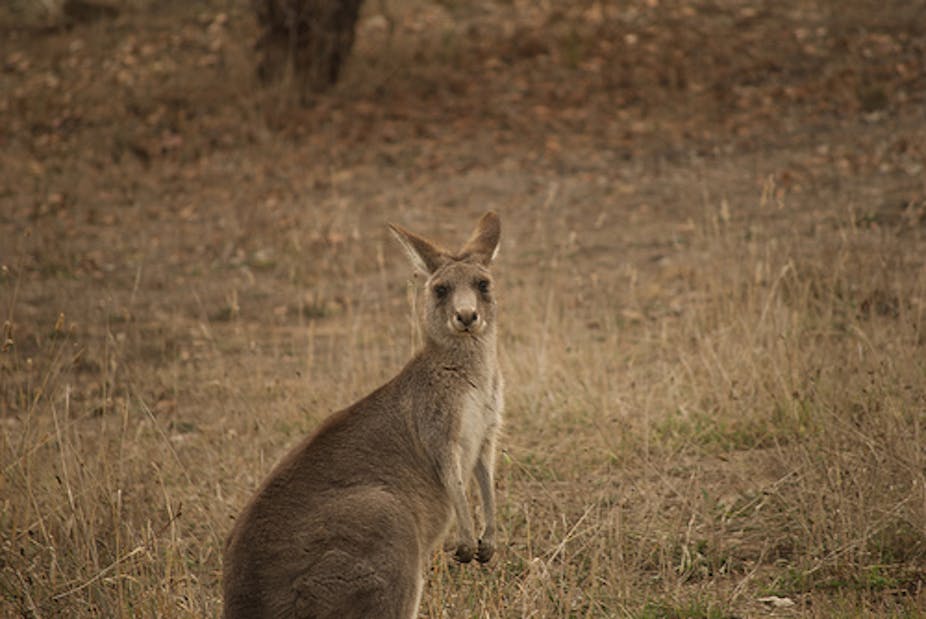
An average of three million kangaroos are killed per year for pet meat, meat for human consumption and hides. DarthShrine/Flickr

Australia’s commercial kangaroo industry is the world’s largest consumptive mammalian wildlife industry. Calculated on a ten-year period, an average of three million adult kangaroos are killed each year in the rangelands for pet meat, meat for human consumption and hides. But pressures on the industry may well see its collapse.

For example, despite years of negotiations, Russia is still refusing to lift its ban on Australia’s kangaroo meat. Russia once accounted for 70% of exports from the commercial kangaroo industry. But in August 2009, the country banned imports of kangaroo meat from Australia due to hygiene concerns, citing high levels of E. coli and salmonella. Despite the Australian Government investing at least $400,000 to address these issues, Russia remains unconvinced about food safety. The ban may be here to stay.

Another lucrative kangaroo product is leather, used for soccer shoes and other high value products. Adidas, a leading supplier of sport shoes, has also banned kangaroo leather due to concerns for the welfare of dependent young kangaroos killed or abandoned as a result of the commercial kill.

These bans do not bode well. A representative from the Kangaroo Industry Association of Australia was recently reported saying: “I think we are starting to have to seriously consider the end of the kangaroo industry nationally.”

But how did we end up here? And where can we go?

European and colonial contact with kangaroos

In 1770, Captain James Cook described the kangaroo as being like a mouse in colour, a greyhound in size and shape but a hare or deer in locomotion. Europeans killed kangaroos initially as a food source for the colonies and then later for recreation. However, in the 1800s pastoralists increasingly saw kangaroos and other marsupials as “pests” that needed to be killed.

By the 1880s, all of the states of eastern Australia had introduced legislation for the destruction of kangaroos and wallabies. For example, NSW’s Pasture and Stock Protection Act 1880 declared kangaroos and wallabies to be vermin and bounties were offered for their heads. As a result, a massive number of these animals were killed.

From 1883 to 1920, NSW killed around 3 million bettongs and potoroos (Potoroids). Three of these species are now extinct (possibly due in part to the introduction of the red fox). Although all macropods are now protected species, the long shadow of these efforts at extermination are still felt today.

Concern for kangaroos

Scientific study of kangaroos developed during the 20th century, resulting in an increased interest in their conservation. In 1969, CSIRO researcher John Calaby argued that the red kangaroo had become endangered due to “uncontrolled meat hunting and drought”. In 1974, the United States Government banned the import of kangaroo products.

In response, the Commonwealth Government banned the export of kangaroo products and took some power over the industry from the state governments. The Commonwealth’s ban was later lifted and a regulatory system with quotas was put in place. This still operates today.

The Australian government carefully regulates the export of kangaroo meat. jazzijava/Flickr

Pest status

From its earliest beginnings, the kangaroo industry has relied upon popular perceptions of kangaroos as “pests”, particularly in rural communities. Even today it is frequently argued that kangaroo populations must be reduced. Common reasons cited are that they compete with livestock for resources in the rangelands and that their numbers have increased because of the installation of artificial waterholes.

However, the programs of management have not correlated with increased pastoral productivity, and long-term observations in north-western NSW indicate that kangaroos and livestock only compete when pasture is drought-affected. Kangaroos and livestock have different foraging styles that generally lead to the two groups being ecologically separate.

The red kangaroo, which is the most abundant rangeland species, does not show water-focused grazing as livestock do.

The latest economic assessment found that kangaroos cost pastoralists around $44 million a year. The cost to graziers was estimated at $15.5 million. The cost to crop farmers was estimated to be $11.9 million and fencing damage was estimated at $16.7 million.

This assessment did not take account of any of the benefits of having kangaroos in the landscape. Indeed, kangaroos have 16 million years of evolutionary history in the Australian landscape and may contribute to its well being.

Where to from here

If the commercial kangaroo industry collapsed tomorrow, it appears likely that some landowners may take matters into their own hands and shoot kangaroos non-commercially. Such an occurrence may present a risk to the conservation of kangaroos and to their welfare. Research by the RSPCA found that there is a far higher degree of cruelty in non-commercial killing than in commercial killing. Issues arise around the decreased accuracy of shooting by farm personnel.

It is time for the federal and state governments to reassess kangaroo management. The industry has been based upon erroneous underpinnings, portraying kangaroos as “pests” without any clear justification. Landowners may need options in the cases where kangaroos are reducing the productivity of their properties. But shooting kangaroos does not need to be the first response.

One option being trialled in other countries are insurance policies whereby pastoralists are able to insure against damage caused by a particular wild species and receive payments when damage occurs. Another approach is for landholders to benefit from wildlife via ecotourism. Perhaps it is time for Australia to consider such approaches and take pride in our kangaroos.

This article is partly based upon Keely Boom et al, ‘'Pest’ and resource: A legal history of Australia’s kangaroos' (2012) 1(1) Animal Studies Journal 17-40.

Join the conversation

53 Comments sorted by

  1. John Coochey

    Mr

    This article is so in error I have difficulty in taking it seriously. But then I am biased being preparing for my culling licence test. One issue not covered is that we have more kangaroos now than when Captain Cook arrived.

    report
    1. John Coochey

      Mr

      In reply to John Coochey

      Does anybody know where THINKK gets its money from, is seems to be nothing more than essays in political correctness.

      report
  2. Stephen Larsson

    Consultant

    Ah yes, good old ecotourism - that's what was going to save Tasmania from economic oblivion, wasn't it?

    report
  3. Pat OBrien

    Activist

    How do you know there are more kangaroos here now, than when Cook arrived John? Where you here then?

    report
    1. Mike Swinbourne

      logged in via Facebook

      In reply to Pat OBrien

      Pat

      One does not have to be around at the time to know what went on in the past. If you were to extrapolate your argument, we would know nothing about the ancient Romans because we weren't there at the time, or know nothing about climate change because we weren't there at the time either. We know because we can look at the signs and effects on vegetation etc. And it is highly likely that there are more of the large kangaroo species (red, grey) than in the past, but less of the medium and small…

      Read more
  4. Chris Owens

    Professional

    One issue not discussed is with the loss of all top line predators including most recently dingos, kangaroos have no natural population controls only the availability of suitable food. I live on the urban fringe and during the drought years had up to 50 kangaroos queuing up to drink from a garden pond every afternoon. The only population control locally is impact by car and possibly the occasional dog attack. With suitable conditions, kangaroos are breeding constantly.

    Animals that die are cleaned up locally by foxes which supports an abundant population. I would much prefer to see devils reintroduced to serve that function however that is another issue.

    I do worry about such issues as injured animals, orphaned joeys and economic considerations over animal and population welfare.

    report
    1. Peter Ormonde

      Peter Ormonde is a Friend of The Conversation.

      Farmer

      In reply to Chris Owens

      Ah Chris I suspect you have not spent much time in the proximity of devils. Not recommended for light sleepers.

      That said we might have to do some very careful re-introductions - simply because the little buggers are dropping like flies in Tasmania. There's actually a trial colony of about 40 hopefully disease-free devils just up the road. It will be interesting to see how they get on.

      My local foxes seem to make a decent living from rabbits - and the odd chook. We do have quolls however…

      Read more
    2. Craig Henderson

      Horticultural Scientist

      In reply to Peter Ormonde

      Thanks Peter for some interesting observations, enjoyable writing style, and absence of strident, ideology driven opinion. Made my morning cuppa that little bit smilier.

      Initially thought I'd conceptually enjoy the concept of living in an environment with roaming packs of thylacines, but then realised I'm not even dealing well with the magpies keeping us under house arrest at the moment. Why don't the harass the damn possum camped in our roof instead?

      Wildlife / human interfaces, gotta love them...

      report
    3. Chris Owens

      Professional

      In reply to Peter Ormonde

      Peter,

      Yes correct, haven't lived in Tassie but have visited and seen devils quarrelling over a carcass. With the choice of our ballooning fox population or noisy devils, I'd get some earplugs.

      I suspect native animals would have a defensive strategy for devils, having evolved together before the dingo contributed to the mainland demise of the devil. At my bush block, the lyrebirds roost overnight high in a mountain ash which if books on the subject are to be accepted is a response to the introduction of the fox.

      I find it confusing we are watching all the major mammalian predators go extinct (thylacine, devil, quoll), but seem to accept feral cats, foxes as inevitable. Maybe its time to take a chance on tilting the balance back in favour of the locals..

      report
  5. Pat OBrien

    Activist

    Sorry Mike, I don't want to get bogged down reciting facts that are well recorded elsewhere, but this argument about more or less kangaroos now or then is pointless. The fact is that when Cook arrived Australia had several pristine river systems and wetlands, thousands of sq kilometers of natural grasslands, and kangaroos couldn't get drink or a feed until we arrived and dug dams and planted grain crops? I don't think so. The kangaroo Industry is a disgrace, it influences poorly the way other countries view us, brings great shame on all Aussies, and the sooner it collapses the better. There are no "benefits" that this awful Industry brings to Australia....fortunately its dead now, but still gives a twitch now and then....

    report
    1. Mike Swinbourne

      logged in via Facebook

      In reply to Pat OBrien

      If that is your view Pat, then it is pointless attempting to engage with you, because you have adopted a position based on ideology, and you are completely ignoring facts.

      Anyone who has ever worked with wildlife and livestock will tell you the hugely different impacts that livestock have on the ecosystem in comparison to kangaroos. In simple terms, the Australian landscape would be much better off if we farmed kangaroos instead of sheep etc.

      But at the moment we do not do so. So harvesting…

      Read more
    2. Pat OBrien

      Activist

      In reply to Mike Swinbourne

      Hi again Mike, this is my last comment on this issue. If you talk to real farmers ( and I do a lot) about farming kangaroos they roll around on the ground laughing, its so impractical and so ludicrous. Apart from that, there is no way the broader community are gong to allow our kangaroos to be treated as we now treat domestic cattle and sheep. Live export? Drenching? Breeding manipulation? Transport to abattoirs? Forget kangaroo farming Mike, just leave the poor buggers alone. And by the way, a few hundred, or even a few thousand dingoes in the 1800's, were hardly serious kangaroo predators.

      report
    3. Mike Swinbourne

      logged in via Facebook

      In reply to Pat OBrien

      Then once again you are obviously not interested in rational debate and base your opinion on ideology rather than evidence.

      Even today, kangaroo populations are regulated by dingo predation, despite the huge decrease in dingo numbers from pest control measures. You should do some reading on the subject. Try these for a start:
      http://www.publish.csiro.au/?paper=WR99030
      http://onlinelibrary.wiley.com/doi/10.1111/j.1442-9993.2009.02022.x/abstract?deniedAccessCustomisedMessage=&userIsAuthenticated=false

      And you cannot seriously think that there has only ever been a 'few thousand' dingoes in Australia. That is such a silly statement to make that it beggars belief. There are more than that now.

      report
    4. Pat OBrien

      Activist

      In reply to Mike Swinbourne

      What, did the dingoes all arrive at once in boats or something? They were only camp dogs after all. Goodbye Mike, nice talking to you, Pat

      report
    5. Mike Swinbourne

      logged in via Facebook

      In reply to Pat OBrien

      Pat

      You may not agree with the harvesting of kangaroos for meat and skins etc, and it is your right to hold such an opinion.

      But you do not have the right to hold your own facts. If you wish to engage in informed debate on this subject, I strongly suggest you do some reading. And by that I mean real science papers written by real scientists published in real science journals. Not the opinions of bloggers on activist websites. I have given you a couple to start you off. But you need to read a lot more if you want your view to be taken seriously.

      At the moment, all your posts have been nothing more than strawmen, ad homs, and silly statements like the one you just made. I would like to think that you could do better.

      report
    6. In reply to Pat OBrien

      Comment removed by moderator.

    7. Peter Ormonde

      Peter Ormonde is a Friend of The Conversation.

      Farmer

      In reply to Pat OBrien

      Is it the killing of kangaroos by present methods the source of your objection or would you be opoposed to any attempt at roo farming rather than "hunting"?

      See potentially there are great benefits - in a few places that really need them - from a clever well managed sustainable industry like roo farming. Need at lot of open country, some good places to find and cultivate a decent patch of roos and every now and again do a swoop - but humanely, efficiently and safely.

      In my view this is…

      Read more
    8. Pat OBrien

      Activist

      In reply to Peter Ormonde

      I have to say that I am very surprised by the lack of knowledge by most commentators on this matter. I truly did think academics were smarter than what some of these comments have shown.

      For instance Mike desperately quotes from the IUCN " use of some wildlife can provide an alternative or supplementary means of productive land-use, and can be consistent with and encourage conservation, where such use is in accordance with appropriate safeguards...", and that: "....Use, if sustainable, can…

      Read more
    9. Peter Ormonde

      Peter Ormonde is a Friend of The Conversation.

      Farmer

      In reply to Pat OBrien

      No Pat - Iagree - the fact trhat Russia just shut down 70% of the export business in one hit shows how "sustainable" the existing wild hunting business is.

      But unlesss you are going to argue that we should stick to beef and sheep in changing climate... that kangaroos - being very cute - like deer ... deserved special treatment while we continue to hammer our more fragile ecosystems into oblivion with hoofed ruminants and shrub grazers. It's like running a slasher through the place every year…

      Read more
    10. Mick Matheson

      Journalist

      In reply to Pat OBrien

      What's wrong with making a few dollars? It is an industry. As for not wanting kangaroo meat, that is relatively easy to change. Australians didn't want seat belts; we wouldn't eat "that wog food"; we were homophobic. Now the road toll is way down, we love sushi and spices, we might even approve of gay marriage. Social change is inevitable if there's a reason to go that way. Equally, there's no reason why a determined Australia could not change international attitudes towards roo meat.

      What stands in the way is activism based on ideology and sentimentality, as I see it. Pat's comments are rife with both.

      But he is right: Kangaroo farming is probably not going to happen under the current status quo, for both political and practical reasons. Then again, we'd have said the same thing of citizenship and voting rights for Aborigines a few decades ago.

      report
    11. Pat OBrien

      Activist

      In reply to Peter Ormonde

      Peter, Ive been a butcher most of my life, although farming cattle, pigs, and organic veges was also involved. You are correct, farming cattle and sheep etc is not environmentally sustainable, and I would never say it was.

      The reality, and it may be hard for some to accept, is that we have to become vegetarian...all of us....not just here in Australia, but world wide, if humans are to survive an this Planet, and even if, I'm not convinced that we can (survive) unless we get a lot smarter…

      Read more
    12. Mike Swinbourne

      logged in via Facebook

      In reply to Pat OBrien

      Pat

      For someone who claims to have read a lot about kangaroos, and who claims to know a lot about them, your comments reveal a level of ignorance which belies your claims.

      Your comments on dingo numbers and predation are just staggeringly ignorant, as are your assertions about changes in population numbers since European settlement.

      And your statement on Australians not wanting to eat wildlife- not to put to fine a point on it - foolishness. I had fish for dinner last night. They were delicious…

      Read more
    13. Pat OBrien

      Activist

      In reply to Mike Swinbourne

      Sorry Mike, I don't mean to upset you, but I do hope you have a very good health insurance plan......

      report
    14. Peter Ormonde

      Peter Ormonde is a Friend of The Conversation.

      Farmer

      In reply to Pat OBrien

      Pat... look I can understand... I know what it's like to "jump the counter" ... I'm a "recovering economist" myself. I reckon there should be some sort of myxo for economists. And I'd reckon a background in butchery would turn anyone half decent into a militant vegan.

      That's OK with me - there are good moral grounds for it and one ends up being a rather imaginative cook. And, if you're like me and grow most of your own food, then one just is a vegetarian predominantly, really. 'Cept for bacon…

      Read more
    15. Pat OBrien

      Activist

      In reply to Mike Swinbourne

      HI again Mike, I just had to race off to join a protest about the new Qld government allowing quad bike tours in National Parks. Something you said in your last email that I just cant get my head around, and Id like to hear more about it.

      You appeared to say that eating wildlife was good for wildlife (and I cant get my head around that either) but we've been eating wildlife for some time now, as you point out.

      But if eating wildlife is good for wildlife how come our oceans are almost fished out, most authorities believe we are going thru a big new round of extinctions, and according to many experts, wildlife species are disappearing worldwide....but especially so in Australia, and especially the smaller species.

      If eating wildlife is good for wildlife how come its all disappearing? Can you clarify this for me? Cheers,Pat

      report
    16. Peter Ormonde

      Peter Ormonde is a Friend of The Conversation.

      Farmer

      In reply to Pat OBrien

      The BIG driver for extinctions both here and globally is habitat loss Pat. The great overwhelming - like 80% or so, it's habitat loss - clearing, suburban sprawl, overgrowing lantana ... and then things we've brought with us - cats, dogs, pigs, rabbits, foxes, goats, hoofy things and the like.. oh yes and rats. And carp.

      But The larger species of kangaroos, such as the Red Kangaroo and Eastern Grey are not listed or regarded as endangered.

      Smaller species of kangaroos, such as certain wallabies…

      Read more
    17. Tee Kay

      Conservationist, Author, Children's Edutainer

      In reply to Peter Ormonde

      Being that shooters/hunters/commercial harvesters, what ever you want to call them, usually go for the biggest return on their investment how can it be beneficial to a Mob, genetically, to lose the Alpha male? And, as often is the case, the Beta male?

      report
    18. Mick Matheson

      Journalist

      In reply to Pat OBrien

      Pat, your dogmatic approach is excruciating. If you can't get your head around some of the concepts being discussed here, it reflects on your lack of reading and knowledge, as has been pointed out, and the lack of an open and inquisitive mind. You, like many activists, ask many questions, make many generalisations, construct many straw men, even protest many quad bike tours. But you do not appear to even try to come up with workable solutions that encompass a universal sustainability.

      Seventy…

      Read more
    19. Peter Ormonde

      Peter Ormonde is a Friend of The Conversation.

      Farmer

      In reply to Tee Kay

      Yes that's a silly thing to do when you're farming roos ... the bigger bucks would be the ones you'd be keeping as breeders wouldn't they?

      See the drivers for farming are quite different to just wild harvesting or culling. Wild harvesting is very inefficient and low value. And a contamination hazard waiting to happen.

      report
    20. John Coochey

      Mr

      In reply to Mike Swinbourne

      And how many dingoes are there in the ACT? Where the Labor Government bot Federal and local auhtorisd the culling of several thousand kangaroos on Defence land?

      report
    21. Pat OBrien

      Activist

      In reply to Mick Matheson

      I notice that a few people have posted and supported the idea of kangaroo farming. So apart from the Legislative and community obstacles of such a project, let's look quickly at the economics.

      Effective fencing, which may or may not keep kangaroos enclosed, costs, in good country is around $11,000 a kilometer, so 500 kilometers of fencing ( a good size kangaroo breeding paddock) would cost around $5 and one half million dollars. Add an abattoirs, as kangaroos can't be herded or transported in…

      Read more
    22. Peter Ormonde

      Peter Ormonde is a Friend of The Conversation.

      Farmer

      In reply to Pat OBrien

      Ah ... "real farmers" ... they'd be the fellas sucking 125% of the water out of the Murray... complaining how they can't make a quid without sending animals off to be massacred... those "real farmers"?

      Yep, round here my neighbours grow grass for a living. I tease them about it. But that's what they do. They do it in paddocks. They dump super on the paddocks to make the grass and the cattle grow faster.

      So voice of "realism" ... what sort of roo -proof fencing is necessary on a 50,000…

      Read more
  6. Mick Matheson

    Journalist

    Insurance? It'll be another expense for an industry (agriculture) already loaded with costs; remember that insurance companies have to make more out of it than they put in, and roo damage is almost across the board, constantly. Ecotourism? There aren't enough tourists for all the kangaroos. I counted 93 greys in a roughly 3.2 sq.km area where I live, and they're all fairly tolerant of humans, but I doubt I could attract ecotourists in the numbers I'd need to make it worthwhile.

    This is a great…

    Read more
  7. John Gibbens

    Consultant Ecologist

    Kangaroos ARE more abundant than before settlement: primarily due to increased water availability and the reduction in predators (dingos and aboriginals). As has been shown in many other herbivore populations around the world, the release from predation often results in increased herbivory, to the detriment of the landscape. Agriculture is a complicating factor here, with the farmers quick to blame wildlife for the loss of their productivity.

    Hunting acts as artificial predation - removing around…

    Read more
    1. Scott Jones

      logged in via Facebook

      In reply to John Gibbens

      "Kangaroos ARE more abundant than before settlement"

      Strong statement indeed from a scientist though in truth nobody knows whether this is correct. In my home state of Western Australia, Prince (1984) came to the conclusion that Western Greys, particularly in the South West region had more than likely reduced in numbers after white settlement due to land clearing. This was accompanied by (perhaps) a slight increase in the population of reds.

      You are dead right however about hunting representing artificial predation. Unfortunately though in the natural world dingo predation on kangaroos takes place mainly at the very young or very old stage of the kangaroo life cycle. Shooters however seem to target the biggest and strongest males and females that are in their prime. How you can accept artificial selection replacing natural selection is beyond me.

      Me thinks you may be under the spell of Mike Archer

      report
    2. Peter Ormonde

      Peter Ormonde is a Friend of The Conversation.

      Farmer

      In reply to Scott Jones

      It's a bit like fishing isn't it - unlike any other predator I know of we seem to be entranced with bigger is better when it comes to feeding our hunting prowess. Most predators seem to take great steps to enconomise on the time and energy wasted on hunting. Not so us. At least where it becomes less than survival hunting.

      There is a big difference I'd suggest between "sport shooting" or culling wild animals and running a viable export business of a top quality food product. While the industry…

      Read more
  8. Peter Ormonde

    Peter Ormonde is a Friend of The Conversation.

    Farmer

    I actually support the kangaroo industry. But gee it was a disaster waiting to happen. The demolition of the export trade following the inevitable contamination outbreaks ... gee who couldn't see that coming with horns and trumpets?

    If we're serious we have to find a way of doing this efficiently, safely and humanley. Not easy. Bloody tall fences? Electric fences? Mobile electric fences?

    If ever there was an industry begging for some entreneurial indigenous outfit to have a serious crack at roo grazing commercially - not just wild culling and utes.

    report
  9. Euan Ritchie

    Lecturer in ecology at Deakin University

    This is an important article, but as some have pointed out it is incorrect in parts and overly simplified. To give some background, I have studied kangaroos for many years as well as dingoes. The argument about roos being in higher numbers due to water is just not true, go to northern Australia and there is plenty of water but in most parts few roos. Why? Because in many parts there are healthy dingo populations which keep roo numbers down. Just as wolves, lions, lynx etc do to other herbovores all…

    Read more
    1. John Phillip

      John Phillip is a Friend of The Conversation.

      Grumpy Old Man

      In reply to Euan Ritchie

      Euan, you have made a terrific point. Kangaroos fall into the category of a renewable resource and, if managed properly, could provide a healthier and lower impact source of red meat than traditional farmed animals. Additionally, their leather is second to none in terms of durability and suppleness.

      report
  10. Mike Swinbourne

    logged in via Facebook

    Keely

    As a research fellow for THINKK, you may wish to pass on to the organisation that there is a blatant lie on the homepage of the organisation.

    The website states (inter alia), that:
    "...Sustainable use of wildlife (per the International Union for Conservation of Nature) is only justifiable when there is a clear conservation benefit...."

    Anyone reading the IUCN policy statement on sustainable use would know that is not correct, and as a consequence it can only be construed that it was…

    Read more
    1. Keely Boom

      Research Fellow, THINKK, the Think Tank for Kangaroos at University of Technology, Sydney

      In reply to Mike Swinbourne

      Thanks for your question.

      If you look at Point 1 of the IUCN Policy Statement on Sustainable Use of Wild Living Resources (which you have provided a link to) it states:

      "1. Conservation of biological diversity is central to the mission of IUCN, and accordingly IUCN recommends that decisions of whether to use, or not to use, wild living resources should be consistent with this aim."

      This statement clearly requires consideration of the potential conservation benefits and costs of the use of wild animals such as kangaroos and is consistent with what is written on the THINKK website.

      report
    2. Peter Ormonde

      Peter Ormonde is a Friend of The Conversation.

      Farmer

      In reply to Keely Boom

      Keely,

      If not roos then what? Sheep and cattle? Lentils?

      Look I like lentils. I grow most of my own food. But even I don't grow lentils.

      Now I am not talking about going out and spotting roos from a truck. I am talking about free range roos in a huge paddock with a few dozen habitat patches where they'll congregate...every couple of years you pen them all up in a net fence - a big one. That rolls of the back of your ute. And then you get professional.... selecting the best too keep, no pouched joeys, that kind of thing... you farm them.

      Do you object to this idea or not? If so, why?

      report
    3. Mike Swinbourne

      logged in via Facebook

      In reply to Keely Boom

      Sorry Keely. It was neither a question, nor is the THINK website consistent with the IUCN position on sustainability.

      The THINKK website clearly states that the IUCN position is that sustainable use is only justified when there is a conservation benefit. That is NOT what the IUCN states. And that is so patently obvious from any reading of the IUCN statement that it is only possible to draw one conclusion - that THINKK is deliberately misstating the real position: ie they are lying.

      The IUCN is clearly stating that the harvesting of wildlife should be consistent with conservation, not that it is only justified for conservation purposes. Even you have admitted that when you quoted the IUCN position.

      It does no credit to any organisation that they base their ideology and policy on a lie. And I am at a loss to understand why anyone would associate themselves with an organisation who acts like that. Why do you?

      report
  11. Tee Kay

    Conservationist, Author, Children's Edutainer

    Keely,

    "The latest economic assessment found that kangaroos cost pastoralists around $44 million a year. The cost to graziers was estimated at $15.5 million. The cost to crop farmers was estimated to be $11.9 million and fencing damage was estimated at $16.7 million."

    Can you please explain the costs you have here as the referenced document does not support what you have stated.

    report
    1. Keely Boom

      Research Fellow, THINKK, the Think Tank for Kangaroos at University of Technology, Sydney

      In reply to Tee Kay

      Please refer to "Table 25: Annual Cost Impact of Kangaroo" on page 55 of the report. The amounts are in the column "Total $A million". The relevant rows are:
      - Graziers: see rows "Sheep Production Loss" and "Cattle Production Loss"
      - Crop farmers: see row "Cropping Industries"
      - Fencing: see row "Fencing Cost".
      The amount of $44 million is the sum of these costs.

      report
  12. John Robert Davidson

    Retired engineer

    Arguments in favour of using Kangaroo as our main source of red meat are the very low fat content and the damage hoofs are doing to our environment. Reduced methane production is a bonus if you accept that a natural methane cycle is doing a lot of harm.
    Get rid of the cattle and sheep and get on with harvesting kamngaroo

    report
    1. Peter Ormonde

      Peter Ormonde is a Friend of The Conversation.

      Farmer

      In reply to John Robert Davidson

      Depends a bit how we do it John.

      We cannot afford to try and build an export industry based on wild harvesting or culling - at least the way it was done. No quality control, inherent lack of basic hygeine. Every container load was ticking I'd reckon.

      Mobile licensed halal certified abattoirs ... god we can do a field hospital and we can't do a slaughter house or 4wd chiller trucks at least? Take it to where there are too many roos. That at least is a start. It is a basic necessity.

      This stuff must be absolutely squeaky clean. That's the best thing going for it.

      There are too many plusses to dismiss notions of a sustainable humane and ecologically outstanding form of farming and generating farm income.

      At the moment the wild culling of kangaroos devalues the product and endangers and limits its viability.

      report
  13. Pamela Pratley

    potter

    What's wrong with looking at kangaroos as a valuable agricultural commodity? Lean tasty meat grown in a humane environmentally friendly fashion. A happy life of freedom must be infinitely preferable to life in a battery cage or sow stall. Surely the alpha males are likely to be tougher and less desirable for the meat trade and orphan joeys succulent and tender so why abandon them? With looming worldwide food shortages it seems insane to cull kangaroos and simply leave the carcasses to rot.

    report
  14. Tamsin Delafonte

    logged in via Facebook

    Gday, Peter, Pat, Mick et al,

    very welcome debate about the relative value of kangaroo farming. Tho' I've perhaps joined in a bit late, in some ways, it seems everyone is trying to say a similar thing.

    Concern about environmental degradation does give good reason to reduce our farming of cattle and sheep in Australia; and erosion definitely is caused by these animals - sheep eat the bark of trees right down to ground and eat the roots of plants so these plants can't regrow; cattle are big…

    Read more
    1. Mick Matheson

      Journalist

      In reply to Tamsin Delafonte

      Some good points, Tamsin. You might be interested to know there were over 21,000 Victorians licensed to hunt deer as of June 2011, and they took an estimated 40,000 deer in the 12 months up till then (based on the actual take of a sample of 1200 hunters). The number of licensed game hunters in Vic has grown over the past few years and looks like growing further still. Of course, there's still not enough to do more than slow the deer population's growth at this stage, but plenty of people are discovering the appeal and challenge of it, and not just in Victoria.

      report
  15. Gerard Conlon

    not relevant

    Slightly off subject - I am not sure that we have issues with large graziers like kangaroos and emus currently - not for the last few seasons anyway - but there is a serious issue with smaller mammals and reptiles.

    I work in remote areas of SA and NT with mining exploration and am becoming increasingly worried - as seems to be reflected by the people I work with (mining exploration personnel and station owners)

    Kangaroos and emus seem to outnumber sheep and cattle (at least in the areas I have…

    Read more