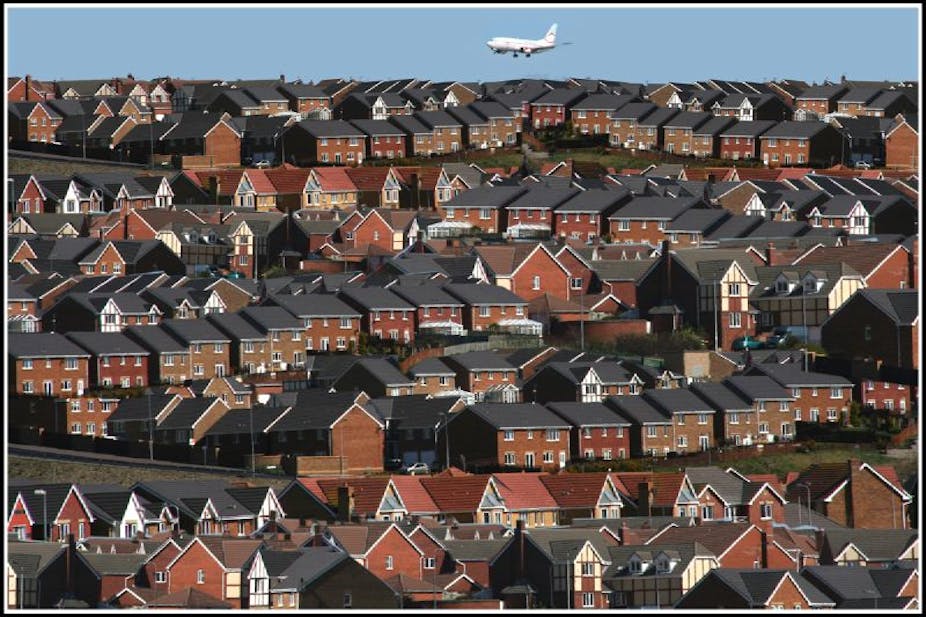
One of the more interesting outcomes the 2011 Census produced was the figures concerning the housing market. The reason for this interest is how the results contrasted with the idea that Australia currently suffers from an acute housing undersupply or shortage. Taking the lead in promoting this idea is the National Housing Supply Council (NHSC), an organisation formed by the federal government in May 2008 to provide an in-depth analysis of the housing market. The NHSC is widely considered to be the peak body in this field.
Unsurprisingly, in its first report – State of Supply Report 2008 – released in March 2009, the NHSC concluded that a deficit or gap of 85,000 dwellings existed. Here was the most comprehensive study of Australia’s housing market, a dense 172 pages. The alarming shortfall of dwellings made instant headlines in the media, not least because it provided concrete proof that Australia’s rocketing housing prices were strongly affected by this shortage. Both government and industry broadcasted the NHSC’s results because it confirmed the suspicion that a shortage did, in fact, exist – and that something could now be done about it. The banking and real estate sectors were also very supportive, as their own arguments about a housing shortage were now considered irrefutable.
There was only one small problem: the purported shortage of 85,000 dwellings was complete fiction.
In order to arrive at the shortage, the NHSC had to employ a methodology of the most dubious nature – a travesty of basic science. The shortfall of 85,000 dwellings was composed of the following: 1) 9,000 to address homelessness of those sleeping rough, 2) 35,000 to address homelessness of those staying with friends and relatives, 3) 13,000 to house marginal residents of caravan parks, 4) 26,000 to increase the rental vacancy rate to three percent, and 5) an extra 2,000 to round up to the nearest 5,000!
The problems with this analysis are legion, and were quickly unmasked by Australian economists Kris Sayce and Steve Keen, and are covered briefly here. While homelessness is indeed a serious problem with tens of thousands suffering from this plight, these persons (typically on the lower income scales) do not have the financial power to turn their needs into demand on the property market. Instead, the NHSC produced evidence of social need but not actual demand. The same goes for the residents of caravan parks.
The fourth category is an interesting one because it assumes that data sourced from the Real Estate Institute of Australia (REIA) and its state-level affiliates are also based upon sound methodology. As I have covered elsewhere, the reported vacancy rates are likely to be severely biased downwards given the appalling methodology, data-gathering techniques, and lack of independent oversight (auditing). The last point is self-explanatory: who on earth rounds up to the nearest 5,000?
These highly questionable statistics were produced by Australia’s “peak” body. The NHSC is a body stacked with industry and former government professionals. Its continued funding would most likely quickly dry up were they to find that no shortage existed. If instead a surplus was found, the NHSC’s brief existence would come to an end as dwelling supply considerations are found not to be an issue in price inflation.
The outcome is obvious: if a shortage can be found, then government is much more likely to enact policies favourable to industry. Asking the NHSC if there is a shortage is similar to asking Dracula if the blood bank needs to be expanded because of a deficit – the answer is already predetermined and reflexive.
Little more could be expected in the 2010 and 2011 reports. The NHSC performed a backflip, admitting that it was uncomfortable with its previous methodology given the obvious problems with it. It is unlikely that the NHSC would have changed course if not for the barrage of ridicule it experienced from those who read the report and were honest enough not to give their silent approval. Each report provided an increasingly dismal prognosis as the shortage had increased to 185,000 in 2011 and, if present circumstances remained the same, there is expected to be a shortage of 640,000 dwellings by 2030.
But nothing changed. The NHSC had to find another pretext for the pre-supposed shortage, this time by creating a category called “underlying demand”, driven primarily by immigration and other demographic factors. This would appear to be a more sound methodology if not for the fact that the numbers were simply made up again.
The pseudo-science of the NHSC has not prevented vested interests from promoting its conclusions as fact and crucially relies upon the public not reading through hundreds of pages (630 in all) of economic and statistical analysis to understand this. After all, the public is supposed to trust the “experts”. It is worth reading through these three reports in order to realise how the phrase “lies, damned lies, and statistics” rings true.
The non-existent housing shortage probably comprises the most popular argument used by the bubble deniers to justify astronomical housing prices. As Australia is apparently suffering from a chronic deficit of dwellings, demand is greatly outstripping supply, leading to rising prices.
The problem with this argument is it can’t explain why prices started to rise in 1996 and have skyrocketed onwards, especially during 2001-2004. Annual population growth between 1996 and 2005 registered at approximately 1%, but dwelling growth (adjusted for demolitions and discontinuations) was greater over this period. In fact, 2007 was the first time since 1950 that population growth was higher than dwelling growth. If the housing shortage argument was correct, housing prices should’ve started to rise from 2007 onwards, not 1996.
The shortage argument, however, is not new. Every country that has suffered through a housing boom followed by a crash (a bubble) in recent years have always had its so-called ‘experts’ claim that prices were based upon fundamental valuations due to dwelling shortages.
Take the US as a case study. Leading institutions such as the Federal Reserve, National Association of Realtors, California Building Industry Association and Harvard University’s Joint Center for Housing Studies produced sophisticated studies to show that the $8 trillion housing boom was caused, in part, by dwelling shortages. These studies were authored by professors, PhDs, and businesspeople, all with extensive knowledge and experience but with conflicts of interest that could fill a small book. Yet, their expertise was as illusory as the shortage when the housing market crashed. The same again occurred in Ireland and Spain to the point where these three countries are now bulldozing entire neighborhoods to reduce some of the massive oversupply.
Going back to point first made in the introduction, the 2011 Census revealed Australia had 7.8 million households, 900,000 lower than the NHSC’s figure, with population also growing by 300,000 less than previously estimated. These figures have come as such a shock that the NHSC chairman has reported that an undersupply could be incorrect. In fact, Morgan Stanley researchers have found that the current 228,000 dwelling undersupply has now become an oversupply of 341,000, a huge turnaround.
Given the flawed nature of the NHSC’s reports, the run-up in housing prices is likely due to other factors, specifically the escalation in mortgage debt used to finance real estate speculation. As of 2011, mortgage debt reached $1.2 trillion or 85% of GDP. Combined with personal debt, this climbs to $1.3 trillion or 95% of GDP, a staggering sum. Also of concern is the $53 billion in subsidies and tax breaks that property owners receive.
Perhaps the NHSC can stop wasting our taxpayer dollars and instead investigate these leads.
rory robertson
rory robertson is a Friend of The Conversation.
former fattie
Philip, you cite Steve Keen as some sort of authority on Australian housing, yet he didn't walk from Canberra to the top of Mt Kosciuszko because he knows what he is talking about.
Here's a recent letter in the (London) FINANCIAL TIMES:
June 20, 2012
HEY, THE SKY HASN'T FALLEN AFTER ALL...
...From Mr Rory Robertson, Sydney, Australia.
"Sir, Steven Keen, whom you quote in “Mine, all mine” (Analysis, June 18), notes that nominal house prices in Australia have risen by “a factor of six…
Read moreMav
logged in via Twitter
Rory who? While Steve Keen is feted by the international press (BBC, FT etc), Rory is reduced to writing bitter letters to editors.
Jealous much?
Joseph Baron
logged in via Facebook
Well said Rory. You are completely correct. Steve Keen has made a great many incorrect predictions about the Australian housing market and economy. Check out this <a href="http://australianpropertyforum.com/topic/8427160">Steve Keen Profile</a> for a good summary of Keen's bad calls and predictions...
http://australianpropertyforum.com/topic/8427160/1/#post8301101
01 - In 2006, Keen said we may already be in a recession
Read more02 - In 2006, Keen said the Australian Debt/GDP ratio would exceed 160…
Chris O'Neill
Telecommunications Engineer
The Australian property boom came to an end in 2010. Just look through a few suburban median property price histories, e.g. click on annual property prices in http://www.rs.realestate.com.au/cgi-bin/rsearch?a=sp&s=vic&u=glen%20waverley .
The problem with booms and busts is that even though you know they must end sooner or later, the timing is extremely difficult, if not impossible to predict, especially if there is no recession to initiate the bust. I think Keen also ignored the nature of property…
Read moreNot MacroBusiness
logged in via Twitter
Steve Keen initially said house prices would fall 40% in 'a few years'. This was when he sold his Sydney home at the worst possible time, just before prices really took off. The chart below shows just how bad his mistake was!
http://australianpropertyforum.com/topic/9636103
Ouch!
Alex Barton
Astroturfer
Not Macrobusiness and Australian Property Forum are proven Astroturfing organisations for undisclosed property interests. So the fact that paid for corporate shills are disparaging Prof Keen on this website should be disregarded.
For further evidence of the fraud that is Australian Property Forum (Astroturfing Property Front) - please read the following:
http://bubblepedia.net.au/forums/viewtopic.php?f=32&t=194
James Sanders
logged in via email @gmail.com
It's pretty simple. The industry has been in a mad rush to build homes for people who don't need a home for living in. Those that do need one, are excluded from the market because the market is broken.
The question is, why do state and federal governments effectively provide a rock solid, guaranteed land tenure system with subsidies that merely serves to bolster a speculative board game (aka Monopoly)?
Why do we pretend to have respect for indigenous values toward land and belonging, when we increasingly see land as a weapon to leverage advantage over our neighbour?
Karl Fitzgerald
Economist
you've identified the ponzi scheme that is real estate 4 ransom! To think that we have elaborate Infrastructure Australia boards who do all they can to avoid the simplest way to finance it, use the rising land values surrounding new train stations to finance it (Land Value Capture). But that would eat into the profits of these largely finance & developer dominated boards. One wonders if the NHSC is the same.
James Sanders
logged in via email @gmail.com
Even the comments posted here are largely concerned with playing the market: ie, who cleans up and who doesn't, based on timing of sale. The nexus between the 'market' and its relation to a limited resource, public infrastructure, employment and social participation is conveniently lost on those who see housing as a crass tool for bagging wealth.
The housing figures and reporting by economists and many real estate players is a predictable bore now. When prices go up - we are all meant to applaud…
Read moreChris O'Neill
Telecommunications Engineer
"housing as a crass tool for bagging wealth"
It's interesting to consider the arguments that occurred a few years ago (and still occur) about the privatization of government owned assets when the biggest privatization of all occurred many, many years ago, i.e. land ownership.
The sad fact is that this "crass tool for bagging wealth" is deeply ingrained in the status quo even though it is the greatest single form of economic unfairness in existence. The real capital gains from land ownership are the "rent" that Philip Soos talks about. Gains that come about from processes other than any effort by the owners. Refer to http://www.lvrg.org.au/
Unfair as it is, I can't see this changing for a long time in the future. State governments aren't even capable of setting up a fair licensing system for taxis which is trivial by comparison with land allocation. Rent-seeking through land ownership is here to stay. To add insult to injury, it's not even taxed properly.
Bruce Moon
Bystander!
Philip
Great to read a considered critique of a national sacred cow.
What is now needed is analysis of the drivers of housing stock price rises since the mid 1990's, and any relevant arguments as to why the prices have not plummeted as Steven Keen and others claimed.
I'm sure other would join me in eagerly awaiting your reply.
Cheers
Simon Jones
Student
The drivers are all there. Just look back at the boom prior to the great depression, and the measures taken afterwards to prevent further recuring financial crisis (and reduce the volatility). These measures were done away with in the mid-late 80's when market fundimentalism took hold. BTW, its not interest rates, these are just a "ramping" effect. Unfortunately macroeconomics see these as primary.
In reality the real drivers are not something generally talked about, as they are counter to the…
Read moreMike Swinbourne
logged in via Facebook
When I moved to Adelaide from Sydney in 1980, it had a population of about 950,000. It is now just on 1,100,000 - a growth of only 150,000 or about 14% in the last 30 years.
Since that time the size of the city and the number of new houses has exploded dramatically. There were new developments at West Lakes and Golden Grove, the suburbs to the south of the city have exploded in number, now there is Mawson Lakes and new work going on in the Craigmore / Smithfield area.
It can't possibly be the case that all that new work is required to support the tiny population growth - something else must be at play here. It may well be that less people are living together, and therefore want more houses, but the size of the building blocks has also shrunk dramatically, with sizes around 300 sq m and smaller considered normal.
What's going on!?
Aaron Tuck
logged in via LinkedIn
More people are living in share houses and with their parents according to the census.
It's real estate hype that has got us here and a lot of people will wish they hadn't bought into the 'money for nothing' pot of gold that was promised to them from their investment property.
How about we LIVE in these houses, or is that too much of a leftist ideal?
Aaron Tuck
logged in via LinkedIn
This whole scenario reminds me of the 80's film "They Live". Everyone has been blindly following the daily news and lining up for their morning dose of real estate propaganda.
There are people who will read this article and any article reporting the blatant lies we've been told by the "experts" and still argue that houses will appreciate in value again in the next few years.
I'm looking forward to seeing the ABS house price index on August 1st.
Rosie Torr
Does it matter what I do?
I looked up the NHSC's website a while ago to see who was on it and as soon as I did, realised that any information they would produce would be biased. How could property developers not be? Talk about vested interests.
It is all a con to keep the price of land high and the rich owners sit on it and wait for their money to come in while doing nothing. Australia supports such an awful system by not taxing land and instead taxing income. Why indeed would we all work when we could buy, or indeed, inherit land, wait for the price to go up then sell it? Land banking is alive and well in Australia and even applauded and supported by the government. The National Housing Supply Council should be disbanded.
Thank goodness the bubble has finally burst and prices are going down. Housing is a right for every human not a means for the rich to get richer by doing nothing.
And is this a men only site? I never see any comments by women here!