



The profile of science has risen dramatically in policy making in recent years. Climate change mitigation, the Murray Darling Basin Plan, debate over the MV Margiris: all are talked about in terms of whether the science is certain. But what happens when government demands certainty in the science before acting, but won’t fund the studies to provide that certainty?
Migratory shorebirds appear to be showing widespread declines while being increasingly threatened, but finding out for sure is expensive.
In Japan and several areas throughout Australia, recent work indicates that some of these species appear to have declined locally by anywhere from 30% to 80% in 15 to 30 years.
When faced with potential biodiversity losses such as those in shorebirds, decision makers often require high levels of certainty regarding any negative impacts of human activity on ecosystems. They are unlikely to support the typically costly actions to avoid impacts until they have strong evidence.
Unfortunately, such evidence can be difficult to deliver. Resources are scarce, and there has been under-investment in data collection for the past several decades. The unfolding evidence of large declines in migratory shorebirds exemplifies a rare long-term data set collected by volunteers that shows just how much information is needed to deliver strong evidence.

Shorebirds undertake remarkable journeys across the earth, at times coming together in clouds of birds which defy human understandings. Migratory shorebirds that visit the coasts and wetlands of Australia are very diverse. They come from breeding areas in the Arctic tundra, the steppes of central Asia, or large meadows found within boreal forests.
Many of the young are able to find their own food only days after hatching in the far north, and a few weeks later most fly south independently with no help from their parents or other experienced guides.
Most fatten up before they leave, in some cases to over 80% above their typical weight. They put on up to 5% weight gain per day in just a couple of weeks. These birds depart on their migrations looking like over-inflated footballs with wings, and yet some are known to fly up to 12,000km for over eight days non-stop across the Pacific.
They gauge favourable winds, and then with a variety of apparently built in navigation systems, and the sky for a map, they cross the globe.
Most migratory shorebirds feed in the non-breeding season on invertebrates living under the mud and sand. On their northern migrations these birds must stop at least once at habitats rich in food to fatten up again. One of the most important and widely used areas to stop and refuel is in south-east Asia’s Yellow Sea.
There is growing evidence that the critical refuelling habitats in the Yellow Sea are declining rapidly. In fact many decision makers in these areas view intertidal habitats as an easy place to reclaim cheap land from the sea for other uses. The increasing popularity of these kinds of developments over the past few decades can easily be seen from space.

Evidence of declines in migratory shorebirds, combined with the loss of refuelling habitats, is sparking conservation planning throughout the flyway. The evidence is even convincing some of the most sceptical decision makers of declines. Unfortunately, many shorebird conservation advocates believe any action may come far too late if at all.
In a recent piece in The Conversation, Peter Doherty noted how citizen science focused on birds, which are relatively easy to monitor, may provide a barometer of the threats associated with increasing human activity on the planet. Migratory shorebirds are one such barometer. But without the efforts of hundreds of volunteers who have dedicated themselves to monitoring these birds across Australia and Japan for decades, we would have little idea that they appear to be in trouble.
Further work is determining the scale of declines across migratory shorebird species, and identifying any other factors aside from habitat loss in SE Asia that may be reducing populations.
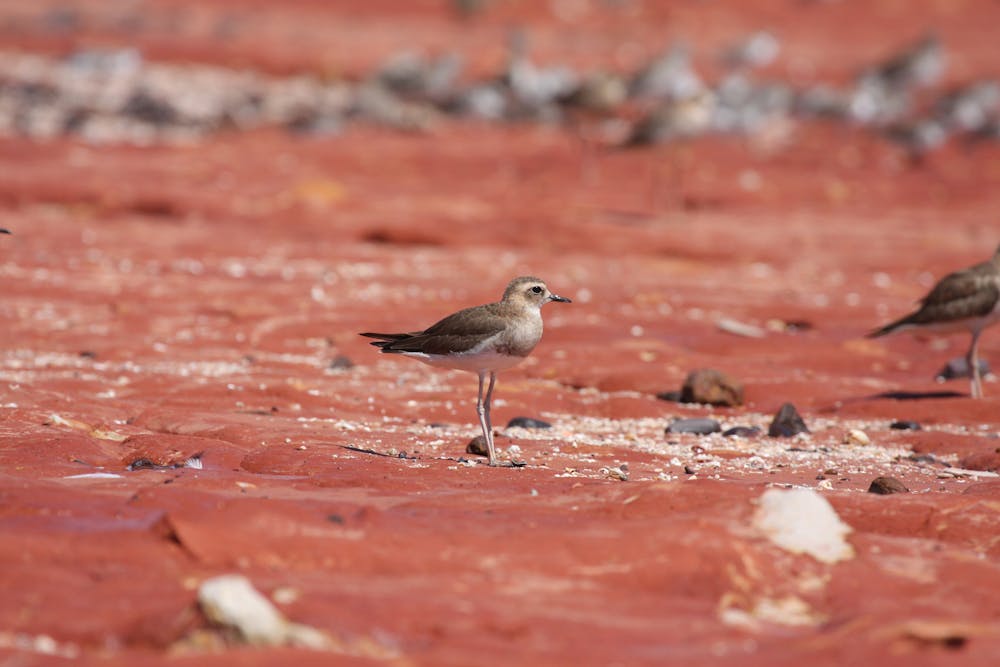
The threats to migratory shorebirds span a variety of interconnected habitats across the globe, from growing ecological imbalances in the Arctic, to large scale degradation at inland non-breeding wetlands in Australia, such as the Coorong. As work continues I’m hopeful that the web of causes of declines in migratory shorebirds can be untangled so that sufficient and compelling evidence can be delivered regarding what is needed, and where, to reduce impacts to these birds.
It is striking though, that had it not been for the long term efforts of volunteers we would have no idea of the problem or its scale, and still less hope of beginning to unravel solutions. What about all those species, including other migratory shorebird species, that have not been monitored by an army of volunteers for over 30 years? We know almost nothing about some of these species.
What if the canaries we have enough data to look at seriously, and which we know are in trouble, are among the hardiest birds in the mine?