Can forest conservation and logging be reconciled?

Is there a role for logging in ensuring the future of the world’s tropical forests and their rich diversity of plants and animals? For many this idea is absurd, because timber production achieving conservation goals have long been viewed as incompatible opposites. “Loggers” were tarred as planet plunderers…

W7g3d44p-1341815510
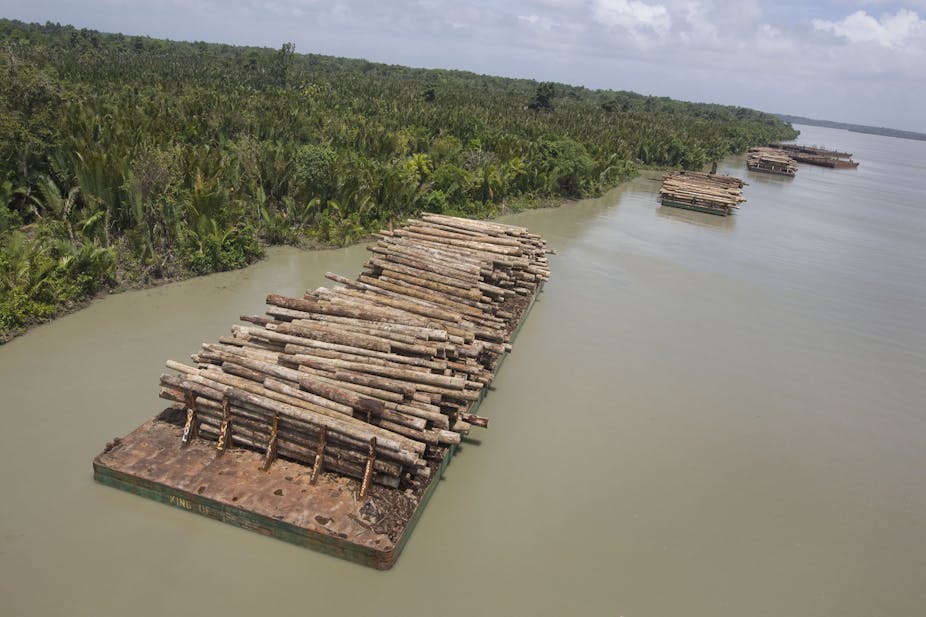
No simple matter: logging and conservation are not polar opposites, and controlled harvesting can fund the protection of forests. AAP/Greenpeace/Jeremy Sutton-Hibbert

Is there a role for logging in ensuring the future of the world’s tropical forests and their rich diversity of plants and animals? For many this idea is absurd, because timber production achieving conservation goals have long been viewed as incompatible opposites. “Loggers” were tarred as planet plunderers, “greenies” were branded ignorant idealists, while researchers found themselves caught between warring factions with little interest in data from outside their own views and experiences. Sadly, this myopic and highly polarised view of preservation versus production rarely helps save vulnerable landscapes. Fortunately these views are changing.

Finding outcomes that offer real improvements for conservation gains depend on recognising some myths and acknowledging the dynamic nature of forests. Many people, especially in Australia, generally imagine all “logging” as broad-scale clear-felling. However, timber harvesting takes many forms, and large-scale clear-felling is at one end of a broad spectrum. In well-managed forests, foresters seek to harvest in an ecologically-appropriate way. Generally, clear-felling is appropriate only in forests that are naturally adapted to major disturbances (such as Australia’s wildfires). At the other end of the harvesting spectrum, single-tree selection is appropriate in forests that evolved with small-scale disturbance (such as many species-rich where most trees die standing and finally collapse from decay), and where seedlings tolerate heavy shade.

In most tropical forests managed for sustainable timber production, harvesting is selective. Between two and 20 stems are removed from each hectare of forest, once every few decades. When done carefully this leaves over 90% of the trees in place. Thus a logged, rich, tropical forest is still a rich tropical forest and stems regrow to replace those removed.

Many of the technical arguments against timber production in tropical rainforests relate to species loss or to the increased likelihood of forest conversion (i.e. that the forest will then be converted to some other non-forest use). There is ample evidence from various sites that logged forests lack many of the species – especially the larger animal species – found in more pristine forests. There are also many cases where forests that have been selectively logged for timber have subsequently been converted to pasture, oil palm, or other intensive uses. But, we now realise, the implied cause-and-effect relationships are not necessarily inevitable. Let’s deal with these issues one at a time.
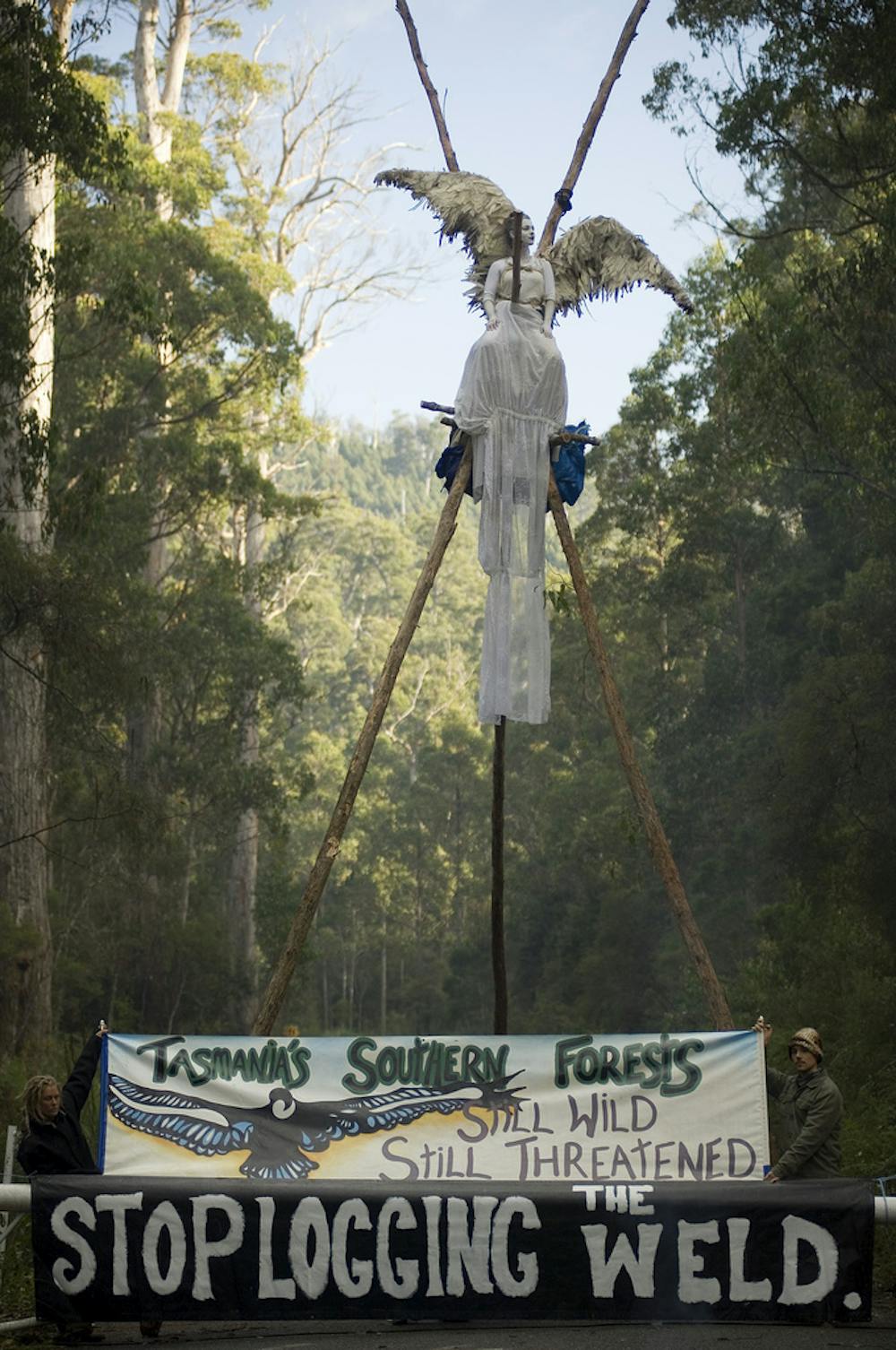
Passions run deep where the trees climb high. Flickr/Rainforest Action Network

First, how does timber harvest affect the biological value of tropical forests? Our recent study summarised over 100 scientific papers from a range of sites and concluded that 85% to 100% of the forest biodiversity was maintained in forests that have been logged once. Other studies of forests harvested repeatedly have found similar results. This doesn’t mean that other older observations were wrong – just that they didn’t distinguish the cause of the species declines they observed. Areas that are accessible for timber harvest are often accessible for hunting, pet-trade collecting, gold panning, and so on. Certainly, new logging roads often provide access into once inaccessible areas, and can exacerbate and facilitate other harmful activities, but whether they are the cause is a matter of semantics. High levels of hunting can and do occur in strictly protected forests, too – but no-one would argue that that is a valid reason not to have strictly protected forests. In both cases, logged or protected forests, the answer is the same – stronger incentives and controls are required to favour the desired conservation outcome.

The question then is how to provide these incentives and controls. On the ground, control of activities like hunting is often more practical in actively-managed production forest than in national parks starved of staff and resources. The need to control, and in some cases prohibit, hunting is now a common element of good practice in forest management and is implemented in many concessions (in Sarawak, Congo, and other concessions accredited by the Forest Stewardship Council).

Secondly, what are the implications of a timber harvest for sustainable forest cover? Experience shows that logged forests have at different times, been cleared, maintained for subsequent harvests, and elevated to national parks. Clearly the fate of a logged forest depends on many things, including the external pressures on land and the degree to which we are willing and able to value and protect both logged and unlogged forests. But studies of concessions in several parts of the world where law enforcement in protected areas is weak reveal instructive cases where logged forests have been found to resist conversion better than unlogged forests (e.g. in Sumatra and Borneo). These cases, as with the elimination of hunting mentioned in the previous example, show the potential benefits of having local caretakers with the ability, motivation, and support to support forest conservation.

The chief question is how to achieve the best results. Even if we forget the demand for timber and consider only conservation benefits, and draw on the examples given above, it is apparent that logged forests bring options and opportunities.

No-one suggests that all forests should be logged. As far as we are aware everyone agrees that some forests should be set aside and protected. Ideally these areas should be as big and as well-connected as we can manage. Low-density, wide-ranging forest-dependent species such as Borneo’s clouded leopards will depend on these large areas. But, given other demands on land and resources, such strictly protected areas are unlikely to ever make up more than a minority of the landscape.

This appears especially true in poorer regions of the world where people live on the land and there are massive pressures to generate the funds they need for development from high value crops like soya and oil palm. In such regions we are unlikely to find the money necessary to protect and manage large reserved areas and meet the aspirations of the people. However, timber production provides one way in which forest lands can provide income and employment while retaining forest: in simple terms, the forest can pay for its own protection.

Light touch: a Papuan hunts in forests where his clan selectively fells trees. AAP/Greenpeace/Natalie Behring

From a non-negotiable starting point with islands of strictly-protected forests, we can choose the fate of the rest of the landscape: we can strive for a landscape dominated by non-forests (e.g., agriculture) with little connecting forest, or we can seek to maintain productive working forests that provide valuable habitats for most forest species, provide connectivity among populations, and allow the landscape to sustain many wide-ranging forest species.

Even better, these forests can be supervised and managed by people who care about them and can combat alien species, check fires, and confront hunters and other threats. While there are risks, many researchers believe that this latter option comprising a matrix of managed production-forest remains one way to ensure the survival of the world’s tropical forests and their rich diversity. Conservation is seldom simple to achieve and there will be challenges. Nonetheless, in our view well managed production forestry, as part of a larger forest-landscape guided by science, offers a vision where once conflicting interests will benefit by working together.

Comments welcome below.

Articles also by These Authors

Sign in to Favourite

Want to follow The Conversation?

Sign up to our free newsletter to get the day's top stories in your inbox each morning, with a special wrap on Saturday.

Spinner
Become a friend of The Conversation and donate

Join the conversation

66 Comments sorted by

  1. Lynne De Weaver

    logged in via Facebook

    This was a really interesting article and certainly goes a long way to allaying some of the more emotional elements that we read in mainstream media.

    report
  2. Paul Richards

    strategic foresight

    Jerry & Douglas said - "......generally imagine all “logging” as broad-scale clear-felling" - Not many would disagree. This is because largely that is how the timber industry has worked across the world and relatively recently in our timber history.

    Can forest conservation and logging be reconciled? Yes, no doubt.

    Where this world's best scientific appraoch fails, is with the value system in the local community, region and country as not all countries have the benifit of a evolved value…

    Read more
    1. Let's Not Pretend

      logged in via Twitter

      In reply to Paul Richards

      I'm not sure the values in Indonesia and Australia are so different? Much of the timber and other products (eg palm oil) of deforestation coming out of Indonesia are going to developed countries with 'evolved value systems'. Nobody is forcing importers or consumers to buy this stuff. The social and political will in the developed world to help address the problem still seems quite weak.

      report
    2. Paul Richards

      strategic foresight

      In reply to Let's Not Pretend

      Let's Not Pretend - then why are you pretending? The fact you do hide goes right to heart of your personal values.

      Saying Indonesia have the same values as ours is easy.
      Can you demonstrate in writing or refer to examples of their level of thought or stage of development compared to Australia or New Zealand?

      report
    3. Let's Not Pretend

      logged in via Twitter

      In reply to Paul Richards

      Pointing the finger at the other guy is easy. Recognising that we have shared responsibility is much more difficult.

      report
    4. Paul Richards

      strategic foresight

      In reply to Let's Not Pretend

      Let's Not Pretend - Still incognito? Easy to point fingers when no one knows who you are, but of course you must know that.

      If you bothered to read what I wrote I said;
      "We need to assist in changing the values in these countries first and quickly, helping them to develop deeper understanding of of their responsibility to manage their culture on many levels."

      So again can you please explain from a cultural point of view how Indonesia is similar to Australia and New Zealand regarding this issue?

      report
    5. christine tiley

      volunteer ambulance first responder

      In reply to Let's Not Pretend

      Have you read the Sydney Morning Herald article in Saturday's paper about the deforestation of the Solomon Islands - it will make your blood boil. A prominent Australian bank is the money behind the Malaysian company involved. Unbelievable!

      report
    6. Let's Not Pretend

      logged in via Twitter

      In reply to christine tiley

      Yes. I guess that's my point. Corporate greed is a global phenomenon. So is ignorance and apathy. Governments, banks, logging companies, middle-men, land owners and consumers can all contribute to the problem - or the solution for that matter. The science is the easy part. Managing the vested interests is the hard part.

      report
    7. Mark Graham

      Ecologist

      In reply to Let's Not Pretend

      I agree with these statements Let's Not Pretend. The main problem is profit driven interests trashing forests for short term gain. I can't see this situation changing and feel very strongly that the authors of the article have not delivered a realistic appraisal of the situation nor one that offers achievable or realistic solutions to the fundamental problems of biodiversity and cultural loss.

      report
  3. Bernie Masters

    environmental consultant at FIA Technology Pty Ltd, B K Masters and Associates

    Thanks for the article which is a useful perspective on the never ending argument between loggers and conservationists. My only developing country experience is in Madagascar where farmers would clearfell the rainforest, burn, plant grass for their cattle (which are their most important measure of wealth) and then, when the nutrients from the burnt forest have been consumed, they'd move on to the next patch of forest to clear it.
    In this situation, selective logging would not be accepted so other forms of sustainable development would need to be devised to give these people a secure income and source of food.

    report
  4. Bruce Moon

    Bystander!

    Jerry & Douglas

    I appreciate where your views are coming from. BUT!!!!

    I got increasingly annoyed with the content of your article. It singularly fails to address the core issue in tropical region logging - the politico-economic environment in which logging is undertaken.

    I suppose my take on your article is that it is a perspective from observers trying to describe an ideal form of logging in the tropical zone. Sadly, I only got a first world view about a resource 'managed' by third…

    Read more
    1. Mark Poynter

      Forester

      In reply to Bruce Moon

      The article you have cited in today's The Age newspaper is based on an ENGO report. Given the poor track record of these groups in reporting accurately while pushing an agenda and striving to elicit donations, its assertions need to be treated with caution. You only need to read almost anything that emanates about Tasmania from our own ENGOs to see the level of misrepresentation of forestry issues here, let alone in other countries.It would be good to hear from those who know more about what is actually happening in PNG.

      report
    2. Bruce Moon

      Bystander!

      In reply to Mark Poynter

      Mark

      Your prejudice is unhelpful.

      Though Greenpeace informed the author, midway through the article Hamish wrote...

      "Immediately after he ousted predecessor Sir Michael Somare from the prime ministership last August, the present caretaker prime minister, Peter O'Neill, initiated a commission of inquiry into controversial forestry concessions granted over the previous decade when Sir Michael held power.

      The commission's report was completed in May, just before recent elections, and will be tabled in the new parliament. It is believed to include damning criticisms of the granting of a new form of lease for more than 5 million hectares of forest owned by locals under traditional title."

      Tedummmmm!

      Cheers

      report
    3. Mark Poynter

      Forester

      In reply to Bruce Moon

      Bruce
      You may have a point in this instance ... as I said I don't know the truth about PNG but I still remain very sceptical of ENGO pronouncements on forestry issues anywhere based on their track record over several decades. As I also said I would like to hear from someone working over there who is aware of the issues before I could believe an ENGO report.

      report
  5. Anthony Nolan

    Ruminant

    Oh yeah?

    "Sadly, this myopic and highly polarised view of preservation versus production rarely helps save vulnerable landscapes..."

    Saved Terania Creek though, didn't it?

    "Many people, especially in Australia, generally imagine all “logging” as broad-scale clear-felling."

    No imagination required. I can drive twenty minutes from where I live and see exactly that in a so called "managed" forest. It's the same up and down the NSW east coast. All you have to do is get out of the car and…

    Read more
    1. Mark Graham

      Ecologist

      In reply to Anthony Nolan

      Thanks for your contribution Anthony

      I too can travel to most State Forests in my region (the Mid North Coast of NSW) and see complete deforestation and destruction of forested ecosystems. This is mostly because of unsustainable contracts between the NSW Government and timber companies such as Boral. What remains is mostly a weed and Bell Miner Associated Dieback degraded shadow of formerly diverse and carbon-rich forests.

      Some of these forests support the most diverse assemblages of Eucalypt…

      Read more
    2. Mark Poynter

      Forester

      In reply to Anthony Nolan

      The harvesting systems used are related to the silvicultural requirements of particular forest types. There are plenty of examples of drier forest types being managed by selective harvesting regimes for over a century in accordance with their silvicultural requirements. These include the red gum forests of southern NSW and northern Victoria, and the extensive cypress pine and ironbark woodlands of north central NSW and southern central Queensland which have now largely been declared as National Parks…

      Read more
    3. Mark Graham

      Ecologist

      In reply to Mark Poynter

      Mark

      As a forester you write:
      "There are plenty of examples of drier forest types being managed by selective harvesting regimes for over a century in accordance with their silvicultural requirements"
      What about the native fauna that once inhabited these forests? They no longer occupy these forests because habitat resources critical to their survival have been lost.

      "These include the red gum forests of southern NSW and northern Victoria, and the extensive cypress pine and ironbark woodlands…

      Read more
    4. Mark Poynter

      Forester

      In reply to Mark Graham

      Mark Graham

      So, ..... what about the fauna that inhabited these forests? You again neglect to appreciate that not all of these forests are harvested anyway, and that it is a scientific fact that timber harvesting, unlike forest clearing for agriculture, has not been responsible for any fauna or flora extinctions.

      In the Brigalow South and Nandewar bioregions, thinning for timber production over a long period actually increased the size of the overstorey trees and improved their habitat values…

      Read more
    5. Paul Richards

      logged in via LinkedIn

      In reply to Mark Poynter

      Mark P - said " ........financially underwrites management needed to at least hold back the tide of problems facing our forests. Simply placing them in parks and walking away won't do anything good."

      Yes, everyone reading here is aware cutting trees financially underwrites the forestry industry. As for holding back the tide of problems, that is another issue that could contradict easily, but why bother?
      For as long as you hold the current level of thinking or stage of personal development there is little point discussing the principles. This is in no way putting your level of thought down, because it is valid and justified given your value system.
      Most who disagree with your perspective, understand and are aware of why this position is taken. For as long as 'we' as a culture are at this stage of development, positions like this will be taken, justified with logic and will be still be flawed when measured against a latter stages of human values.

      report
    6. Mark Graham

      Ecologist

      In reply to Mark Poynter

      Mark P

      You write:
      "As an ecologist, you seem to be far too focussed on a 'preservationist' model of conservation which is out of step with the huge changes that have taken place since pre-European times. Simply, abandoning all management to leave nature to take its course is hardly appropriate given the extent of feral animal and weed invasion and inappropriate fire regimes."

      Please do not misrepresent me.

      At no stage have I suggested that active management of ecosystems is not required. Active management of threatening processes IS required, particularly for weeds, vertebrate pests and fire. Without management of these threats declines in biodiversity will continue to occur.

      I suggest that you read what I have written, gain an understanding of it and stop misrepresenting me.

      report
    7. Mark Poynter

      Forester

      In reply to Mark Graham

      Mark Graham

      You are indeed a sensitive soul when someone challenges your self-righteous assertions about forestry. I have merely made an observation based on your previous postings rather than set out to 'misrepresent you". I presume you are only doing the same when you imply that foresters such as me are responsible for trashing forests, and ignoring the fact that forests and woodlands are ecosystems.

      report
    8. Mark Poynter

      Forester

      In reply to Paul Richards

      Paul

      Have you perhaps heard of the concept of timber companies paying royalties to State Governments for being allowed to harvest logs from State Forests... it appears not.

      My level of thought and my values on forestry issues is informed by 5-years of tertiary education and over 30-years of working experience. Yours are informed by......?

      report
    9. Paul Richards

      logged in via LinkedIn

      In reply to Mark Poynter

      Mark P - said "... Yours are informed by......?" A stage of development that you do not hold. But that's ok we are all in development.

      A simplistic overview of stages of human development, enabling a view of others perspective.
      http://goo.gl/aJy6f

      report
    10. Mark Poynter

      Forester

      In reply to Paul Richards

      Paul

      You've mentioned "stages of human development" and "personal values" several times in response to me and others. I'm presuming that's a polite way of saying that anyone who doesn't agree with you simply hasn't evolved to your lofty heights .... that perhaps relative to you they are a 'neanderthal'?

      Hmmm.... by my reckoning that's a way of side-stepping any requirement to defend your articulated beliefs. As you haven't answered my question of where you've obtained your beliefs about forestry, I'm presuming that your tactic is tantamount to admitting you don't have any real knowledge of forestry issues. Glad we've sorted that out.

      report
    11. Paul Richards

      strategic foresight

      In reply to Paul Richards

      Mark P. - One of the issues with your value system is the way of seeing others, your response is demonstrates it. Whatever the level of thought you have is literally "judging me by your level of thought" which does not offend or bother me, but it is far from reality.
      Until a shift in values, anything anyone explains to defend the forest and their position will never meet your criteria. Discussion on this level is futile. No level of thought / stage of development is better than another it is about…

      Read more
    12. Mark Graham

      Ecologist

      In reply to Mark Poynter

      No sensitivities at this end cobber. Just ensuring that there is a straight record, not one warped by your spurious contributions.

      Peace.

      report
    13. Mark Graham

      Ecologist

      In reply to Mark Poynter

      Mark P writes:

      "timber companies paying royalties to State Governments for being allowed to harvest logs from State Forests"

      You left out the bit about Forests NSW losing multiple millions of $$ annually from their native forest operations (http://www.audit.nsw.gov.au/ArticleDocuments/141/185_Sustaining_Native_Forest.pdf.aspx?Embed=Y).

      So we have major declines in biodiversity attibutable to logging and taxpayers incur a financial loss. That is a lose-lose situation if ever there was one.

      report
    14. Mark Graham

      Ecologist

      In reply to Mark Poynter

      Dear Mark Poynter,

      Your career is littered with examples of trashed forests and your contributions to this article are predictable given your industry stooge status. You advocate forest management practices that do us all a great disservice.

      report
    15. Bernie Masters

      environmental consultant at FIA Technology Pty Ltd, B K Masters and Associates

      In reply to Paul Richards

      So, Paul Richards, because "Discussion on this level is futile.", we should all accept your view of the world without argument? Putting aside the arrogance of such a statement, I'd really like to know how you believe change should occur in a society like Australia's. Do we make you dictator for life, appoint your political party as the government without holding elections or more generally do we accept that whoever shouts loudest is right? Please don't be so condescending to people like Mark Poynter who has a legitimate right to hold a particular point of view, even if you don't agree with it and aren't prepared to argue against it.

      report
    16. Paul Richards

      strategic foresight

      In reply to Bernie Masters

      Bernie M - "Please don't be so condescending ..... "
      This is the issue with certain levels of thought, we humans tend to only see where we have been. Often saying; "if he or she says this or that it must mean such and such" If anyone reads condescension into what I said, that is interesting, inoffensive and completely understandable. But utterly wrong.
      When I said I understand Mark P and his point of view my meaning is literal, accepted and seen appropriate for his level of understanding, and…

      Read more
    17. Bernie Masters

      environmental consultant at FIA Technology Pty Ltd, B K Masters and Associates

      In reply to Paul Richards

      Paul, I visited http://goo.gl/aJy6f and, while I respect your right to hold whatever views of your (or my) place in the world that you wish, it remains extremely condescending of you not to explain 'the opposite of their line of argument' or 'the various levels of thought on this issue' as you see them. So that people like myself and Mark can understand, please contribute some details to the dialogue or you will be seen as the cause of the uselessness that you say dialogue cannot resolve.

      report
    18. Paul Richards

      strategic foresight

      In reply to Bernie Masters

      Bernie M - The commercial forestry right use this set of values, please correct me if they do not;
      ✓ Distribution of responsibility
      ✓ Pragmatically test for advantages to succeed
      ✓ Search out the best solution to their needs
      ✓ Enhance living for many through science and technology
      ✓ Play to win and enjoy competition
      ✓ Many of the laws written to protect individual freedom all flow from an orange worldview
      ✓ Money rather than loyalty
      ✓ Right and wrong
      ✓ Obey higher authority, do what you're told
      ✓ Faithful to the truth
      ✓ Everything in it’s proper place
      ✓ Feel guilty when not conforming to group norms
      ✓ Control impulsivity & respond to guilt
      ✓ Enforce principles and righteous living
      ✓ Ethnocentrism (my people are right no matter what)

      report
    19. Bernie Masters

      environmental consultant at FIA Technology Pty Ltd, B K Masters and Associates

      In reply to Paul Richards

      Paul, your list of values certainly includes some that are used by foresters but it also excludes other important values. In particular, the application of the scientific process - determining the existence of a problem, compiling a list of possible solutions, evaluating the most feasible solutions and then implementing those that are practical and affordable - usually leads to the best overall outcome, even if it means increased costs, reduced areas of land available for logging, constraints on…

      Read more
    20. Paul Richards

      strategic foresight

      In reply to Bernie Masters

      Bernie M - said "Paul, your list of values certainly includes some that are used by foresters.."
      The values left off are not clear, other were omitted by myself.[could be misread]

      Most of the very vocal forestry protesters hold these values;
      ✓Sensitivity to feelings
      ✓Fairness driven
      ✓Sharing, caring, egalitarian
      ✓Empathy
      ✓Advanced self-reflection
      ✓Advanced abstract thinking
      ✓Use multiple perspectives
      ✓Consensus
      ✓Organisation of equals for mutual-benefits
      ✓Multi cultural, pluralistic

      report
    21. Bernie Masters

      environmental consultant at FIA Technology Pty Ltd, B K Masters and Associates

      In reply to Paul Richards

      Paul, sorry to disagree with you again but I know many forest protesters and the values you've listed for them overwhelmingly are in fact not held by them. Sensitivity to feelings? The closure of the old growth forest logging industry in WA has caused unemployment in the timber towns and reportedly some suicides, with no sympathy or support from protesters. Fairness driver? Absolutely not, as the protesters see themselves as being superior in terms of their environmental, holistic understanding of the world and fairness simply isn't an important issue for them. I could go on but I think you get my drift.
      Bottom line is that the latest set of values you've attributes to forestry protesters reflect an idealistic, utopian and communist view of the world which has been proven over human history to be completely wrong and the cause not only of massive environmental destruction but also of great human suffering.

      report
    22. Paul Richards

      strategic foresight

      In reply to Bernie Masters

      Bernie M - it is clear you can not understand Spiral Dynamics that is ok, it is based on accumulated understanding of human psychology, and the life's work of Clare Graves.
      As I said before with regard Mark P, there is no point discussing this if the individual has a value system that is not evolved. Let me state here an now, this does not make anyone a better person or a worse person in those with second tier value systems. We are all just an individuals with a different sets of values.
      Those…

      Read more
    23. Bernie Masters

      environmental consultant at FIA Technology Pty Ltd, B K Masters and Associates

      In reply to Paul Richards

      Correct, I don't understand Spiral Dynamics but I can't shake this feeling that you're having me on with your insensitivity and air of superiority. Your latest comment states that my 'value system ...is not evolved'; I'm not a worse person even though I have 'second tier value systems'; etc.
      If you honestly believe the sentiments you've expressed in your comments, can't you see the put downs and condescending statements that are contained in your words? No, I guess you can't, which is sad as it explains why human beings as a species are so murderous, selfish, war-mongering and so uncaring of our environment - some people just refuse to engage with others who they believe have achieved a lower level of intellectual evolution. Not a good sign for the future of the human race nor of our planet.

      report
    24. Paul Richards

      strategic foresight

      In reply to Bernie Masters

      Bernie M - said " insensitivity and air of superiority" Bernie one thing is certain, your take on my motive and whether I wish anyone here well, is yours. Just by way of reminder this discussion is;
      "Can forest conservation and logging be reconciled?"
      My line of argument is simple, without understanding the level of values conservationist have, there can be no reconciliation. The foresters need to move thought the stages of development first, soften their dogmatic stance otherwise dialogue is…

      Read more
    25. David Poynter

      Medical Scientist

      In reply to Paul Richards

      Did you here the one about:

      The Leader of a Branch Davidian sect in Waco Texas, David Koresh, having studied Spiral dynamics and based on his accumaulated understanding of human psychology, believed himself to be the 'final prophet'.

      JOKE!

      report
    26. Paul Richards

      strategic foresight

      In reply to David Poynter

      David P - it is interesting you find any part of that tragedy funny. Appreciate the attempt to lighten the discussion though : )

      report
    27. Mark Poynter

      Forester

      In reply to Paul Richards

      Paul

      You're dialogue with Bernie M and myself has certainly demonstrated that you are on a very different plane ..... whether it is higher or lower than us is highly debatable.

      However, returning to what I said earlier, the values I have in relation to forestry have been shaped by education and a long career in this field. You are making some fairly gross presumptions about the motives of foresters such as myself without any actual knowledge of what we know or don't know and why we would undertake…

      Read more
    28. Paul Richards

      strategic foresight

      In reply to Mark Poynter

      Mark P ".... this is should forests be managed based on knowledge and pragmatism ......." as you say "...on a very different plane ..... whether it is higher or lower than us is highly debatable." Debatable certainly, this is the line of argument I am taking. Getting back to the actual question posed by Jerry V Douglas S is;
      "Can forest conservation and logging be reconciled?"
      My belief is NO.
      Simply because of the very value system you espouse here, says those with opposing values hold - "highly…

      Read more
    29. Mark Poynter

      Forester

      In reply to Mark Graham

      Mark Graham

      No sensitivities eh? You protesth too much when you abuse me with terms such as 'industry stooge status'. I am not actually employed by the timber industry, but write about these issues in a voluntary capacity for the Institute of Foresters of Australia on the back of a 30+ year career in this field to inform my supposedly 'spurious contributions'.

      From what I've seen from you, your knowledge is based on looking at a few coupes immediately after harvest while ignoring the fact that…

      Read more
    30. David Poynter

      Medical Scientist

      In reply to Paul Richards

      Paul,
      Obviously you see any attempts to resolve forestry issues as being negatively impacted by the supposed closed minds and intransigence of those in the forest industries. The greens you seee as honest, honourable, reasonable, informed and ethical. However, in the Australian context, the last three decades have seen compromise going in only one direction, and thats heading toward a total lock up of the entire forest estate.
      What anti-forestry greens (and you) have in common with jihadist members of the Free Syrian Army, the Dalai Lama, David Koresh and followers of the Japanese cult Aum Supreme Truth (re Sarin gas attacks) is that they and you know with absolute quasi-religious certainty that you are following a righteous path.

      report
    31. Paul Richards

      strategic foresight

      In reply to David Poynter

      David P - Lumping the "...Syrian Army, the Dalai Lama, David Koresh.." together really does expose your lack of understanding of personal, group, corporate, organisation, government, national and planetary values.
      Having accused me of not wanting dialogue earlier, the comment above just proves why I say it is pointless.
      Values need to be developed. I once held it and feel yours is entirely appropriate for your value system. I do understand your position clearly, however you leave us in no doubt this is not possible for you.
      Which gets right back to all my comments and question at hand raised by the Jerry V and Douglas S article .;
      "Can forest conservation and logging be reconciled?"
      Your comments are enough evidence why a change in thought processes is needed by forestry.

      report
    32. Mark Graham

      Ecologist

      In reply to Mark Poynter

      The spuriousness continues Mark Poynter.

      Your suggestion that the 1998 North East RFA "delivered three quarters of the forests demanded by NEFA into new national parks and reserves" is a complete lie.

      The website link for the Northeast RFA "JANIS and Natural National Estate Conservation Requirements report" (March 1999) at http://www.daff.gov.au/rfa/regions/nsw-northeast/cultural-heritage
      is broken and links to the Eden RFA JANIS report.

      If my memory of the NE RFA JANIS report serves me…

      Read more
    33. Mark Poynter

      Forester

      In reply to Mark Graham

      Mark Graham

      So.... I'm a liar as well now?

      At least you've acknowledged that 400,000 hectares of forest was reserved in your area during the RFA process .... this is a significant step given your earlier doom and gloom about biodiversity loss.

      I'm sorry, but I really have no confidence in reports written by ENGOs (such as NEFA) who have generally shown a propoensity to lie, exaggerate and misrepresent conservation threats to push their agenda. This is as apparent now as it was 20-years…

      Read more
    34. Mark Graham

      Ecologist

      In reply to David Poynter

      David Poynter writes:
      "What anti-forestry greens (and you) have in common with jihadist members of the Free Syrian Army, the Dalai Lama, David Koresh and followers of the Japanese cult Aum Supreme Truth (re Sarin gas attacks) is that they and you know with absolute quasi-religious certainty that you are following a righteous path."

      What absolute rubbish. How about a meaningful contribution David?

      Are you related to Mark Poynter?

      report
    35. Bart W van Assen

      logged in via LinkedIn

      In reply to Paul Richards

      Hmmm, photoshopping satellite imagery to make it look "greener" - and suggesting there's virgin "rainforest" there - is a known issue. Using outdated concession boundaries to suggest a concession is logging in protected areas last year scared off a ministerial visit. And the person contracted to compile all this BS - for a well known anti-forestry super-brand - happily admitted to my face that these falsifications are acceptable practice as they generate funds for more anti-forestry activities. The contractor's boss even went so far to suggest that their "illegal" actions are far less severe as the "illegal" actions by concessionaires. (Neither seemed worried that most laptops can also act as a recording device *evil grin*)
      My point: attributing 'fairness driven' to forestry protesters is a rather romantic (and perhaps even discriminating) view. It's a dirty "game" and both sides "play" dirty...

      report
    36. Paul Richards

      strategic foresight

      In reply to Bart W van Assen

      Bart said "My point: attributing 'fairness driven' to forestry protesters is a rather romantic (and perhaps even discriminating) view. It's a dirty "game" and both sides "play" dirty..." - Totally agree with you.
      I never said they were not capable as individuals of matching the corporatists. But essentially corporations, are not people, hold no values and do not die.
      Those who place corporations value and importance below humans / our ecosystem are certainly capable of matching un-evolved value systems evident in corporatists within corporations when it is appropriate.
      After all, that is what evolved values are about, depth and complexity.
      My earlier references here to spiral dynamics covers the meaning in more depth;
      http://pialogue.info/definitions/spiral_dynamics_aqal_BIG.jpg

      report
    37. Bart W van Assen

      logged in via LinkedIn

      In reply to Paul Richards

      Paul, do you suggest that "bad" deeds by forestry protesters are individual responsibilities while "bad" deeds by foresters are corporate responsibilities? That would be a pretty big double standard... can you clarify?

      My point doesn't refer to individuals, but institutions... with the old adagio(?) of power and corruption in the bak of my mind. To depict corporations as value-less and immortal is incorrect. Greenpeace has clearly proven that corporations have to adhere to "common" values. And the "first" corporation (the Dutch VOC) is long gone and obviously not immortal. Super-brands (able to defy "common" values and "death" for a certain time) exist on all "sides".

      report
  6. Mark Graham

    Ecologist

    Jerry and Douglas you write:
    "Certainly, new logging roads often provide access into once inaccessible areas, and can exacerbate and facilitate other harmful activities, but whether they are the cause is a matter of semantics."

    This is not a matter of semantics it is a matter of fact. In tropical nations where traditional owners inhabit forested areas the development of such infrastructure causes not only a decline in biodiversity, but a loss of culture, traditional knowledge and traditional management practices. To suggest that this is a matter of semantics is a complete misrepresentation.

    When logging companies descend upon tropical forests with traditional custodians present there is only one financial winner - the logging company. The traditional custodians MIGHT be paid a pittance for the timber removed from their lands and the forest WILL be degraded.

    report
  7. christine tiley

    volunteer ambulance first responder

    In reply to Mark Graham. I also live on the north coast of NSW and have done so for the past 38 years. The destruction of forests and habitat I have seen over this time is deplorable. And it continues. Not only in state forests but on private land which has been bought, and carved up, by developers. It just seems that the almighty dollar rules when it comes to land conservation.

    As a keen bush walker I can find less and less places to have a quiet meander. I am constantly assailed by trail…

    Read more
    1. Jerry Vanclay

      Dean of Science at Southern Cross University

      In reply to christine tiley

      Christine, I’m a bushwalker too, and share your concerns. It’s interesting to note recent developments in research on ‘green exercise’ - evidently exercise in the great outdoors has measurable medical benefits greater than equivalent exercise in a gym. In Norway, some communities are prescribing walks in the forest for cardiac patients, and are paying forest owners an amount equivalent to the medication no longer required. This extra income motivates forest owners to manage forests in ways more friendly to walkers… Wouldn’t it be great to have similar incentives here in Australia?

      report
  8. Mark Poynter

    Forester

    This is an excellent article. However, some of the comments made in response to it which effectively equate forestry in developing countries as being akin to that practiced in Australia are disturbing and suggest that we remain a long way from changing highly polarised views and that our own value system with regard to conservation expectations is in dire need of an overhaul.

    Several earlier posters have pointed to southern and northern NSW as examples of supposedly devastating forestry practices…

    Read more
    1. Mark Graham

      Ecologist

      In reply to Mark Poynter

      Mark,

      Statements such as "we have strong legislative and regulatory regimes" and "the excellent management of Australian forests" are completely wrong. The evidence of this is:
      1. the degraded condition and declining biodiversity of the industrially logged publicly owned native forests in northeast NSW, and
      2. the lack of regulatory action taken against the numerous legal breaches of the IFOA in the logging operations of Forests NSW in publicly owned native forests in northeast NSW .

      I live…

      Read more
    2. Mark Poynter

      Forester

      In reply to Mark Graham

      Mark Graham

      You really haven't read what I said. Firstly I don't accept that logged and regenerated areas are responsible for 'declining biodiversity' over the longer term although they are obviously impacted in the short term. However, even if I did accept that you were right, most forests are not harvested, they are reserved. In the example cited for Eden RFA region, 74% are reserved.

      So, ....... if your considered opinion is that there is biodiversity decline, it is due to other factors. Most likely this is the lack of fire as Jurskis and others have shown in recent years. This is a problem elsewhere in southern Australia because we don't (and can't due to logistic problems) do sufficient prescribed burning comparable to pre-European fire regimes.

      Please consider the forest landscape as a whole and put timber production into its proper perspective before contributing such patently wrong material again.

      report
  9. Timothy Curtin

    Economic adviser

    I noted reference to the latest GP report on forestry in PNG "Up for Grabs", as tendentious as aever, as <Mark Ponyter has noted.

    Inter alis it states "Greenpeace mapping, using data developed by
    Woods Hole Research Centre, suggests that PNG’s
    forests contain at least 6.89 billion tonnes of carbon
    (tC),2 of which over 814.5 million tC is within SABLs.
    If these SABLs were logged and deforested, almost
    3 billion tonnes of CO2 would be released. This is
    equal to Australia’s total CO2 emissions…

    Read more
  10. Timothy Curtin

    Economic adviser

    It was delicious to watch Christine Milne on SBS this evening ranting on about the wickedness of commercial forestry with a timber cupboard and timber bookshelves behind her along with a hundred or so books, all based on forestry. With somebody as stupid and ignorant as Christine as our de facto deputy PM, who needs enemies?

    She has about the same level of intelligence as this government's Chief Scientist, who as VC of ANU selected the design for the new Crawford School building, at the back of…

    Read more
  11. Jerry Vanclay

    Dean of Science at Southern Cross University

    This article has attracted many comments, but little common ground, in part because of different viewpoints, different perceptions of scale, and the diversity of forests. Examples of important scale issues arise from comments by Anthony Nolan and Mark Graham.

    Anthony Nolan's response that protection "saved Terania Creek" begs two interesting questions. Would there have been a lasting impact if Terania Creek had been logged? And what was the ecological impact elsewhere of protecting Terania Creek…

    Read more
    1. Paul Richards

      logged in via Twitter

      In reply to Jerry Vanclay

      Jerry V - appreciate the comment and do hope there is - " an important step in understanding our ecosystems and value systems."
      We have seen a shift in the centre of gravity on climate change over ten years, so there is hope for us reconciling but it needs a change in perspective. From which side? Well that is the issue.
      Unfortunately this kind of rapid and crucial shift probably will never happen in some cultures over their forestry resources and they are destined to fail.

      report
    2. Mark Graham

      Ecologist

      In reply to Jerry Vanclay

      Hello Jerry,

      You write:
      "Anthony and Mark's request for an example of excellence warrants a caveat: forests are dynamic, and change over time and space. And what looks picturesque is not necessarily biodiverse or sustainable (e.g., Heysen's watercolours, devoid of regeneration). Some of the native forests that I most admire are on private land, where owners have had the courage to bend the rules a little, to apply science not bureaucracy, and create rich habitats and productive forests. And sadly…

      Read more
  12. christopher legg

    logged in via LinkedIn

    Jerry and Douglas,
    This is an extremely timely article, although the discussion, unsurprisingly, has a strongly Australian focus.
    From my own experience in Indonesia and Africa, it is certainly possible for logging and conservation to be compatible, although this tends to be the exception rather than the rule. I knew loggers in Sumatera and Cameroon who were passionate about conserving fauna and flora in their "permanent production forests" but were unable in the long term to protect "their" forests…

    Read more
  13. Douglas Sheil

    Director of the Institute of Tropical Forest Conservation at Institute of Tropical Forest Conservation

    Great to see the interest and rich debate. Thanks everyone for the comments and replies.

    Let me try and give a general reply about our scope and focus. Firstly, please note that I am based in Central Africa (where I am currently travelling, hence internet is not simple) – I cannot claim knowledge and experience in Australia in general or NSW in particular. That is not the focus of our piece.

    I agree that many forest management operations in many parts of the world have been done badly. If you…

    Read more
  14. Bart W van Assen

    logged in via LinkedIn

    Very interesting article! But what I'm missing is the language gap between producers, activists and politicians (even when they use the same language). A very recent example is a presentation about conservation of coal and minerals by a Director General of the Ministry of Mining (++). This was at a workshop for High Conservation Values, a tool developed for (natural) ecosystems. And the poor guy was painfully unaware of the concept and had grasped around for any legal references on "conservation". Of course this fueled the superiority feeling of HCV "experts" monkeying around for peanuts from producers. And all happily dance around the bonfire, trying to determine who dropped the first spark...

    report