


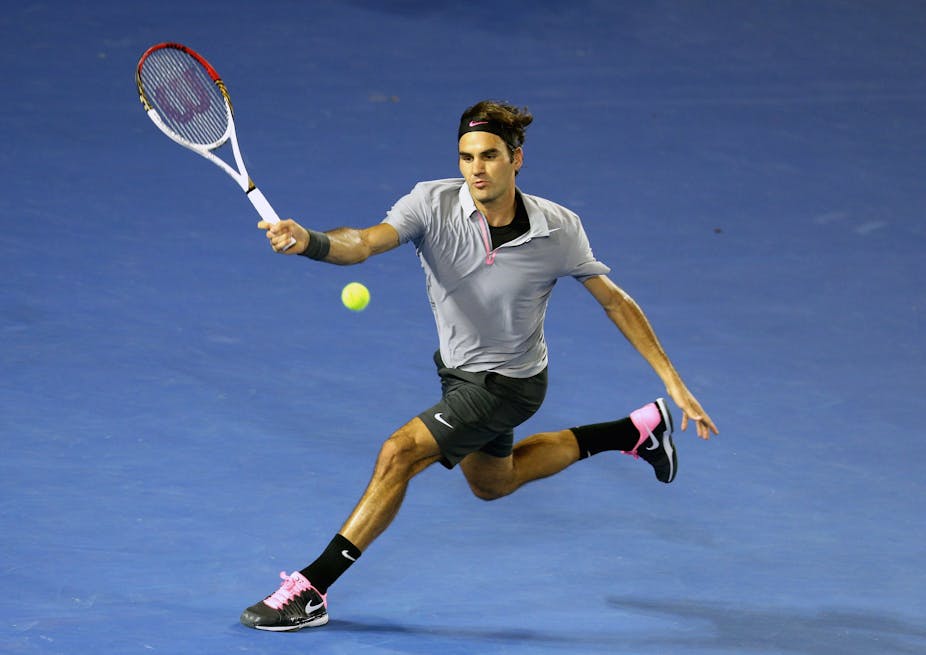
The Australian Open reaches its climax this Australia Day weekend, so it is opportune to reflect how it relates to the nation.
All the singles finalists will be overseas players, meaning that, to the dismay of sport patriots, Australia is more gracious host than active participant. But the current weakness of local tennis does not undermine the open’s formal recognition as an event of “national importance and cultural significance” by the government. For this reason, it is guaranteed to be shown on free-to-air television in the interest of allowing the widest possible citizen access, irrespective of whether they are tennis or, indeed, sports fans.
But as two million or so viewers absorb the men’s final on the Seven Network, it is worth asking how it got to be on their screens, and whether they are receiving the quality of coverage befitting common cultural property.
I have recently discussed the anti-siphoning regulations that prevent certain free-to-air sports events migrating to subscription television.
By way of brief example, the recently concluded one-day cricket series with Sri Lanka is part of a federal government-sanctioned list that requires “each one day cricket match involving the senior Australian representative team selected by Cricket Australia played in Australia” to be freely available via broadcast television. The justification for this intervention into the sports media market is the idea of national cultural citizenship: the notion that some events (all, currently, of a sporting nature) are integral to Australian identity.
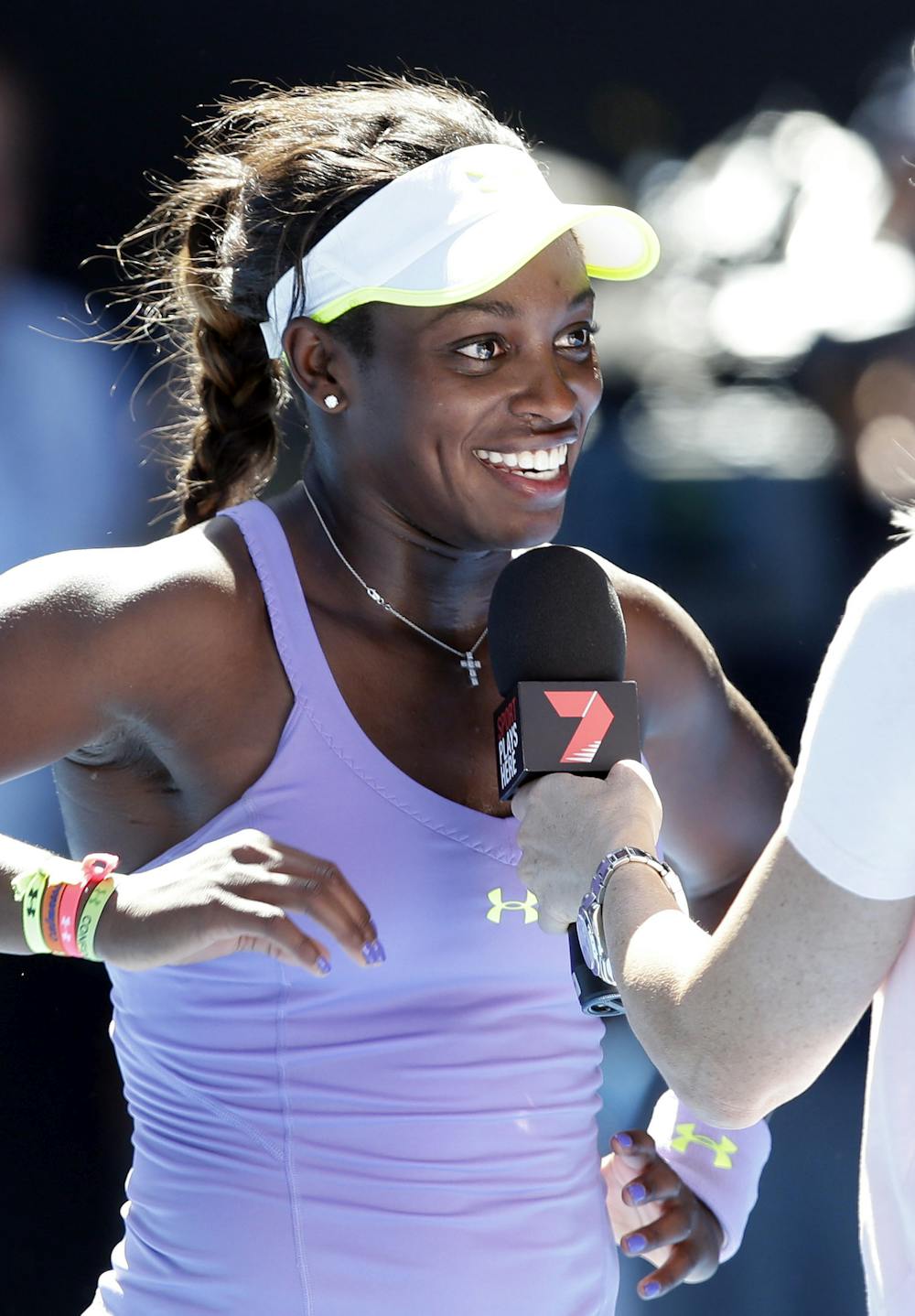
While the increasingly combative behaviour in federal parliament may make it feel like a spectator sport, Question Time does not make the anti-siphoning list. But it is governed by Parliamentary Proceedings Broadcasting Act 1946, which “requires the Australian Broadcasting Corporation (ABC) to broadcast proceedings of the Senate and the House of Representatives, including joint sittings”.
Televised sport’s anti-siphoning list comes under the Broadcasting Services Act 1992, which recognises the ABC or SBS as national broadcasters, but is actually much more interested in cashed-up commercial television broadcasting licensees. The economics of sport and media, and the government’s commercially-oriented regulatory framework, have progressively sidelined public service broadcasters with regard to major sport events.
As a result, these national moments have become the province of advertising-dependent broadcasters, with subscription television also getting a negotiated but limited slice of the action. As the billion-dollar deals for AFL and NRL - in which Seven and Nine were major players - premium sport rights are highly prized assets. But are the citizens in whose name they have secured a better bidding position being well served?
The current arrangements for watching sport on television mainly honour cultural citizenship rights in the breach, not the observance. The core market is essentially a captive one, with the popularity of live sport among large sections of the population incontestable.
In 2012 (an Olympic year), 51 of the top 100 free-to-air programs were either “listed” live sport programs or about sport. Among the rest were the cricket-focused drama Howzat! Kerry Packer’s War, and legions of competitive “reality” shows such as The Voice, The Block and My Kitchen Rules, whose live presentation has copied much from sport, not least by appropriating the climactic “Grand Final”.
Sport and television’s “match made in heaven” involves expensively trading broadcast rights to the advantage of both parties, with viewers’ interests coming in a rather poor third. Of course, sport organisations protest that they must maximise revenue for the health of the game, and broadcasters trumpet their customer focus. But they know the perishable commodity that is live television sport demands that they expose viewers to everything else that pays for the “right” to watch.
Hence, the viewer-infuriating practices of running advertisements over key sporting moments, the constant spruiking of often unhealthy goods, the insistent promotion of other network programs, and the aggressive alignment of the sport and betting industries. Viewers have little recourse other than to switch off or adopt avoidance strategies involving remote controls or awkwardly substituting public service radio for television commentary.
If this weren’t enough, sport’s crown jewels are commonly dulled by broadcast mediocrity. If you want HD with your Australian Open, you’ll need to subscribe to Fox Sports and watch it overnight on delay.
And for an event with a number of matches occurring at once on different courts, there is surprisingly little use of split screens, Seven’s digital channels, or of an integrated web-and mobile-based platform (like the BBC’s gold standard coverage of the London 2012 Olympics).
Then there is the perennial complaint of some execrable commentary, especially after the main matches of the day, when Seven’s producers assume that buffoonery will maintain aggregate viewing numbers.
Social media can provide a rallying point for protest, as with the Facebook page “Channel 9 Olympics Coverage sucks”, which currently has 25,504 “likes”. A petition with 2,286 supporters submitted to the International Olympic Committee demanded that 9 “review the policy that enables commercial broadcasters to more easily win broadcast rights at the disadvantage of non-advertising broadcasters such as the ABC who would be able to show events without constant advertisement”.
A revival of public service broadcasting of premium sport in Australia would have revolutionary consequences for the commercial sports media in substantially reducing rights revenue and audience advertising exposure.
Many citizen viewers would no doubt be delighted, but few federal governments would be game to take on big sport and big media. Instead, the government could turn its attention to exercising some quality control over the sport broadcasts that it regulates in the name of Australian culture.
The amount and type of advertising and promotion would be a promising place to start.