Domestic violence: how the law treats women who kill a violent partner

In the vast majority of cases where women kill their partners, there is a history of domestic violence. Isolation as well as often cyclical psychological and physical abuse means leaving home is not only difficult, but can be deadly. Almost half of all spousal homicides committed by men involved killing…

Ccvm4s3z-1343613377
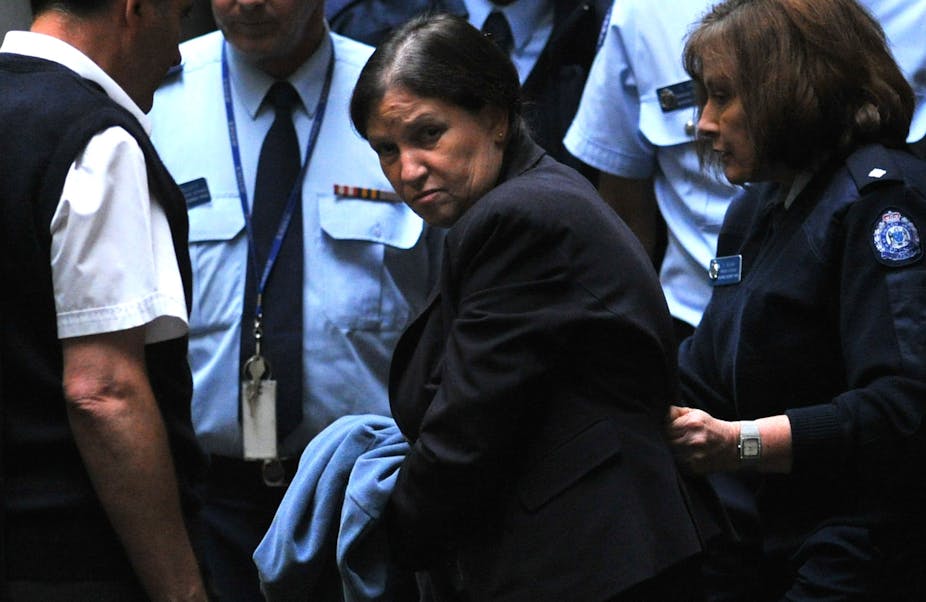
Eileen Creamer was sentenced to a minimum of seven years imprisonment for the defensive homicide of her violent partner. AAP/Julian Smith

In the vast majority of cases where women kill their partners, there is a history of domestic violence.

Isolation as well as often cyclical psychological and physical abuse means leaving home is not only difficult, but can be deadly. Almost half of all spousal homicides committed by men involved killing women who had left them, or were attempting to do so.

This can drive desperate women to attack or kill their partner. But when battered women fight back, the law does not always truly take into account the difficulty of their circumstances.

Murder or self-defence?

In court after a women kills her partner following domestic violence, a murder conviction or complete acquittal are the two least likely outcomes.

Analysis by the University of Tasmania’s Rebecca Bradfield looked at 65 cases between 1980 and 2000 in which a woman killed her male spouse after domestic violence. Only 6 cases or 9% resulted in a murder conviction.

At the other extreme, acquittals are nearly as rare: in Bradfield’s analysis, only 10 cases (15%) resulted in an acquittal. Most were on the basis of self-defence and usually the act conforms with the traditional common law model of an active struggle.

The case of Susan Falls, who was acquitted of killing her sleeping husband in 2010 after he threatened to kill her daughter, is a rare exception.

Many paths to a manslaughter conviction

The most common result in these cases is a manslaughter conviction, generally on the basis of either provocation or an absence of intent (34% and 35% respectively in Bradfield’s analysis).

But the way women might defend themselves against a manslaughter charge varies significantly between cases and across jurisdictions.

The partial defence of provocation is currently available in the ACT, NSW, Northern Territory, Queensland and South Australia. In contrast to self-defence which sees the killing as a justified response, provocation regards the reaction as understandable in light of the circumstances.

The criticism of this defence is that it tends to cater for cases where the “trigger” is a one-off angry encounter. It doesn’t adequately acknowledge a battered woman’s drawn-out experience of fear, despair and anger in an ongoing abusive relationship.

The partial defence of diminished responsibility (or substantial impairment of the mind) is available in the ACT, NSW, Queensland and the Northern Territory. However, this appears to be argued or accepted only rarely – there were no convictions on this basis in Bradfield’s analysis, and such cases only accounted for four out of 44 sentences imposed for manslaughter by substantial impairment in NSW between 1999 and 2010.

In NSW, South Australia, Victoria and Western Australia, excessive self-defence may also result in a manslaughter conviction. A genuine belief is sufficient to warrant a verdict of manslaughter, even where the person uses more force than a reasonable person would consider necessary in the circumstances.

What is seen as an overreaction (and unreasonable) by some may be appropriate in the context of the violence the woman has previously experienced. However, it appears to be rarely used, accounting for only two out of 36 sentences or 5% in NSW between 2002 and 2010.

Defensive homicide

In 2005, Victoria introduced the specific offence of “defensive homicide”, in an attempt to deal with battered women with more compassion.

After 13 convictions of men, in March 2011, Eileen Creamer became the first woman convicted under this charge and was sentenced to 11 years’ imprisonment, with a non-parole period of seven years. Shortly after, in April 2011, Karen Black pleaded guilty to defensive homicide and received a sentence of nine years. The third case involving a woman who killed her violent partner resulted in a sentence of seven years, with a non-parole period of four years and nine months.

Given that Bradfield’s analysis indicated that the median sentence for manslaughter in 55 cases around Australia where a woman killed her partner was three years and 10 months, the Victorian law has so far hardly achieved a more just response for battered women. Recent research has also confirmed that the model does not operate in the way originally envisaged and also offers limited transparency and accountability. The Victorian Government reportedly plans to change the law to minimise the risks of secret deals by prosecutors, although it is not yet clear the extent to which this will impact on female offenders.

In 2005, Victoria also introduced a new provision which now allows for a range of evidence about violence in the relationship in arguing self-defence, manslaughter or defensive homicide. These reforms put beyond doubt that the reasonableness of a battered woman’s actions must be evaluated by reference to “what it must really be like to live in a situation of ongoing violence”.

In February 2010, Queensland introduced an offence of killing for preservation in an abusive domestic relationship, which, like the Victorian offence, reduces murder to manslaughter. This is particular significant in the Queensland context, where murder carries a mandatory life penalty.

Importantly, the legislative definition of “abusive domestic relationship” recognises the victims’ reality of violence, since it acknowledges that “a history of acts of serious domestic violence may include acts that appear minor or trivial when considered in isolation.’ However, this section is yet to be tested in case law. Like defensive homicide in Victoria, it will still result in a manslaughter conviction, which may deny women in such circumstances true justice.

This needs to change and jurisdictions other than Victoria should adopt legislation which ensures engagement with the experience of battered women in assessing their claims to self-defence instead of manslaughter.

The need for expert evidence

There was no mention in the sentencing remarks for Creamer or Black of “battered women syndrome” (BWS), which has been recognised as a sub-category of Post Traumatic Stress Disorder.

It was considered by the High Court in the case of Heather Osland, and has been used in a number of Australian cases, including Falls.

The concept of BWS has been the subject of critique – including that it is something women “suffer” from – but has served to broaden the interpretation of what is “reasonable” and “self-defence”.

But expert evidence here is key, with or without reference to BWS, both in arguing defensive homicide and in trying for an acquittal.

In its report on defences to homicide, the Victorian Law Reform Commission advocated that judges and jurors need to learn what it is really like to live in a situation of ongoing violence.

Judges and jurors should be introduced to evidence from psychologists and psychiatrists, as well as those with extensive experience at the “coalface” of domestic abuse. This kind of evidence can contextualise what might otherwise appear to be a history of discrete incidents of violence.

Courts need to examine the history of evidence of what it is really like to live under the constant shadow of abuse, rather than just an atomised account.

Since a battered woman’s experiences are generally outside the common understanding of the average judge and juror, it is only with an appreciation of the battered woman’s reality that the reasonableness of her response can be assessed.

Articles also by These Authors

Sign in to Favourite

Want to follow The Conversation?

Sign up to our free newsletter to get the day's top stories in your inbox each morning, with a special wrap on Saturday.

Spinner
Help evidence based journalism become the norm and donate

Join the conversation

29 Comments sorted by

  1. Philip Dowling

    IT teacher

    It seems to me that the author seems to be suggesting that domestic violence by a male should be considered punishable by extra-judicial capital punishment.

    report
    1. DMK

      logged in via Twitter

      In reply to Philip Dowling

      I also have that impression, which I am not comfortable with at all.

      Obviously living with domestic abuse is devastating, but to give abused women a right to murder their husbands is obscene. It's effectively a green light to revenge killings.

      Yes our system could do more to help victims of domestic abuse, but to view homicide as a viable solution in a country that does not even use capital punishment for convicted murderers? That flies in the face of our entire conception of justice.

      report
    2. Lorana Bartels

      Senior Lecturer, School of Law at University of Canberra

      In reply to DMK

      I am sorry you have arrived at this interpretation.

      We are certainly not suggesting that homicide is a desirable response to the situation in which these women find themselves (or that they have 'a right to murder their husbands'), merely commenting on the law's response in such circumstances.

      It was beyond the scope of the present commissioned article to comment more broadly on what is required in response to domestic violence situations, but this would obviously include the provision of appropriate support for both women and men to prevent the ongoing cycle of violence. The need for more sensitive policing, to ensure victims of domestic violence do not feel they have no alternative to killing their assailant, was also highlighted in last night's Four Corners program (see http://www.abc.net.au/4corners/stories/2012/07/26/3554420.htm).

      report
    3. Scott Dunsdon

      logged in via Facebook

      In reply to Philip Dowling

      Actually I don't think the authors are recommending battered women should "get away with murder" at all. They are seeking a way for the courts to better reflect and provide -just and fair- punishment for abused women who kill their partners in desperation. Currently, based on the evidence provided, it appears the courts struggle to deal consistently with the issue.

      This quote from one of the papers linked to early in the piece I think is relevant:

      "when women choose the most obvious way to end a violent relationship, that is, by leaving it, they in fact place themselves at an increased risk. Thus, women victims are in a no-win situation. If they get out their chances of being killed escalate. If they kill their oppressor they will almost certainly find that the legal system is ill-equipped to understand the forces which have led to their predicament."

      from http://www.aic.gov.au/publications/previous%20series/lcj/1-20/beloved.aspx

      report
    4. DMK

      logged in via Twitter

      In reply to Lorana Bartels

      So can you please clarify what you meant when you said this:

      > "Like defensive homicide in Victoria, it will still result in a manslaughter conviction, which may deny women in such circumstances true justice."

      In what situations other than where her (or another's) life is in grave and immediate danger should an abused wife have access to a homicide defence that will reduce the crime to something below manslaughter?

      From what I can see, the current legislative framework makes sense. Victims…

      Read more
    5. Lorana Bartels

      Senior Lecturer, School of Law at University of Canberra

      In reply to DMK

      Hi DMK,

      It might be helpful if you have a look at the Hopkins and Easteal article (click on final word in the piece above for the ref), where they explain that self-defence needs to be interpreted more broadly to include what is 'immediate' for a victim of ongoing domestic violence.

      report
    6. DMK

      logged in via Twitter

      In reply to Lorana Bartels

      I read the article and am still uncomfortable with the argument. There does not seem to be any focus on what the actual outcome is: ending a human life with no legal process whatsoever.

      There is no doubt that domestic abuse victims find themselves in awful situations and that they may be driven to extraordinary acts in order to escape, but unless they are about to be killed, killing another is not warranted.

      I do not like the characterisation of "immediacy" that the article gives. Immediacy…

      Read more
    7. DMK

      logged in via Twitter

      In reply to DMK

      Also, allowing the defence on the basis of a possibility that the abuser could later kill the abuse victim is effectively pre-emptive punishment - another idea that our justice system is very weary of. The abuser does not deserve to die because of an act that they may commit in the future.

      report
    8. Philip Dowling

      IT teacher

      In reply to DMK

      I agree with these ideas.
      It is important to remember that where an "abuser" has been killed, he/she cannot provide an alternative view of the relationship, and so a defence team has a significant advantage.
      To say that "Since a battered woman’s experiences are generally outside the common understanding of the average judge and juror" is in my view a rather dangerous case of exceptionalism.

      report
    9. John Coochey

      Mr

      In reply to Philip Dowling

      I find the statement "Since a battered woman's experience is generally outside the common understanding of the average judge and juror" to be in conflict with the oft repeated assertion that a third of women have experience of domestic violence. If a third of women have first hand experience of something how could it be outside common understanding?

      report
    10. John Coochey

      Mr

      In reply to Lorana Bartels

      There is a basic tenet of the self defence justification that you cannot kill in self defence if you had the opportunity to flee. I recall one woman getting off when she had ambushed her husband previously building a sniper's nest and killing him from concealment. I think one word to describe the article would be misandry.

      report
    11. John Coochey

      Mr

      In reply to Lorana Bartels

      I find your phrasing "aw's response in such circumstances." a little unnerving suggesting the author's know more about each and every case in question than the courts. How do we know what the circumstances were? I recall a study by Dr Sarantakos of violent couples, in a quarter it was a male perpetrator, a quarter female and the remainder mutual. So after killing someone we did not like it would be easy to embellish selectively past history to justify the action. There is also the question of the…

      Read more
    12. Gil Hardwick

      Anthropologist

      In reply to Lorana Bartels

      In this Four Corners program, I watched it all the way through before replying further, it is clearly stated that the victim's mother had advised her against marrying the man concerned, and that over the period she had 13 children, everybody saying how much she loved them all, yet no reference whatsoever on whether he was their father, or father of only some of them.

      His ongoing accusations against her were that she was being a slut, a whore. It has to be asked what redress he had in his community…

      Read more
    13. Anthony Nolan

      Ruminant

      In reply to Scott Dunsdon

      I don't accept that all women victims of DV are always at increased risk of homicide after flight. Some women undoubtedly are at increased risk but not all women all of the time. Unless you have some fairly remarkable statistics to substantiate this claim. The key issue is to isolate which women are at increased risk of homicide on flight and this would depend on a profile of what sort of men are most likely to kill fleeing intimate partners.

      report
    14. Anthony Nolan

      Ruminant

      In reply to Gil Hardwick

      Gil Hardwick, your comments that:

      "...his ongoing accusations against her were that she was being a slut, a whore. It has to be asked what redress he had in his community for marital infidelity, and how his own complaints were to be heard. The image is of an increasingly angry and frustrated husband and father to whom nobody was listening..."

      ...are a gruesome reconstruction of the facts as presented on 4C that are as close to offering a cultural justification for homicide as the authors of this article are offering a legal justification for homicide.

      Appalling.

      report
  2. Gil Hardwick

    Anthropologist

    Far better to work toward avoiding these incidents, principally focussed on the gross gendering of men and their rejection from domesticity resulting in the now too common inability of many men to settle down and live comfortably in the domestic environment, and I should add the paradoxical attraction of many women to such men, than be perpetually bickering over the injustice of sentencing after the fact.

    As pointed out, Western Australia is the most redneck place in Australia, a cowboy police…

    Read more
  3. Comment removed by moderator.

  4. Robin Bell

    Research Academic Public Health, at University of Newcastle

    I note the definition of “family violence” (synonymous with domestic violence) in section 4AB of the Family Law Act (Cth) now includes acts such as repeated derogatory taunts, damaging or destroying property, causing death or injury to an animal, unreasonably denying the family member the financial autonomy that he or she would otherwise have had and unreasonably withholding financial support needed to meet the reasonable living expenses of the family member. Note these acts are all represented as discrete acts of violence.
    Should killing a male partner be viewed as less culpable if say the partner has been cruel to animals, called their female partner nasty names or didn’t give their female partner enough money?

    report
    1. John Coochey

      Mr

      In reply to Robin Bell

      Why limit it to male partners, should we allow honor killings when women do not make a sufficient financial contribution as occurs sometimes in India where promised dowries do not eventuate?

      report
    2. Robin Bell

      Research Academic Public Health, at University of Newcastle

      In reply to John Coochey

      The reason John is that the domestic violence dialogue in western societies is dominated by sociologists trained in the Duluth model. This is a framework for understanding domestic violence based on the primary principle that all domestic violence is an expression of male dominacy behaviour. That is, all men are perpetrators of violence on women and all women are victims.
      Thus these initiatives focus only on women victims, because only women can be victims.

      report
  5. Anthony Nolan

    Ruminant

    The alternative to killing one's oppressor is flight.

    Ensuring that those victims of DV who are convicted of the lesser charge of manslaughter still get a decent lagging is the best way of asserting that flight is preferable to killing. The state must provide far more resources to aiding flight. The alternative, which is what the authors of this article appear to be advocating, is legalised killing.

    This article is a very uncivilised contribution to the discussion because you don't escape barbarity by becoming as barbarous as your oppressor.

    report
  6. Anthony Nolan

    Ruminant

    On consideration it appears to me that offering a defence of murder whereby a murder charge is reduced to manslaughter subsequent to the court accepting that the perpetrator is in fact the victim of a DV relationship is totally unacceptable in the light of any notion of equality before the law. It is equivalent to the homosexual panic defence in so far as it creates a category of defendant whose subjectivity is exceptional, that is, not subject to normal 'reasonable person' tests.

    One category…

    Read more
    1. Anthony Nolan

      Ruminant

      In reply to Anthony Nolan

      Ah, hit the wrong button there so, to continue...

      however...the process of gaining an AVO was extended by the requirement to wait until the other party had committed a series of such incontrovertibly aggressive acts in front of independent witnesses that I was able to seek police support in the process. The abuser, as many women will appreciate, is entirely capable of creating the perception of being the victim while he or she simultaneously runs their campaign of intimate abuse. These were the conditions I experienced.

      In the light of this I therefore suggest that when the authors of this article call for 'expert evidence', presumably about how 'Stockholm Syndrome' operates, they had best as well demand expert evidence in order to educate the courts about the ways and means of people with personality disorders. Otherwise I reckon that the DV defence of murder actually offers an incentive for personality disordered women to kill their victims.

      report
    2. Lorana Bartels

      Senior Lecturer, School of Law at University of Canberra

      In reply to Anthony Nolan

      Anthony, thank you for sharing your experience. Obviously, in some instances, the woman is the abuser and the man is a victim (and in other instances,the partners are in a same-sex relationship). The legislation is couched in gender neutral terms, as it should be, and I do not accept the suggestion above by another commenter that all women are victims. In addition, yes, evidence before any court should include relevant information about the domestically violent partner, including about any personality disorders.

      In relation to your analogy to the HAD, I don't think this is at all on par, as the latter is a one off incident, rather than ongoing abuse and trauma. I would presume that in the HAD context, most people would have much more clarity of mind and alternative options.

      report
    3. Anthony Nolan

      Ruminant

      In reply to Lorana Bartels

      A very complex issue, to be sure. Without wanting to impose my meaning on your intentions I'll try and summarise what you are after: a category of terrorised DV victim who is so confused and fearful of their persecutor that they kill that person rather than take any other course of action to protect themselves and their family. As a corollary this requires recognition that they lack the capacity to flee but do have the capacity to kill and this in circumstances where there is not any immediate threat to them.

      If that is wrong or unfair to your argument please say so.

      report
    4. Lorana Bartels

      Senior Lecturer, School of Law at University of Canberra

      In reply to Anthony Nolan

      Hi Anthony,

      Yes, terrorised is an appropriate way to describe these victims. Note that in many instances the victim has tried to flee, or take other action (eg seekvan AVO), only to have the violence escalate.

      In terms of the lack of immediate threat, in many cases the trigger event (also referred to in the literature as the 'turning point') for the woman killing her partner is some form of violence of a different type to what has gone before, eg a threat to assault or rape the couple's (or woman's) child. Qualitative research points to women saying something to the effect of 'I could put up with what he was doing to me, but I couldn't let him do that to the kid'. I hope that contextualises this further.

      report