


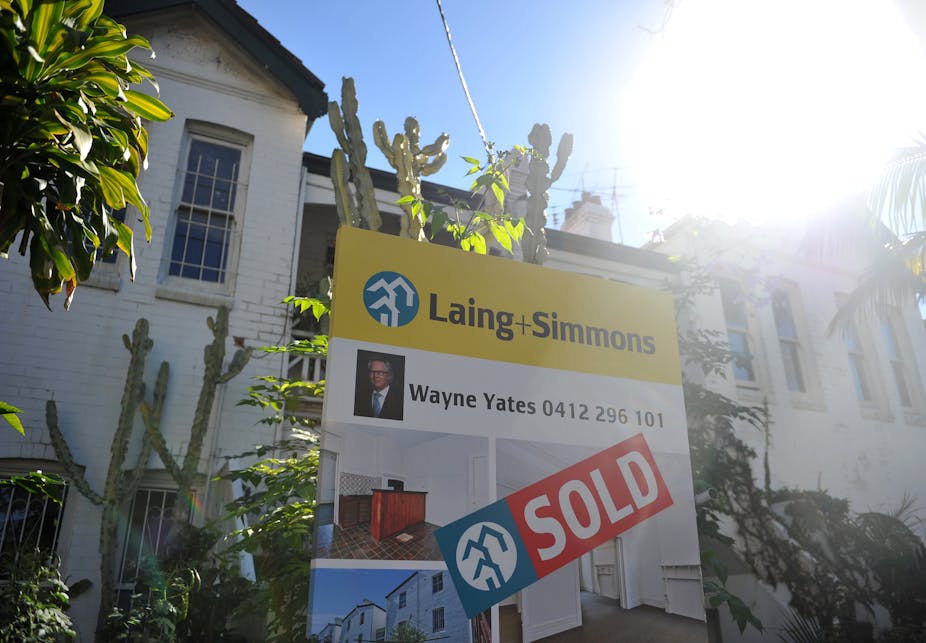
One question that arises on the topic of real estate is the scale of foreign investment and ownership in Australia. It is understandable that the public has concerns about such investment, especially as precious little information is available.
An interesting case arose late last year as Chris Vedelago, The Sunday Age’s property reporter, used a Freedom of Information Act (FOI) request in an attempt to gain some insight into this issue. The target of the request was the Foreign Investment Review Board (FIRB), a government agency tasked with tracking, reviewing and approving submissions for investments of all kinds in Australia.
The reason for the FOI request is that the FIRB is notoriously opaque (non-transparent) in ensuring detailed data on foreign investment are made available to the public. The annual reports provide some basic aggregate statistics but do not release enough information, for instance, the number of temporary residents who have purchased residential real estate and those who have violated investment regulations. Unfortunately, the FOI request revealed little as the FIRB refused to budge.
Vedelago noted this behavior to be political in nature, as discouraging disclosure of relevant details limits the backlash over the perception foreigners are purchasing large amounts of property, causing prices to rise and reducing the options of Australian citizens (though the majority who own property would benefit).
With Australia’s economy appearing relatively strong on the global stage, foreign investors may see the real estate market as attractive, especially given the rapid run-up in property values (approximately 130% adjusted for inflation and quality from 1996 to 2010). Foreign investors likely heed the comforting statements by mainstream commentators who claim housing prices are based upon underlying fundamentals, or intrinsic value.
From what little data the FIRB provides in its latest annual report (2010-11), a picture emerges that is at odds with the conception that a foreign horde is responsible for a flood of investment into the real estate market.
In financial year 2010-11, the FIRB considered a total of 10,865 applications, covering all industry sectors (agriculture, forestry and fishing; finance and insurance; manufacturing, mineral exploration and development; resource processing; services; tourism; and real estate). 4,606 (42%) were approved unconditionally, 5,687 (52%) approved with conditions, with the rest rejected, withdrawn or exempt.
The real estate sector was the primary target of investment, with 9,771 (96%) of all applications. While clearly dominating the number of applications, real estate investment comprised only $42 (23%) out of $177 billion of investment across all sectors. This is due to the relatively small nature of investment in real estate, compared to the larger scale of business investment. For instance, mineral exploration & development garnered the most investment at $55 billion, albeit with a tiny number of applications at 222 (2%). Next was the service sector at $48 billion with 117 (1%) applications, followed by the real estate sector.
The overwhelming majority of real estate applications were for the residential sector rather than commercial sector, at 9,556 (98%) and 215 (2%), respectively. While the number of applications is overwhelmingly lopsided, both residential and commercial sectors received the same amount of investment at $21 billion. Within the residential sector, 3,885 (41%) applications were for existing properties and the rest for purposes of property development at 5,671 (59%).
Interestingly, Victoria was the target for most real estate applications, at 4,398 (45%), with New South Wales coming in at a distant second with 2,598 (27%). Given Victoria’s 2.2 million dwellings, with an estimated 40,000 new dwellings constructed last year, the number of applications amounts to 11% of all new dwellings, a fraction compared to the total dwelling stock.
Clearly, the vast majority of ownership within the real estate sector is domestic. The top country by investment in this sector is the UK at $4.6 billion, followed by China at $4.1 billion, and the US in third place with $3.4 billion. China headed the pack with the largest number of applications across all sectors, at 5,033 (47%) of the total.
Chinese investors may perceive Australia’s property market as a store of wealth, especially considering the relative stability of the Australian government and economy. The steadily growing Chinese economy has produced 535,000 millionaires as of 2010, outnumbering Australia’s 193,000. The growing ranks of these high net worth individuals could be a driver of foreign investment into Australia, though this cannot be confirmed without comprehensive data from the FIRB.
As noted, this has resulted in concerns about foreigners “interfering” in the health of the property market. The evidence, however, shows that foreign investment in real estate is relatively small. Apprehension of Chinese influence (the “yellow peril”) is unwarranted, as the US and UK are collectively responsible for double the amount of Chinese investment.
It is impossible to mount a case that foreign investment is a driver of increasing housing prices. This is no different to the National Housing Supply Council suggesting that homeless people and caravan park residents are a cause of an undersupply, pushing up prices. The blame game in the US says that the Chinese were partially responsible for the housing and financial crises on the basis that the Chinese government’s purchases of US bonds kept interest rates artificially low, setting off the housing boom.
Blaming foreigners for astronomical prices is nothing but a scapegoat for the policies enacted by government on behalf of bankers and landowners that makes housing unaffordable. Those who are discontented with the current states of affairs should focus their attention on our own government rather than searching for foreign influences.