Drug prohibition: moving to Plan B

Australia21, of which I am one of the directors, released its second report on drug prohibition on this morning. The report calls for a redefinition of how we deal with drugs to primarily a health and social problem. Our first drug report, released in April, concluded that the war-on-drugs approach…

3xn86z24-1347157896
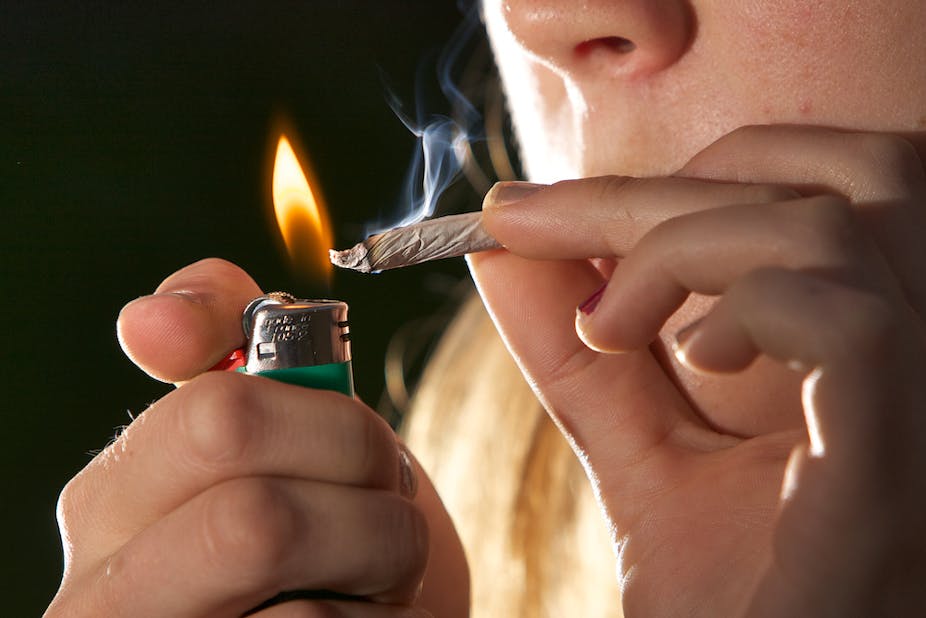
It’s difficult to explain why up to three million Australians are better off purchasing cannabis from criminals rather than regulated sources. Chuck Grimmett

Australia21, of which I am one of the directors, released its second report on drug prohibition on this morning. The report calls for a redefinition of how we deal with drugs to primarily a health and social problem.

Our first drug report, released in April, concluded that the war-on-drugs approach had failed comprehensively. It provoked a vigorous media response in which few commentators challenged the notion that heavy reliance on drug law enforcement had failed.

We invited prominent Australians who support a hardline approach to attend a meeting but all those approached declined. When someone of the stature of Mick Palmer, former commissioner of the Australian Federal Police, acknowledges that despite improvements in drug law enforcement, there has been little impact on the drug market, the debate has entered a new stage.

This second report builds on the conclusions of the first one, attempting to provoke a national discussion about what our best options might be. There are several reasons why this discussion is now different from previous debates about drug policy.

Winds of change in the Americas

Vigorous debates about drug policy are now taking place in Europe and the Americas. The murder of 50,000 Mexicans since President Felipe Calderon declared a war on drugs in December 2006 has brought that country to a precipice. Two previous Mexican presidents have called for legalisation and the current one has called for use of “market mechanisms” – presumably a euphemism for legalisation.

Latin America is being torn apart by pressure from the United States to stop drugs heading north to the biggest drug market in the world. President Barack Obama was forced to bow to pressure from Latin America in April and acknowledge (in an election year) that it was entirely appropriate to debate the legalisation of drugs, although he added this was something the United States would never do.

In a world-first, Uruguay’s president has sent a Bill to legalise cannabis to the legislature for consideration. At the Summit of the Americas in Cartegena, Colombia, earlier this year (14 to 15 April), the United States and Canada were isolated on drug policy. Latin America now wants change.

911 Bail Bonds Las Vegas

The politics of drugs also seems to be changing in the United States. Primaries for a Democratic Congressional district in El Paso, Texas and a contest for the Oregon attorney general were both won by younger candidates supporting drug law reform, defeating older incumbents who supported a war-on-drugs approach.

And, the 2011 annual Gallup poll in the United States, asking “do you support the legalisation of marijuana?” reported that supporters (50%) now outnumbered opponents (46%). In 1969, 12% supported while 84% opposed legalisation of marijuana. Medical marijuana is now available in 17 states (and the District of Colombia).

The situation in Europe

There are now more countries providing models for how reform can be implemented. The Netherlands, Switzerland and Portugal have shown that reforms can be carried out without breaching international drug treaties, and that an approach with more emphasis on health and social measures can produce better outcomes and achieve strong community support.

In contrast, Sweden is one of few European countries still heavily reliant on severe punishment and drug law enforcement. It claims a drug-free nation as the over-arching goal of its drug policy and rejects safer injecting facilities and heroin assisted treatment.

Sweden still only has the same two needle syringe programs that were established 25 years ago. And it has the eighth-highest drug overdose death rate in the European Union while the Netherlands has the 19th and Portugal the 25th. Overdose deaths have been increasing in Sweden, are stable in the Netherlands and falling in Portugal.

Still, the country seems to be slowly moving away from its hardline approach and gradually becoming more like other European Union countries. And it takes drug treatment seriously, as do all countries that have started reforming their drug policy.

Coinciding with a major expansion and improvement of drug treatment in Zurich, Switzerland, the estimated number of new heroin users declined from 850 in 1990 to 150 in 2002 with decreasing numbers of heroin overdose death, HIV infections and crime. The quantity of heroin seized by police also declined during this period suggesting a shift from the black market to the white market.

Time to make the move

Sooner or later, one side of politics in Australia will realise that drug law reform could be a vote-changing issue for young people. With the current and two previous presidents of the United States, and the current prime minister of Australia, and the current and previous leaders of the Opposition all known to have tried cannabis, it’s increasingly difficult to explain why two to three million Australians are better off purchasing cannabis from criminals, corrupt police or outlaw motorcycle gangs than obtaining the same drug from regulated sources.

Drug policy is a difficult issue for politicians. But the longer they delay reform, or even discussion of reform, the more difficult it’s going to get.

Join the conversation

64 Comments sorted by

  1. Mark Gregory

    Senior Lecturer in Electrical and Computer Engineering at RMIT University

    Good article on why we should legalise drugs. We should also be angry with the government for plain paper packaging on cigarettes and we should be very angry that Tasmania is looking to incrementally increase the legal age for cigarettes to bring about a generation that do not have access to cigarettes. How could they think this is a good way to remove one of the blights on society? Surely they have read the reports produced by Australia21 and realised that banning cigarettes will drive them underground…

    Read more
    1. Juan Vesa

      student

      In reply to Mark Gregory

      cannabis has not been shown to cause cancer. in fact, studies have shown that cannabinoids have anti-cancer properties. and there has never ever been a death from cannabis use. not one.

      report
    2. Mark Gregory

      Senior Lecturer in Electrical and Computer Engineering at RMIT University

      In reply to Juan Vesa

      Hi Juan, I'm sure your correct. Car accidents caused by people on cannabis must have been because of aliens rather than a driver seeing stars. And the people who overdose when they're on cannabis and someone offers them a pill or two and they have no control and cannot say no. And those that get violent when high and hit women and children, well that must be the fault of the people who were bashed. I have seen all of these things. Maybe you will too in time.
      regards, Mark

      report
    3. john. b

      logged in via Twitter

      In reply to Mark Gregory

      The author of 'Reefer Madness'? Who knows. A glimpse of what we'll be up against though. Oh joy.

      report
    4. john. b

      logged in via Twitter

      In reply to Juan Vesa

      Uh oh. Good point. I may have been had here.

      report
    5. Albert Haran.

      Retired

      In reply to Mark Gregory

      All these things you mention are also associated with the consumtion of alcohol ( actually more so ) so I assume you would like to make the consumtion of alcohol a criminal offence also, personally I feel it would be better to leagalise ALL drugs so as to put its consumtion in the open where appropriate health/ community concerns could be adressed ( by the tax raised due to its consumption ) which would also take the income away from the drug suppliers of today who use their rivers of gold to usurp the legal and democratic system of our society.
      Thanks

      report
    6. Emma Anderson

      Artist and Science Junkie

      In reply to Mark Gregory

      On the subject of smoking cigarettes / tobacco, I'm probably a typical case from my generation. I came from a household that was anti-tobacco. When I was in primary school Harold the Giraffe and the Life Education van came and told us all about the evils of tobacco and that intestines were very long. I promised I would never smoke. And then, despite my better judgement, as a teenager a peer offered me a cigarette and I smoked. I vowed never to do it again, but I did. Then I smoked for years…

      Read more
    7. Emma Anderson

      Artist and Science Junkie

      In reply to Emma Anderson

      I should also add that tobacco is more addictive than heroin and although people do get addicted to marijuana it's often when it's mixed with more addictive substances like tobacco (and even heroin in some cases).

      Were marijuana cheaper, legal and available in pure forms, that is, unadulterated by other substances, it would not be a forbidden fruit and although some people would be addicted to it, many people wouldn't, and like others have said, they wouldn't have to turn to alcohol as often which does a shit load of damage in the community - probably more than the other drugs combined.

      report
    8. john. b

      logged in via Twitter

      In reply to Emma Anderson

      "You tell a teenager no no no and give them obstacles to what they can and can't do and it's not something to be obeyed, it's a challenge to be overcome, a way to assert independence, identity and craft one's own path."

      I agree. This reminds me of an article by the former US Surgeon General who suggested a drop in cannabis usage when a medical marijuana law was passed.

      "According to the official California Student Survey, teen marijuana use in California rose steadily from 1990 to 1996, but began falling immediately after the medical-marijuana law was passed. Among ninth graders, marijuana use in the last six months fell by more than 40 percent from 1995-96 to 2001-02 (the most recent available figures)."

      I wondered if this was the opposite of no no no. If it's yes, they lose interest?

      http://www.maps.org/media/pj032804.html

      report
    9. aligatorhardt

      logged in via Twitter

      In reply to Mark Gregory

      Mark, your descriptions of cannabis users are unbelievable. I suspect a stereotype of all drug users is causing the exaggerated conclusions. When cannabis decriminalization is proposed it does not include other drugs. Each substance must be evaluated on it's own merits or faults. Cannabis is unlikely to cause severe driving behaviors. Cannabis has legitimate medical uses. There has never been a lethal "over dose".

      report
    10. Dianna Arthur

      Dianna Arthur is a Friend of The Conversation.

      Environmentalist

      In reply to Mark Gregory

      I agree with the other commentators, Mark Gregory, what you are describing is the behaviour of a drunk. People on cannabis rarely get violent, if at all. There would have to be another drug in the mix - say some form of amphetamine for a dope smoker to become aggressive.

      report
    11. Dianna Arthur

      Dianna Arthur is a Friend of The Conversation.

      Environmentalist

      In reply to Emma Anderson

      Emma

      Cannabis has been demonised for so long, for reasons that were purely market driven to begin with (https://raoulduke1989.wordpress.com/2011/05/02/mini-thesis-the-smear-campaign-against-cannabis-u-s-a-1930s/) and now have resulted in the herb as being perceived as heinous as heroin.

      Cannabis is a far safer drug than either the legal tobacco or alcohol. It does not even require smoking, can be used in cooking or inhaled using a vaporiser.

      report
    12. Dianna Arthur

      Dianna Arthur is a Friend of The Conversation.

      Environmentalist

      In reply to Emma Anderson

      Emma

      Your description of how you became addicted to tobacco resonated with me also. I come from a non-tobacco smoking family. Although my father was an alcoholic - so have had first hand witness as to how a legal drug could turn a delightful witty man into snarling creature his family were too afraid to approach. He was not physically violent, but verbally did much damage.

      I got hooked on nicotine, because of the dumb, mostly Australian, habit of mixing cannabis with tobacco - to make it go…

      Read more
    13. Danny Hoardern

      Analyst Programmer

      In reply to Mark Gregory

      G'day Mark

      Have a look at this study which found that US states that have legalised medical marijuana have seen a 9% reduction in road fatalities compared to non-medical marijuana states.

      It comes down to: Do you want 9% fewer road fatalities or not? Which side are you on? I hope this is new knowledge to you and you were unaware of this study.

      https://theconversation.edu.au/fewer-road-deaths-after-medical-marijuana-legalised-4561

      If this is new knowledge to you, I hope for the sake of humanity that your ethical standpoint on this issue swings toward reducing road fatalities.

      Peace :)

      report
    14. Mark Gregory

      Senior Lecturer in Electrical and Computer Engineering at RMIT University

      In reply to Juan Vesa

      Hi, I read recently that marijuana use has now been linked to testicular cancer. I also read recently that marijuana use over prolonged periods reduces IQ. Both stories appear on The Conversation and elsewhere.

      With regards to the latter, I have witnessed several people turn into near vegetables through prolonged cannabis use.

      With regards to a drop in road fatalities by 9% after US states legalised medicinal marijuana - is this coincidence, the introduction of better cars, more people wearing…

      Read more
    15. Danny Hoardern

      Analyst Programmer

      In reply to Mark Gregory

      "I read recently that marijuana use has now been linked to testicular cancer"
      The sample size of the study you mentioned is too small (data could have been cherry-picked) and it is well known that cannabis has anti-cancer properties.

      A hypothetical study investigating the ‘link’ between Panadol and headaches would conclude that those that use Panadol have more incidence of headaches than non-Panadol users.

      The same study could be applied to any substance or procedure that can kill cancer…

      Read more
    16. Danny Hoardern

      Analyst Programmer

      In reply to Danny Hoardern

      Evidence that cannabis higher in CBD is safer (and therefore, regulated cannabis is safer):

      1. http://www.ncbi.nlm.nih.gov/pubmed/21592732
      2. http://www.ncbi.nlm.nih.gov/pubmed/16612464
      3. http://www.ncbi.nlm.nih.gov/pubmed/20218784

      There are more references out there accessible via your favourite search engine...
      Here's a nice video if you don't feel like reading abstracts:

      http://www.youtube.com/watch?feature=player_embedded&v=T2cAFRAX3Gs

      Note that in the video, they refer to "skunk", which contains zero (or little) CBD.

      report
    17. Evert Rauwendaal

      logged in via Facebook

      In reply to Mark Gregory

      A few more studies:

      "cannabinoids counteract prostate carcinoma growth" http://www.ncbi.nlm.nih.gov/pubmed/22594963

      "the non-cannabimimetic constituent of marijuana, cannabidiol, exerts clinically relevant antipsychotic effects that are associated with marked tolerability and safety, when compared with current medications." http://www.nature.com/tp/journal/v2/n3/full/tp201215a.html

      Just how long is the TGA going to ignore the fact that the cannabis plant has therapeutic properties that could save lives?

      report
    18. Emma Anderson

      Artist and Science Junkie

      In reply to Dianna Arthur

      Your description of the mixing tobacco with cannabis was actually what I had in mind but didn't say. It's a common thing amongst cannabis users in Australia that started with cannabis first. Long after they stop smoking the weed, it's a pack a day of nicotine (and sometimes alcohol too).

      Clearly the cannabis is a related factor in the addiction process, particularly where people moved from chronic cannabis to alcoholism. But I can pretty much state outright that whilst it's possible to not…

      Read more
    19. Emma Anderson

      Artist and Science Junkie

      In reply to Dianna Arthur

      Hey Dianna apologies I saw this comment after I made the reply to the other one....it appears you are already familiar with what I was referring to.

      Yes, and one of it's famous uses is in cookies and brownies or as a herb in pasta. :P I wonder which drugs are having the effect in that case, the cocoa/ THC? Double cannabinoid dose it may seem. Cocoa is legal.

      Speaking of which there are situations where cannabinoid consumption may be healthy, like Parkinson's disease. I wonder how many side effects are in hash brownies compared to L-Dopa tablets?

      report
    20. Emma Anderson

      Artist and Science Junkie

      In reply to john. b

      Maybe. But it is also correlative, not casuative. I don't know if it's just a coincidence, like for example the number of characters on this comment may be identical to the number of non-flare generating sunspots that happened to occur at the same time. Totally unlikely that I have anything to do with solar activity ;)

      Still there is a purported psycho-social mechanism here so it's not impossible. But at the same time there are kids who sell their Ritalin on the playground. That's legal…

      Read more
  2. Gavin R. Putland

    logged in via Twitter

    "Market mechanisms" need not include legalization. To discourage use of illicit drugs, we need retail ("street") prices to be high. To discourage trafficking, we need upstream ("wholesale") prices to be low, so that concealable quantities are not valuable enough to be worth trafficking. Law enforcement is a bottleneck in the supply chain, raising prices downstream and lowering prices upstream. To meet these requirements, law enforcement must be concentrated on RETAIL SALES. Enforcement further upstream…

    Read more
    1. Glen Daly

      Retired

      In reply to Gavin R. Putland

      Gavin,I've never been called for jury service due to occupational exemption.But I can assure you I would never go soft on a drug offence.I was born in the morning,so I've been told by the person who should know,but not this morning.I've seen the damage that drug abuse does to people.Everything from antisocial behaviour to death.The "they aren't my drugs" excuse is about as believable as a fairy tale.

      We have more than enough problems with legal drugs without legalizing more of the garbage. This includes the obvious culprits,alcohol and tobacco,but also mind altering prescription drugs.The "shrink" fraternity as well as GPs are remarkably relaxed about doling this stuff out to everybody from toddlers up.

      If you want a full on drug dependent society just legalize the bloody lot and see what happens.You are guilty of gutless and irresponsible attitude and behaviour.Not a chargeable offence,unfortunately.

      report
    2. Gavin R. Putland

      logged in via Twitter

      In reply to Glen Daly

      `The "they aren't my drugs" excuse is about as believable as a fairy tale.'

      May you be judged by your own rules, sir.

      report
    3. In reply to Glen Daly

      Comment removed by moderator.

    4. Danny Hoardern

      Analyst Programmer

      In reply to Glen Daly

      "We have more than enough problems with legal drugs without legalizing more of the garbage"

      A logically equivalent statement goes as follows: "We should never legalise safer alternatives to alcohol"

      "mind altering prescription drugs"

      All drugs are mind altering: coffee included. There are many benefits of drugs, people that take any sort of drug do it for their benefit (unless they are suicidal).

      I encourage you to read about Cannabis, neurogenesis[1] and hyperpriming[2-3] and keeping in mind cannabis has been used since first recorded history, ask yourself:

      Could cannabis be responsible for the evolutionary advantage humans have over other species?

      1. http://www.jci.org/articles/view/25509
      2. http://www.ncbi.nlm.nih.gov/pubmed/20122742
      3. http://mindhacks.com/2010/03/09/how-cannabis-makes-thoughts-tumble/

      report
    1. john. b

      logged in via Twitter

      In reply to Riddley Walker

      I don't like this part though. And no mention of getting cannabis out of the "illegal" category.

      "The Australian Greens believe that:

      1. The Australian Greens do not support the legalisation of currently illegal drugs.

      report
    2. Riddley Walker

      .

      In reply to john. b

      You are entitled to your opinion, Mr. Dawgs.

      There is a difference between legalising and decriminalising, which is not specifically discussed in the Greens policies or the article above, but that is what we are talking about here, IMO.

      It is rare to find any Party that has a policy platform entirely matching one's own position. Look at poor old M. Turnbull, for example!

      report
    3. john. b

      logged in via Twitter

      In reply to Riddley Walker

      @Mr Walker. Not supporting legalisation sounds pretty specific to me. I am aware of the difference. I want it legalised and taxed like many others and this is not so much a lone position. Decriminalising doesn't go far enough.

      report
    4. John Newton

      Author Journalist

      In reply to john. b

      There s much contention within the Greens on this topic: the NSW Greens, for example do not support the Australian Greens position.

      It is also a terribly complex problem: what would the supports of legalisation (of which Iam tentatively one) do about ice?

      report
    5. Felix MacNeill

      Environmental Manager

      In reply to Riddley Walker

      Yeah, I was going to say, excellent as Alex's article is, his comment that: "Sooner or later, one side of politics in Australia will realise that drug law reform could be a vote-changing issue for young people." slightly misses the point that there is a third - once again, more rational - side to Australian politics!

      report
  3. john. b

    logged in via Twitter

    Nearly everyone I know smokes dat hooch mun. I think legalising cannabis will do a lot to address the alcoholism in this country, especially for the indigenous. But we push people to all the poisons instead. If you want to "relax" in this country, it's gotta be a poison. A nanny country with gutless politicians. I don't have much hope. When Bob Carr says we have had 40 years of wrong drug policy, and then walks away without any ammendment, it's not hard to be concerned re hope for change.

    Congrats and thanks for the work on it Alex. Would you dare to answer this question? When, in your opinion, will cannabis be legalised? I don't worry about the harder drugs as much. I think (a) will largely fix (b). Will you give an opinion? 1 year? 15 years?

    report
  4. Dale Bloom

    Analyst

    For many drug users, I tend to think the drug scene has become a part of their social scene. They have their friendly source, and they know how they can get the best deal etc.

    It is flirting with danger, a chance to act cool, and peer group pressure could also be a factor in drug taking, so I like the idea that certain drugs are simply made available through regulated sources.

    The devil would be in the detail, and how the regulated sources are to be run would need to be detailed.

    It would be an excellent opportunity for social science in Australia to show they can get something tight.

    report
  5. Evert Rauwendaal

    logged in via Facebook

    Some people argue that the best way to prevent drug use is to exterminate all traces of cannabis, coca and poppy plants from the face of the planet by bombing the land with pesticide, executing the growers and locking the rest (the people who consume them) in cages.

    These people are extremists and totally insane. History will remember them as monsters.

    report
    1. Philip Dowling

      IT teacher

      In reply to Evert Rauwendaal

      Pesticides don't kill plants. Herbicides do.
      When not drugged, is it possible for you to produce a coherent sentence with perhaps the merest suggestion of logic included?

      report
    2. Robert Tony Brklje

      retired

      In reply to Philip Dowling

      Your comment would simply be described as an ad ho minim attack, attempt to lessen the argument by attacking the person making it.
      There are better way of using police resources in pursuing crimes against people than in drug use. The evil drug dealer was largely a Hollywood creation to act as the antagonist in Hollywood cop movies and from there entered the public psychic and police enforcement, with the police no longing keeping the peace but actively at war with sections of the community.
      Right…

      Read more
    3. Evert Rauwendaal

      logged in via Facebook

      In reply to Philip Dowling

      Dear Philip

      Thanks for taking the time to respond and adding your '2 cents' (which I'm going to round down to its actual value - zero).

      This technicality doesn't change the fact that chemicals are being used to bomb rainforest, farms and people (including children) as part of the drug war.

      Information on the impact this is having is freely available online:

      http://vimeo.com/3869895

      http://www.ihra.net/files/2011/08/08/Children_of_the_Drug_War%5B1%5D.pdf

      report
  6. Mike Parent

    logged in via Facebook

    Legalize and Regulate!
    “THE CHILDREN”
    If they really cared for the children they’d legalize and regulate marijuana. If they really wanted to keep any substance out of the hands of “The Children” they first must take control of distribution away from black market dealers. They (The US Govt.) haven’t accomplished that in 40+ years at a taxpayers cost in the hundreds of billions. It’s time to treat marijuana as we do alcohol. My 27 year old daughter still gets carded when she buys alcohol, yet your 13 year old can buy anything the black market dealer has for a price whether it be money or “something else”.
    FACT: Your kids have a better chance dying at the hands of someone enforcing marijuana laws than they do from ingesting it. (ZERO %).

    LEAP member, NYPD, ret.
    http://www.pitt.edu/~ugr/Hrych2.pdf Scientific Proof Marijuna is not a Gateway drug!

    http://www.cbsnews.com/8301-504763_162-57456999-10391704/medical-marijua...
    wont-boost-teen-pot-use-study-finds/

    report
    1. Mike Parent

      logged in via Facebook

      In reply to Philip Dowling

      The people who distribute them, to the kids aren't careful to be sure the pills are administered properly. Or people can get a Dr to prescribe it, as they do with other drugs. How big is the Ritalin Black Market? TIA
      Ritalin and Cocaine: The Connection and the Controversy
      learn.genetics.utah.edu/content/addiction/issues/ritalin.html
      Ritalin is currently prescribed to approximately six million people in the US. 75% of these are children, with boys receiving Ritalin about four times more often ...

      report
    2. Emma Anderson

      Artist and Science Junkie

      In reply to Philip Dowling

      One kid in the school yard with a Ritalin prescription sees an opportunity for popularity by big noting the fact that they have something similar to a forbidden fruit (speed). They may also have an opportunity for a little pocket money on the side. They sell the Ritalin to the other kids for the exact same reason as the other kids buy them - they're not supposed to, and it's an experimentation with a social benefit.

      Were speed legal, or at least so mundane as to not be worth the effort, the Ritalin school yard black market would disappear.

      report
  7. Gart Valenc

    Analyst

    I agree with you to a large extent, Alex. Admittedly, there is a discussion to be had regarding the specifics of Uruguay’s initiative and in a broader context, about the impact such a model might have on other countries seeking alternatives to current drugs policies.

    At this juncture, though, one thing is crystal clear: any chance of finding and implementing alternative policies will be wasted unless producing and transit countries in Latin America receive a clear and unambiguous support from…

    Read more
  8. Gavin R. Putland

    logged in via Twitter

    Drug syndicates toast the Qld CMC for taking out a rival, saving them the expense of hiring a hit squad to do the same job: http://is.gd/H2gQfm .

    report
  9. Jack Arnold

    Director

    The solution is already proven in the UK but abandoned in the mid-60s, cynics claim to allow the illicit market to develop.

    For pharmaceutical quality hard drugs the UK hospital system held a register of users at hospital pharmacies where addicts attended & ingested their daily dose of illicit drugs or alternatives. Consider the present cost of policing drug enforcement & so these funds could be transferred to run this UK system in Australia. of course, there will be elements in policing that find their "investments" are threatened & may inhibit this sensible change of policy.

    report
  10. Peter Andrew Smith

    Retired

    Harm minimization requires pharmaceutical quality control which is not available through an unregulated illegal market.

    report
    1. Philip Dowling

      IT teacher

      In reply to Peter Andrew Smith

      Legalization for sixteen year olds?
      So high school teachers and university lecturers try to teach students who are off their faces. Such a progressive suggestion.
      I will agree with this approach as soon as I can afford a tank to drive to work.

      report
    2. Danny Hoardern

      Analyst Programmer

      In reply to Philip Dowling

      Wouldn't it be great if we could all drive tanks to work! No wait, probably not.

      I think sixteen is too young, it should be either 18 or 21. The justification for the 21 limit: give young adults ample time for their brains to 'set', plus giving them an un-destracted chance at university.

      report
    3. Emma Anderson

      Artist and Science Junkie

      In reply to Danny Hoardern

      Actually if you want the brain to set (which it doesn't exactly, you see it's got plasticity...so we'll go with the Finish Growing idea) 25 is probably a better age.

      But in terms of the law, 18 year olds are adults who can do all the things other adults do. 16 year olds are given some rights but perhaps more responsbilities (we can be taxed and work before we can vote). When the law said 21 year olds could drink 16 to 20 year olds snuck it from their parent's cabinet or got an older person…

      Read more
    4. Danny Hoardern

      Analyst Programmer

      In reply to Emma Anderson

      Thanks Emma

      Maybe 18 is best to be consistent with alcohol then; this will also reduce the size of the black market.

      I started consuming pot when I was 20 and turned out just fine (apart from one side effect of having irrational urges to post things in comment sections....).

      A good reason to have the age limit consistent with alcohol comes from this study which found that alcohol is twice as harmful than cannabis:

      Popular intoxicants: what lessons can be learned from the last 40 years…

      Read more
  11. Peter Hindrup

    consultant

    Thanks Alex. As you have for so long, you continue to make sense.

    The beginning of demonisation of drugs was immediately after the abolition of prohibition in the early 30's in the US when a huge enforcement corps was effectively out of a job.

    The non-nonsensical ‘Reefer Madness’ set the scene for the launching of the US war on drugs. Like most wars launched by the US it caused much death and misery and was a total failure unless of course you subscribe to the belief that the US has benefited…

    Read more
  12. Philip Dowling

    IT teacher

    How many of the people responsible for this report were drug tested before it was released?
    It might help to establish motivation.
    After all a well-known ex High Court judge was breaking the law until the law was changed.

    report
    1. Danny Hoardern

      Analyst Programmer

      In reply to Philip Dowling

      Those who know that the law is wrong, and those who are aware that our law system is not static and changes on a weekly (daily?) basis, will continue traditions that have been existence since first recorded history - they will continue using useful drugs with a guilt-free conscience.

      I'm sure there was much drug taking during the creation of this report, as coffee has many known benefits, and alcohol is a socially acceptable means of celebration.

      report
    2. Emma Anderson

      Artist and Science Junkie

      In reply to Danny Hoardern

      Add to that the panadol when the computer crashed in the middle of statistical analysis, the chocolate cake eaten with the coffee most likely and possibly a dozen other psychoactive substances naturally occurring in food, as by products of industry and pollution and the general effects of the environment on human beings.

      We're basically stoned just breathing....what kind of stoned...that's the question!

      report
  13. Keith Thomas

    Retired

    Alex

    I would agree with you that the approaches, tactics and strategies we associate with the "war on drugs" have failed. Can you enlighten us as to why the police have not been as effective as those politicians and lobbyists who write the legislation, establish them, fund them and support them would like?

    Is it because of police corruption (due to the large payoffs available because these drugs are illegal and trafficking in them is highly profitable)?

    I still find myself going instinctively for the simple "ban 'em" approach, thinking not only of the harm to the consumers but to those others whose lives are affected by them. But I am willing to keep my brain open to approaches that differ from those my gut tells me are the best.

    report
    1. Peter Hindrup

      consultant

      In reply to Keith Thomas

      Keith:
      ' still find myself going instinctively for the simple "ban 'em" approach,'

      But it obviously hasn’t worked -- anywhere!

      That there is huge money involved in keeping the status quo, without visiting illegalities, is obvious.
      All industry involved in liquor can do without the competition, 80 something percent of criminal offences in Australia involve drugs — just imagine the savings to society buy eliminating 15 or 20 percent of that! — but give some thought to the ‘losers…

      Read more
  14. Keith Thomas

    Retired

    Peter Hindrup - I accept that the "war on drugs" approach has not worked. Why hasn't it? Is police corruption a major factor? We all know it hasn't worked, but I have yet to read a believable account of what Australian society would be like with an alternative approach. You say that over 80% of criminal offences in Australia involve drugs. I am not convinced that legalizing all drugs would simply eliminate that proportion, whatever it is. But would an alternative approach just lead to legal drug…

    Read more
    1. Peter Hindrup

      consultant

      In reply to Keith Thomas

      Keith:
      You ask why the war on drugs has failed. Prohibition never worked. Drugs find there way into prisons in significant quantities, the US government has had segments under its control transporting drugs, and otherwise heavily involved in the drug trade — always when it was in the ‘interests of the US’, of course!

      Police corruption? Undoubtably there are, or have been instances, just as police used to be involved in prostitution, in Sydney at least, but in numbers enough to subvert…

      Read more
    2. Keith Thomas

      Retired

      In reply to Peter Hindrup

      Peter, Thanks. I'm not fully convinced, but I would be prepared to give it a try - under enlightened governance arrangements and with open and un-prejudiced monitoring. After all, it's something we can always change if we need to.

      Apart from arrests and convictions for drug offences, I don't think the reduction in criminality would be as large as some proponents of decriminalization suggest. Some people are just wired to be more susceptible than others for a quick fix, and to succumb to opportunities…

      Read more
    3. Peter Hindrup

      consultant

      In reply to Keith Thomas

      Keith: Thanks for a thoughtful reply, and yes, 'However, corruption of police and prison officers and weakness in law enforcement arrangements are issues for another day and another forum'.

      report
  15. Michael M Chee

    logged in via Facebook

    I had written an article on the 1st Report and I hope that was transmitted as I could not confirm just as usual, somehow rather it occurred. Yes, I smoke Meth earlier today and still have some with me though after reading through the comments mostly on "Marijuana" I tried to source my usual "pusher" but the phone-off.

    I wish to inquire hereby if the current and pasts issues/laws concerning this sub-culture (illicit drug users/addicts) in anyway substantially had deviated from the 10 Commandments…

    Read more
  16. Glen Risk

    logged in via Facebook

    Decriminalising drug use is a step towards reclaiming a massive underground economy. Providing a registered supply would allow monitoring and prevention of excessive drug use.

    It is interesting to me being descendent of Native American peoples to whom chemical self manipulation is an integral part of life and deeply connected with spirituality that "White America" has such a "problem" with drugs. It is a continuing attack upon our culture, our values and the essence of our spirituality.

    report
    1. Danny Hoardern

      Analyst Programmer

      In reply to Glen Risk

      Good point Glen

      I am confident a case could be made (given sufficient research) that all religions were created in an altered state of mind. Have a read of this if you're unconvinced: http://en.wikipedia.org/wiki/Entheogen

      I bet there is a direct correlation between origins of religions and origins of psychedelics. For example: cannabis was thought to have been discovered in the Himilayas, and Hinduism is the oldest active religion.

      Most of us are aware that prohibition was not founded on science, but as racial discrimination against Mexicans and other questionable ethical practices back in the day.

      report