
Explainer: what is forgetting?

If memory can be defined as “a past that becomes a part of me”, can forgetting be defined as “a past that is no longer a part of me”? Smokers who have abstained for years may not consciously be able to recall the sensation brought forth by smoking, but can suddenly feel craving upon seeing a smoking…

2xk92qjh-1347847928
We all know the past disappears. FotoRita [Allstar maniac]

If memory can be defined as “a past that becomes a part of me”, can forgetting be defined as “a past that is no longer a part of me”?

Smokers who have abstained for years may not consciously be able to recall the sensation brought forth by smoking, but can suddenly feel craving upon seeing a smoking-related cue – often a cigarette brand logo – and relapse into smoking again. Tobacco companies know this only too well.

This illustrates a past that may have been forgotten but is not gone. It’s consistent with what’s known as the cue-dependent theory of forgetting, which states difficulty in recollection when the stimuli present during memory encoding are absent. Upon presentation of such stimuli, recollection becomes easy.

When a memory exists but cannot be recalled, such forgetting represents a retrieval failure. When a memory cannot be recovered in any way it represents a storage failure.

I have experienced such storage failure repeatedly throughout my education. Information I have studied before an exam is usually remembered during the exam.
stephee

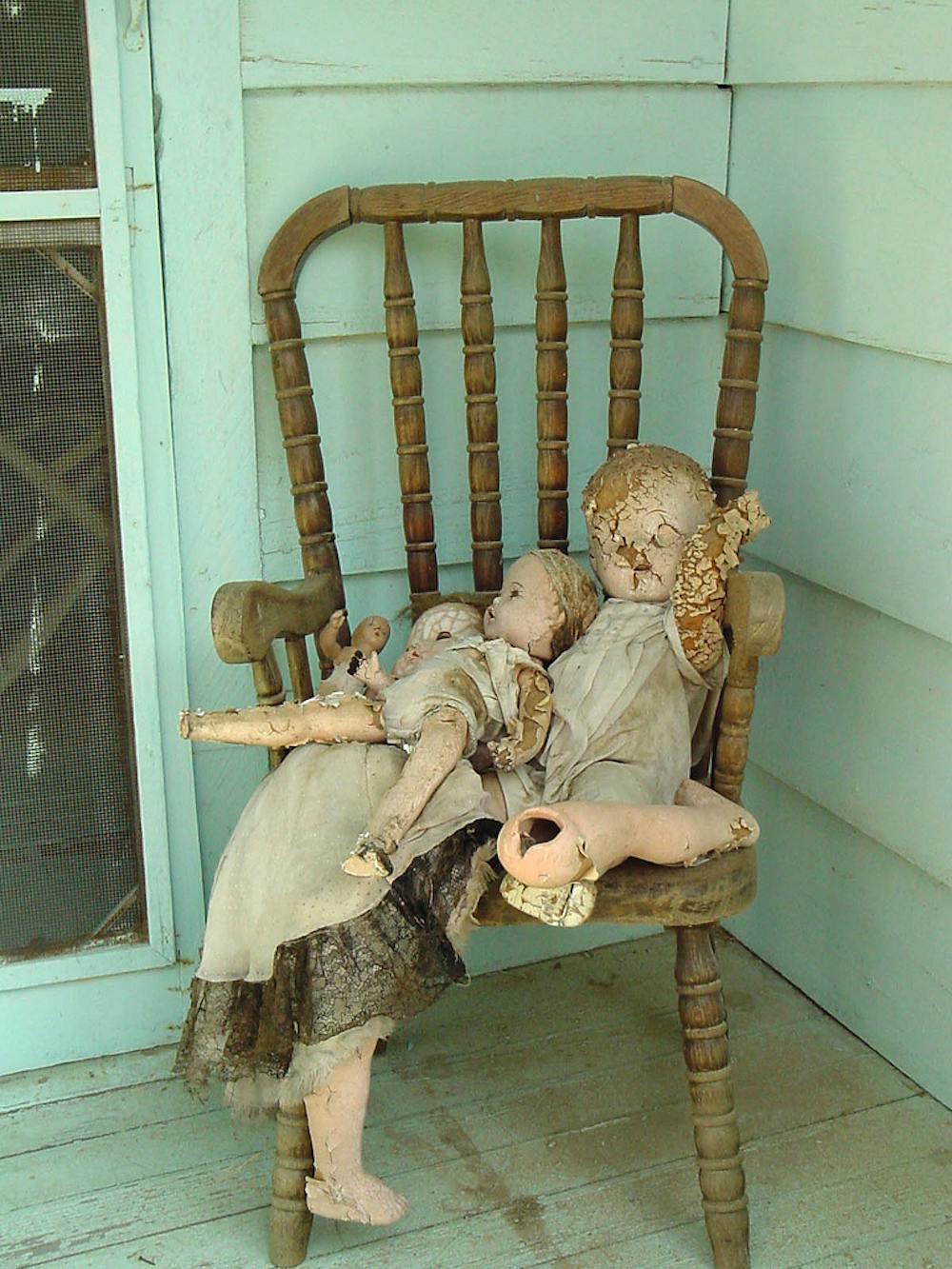
As soon as the exam finishes, the information seems to immediately fade, mostly fading beyond recovery. It’s always made me feel like a faker.

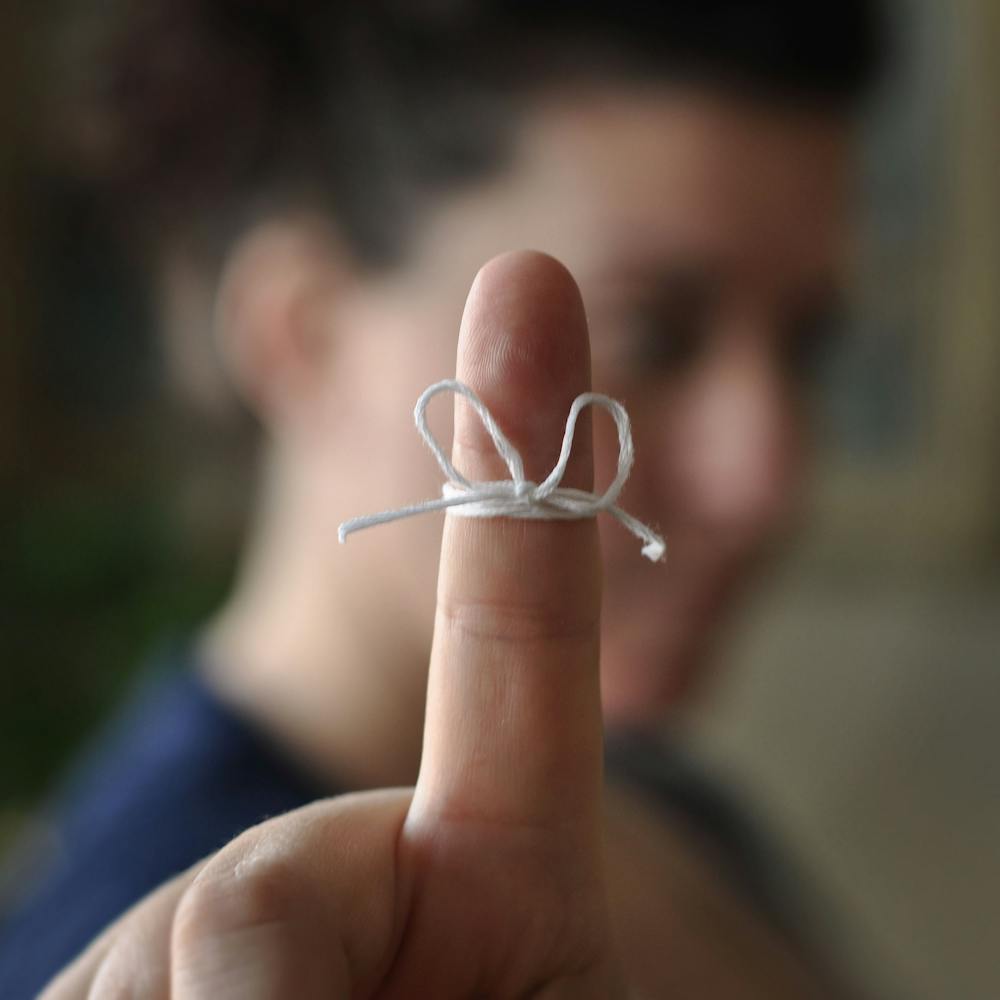
This type of forgetting is consistent with what’s known as the trace decay theory of forgetting. It states that without rehearsal, memory will gradually decay over time, to disappear for ever.

Unfortunately, both psychological theories outlined above are very limited in terms of explaining forgetting.

Cue-dependent theory is criticised because memories can generalise over time, their elements becoming less specific. Trace decay theory fails to explain different fading speeds of different memories.

Infantile amnsesia

Neuroscience comes to the rescue at this point. What happens to the brain when something is forgotten? Although there are not many studies, some insight on the neural basis of forgetting has been provided by infantile amnesia research.

Infantile amnesia commonly refers to the general inability to remember experiences that happened early in life, before three to five years of age. This is a pervasive phenomenon displayed by all humans.

Even Dr Sheldon Cooper of TV’s The Big Bang Theory – who has photographic, or eidetic, memory – cannot recall events prior to “that drizzly Tuesday” when his mother stopped breastfeeding him.

Aspa2006

Importantly, infantile amnesia is not due to an inability to form episodic memories before that age. Children younger than three years have been shown to be able to encode specific episodic memories and even remember them for two years.

Instead, these memories do not persist into later childhood and adulthood, indicating children forget at a more rapid rate than adults.

Amazingly, infantile amnesia is ubiquitous. It is believed to occur in all altricial species (species that, like us, require parental care after birth), and has been observed even in worms, goldfish, chickens and rats. These species require care-givers to survive into adulthood.

This is in contrast to precocial species (species that don’t require parental care) such as guinea pigs, that do not require care-giving to survive.

Rats!

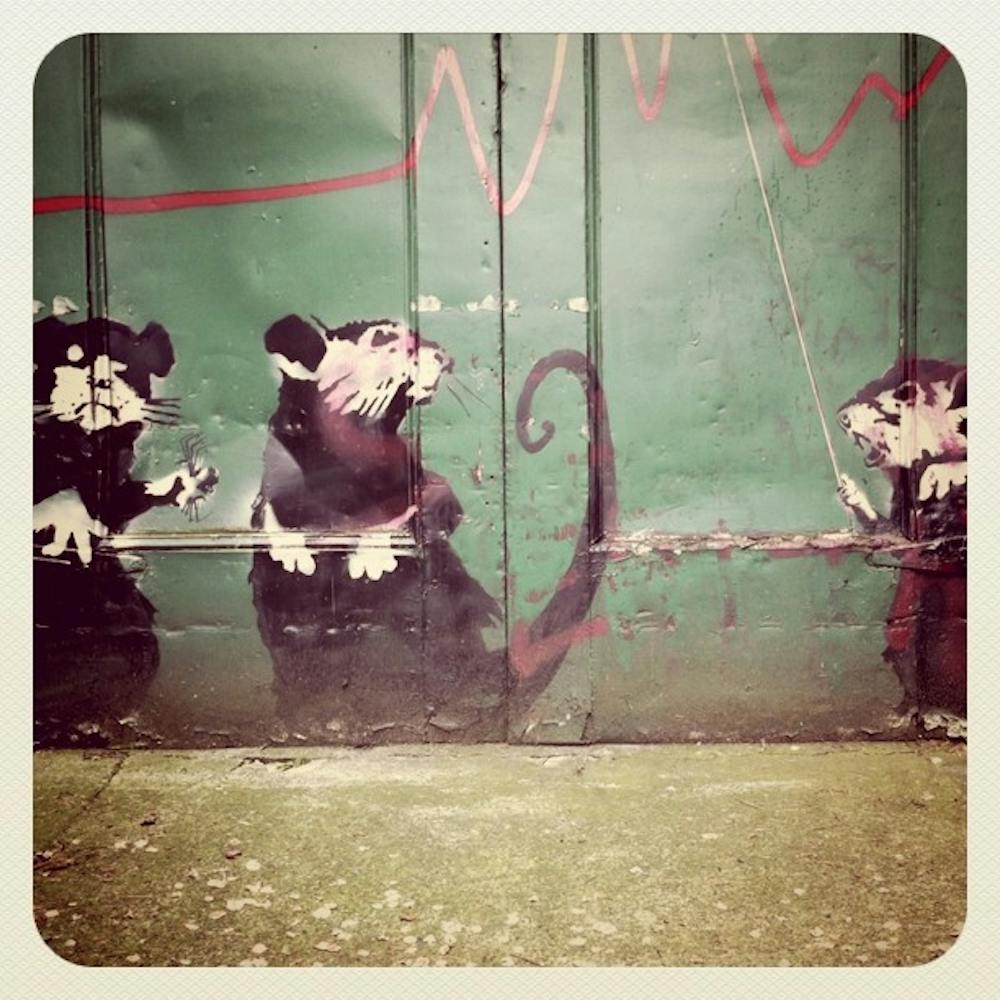
In 1962, Byron A Campbell and his wife Enid Campbell showed that juvenile rats forget considerably faster than adult rats. They trained rats of various ages to avoid the black chamber of a black–white shuttle box.
Flood

This memory retrieval was measured by the latency to enter the black chamber when placed in the white chamber. When tested immediately after training, rats of all ages were equally able to express avoidance of the black chamber.

But when testing occurred later, infant rats showed nearly complete forgetting after seven days, whereas adult rats showed nearly perfect avoidance of the black chamber even after 42 days.

This finding has since been replicated with different learning paradigms and different species, including humans.

Since that time, infantile amnesia has been placed in a “too hard basket” and has not been studied, although most psychologists believed that it was a very important clue to how our memory works.

GABA

In 2006, more than 40 years after the original study, my colleagues and I showed that a neurotransmitter called gamma-aminobutyric acid (GABA) is involved in infantile amnesia.

Reducing GABA allowed juvenile rats to retrieve a forgotten fear memory. In the mammalian brain, GABA is the king of inhibitory communication. Removing this inhibition removed whatever was blocking the fear memory from being retrieved.

Freud was right: infantile amnesia involves repression of aversive memories that can recover later in life!
allthecolor

But this recovery of memory in rats was only possible ten days after the memory was made, and reducing GABA had no effects after 60 days. So sometime between ten to 60 days in these rats, roughly equivalent to a period of between eight months to five years for us, forgetting turned from being a retrieval failure to storage failure.

In the latest follow-up to this study, my colleagues and I reported this year that a brain region called the amygdala, a very primitive part of the brain responsible for emotion, expressed traces of fear memory that was forgotten by the juvenile rat.
Scooter the Photographer

That trace was in the form of increased activation of a chemical called mitogen-activated protein kinase (MAPK) in the neurons, an important kinase (an enzyme involved in the transfer of energy within cells) necessary for gene activation and transcription.

Perhaps this is part of the “engram” (a presumed means by which memory traces are stored as biochemical changes in the brain, allowing retrieval of forgotten memories) scientists have been hunting for decades.

Understanding infantile amnesia may provide a key to unlock the secrets of forgetting that some happy individuals appear to possess. After all, people who develop a post-traumatic stress disorder following a traumatic event suffer from lack of forgetting.

And there are still so many other questions. Is memory erasure possible? What about reconstruction of memories? Will Jason Bourne ever completely recover from his amnesia caused by physical trauma?

I will attempt to answer these questions in forthcoming articles.

Further reading:
Explainer: what is memory?


See more Explainer articles on The Conversation.

Articles also by This Author

Sign in to Favourite

Want to follow The Conversation?

Sign up to our free newsletter to get the day's top stories in your inbox each morning, with a special wrap on Saturday.

Spinner
Help us have better conversations — donate

Join the conversation

10 Comments sorted by

  1. Chris Kim

    logged in via Facebook

    1st!!
    Sorry, couldn't resist. :P
    Cool article nuna. Thanks for making the time to generate public discussion on what is very difficult, strange but such an everyday phenomenon. I'm sure you can crack the code for us eventually! :D

    but I have to confess - my eye did glaze over when the acronyms came out. ;)

    report
  2. Danny Hoardern

    Analyst Programmer

    Forgetting can be both important and a hindrance. This article does a good job focusing on the "important" side to forgetting: pushing away memories that cause us stress (stress kills our brain).

    When forgetting becomes a hindrance (e.g., I can't remember where I was supposed to be at 4.15), we now know that part of the problem is plaque/waste build-up. Our brains have a system to carry away waste, and when this does not do the job properly, plaque builds up which can cause some memories to…

    Read more
  3. Peter Ormonde

    Peter Ormonde is a Friend of The Conversation.

    Farmer

    Most interesting and intriguing.

    Forgetting - not necessarily a bad thing - depends what one is trying to get rid of - can be part of a healing process.

    The connection to the limbic system - those deep dark primeval parts of the brain - is well established - the way some indescribable and even forgotten smell can trigger a flood of recollection. Sensory triggers. Actually I like the term "recollection" - seems to capture the process more accurately - of putting fragments back together like re-assembling a shattered cup.

    Which brings me to my rather odd question. I've read some very curious suggestions on the interweb (the home of curious suggestions) that memory can be stored elsewhere in the body, other than the brain. Be interested if you have any views on that.

    Thanks for the piece. And thanks for choosing to follow this intriguing and important field of study.

    report
    1. Jee Hyun Kim

      DECRA Fellow, Behavioural Neuroscience at The Florey Institute of Neuroscience and Mental Health

      In reply to Peter Ormonde

      'Recollection' is indeed a nice word - if you think how parts of the brain responsible for different elements in our perception are involved in memory formation, and how they work altogether to create one memory and remembrance, that word captures that process.

      As for memory being stored elsewhere in the body, I am not sure for humans. But I think it should be possible, considering how organisms without brains appear to posses memories of past events.

      report
    2. Peter Ormonde

      Peter Ormonde is a Friend of The Conversation.

      Farmer

      In reply to Jee Hyun Kim

      Thanks for the reply Jee.

      My interest arises from PTSD and what I am observing in my own thought processes as I recover myself and my memories. It is a most curious process.

      Meditation seems quite useful. I picture myself collecting fragments walking along a beach ... beachcombing ... and putting them in my pocket. Seems to neutralise painful memories and images as they wash up.

      Still have trouble with loud noises and bright lights - like sensory overload - even smells seem more intense at times. Heightened startle reflex and a overwhelming desire to move my legs .. flight or fight stuff.

      A strange piece of machinery this mind/brain/body business. All hooked up together. Somehow.

      report
    3. Hilde Rombout

      retired psychologist/teacher

      In reply to Peter Ormonde

      Dear John,
      Thanks for the question. I myself believe that memory can be stored elsewhere and for me it is in my fingers. I play an Indian harmonium and when i have not played a piece for a long time, it is my fingers that remember. I play by heart, not from notes though i can do both. As long as i can get my fingers in the right position to start off with, they follow their own cue without any conscious effort on my part. In fact if i try to consciously play it, i make mistakes.

      report
  4. David Healy

    Retired

    Thanks for this - very instructive!

    Does your research deal with selective memory loss?

    A trivial example: working as a programmer a decade or so ago, I was able to remember the syntax for most of the functions I used frequently. Try as I might, there was one function I could never get straight. It took only two parameters, but I could never remember which came first and which came last.

    I used to use mnemonic lines as a memory aid for college exams. That worked really well, but like yourself I promptly put it all out of my mind as soon as the exam was over.

    One thing that has worked, in the sense that I can recall now what I learned decades ago, was a small plastic device with a spring-loaded shutter that flashed words, phrases or lists of digits for 1/10 or 1/100 of a second. It was magnificent for learning how to spell: words like accommodate, occurred and embarrassed come to mind.

    report
    1. Jee Hyun Kim

      DECRA Fellow, Behavioural Neuroscience at The Florey Institute of Neuroscience and Mental Health

      In reply to David Healy

      Selective memory loss (in a simple version using rats/mice) is one of the areas of my research. I will get to share some of the results in the next piece.

      As for confusing the order of elements in memory, I am not sure how to model such in animals. Personal experiences tells me that once I start to mix something up, it is a struggle every time and I have to double-check! It appears that thinking 'which can last, and which came first' strengthens both possibilities as real. :/

      report
  5. Frank Baarda

    Geologist

    Some years ago before my father died at the age of 91, when I was going through the exercise of writing up his anecdotes, I came accross these quotes:

    G.M.Edelman in ‘The Remembered Present: A Biological Theory of Consciousness’(1989): “Every act of perception, is to some degree an act of creation, and every act of memory is to some degree an act of imagination”
    and:
    “… muerte no llega con la vejéz, sino con el olvido…” (Su Despedida: Gabriel Gárcia Márquez)
    “…death doesn’t arrive with…

    Read more
  6. Debra Joan Smith

    Account Executive

    Now, that was fascinating! I realize now that I always assumed that infantile amnestia. especially since it is universally present, coincided with some nerual pruning thus forgeting was the obvious result. Thank you for making me think harder.

    report