


Finger-flicking good: have digital tablets become essential?

The onward march of digital tablets looks incontestable. Tablets are now threatening sales of personal computers in K-12 education in the USA. And the forthcoming launch of a new kiddie-tablet called Tabeo will further erode the PC end of the education market. If there can be a killer app, there can…

5zhyymcr-1348120804
Ropey for writing on … but still easy to fall in love with. ebayink

The onward march of digital tablets looks incontestable. Tablets are now threatening sales of personal computers in K-12 education in the USA. And the forthcoming launch of a new kiddie-tablet called Tabeo will further erode the PC end of the education market.

If there can be a killer app, there can presumably be a killer product. Call it, for now, a killer prod. Is the tablet a killer prod?

The first question is: what distinguishes it from a laptop? Novelty, which will pass. Added portability.

What distinguishes it from a mobile phone? Size. And most can’t function as a phone. Yet. But they are converging.

When I first started using a tablet I was not sure where it would find a place in my work pattern. Did I really want to be a three-device digital user: phone, tablet, laptop?

The tablet has become my meetings machine: PDFs of agendas, minutes, papers work really nicely. It’s a smooth web browser. It skypes.
courosa

And it’s excellent for interactive and shared learning. Whether it involves multiple learners around one tablet, or multiple learners with a table each, or multiple tablets for a single learner, tablets help take us away from the teacher-fronted classroom and into more student-driven learning.

Laptops with Wi-Fi can do this, to be sure. But for real mobility, cellular+tablet wins. And the tablet is less limited to laps than a laptop.

Furthermore, the volume and quality of teaching and learning apps are advancing at a stunning pace, much faster than our ability to sift and assess for quality.

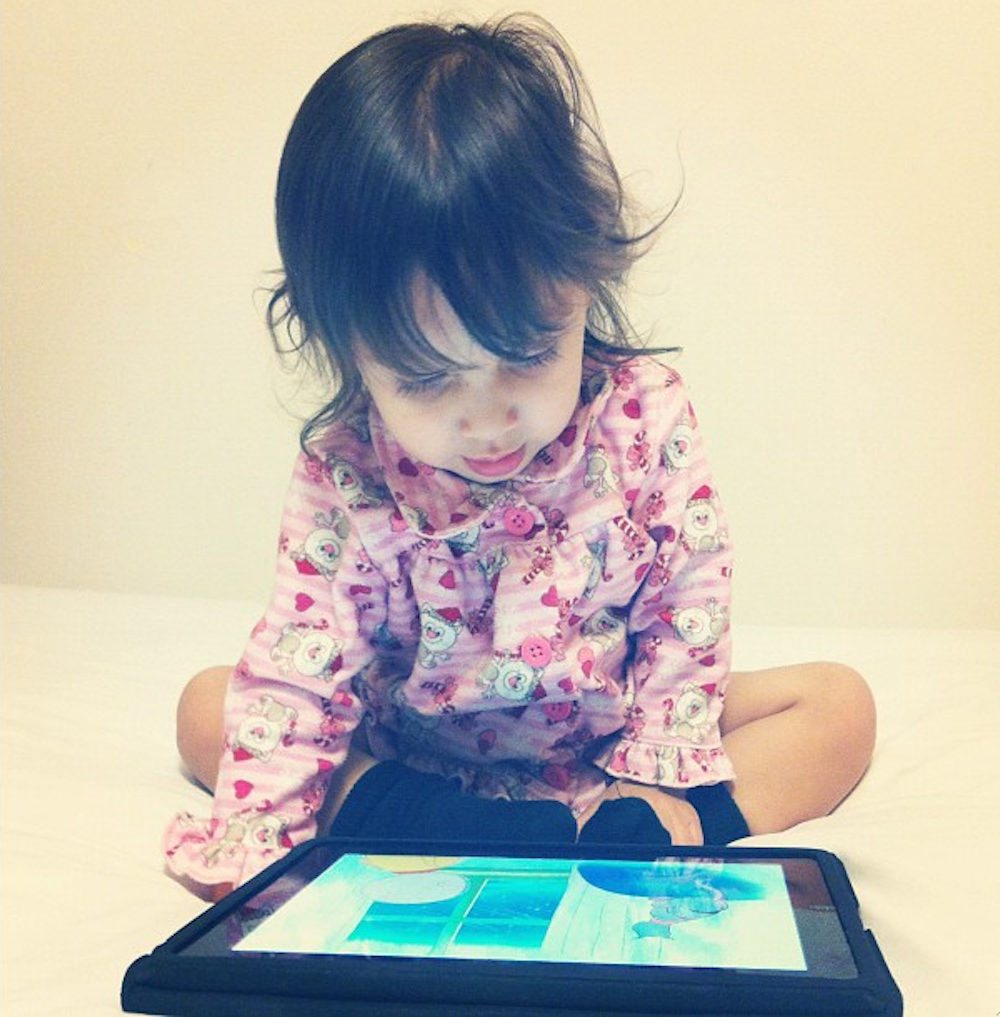
And I am immensely heartened and impressed by the abilities of four-year-olds to manage tablets, to master their ergonomics, to use them to learn and to use them to learn about learning. So, in their way, do some domestic felines. Check out the web for proof.

None of this can take away from the fact that the tablet is a really, hopelessly, disastrously, cosmically awful instrument for text entry. I write a lot, and fast. Tablets drive me beyond distraction.

Good for writing (slowly and poorly)

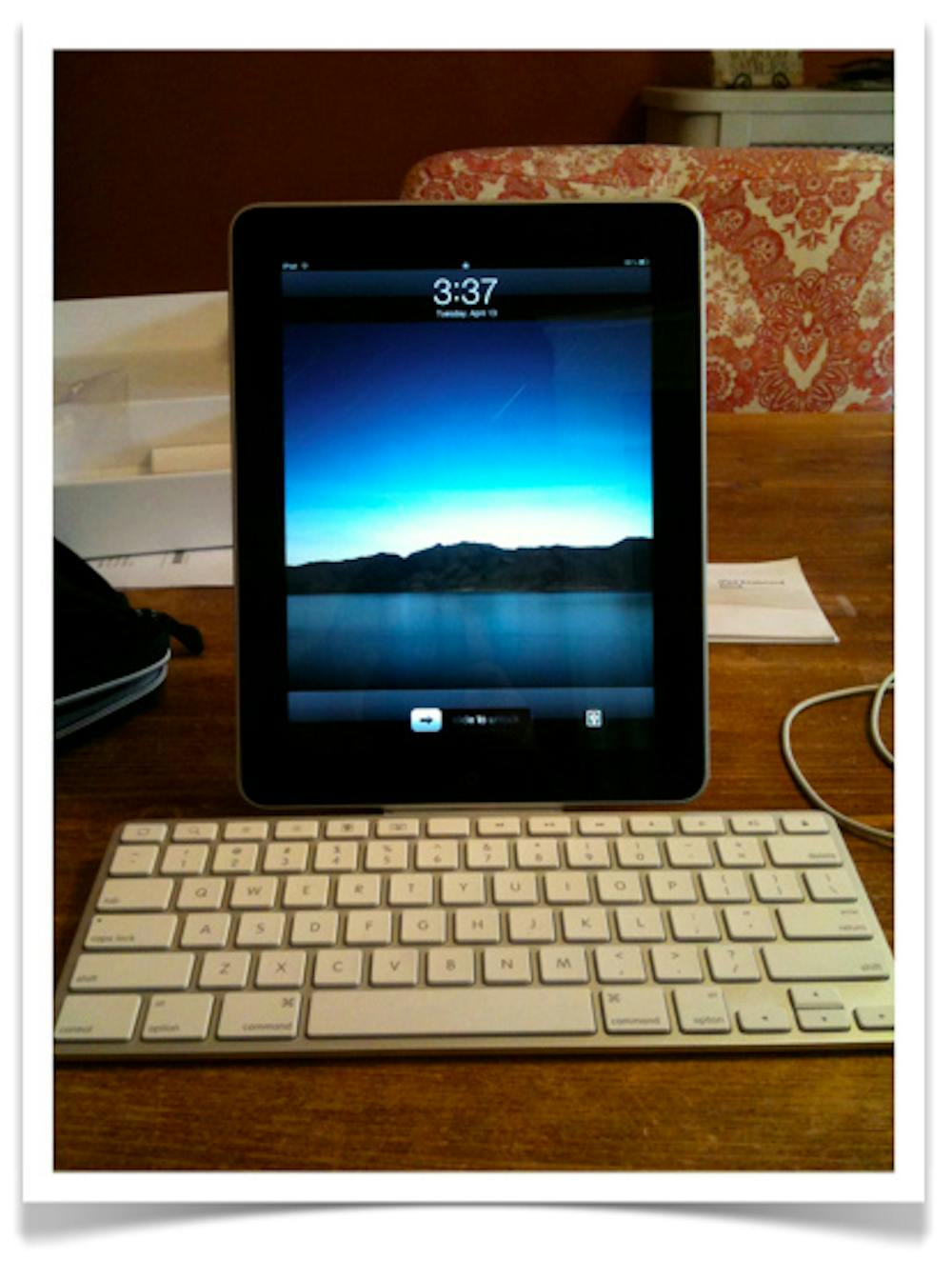
Tablets’ on-screen keyboards are functionally poor, slow and lack the feedback necessary for all but laboured and slow typing. Some tablets can work with associated Bluetooth or USB keyboards.
John Federico

Well, some of these are ergonomically vile, and many require you to tote two instruments around, the tablet and the keyboard. So why not a laptop?

Further, text-processing software for tablets is not yet mature, and bears witness to incomplete innovation about how to be textually creative on a tablet screen.

Voice recognition input to tablets is not yet sufficiently advanced to be reliable. It compares poorly with parallel software on laptops, and tends to be capricious, limited and rigid, and not great with surrounding ambient noise.

I write here – on a laptop – with some asperity, born of frustration and irritation that tablets haven’t got it right yet, and still have far to go. Their poor performance with text input means that using them may skew literacy and its learning.

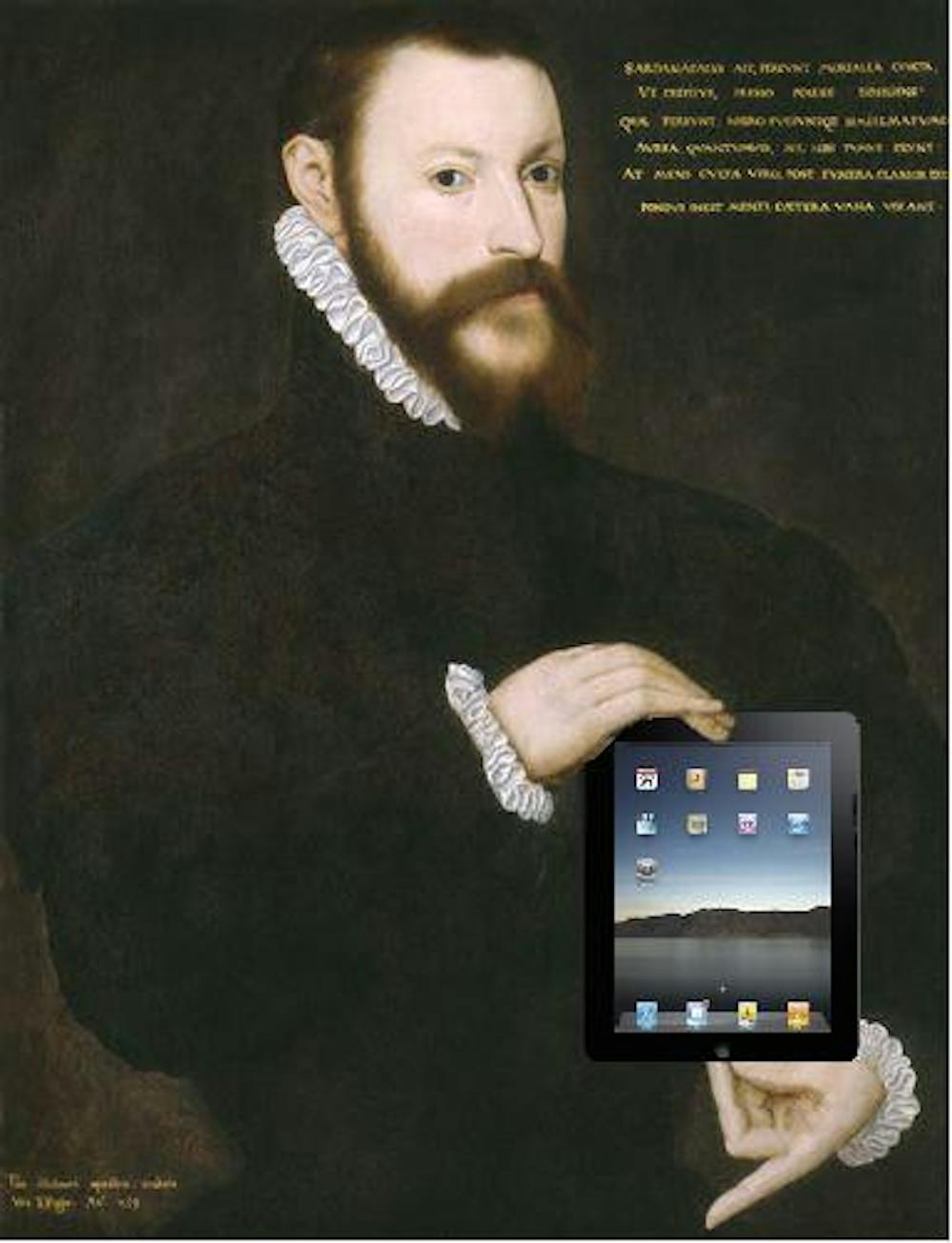
Granted, mobile phones and tablets are tolerable for the input of short text messages: emails, blogs, tweets. For the creation of sustained prose they are pulsatingly, superlatively, transcendentally terrible.
Mike Licht, NotionsCapital.com

And for the rest? Well, as a literacy curmudgeon I mourn the decline of paper literacy. There is nothing like a well printed page in quality type on quality paper. I mourn the decline of handwriting.

But then I am already an anachronism.

And though tablets are more robust than they used to be, they still don’t respond well to immersion in water, or to percussive contact, as with the heads of an importunate sibling. They tend to crack. But so does the sibling, which may be some small comfort.

All this means that tablets cannot yet be a total learning device. For what they do well they are fine. For the rest they need to be complemented. And using them effectively will require some rethinking of how we plan, execute, support and monitor learning.

A tablet, to be fairer than I have been so far, is not a reduced laptop. It’s something different, which is creating new functions and learning spaces. It’s a game-changer. We are still discovering – and creating – the new games.

And for the remaining rest? I have started to learn some Chinese, so I need the textbook, a dictionary, a grammar guide, and access to texts in Chinese to check some expressions.

Some audio files of pronunciation, and some videos of real life situations, would be most convenient. I’d like to share questions with other students and with the tutor.

The prescription? My daily tablet.

Join the conversation

6 Comments sorted by

  1. George Michaelson

    Person

    I would love to see good hard science around the impact of digital media on early child development. As a computer scientist with 30+ years in the field, I find I can't get enough distance from my discipline to say if there are benefits, and I am concerned there are going to be detectable downsides.

    I'm told anecdotally, the rise in digital life has causative as well as correlative relationship to short sight. (lack of distance focus time). If there was analogous effects on brain models of reading…

    Read more
  2. alfred venison

    records manager (public sector)

    tablets do not support easy text entry. and in today's market, tablets outsell desktop & laptop computers. the new normal? or a passing fad? we measure literacy as competence in writing & literacy as competence in reading. what becomes of literacy as writing, and the cultural practices dependent on it, if tablets are the new normal & continue outselling text entry friendly products into the future? -a.v.

    report
  3. alfred venison

    records manager (public sector)

    we are every day moving deeper into the acoustic "tribal" world mcluhan wrote about. a world where the ligaments of print literacy and the linear, rational culture it was central to are displaced before our eyes & ears and almost unawares to us. replaced by acoustic forms of literacy centered on an electric media ecology.

    our society's politics of rational discussion of policy options among informed citizens, profoundly, grounded as it is on institutions predicated on print literacy - gone or going gone. replaced by "the tribal mandate".

    our society's respect for & trust in the activity & productions of systematic rational inquiry - activities & institutions & mentality also profoundly grounded in print literacy values - gone or going gone. replaced by a level playing field of ideas, a relativity of points of view, sustained & constrained by the new electric media ecology, where print culture & its various emanations do not have the same cachet on thinking & being. -a.v.

    report
  4. Harry Lewis

    Retired

    Agreed about the keyboard problem. But you are too kind to laptops, which are already an ergonomic and postural disaster. Basic problem: keyboard and screen position are inseparable. Top of VDU should be at eye level while keyboard needs to be comfortably at/just below elbow level.

    The keyboard kits sold for tablets that incorporate a tablet stand reintroduce this problem.

    report
  5. Nicholas Sheppard

    Computer Scientist & Teacher

    Until computing devices are able to change their shapes and sizes, I can't see a "killer product" being any more likely than a "killer item of furniture" that neatly replaces on the function of chairs, tables, beds and cupboards. To judge by what I see on the shelves in electronics retailers and in technology magazines, tablets are simply the latest addition to a plethora of electronic devices that meet different needs. They don't converge because the form factor most suitable for mobile communications, say, isn't the form factor most suitable for office work.

    I wouldn't be surprised if, in a few years' time, someone thinks up yet another form factor and commentators ask themselves "have digital [insert shape here] become essential?" all over again. Unless the new form factor is some sort of polymorph, I think the answer will remain "no", and we'll stick to choosing the best tool for a particular job.

    report
    1. Harry Lewis

      Retired

      In reply to Nicholas Sheppard

      Excellent! Form factors (so ergonomics) are still important. Without having the link to hand: I think it was David Pogue (NYT) who argued (pre-iPad) that just three formats (TV, desktop/laptop, smartphone) would stay with us - largely because of screen viewing distances and modes of manual control. Tablets have (at last) found a niche. Doesn't social research suggest people are _adding_ tablets, not _removing_ laptops/desktops to/from their computing toolboxes?

      report