Medical researchers raise alarm on overdiagnosis

One of the world’s top medical journals has launched a campaign against overdiagnosis, where people are diagnosed with medical conditions they don’t have and prescribed medicine they don’t need. The British Medical Journal’s (BMJ) campaign, Too Much Medicine, aims to draw attention to a growing body…

Grrpsz7y-1361923695
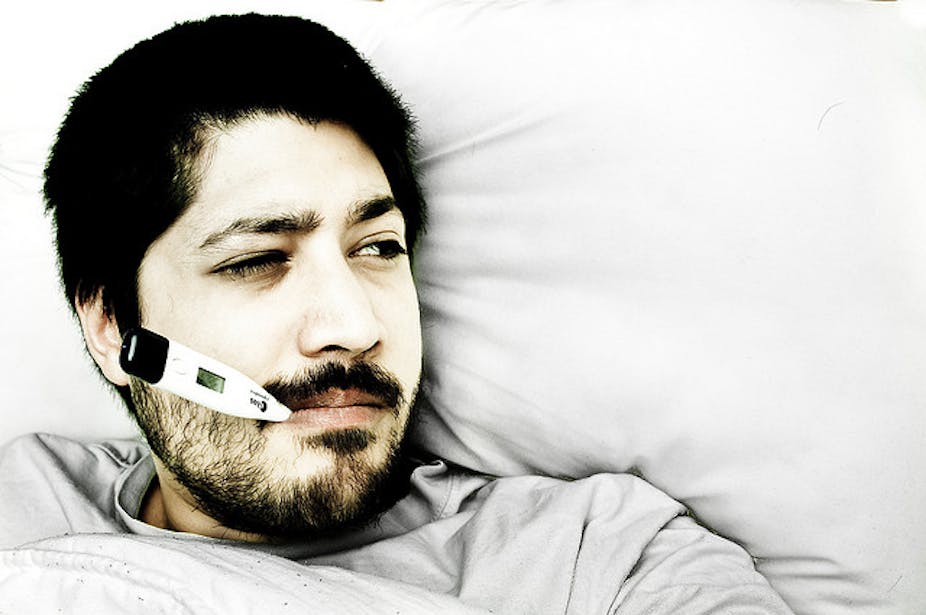
Overdiagnosis wastes money and diverts resources that could be used treating real disease, experts say. http://www.flickr.com/photos/tranchis

One of the world’s top medical journals has launched a campaign against overdiagnosis, where people are diagnosed with medical conditions they don’t have and prescribed medicine they don’t need.

The British Medical Journal’s (BMJ) campaign, Too Much Medicine, aims to draw attention to a growing body of evidence that many people are overdiagnosed and overtreated for conditions such as prostate and thyroid cancers, asthma, and chronic kidney disease.

“Like the evidence based medicine and quality and safety movements of previous decades, combating excess is a contemporary manifestation of a much older desire to avoid doing harm when we try to help or heal,” said BMJ editor, Dr Fiona Godlee.

“Making such efforts even more necessary are the growing concerns about escalating healthcare spending and the threats to health from climate change. Winding back unnecessary tests and treatments, unhelpful labels and diagnoses won’t only benefit those who directly avoid harm, it can also help us create a more sustainable future.”

Overdiagnosis wastes billions every year and new research is urgently needed on how clinicians can scale back the numbers of medications being taken unnecessarily, said Ray Moynihan, a senior researcher from Bond University’s Faculty of Health Sciences and Medicine.

“It’s not anti-medicine or anti-doctor. Often it’s dismissed as some kind of unintelligent assault on medicine but nothing could be further from the truth,” said Mr Moynihan.

“The fact that the BMJ is launching a campaign on overdiagnosis is an extraordinary thing. Here’s one of the world’s most respected medical journals saying we have a problem. It’s a dramatic wake up call, not just for the profession and the government but also the research community.”

Bond University and the BMJ are co-hosting an international conference on the issue, called Preventing Overdiagnosis, to be held in the US in September.

Mr Moynihan said further research was needed into the possibility than many of the normal aspects of ageing were a source of overdiagnosis.

“I think part of the problem here is that too many of the normal processes of ordinary life are being transformed into the symptoms of medical conditions. I think this campaign is about bringing attention to that problem,” he said.

Mr Moynihan said previous studies had found that up to a third of screening detected breast cancers may be overdiagnosed and the risk that a cancer detected by prostate specific antigen testing is overdiagnosed may be over 60%.

A 2008 Canadian study found that 30% of people diagnosed with asthma in the research sample group did not actually have the condition.

“We put them through a diagnostic algorithm to determine if they truly had asthma, and we tapered their asthma medications off in a series of steps. We found 30% had been over-diagnosed. They did not have asthma when their asthma medications were stopped and when they were objectively tested,” said lead author of the study, Dr Shawn Aaron, a senior scientist at the Ottawa Hospital Research Institute.

“Overdiagnosis is happening because physicians are diagnosing asthma based on symptoms, and not sending the patients for lung function testing prior to assigning patients a diagnosis of asthma, which is a chronic disease.”

Overdiagnosis researcher Associate Professor Dee Mangin, Director of the General Practice Research Group at New Zealand’s University of Otago, said the problem was rife.

“Over diagnosis and over treatment are the biggest problems facing doctors and patients in the next decade as they try to make good decisions about health care. It creates illness in otherwise well patients as well as adding to the burden of those who and already ill,” she said.

Among the drivers of the problem were an ageing population concerned with staying healthy for as long as possible and commercial imperatives of drug and diagnostic companies to provide profits for shareholders, she said.

“This drives aggressive marketing campaigns involving direct marketing as well as capture of the research evidence base in a way that overstates benefits and underestimates harmful effects,” said Associate Professor Mangin.

A common fear among doctors of missing a diagnosis or failing to give a treatment that might help a patient has exacerbated the problem, she said.

“It results in harm from the investigations themselves, from treatments that carry significant harms and from the transformation of individuals perceptions of themselves as healthy into someone who now feels they are not. This can have profound effects of the way we see ourselves and the way we live our lives.”

Further reading: The Conversation’s series on overdiagnosis.

Sign in to Favourite

Want to follow The Conversation?

Sign up to our free newsletter to get the day's top stories in your inbox each morning, with a special wrap on Saturday.

Become a friend of The Conversation and donate

Join the conversation

24 Comments sorted by

  1. Ross Kirkman

    Consultant Psychiatrist at Psychiatry

    This is a real issue but I think it is a preferable problem to that which still pervades some parts of medicine and that is the problem of underdiagnosis. This was a very prevalent problem in psychiatry up until recent times and still occurs with some General Practitioners. Overall I think the diagnosis of mental disorders is much improved in primary care settings and their treatment is improving but has a fair bit to go to get to the standard of say the treatment of cardiovascular problems in primary care settings. Overall overdiagnosis is a far preferable problem to have than underdiagnosis!!.

    report
  2. Chris O'Neill

    Telecommunications Engineer

    "Overdiagnosis wastes billions every year"

    One of the examples of this that I noticed recently was in a German study where they found that 25.8% of the younger than 56 year old men who underwent Prostatectomy and who previous to the surgery worked, did not work again after the surgery: http://www.ncbi.nlm.nih.gov/pubmed/16021411

    This is a massive cost where most of the patients would never have died from Prostate Cancer anyway even without the surgery.

    report
  3. Chris Richardson

    Chris Richardson is a Friend of The Conversation.

    Doctor

    I'm just wondering why we are calling this "over diagnosis" - I don't think that term even makes sense! We'd be better off calling it as it is - inappropriate investigation, misdiagnosis, unnecessary treatment, or a combination of these things. No need for a new word to be made up in my opinion.

    report
    1. Sue Ieraci

      Public hospital clinician

      In reply to Chris Richardson

      I agree with the author. "Over-diagnosis" occurs when putting a name to a symptom (or worse, to an asymptomatic condition) results in anxiety or sickness-labeling without helping the person's well-being.

      Risk-aversion and patient expectations can lead to inappropriate testing. If a test is applied to a person with a low pre-test probability of having the condition, then there is a greater chance of the test result being a false-positive (Bayes' theorem). This can lead to invasive testing which…

      Read more
    2. Eric Glare

      HIV public speaker and volunteer

      In reply to Chris Richardson

      I don't find 'over-diagnosis' a very convincing description of the asthma example either. Instead you could claim it as evidence of treatment success.

      Of the 30% where CURRENT asthma was excluded, the mean time since diagnosis was 15.5 yr (SD 12.4) and only 25% of these patients were on daily asthma medication. Really it is only this later small fraction (7.5% of all) that were over medicated at the time and you would expect that with the episodic, seasonal nature of asthma -better follow-up would help. That makes the majority with out current asthma simply aware that if symptoms return -drive in the country; change jobs, holiday, etc - they know what should happen next: that they should restart daily medication. Do we want that awareness removed?

      report
    3. Chris O'Neill

      Telecommunications Engineer

      In reply to Sue Ieraci

      "The solution needs a culture change in both the medical profession and the general community."

      In the case of medical treatment, the opinion of the medical profession very much holds sway unless members of the general community just ignore them, not a very good strategy. When it comes to medical opinion, the culture of the medical profession is the thing that matters. Have a read of this: http://prostatecancerinfolink.net/2013/02/27/one-patients-personal-journey-to-active-surveillance/

      "However, what The “New” Prostate Cancer InfoLink finds interesting about this tale is the apparent willingness of two, clearly well informed and skilled urologists to simply “blow off” the possibility that active surveillance was even an acceptable strategy for a patient like this."

      report
    4. Sue Ieraci

      Public hospital clinician

      In reply to Chris O'Neill

      "In the case of medical treatment, the opinion of the medical profession very much holds sway"

      Chris - if members of the community continue to seek more and more opinions in the quest for a label for their symptoms, then they will eventually get a label. It's a two-way street.

      report
    5. Chris O'Neill

      Telecommunications Engineer

      In reply to Sue Ieraci

      "if members of the community continue to seek more and more opinions in the quest for a label for their symptoms"

      Rather ironic in the case I mentioned. There were no symptoms. If you read the newspaper article referred to in the article I cited, http://www.washingtonpost.com/national/health-science/when-his-psa-score-spiked-prostate-surgery-loomed-but-nih-offered-another-way/2013/02/25/077f66c0-42f9-11e2-8e70-e1993528222d_story.html , you'll see that the surgeons involved did not want to go along with agreeing with a patient's reasonable choice.

      Clearly in that case the patient's culture was reasonable and the surgeons' culture was deficient. Something is seriously wrong if patients' culture leads surgeons' culture. If anything it should be the other way around. Patients have the excuse that they don't have much medical knowledge. What excuse have surgeons got?

      report
    6. Sue Ieraci

      Public hospital clinician

      In reply to Chris O'Neill

      Thanks for omitting my final comment, Chris: "It's a two-way street".

      report
    7. Chris O'Neill

      Telecommunications Engineer

      In reply to Sue Ieraci

      "It's a two-way street"

      Misses the point of course. As I said, patients have the excuse that they don't have much medical knowledge. What excuse have surgeons got? A two-way street maybe, but one side is a LOT wider than the other.

      report
  4. tim mande-jones

    doctor

    Yes many prostates are taken out and the patient suffers the side effects, nevertheless in my recent golf group the other 3 all had prostate ops and when I challenged them whether they had made the right choice they all said "better in the bucket , now I don't have to worry".

    These discussions generally all ignore the individual patient focusing on statistics., In my own area the question of "overdiagnosis" in breast screening arises, but these discussions largely ignore the latest studies which apart from showing deceased morality also show much better therapy including the patients' choice to conserve her breast in many cases.

    I agree with comments that overdiagnosis is a poor term, it really should be wrong diagnosis. If you don't have asthma you don't have asthma full stop. We should say it as it is.

    report
    1. Chris O'Neill

      Telecommunications Engineer

      In reply to tim mande-jones

      "they all said "better in the bucket , now I don't have to worry"."

      No-one is telling anyone that they shouldn't have this or that treatment so your point is something of a strawman. The issue is when medical advice rules out options that they shouldn't be ruling out. This article is an example: http://www.washingtonpost.com/national/health-science/when-his-psa-score-spiked-prostate-surgery-loomed-but-nih-offered-another-way/2013/02/25/077f66c0-42f9-11e2-8e70-e1993528222d_story.html

      report
    2. tim mande-jones

      doctor

      In reply to Chris O'Neill

      Actually medical advise doesn't rule things out, good medicine relies on a proper discussion between the doctor(s) and the patient(and relevant associates). Good doctors welcome informed patients and and second opinions, many patients just want the solution which allows them to get on with lives without worry. Take for example the 35 year old woman after a breast biopsy which showed DCIS( not cancer just a precursor) who then opts for a double mastectomy , her choice. Others will opt for nothing. These statistical discussions do not take into account the human element.

      report
    3. Chris O'Neill

      Telecommunications Engineer

      In reply to tim mande-jones

      "good medicine relies on a proper discussion between the doctor(s) and the patient(and relevant associates)."

      Since it appears that you haven't read the article that I linked to, I'll quote appropriate parts here:

      "After hearing Jim’s diagnosis, we were hopeful that the urologist would recommend watchful waiting. But when I suggested that, he demurred. Then he launched into a speech I’m sure he had given many times before. “Some men in our practice are on this protocol,” he began. “But it’s…

      Read more
    4. Eric Glare

      HIV public speaker and volunteer

      In reply to Chris O'Neill

      "list of the names and phone numbers of men whom he had treated"

      Do you seriously believe this?

      report
    5. Chris O'Neill

      Telecommunications Engineer

      In reply to Eric Glare

      "Do you seriously believe this?"

      Are you suggesting the Urologist or his patient are lying? This was one of the leading research hospitals in the USA.

      report
    6. Chris O'Neill

      Telecommunications Engineer

      In reply to Eric Glare

      "list of the names and phone numbers of men whom he had treated"

      It says on the next page (http://www.washingtonpost.com/national/health-science/when-his-psa-score-spiked-prostate-surgery-loomed-but-nih-offered-another-way/2013/02/25/077f66c0-42f9-11e2-8e70-e1993528222d_story_2.html ):

      "A week or two went by. Finally, he called a couple of the men whose contact information he had been given at Hopkins. Those conversations began to shed light on what really happens after surgery."

      It's either an elaborate scam or he's telling the truth.

      report
    7. Eric Glare

      HIV public speaker and volunteer

      In reply to Chris O'Neill

      Sorry, I am very surprised but I am often surprised at what comes out of the US. In none of my experience, personally, in research and as an advocate, have I ever seen a list of names let alone got to take them home or had any contact details. It makes research ethics seem a bit of a joke where we are concerned that people in the lab might see the names belonging to samples even where there is no blinding on the study.

      report
    8. Chris O'Neill

      Telecommunications Engineer

      In reply to Eric Glare

      "It makes research ethics seem a bit of a joke"

      Maybe the doctor asked for the patients' permission before he put them on that list. It has been known to happen that people are asked for their permission.

      report
    9. Eric Glare

      HIV public speaker and volunteer

      In reply to Chris O'Neill

      I was only talking about where permission was granted as anything else would be breaking the law - all the samples I referred to had the patients' consent for what I was using them for but I had to ask their doctors in code because I didn't know their name, eg 'I need more blood from that elderly patient of yours with haemochromatosis'.

      The closest to testimonials I have got is filling out anonymous satisfaction surveys. I for one wouldn't trust handpicked testimonials and my fallible impression is that Americans like them a lot more than we do.

      report
    10. Chris O'Neill

      Telecommunications Engineer

      In reply to Eric Glare

      "I was only talking about where permission was granted"

      I really don't know what your problem is. Your points seem to be a succession of differing goalposts.

      "I for one wouldn't trust handpicked testimonials"

      The "testimonials" weren't backing up the doctor's recommendation. Handpicked testimonials are normally picked to favour the picker's position. That was not the case here. Strange how you didn't notice the difference.

      Anyway, I've spent enough time responding to your statements. I don't think I'll read any more of them.

      report
    11. Eric Glare

      HIV public speaker and volunteer

      In reply to Chris O'Neill

      I am sorry you keep misunderstanding what I am trying to say.

      I think it is quite clear that I was speaking generally about the Australian experience -not about an isolated US example. And I did this purposely in order to 1) bring the topic back to that of the article 2) bring the topic back to the Australian expereince which is what we are most informed about 3) lift the conversation from a couple of case studies that don't really inform us about what generally happens across medicine. That is the nature of academic discussion.

      report
  5. Eric Glare

    HIV public speaker and volunteer

    I think the discussion got derailed - prostate cancers are notoriously difficult to diagnose, predict and treat so of course there is going to be over-diagnosis. If there wasn't there would be outrage at under diagnosis/treatment - we had this with breast cancer not so long ago.

    If asthma patients weren't under-treated in the 90s I would not have been able to do my PhD on gene expression in asthma and atopy -their lung function would have been too good, too normal for them to be in the study and…

    Read more