




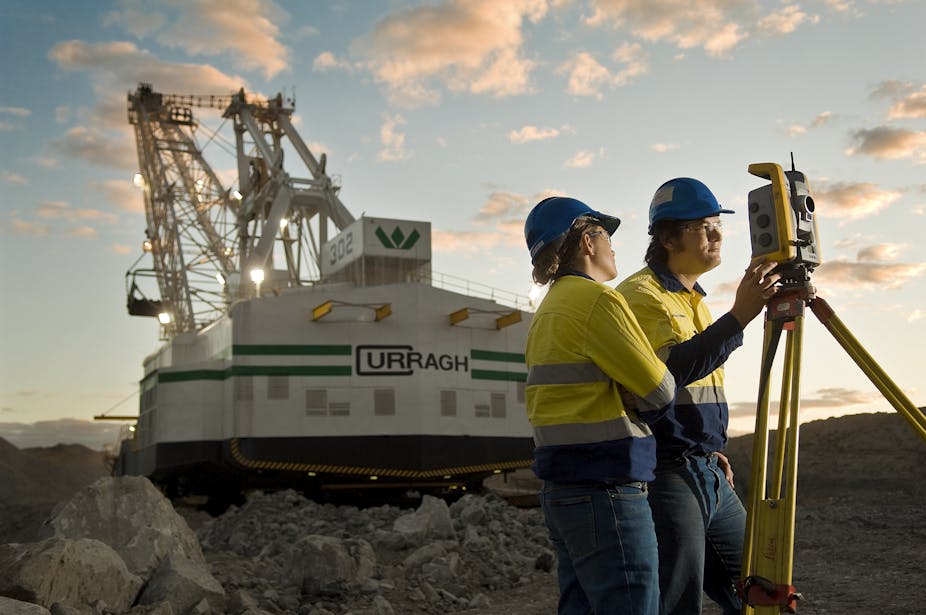
The shifts worked by mining and energy employees are detrimental to sleep patterns, mental health and family life, the preliminary findings of an Australian study have shown.
The Australian Coal and Energy Survey, carried out as part of an Australian Research Council Linkage Grant in partnership with the Construction, Forestry, Mining and Energy Union (CFMEU), surveyed 2566 workers and 1915 partners of mining and energy workers.
The median full-time employee surveyed worked 44 hours per week.
Half of employees surveyed said they worked more hours than they wanted to, while 48% said they worked shifts because they felt they had “no choice”.
Those who had no say over their hours, shifts or starting and finishing times were more likely to report depression, the use of sleeping tablets and general illness than those who had some say.
Lead author Professor David Peetz said there was some ambivalence among workers as to whether such work was worthwhile.
“Most of the comments people made about hours and shifts ran about three to one in a negative way,” he said.
“But when you asked them if they’d rather be working shifts or going back to a day job it’s pretty evenly split, with 40% saying yes, 40% saying no and 20% not sure.”
But he said worker dissatisfaction with hours and shifts could be hurting the industry.
“The mining industry has the highest wages of any industry, and generally speaking, when industry wages increase, then labour turnover goes down.”
“But the exception to this is mining, which has massive turnover; that suggests there’s something wrong for a lot of people who go into the industry.”
“These data are suggesting that one of the things that’s going wrong is the working arrangements.”
QUT’s Dr Alison McIntosh said punishing shift schedules evolved from the industry’s reliance on fly-in fly-out workers.
“The 12‐hour shifts and long work cycles have largely come about because of the industry’s adoption of fly-in fly-out and drive-in drive-out arrangements, as it was not cost effective to have workers travelling long distances to work ‘normal’ rosters for what used to be the ‘standard’ eight‐hour shifts,” she said. “Now, most mines operate 24/7.”
The study also found the impact of shift work extends to workers’ partners and families.
The partners of shift-working employees were unlikely to be able to work full time, and 83% of partners surveyed said they took on the majority of household tasks.
Only 10% of workers said their working patterns closely aligned with their partners.
This led to high levels of anxiety among families, with 69% of employee’s partners reporting that their spouse’s absence during the night made them anxious, and 77% worrying about their spouse travelling to and from night shifts.
And while workers said they appreciated the blocks of leisure time that came up as a result of working shifts, Dr Peetz said that time was not always well spent.
“When you ask them how satisfied they are with their free time, their average score is quite a bit below the population average, that’s the case both for the workers and for their partners,” he said
“They’re also both scoring low when you ask them how satisfied they are with how they’re part of the community.”
Barbara Pocock, Director of the Centre for Work and Life at the University of South Australia, said mining workers had some of the worst work-life balance in the country.
“In our data this year we found the longest hours worked in Australian workplaces are worked by miners, and they have the most negative outcomes as consequence,” she said.
Dr Pocock said the impact on families could be severe.
“Even if the worker themselves loves their job and gets a lot out of what they do in the long hours they work, the pleasure is not shared by their partners or their children.”
“This is in accord with a range of international and national studies that show the consequences for the national health budget and for family life are significant and need to be attended to.”
The data will be updated in 2013, when a follow-up survey will be conducted for the same population.