
On global temperatures, Berkeley’s BEST is similar to the rest

The Berkeley Earth Surface Temperature (BEST) study recently found that global land-surface temperatures have increased by about 1°C since the 1950s — and 1.5°C since the mid-18th century. These results have been getting a lot of press – with some describing them as “game changing” – but how much do…

V7x52bk9-1344398183
Global land-surface temperatures are up, but it’s not really news. Stuart Dowell

The Berkeley Earth Surface Temperature (BEST) study recently found that global land-surface temperatures have increased by about 1°C since the 1950s — and 1.5°C since the mid-18th century.

These results have been getting a lot of press – with some describing them as “game changing” – but how much do they really differ from what has come before?

What the BEST study is

The BEST study re-analyses land-surface temperatures. It was led by Richard Muller, a physics professor at the University of California. Muller has described himself as a “properly sceptical” scientist, and was motivated to analyse global temperature records to satisfy his own scientific misgivings.

Those misgivings related to the veracity of temperature data collected globally. Questions are regularly raised in the blogosphere about corrections to temperature records, and the possible influence of the urban heat island effect on global warming trends.

The BEST study aimed to determine whether the choices made when analysing temperatures influenced the warming trends that were being observed.

What the BEST study did

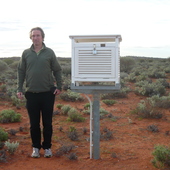
There are many reasons for correcting temperature data. Over time, changes in technology and observing practices introduce inconsistencies to the data that must be accounted for. These include the influence of weather stations moving from one location to another, and changes from mercury (or alcohol) thermometers to electronic sensors.

Hence, temperature data is sometimes separated into two categories — unanalysed data and adjusted data. In the blogosphere, it has been argued that unanalysed data (sometimes called “raw” data), most accurately represent real temperature changes. This assertion is based on the false assumption that “raw” data are “pure” and have not been subject to any factors dependent on human decision making.

Bloggers wonder what effect urban heat islands have on global warming. Kenith Mun

In fact, just taking temperature observations involves a whole lot of decision making — such as which instruments to use, how they are calibrated, and how they are housed and sited in the field. Those decisions have not been applied universally across different countries and different environments and have changed over time.

There are no observations — from satellites to ocean buoys — that are free of these issues. Analysis of data once it’s collected has to ensure the data represents physical reality.

To create a global temperature record, one has to first assemble a data set with the best coverage, which means acquiring data from more than 200 countries.

Then, it is necessary to appropriately analyse the data. Changes in the observational network over time are the most important thing to correctly account for. For example, unless you account for it, new stations starting up in Antarctica (where there used to be none) will drag the global-average temperature down, relative to the preceding period. Similarly, changes in the local environment, such as urbanisation or vegetation changes, can affect already established observing sites.

Before the BEST study, there were three centres analysing global temperatures — the UK Meteorological Office (HadCRU), NASA, and the US National Climatic Data Center (NCDC). All draw on fairly similar data but use different analysis methods. For example, recent global temperatures from NASA have been warmer than those from the UK, due to differences in the way Arctic temperatures are analysed.

All three of the major data sets use a subset of the total available temperature data, with records selected for their length, quality and completeness. The BEST data set uses a different approach, including every piece of data they could lay their hands on, even from stations which have only operated for a few years.

The BEST study did not include temperatures over the oceans. Jens Karlsson

Perhaps the biggest difference between the BEST study and the three established records is in the way that the data are adjusted. Whereas NASA, HadCRU and NCDC use a process of adjustment that includes labour-intensive decisions, such as inspection of metadata (descriptive logs that record information at each site, such as a change of instrument), the BEST study uses an entirely automated process based on data analysis alone. This type of comparison is an important check, since it gauges the impact of the adjustments on the temperature trends.

What the BEST team ended up producing were global land-temperature trends that are slightly larger than those previously reported.

What the BEST study is not

The reason these results received such huge interest is due to the suggestion on blogs that warming trends are due to urbanisation and adjustments. Using a different method, the BEST team has suggested that existing data sets may be underestimating the real warming. This finding was counter to Muller’s expectations.

However, it is important to take a step back and look at just how significant the BEST study was in terms of the science.

The BEST study has not yet been accepted for publication by a scientific journal. Secondly, the importance of historically observed temperatures in assessing the influence of greenhouse gases on climate is overstated in much of the commentary. This is explained in more detail in an earlier post on The Conversation.

Further, the BEST study only looked at part of the picture. It did not include temperatures over the oceans or temperatures recorded from satellites. Those two alternative temperature data sets have showed warming that is consistent with terrestrial thermometers over the last 100 years or more. And we know that those records have not been influenced by urbanisation.

Finally, and perhaps most significantly, it should be acknowledged that the BEST research is not actually that novel. While it is great to have others independently verify results, many climate researchers have been surprised by the attention this study has received.

In fact, national meteorological agencies and research centres have been exploring the sensitivities of the records to adjustments and other analysis choices for two decades.

For example, the Bureau of Meteorology has been producing an automated analysis of Australian temperatures — from 1910 to present*, using a method very similar to that employed by BEST — since the late 1990s. This unadjusted data complements the adjusted data, and the two sets are cross-checked against each other.

The upshot of all that research is that the warming trends observed globally over the last century are physically robust, and not particularly sensitive to urbanisation or method of construction.

But it never hurts to find additional evidence.

*The phrase, “from 1910 to present” was added as an update to this article.

Join the conversation

102 Comments sorted by

Comments on this article are now closed.

  1. Marc Hendrickx

    Geologist

    Karl gives a neat run down of the non peer reviewed results of the BEST study. He ends stating that it never hurts to find additional evidence. Here's some that is of relevance to not only the BEST analysis but also the NCDC, CRU and GISS analyses, and presumably also the BOM analysis as well. It s somewhat surprising that Karl was not aware of this work, or the issue.

    Via Roger Pielke Snr, a voice missing from the con.
    http://pielkeclimatesci.wordpress.com/2012/08/02/more-on-the-best-ncdc

    Read more
    1. Mike Hansen

      Mr

      In reply to Marc Hendrickx

      This is the same Roger Pielke Snr who claimed a blog post/paper from denialist blogger Anthony Watts was a "game changer" - until it was pointed out by numerous sources (including hilariously named co-author Steve McIntyre) that Watts had not taken into account Time of Observation biases in the temp data. Then suddenly it was no longer a game changer. "Game Changer" for Pielke is a very low bar to jump over.

      http://www.skepticalscience.com/watts_new_paper_critique.html

      report
    2. Marc Hendrickx

      Geologist

      In reply to Mike Hansen

      Thanks for thoughts Mike. and in the spirit of new evidence I'm glad you raised the Watts paper, but you must remember it has not gone through peer review yet, I'm sure the authors will take TOD adjustments into account and we'll see the effect on the trends once the paper is published. Perhaps you could provide Watts with your expert statistical analysis.
      Now, I wonder if our BOM's Karl and Blair have considered the impact on BOM's ACORN analysis of the change in station classification criteria…

      Read more
    3. Fred Pribac

      logged in via email @internode.on.net

      In reply to Marc Hendrickx

      I'm not current with the temperature trend analyses and so it is a struggle to try to disentangle the blogosphere to'ing and fro'ing that has been quoted above.

      From what I have seen, my understanding is that the Watts et al results are not in accord with the satellite data which supports the NASA, hadCRU and NCDC temperature analyses.

      Nor does Watts analysis substantially alter the global trends, even if true it is US specific. It seems to be a case of grasping at straws.

      report
    4. Ian Smith

      Hon. Res. Fellow at CSIRO

      In reply to Marc Hendrickx

      Remember the dead parrot sketch from Monty Python?

      The Watts analysis has already been severely criticised. (see: http://www.skepticalscience.com/watts_new_paper_critique.html).
      As a result, it is unlikely to pass the formal review process and see the light of day as a publication. In fact, according to one commentator (Eli Rabett, see:http://rabett.blogspot.com.au/):
      "Indeed, given the profound flaws already pointed out, it's passed on. This paper is no more. It has ceased to be. It's expired and gone to meet it's maker. It's a stiff. Bereft of life, it rests in peace. If Watts hadn't nailed it to the perch it'd be pushing up the daisies. Its metabolic processes are now history. It's off the twig. It's kicked the bucket, it's shuffled off this mortal coil, run down the curtain and joined the bleedin' choir invisibile! THIS IS AN EX-PAPER!"

      report
    5. In reply to Ian Smith

      Comment removed by moderator.

    6. Marc Hendrickx

      Geologist

      In reply to Ian Smith

      I remember the dead parrot sketch. I also recall a certain paper on SH temp reconstructions that was withdrawn following a peer review that missed basic methodological errors. This also an X paper.

      Ps. Can the editor please explain why my earlier post was censored?

      report
    7. Michael J. I. Brown

      ARC Future Fellow and Senior Lecturer at Monash University

      In reply to Marc Hendrickx

      There seems to be a lot of literature on the quality of the ACORN-SAT stations. For example...

      http://www.bom.gov.au/climate/change/acorn-sat/documents/ACORN-SAT_Observation_practices_WEB.pdf

      http://www.bom.gov.au/climate/change/acorn-sat/documents/ACORN-SAT-Station-Catalogue-2012-WEB.pdf

      If one is worried about biases in weather stations, one can cross-check against satellite data. This cross-check flagged that the Watts draft manuscript underestimated warming in the United States. United States.

      report
    8. Marc Hendrickx

      Geologist

      In reply to Michael J. I. Brown

      Yes a lot of non peer reviewed literature, Seems to double as promotional material these days, and none of it deals with changes in station classification.

      report
  2. Glenn Tamblyn

    Mechanical Engineer, Director

    Good article guys, thanks.

    The BEST study is noteworthy for the methodology it used, an important advance over previous methods. However, that it found pretty much the same warming as the other groups isn't in the least bit surprising or noteworthy. BEST got the same results! Well whodda thunk it!

    Michael Mann tweeted simply "Welcome to 1980 Rich".

    One small addition to the article. There is one other temperature series in addition to the other 3 (now 4) that often gets overlooked. The Japanese Meteorological Agency (JMA) also maintain a temperature series showing much the same results.

    report
  3. Comment removed by moderator.

    1. Gerard Dean

      Managing Director

      In reply to Stuart Purvis-Smith

      I have an even stronger feeling that we are going to have deja vu all over again as well (Joe Diamaggio).

      One thing, I noted that Anthony Watts from Watts Up WIth That has released a paper for pre-peer review (online) that has studied the siting effect on temperature stations in the USA. The paper claims that the effect inflated the US temperatures by at least 50% of the actual values.

      Another thing, Gergis and Karoly recently had their paper about Australiasian temperatures pulled from the American Meteological Society due to large errors. They promised to resubmit it by the end of July. Thus far I have not seen hide nor hair of it.

      I will now leave you to slug it out.

      Gerard Dean

      report
    2. Sean Lamb

      Science Denier

      In reply to Byron Smith

      When it comes to poms, I prefer the one who wrote to the Times recently.

      "Sir,
      This is surely the wettest drought since records began.
      Yours etc
      Disgusted of Chiswick"
      The Devil is in the Details, when you have a surfeit of data to choose from and legitimate reasons to adjust raw data, it is possible to reach any conclusion you desire."

      Is there an urban island effect? Personally I don't really mind one way or other, I just assume there would be.

      report
    3. Peter Best

      Computer Programmer

      In reply to Sean Lamb

      Yes, there is an urban heat island effect. It has been studied for years, and incorporated into temperature records.

      report
  4. Gerard Dean

    Managing Director

    Hey Moderator

    Your website is doing that trick again.

    Voted Red on Glen Tamblyn and the score did not update, it stayed neutral.
    Voted Blue on Mr Hendrix and his - 1 Red score did not reduce to neutral.
    Voted Red on Mr Klein's -4 Red score and it increased to - 6 Red.

    I have raised this with the "Management" on several occasions and they advise that their IT department say it is impossible and is actually due to other people voting at the same time. Funny thing is that I have been looking at the page for about 30 minutes and nobody has voted.

    Gerard Dean

    report
    1. Byron Smith

      PhD candidate in Christian Ethics at University of Edinburgh

      In reply to Gerard Dean

      "Funny thing is that I have been looking at the page for about 30 minutes and nobody has voted."
      Simple explanation, I suspect. The votes are not updated in real time, though if you actually vote on a given comment, then the record for that comment (but no others) is adjusted in light of your vote and any others that were made between the time when you first loaded the page and when you voted.

      So, to test this, all you need to do is to refresh your page *immediately* before voting in order to minimise (though not eliminate) the chance that someone else votes on the same comment at the same time as you.

      report
    2. Sean Lamb

      Science Denier

      In reply to Gerard Dean

      Just delete your cookies and reload the page - you can vote as many times as you want - assuming you can be bothered.

      report
    3. Sean Lamb

      Science Denier

      In reply to Sean Lamb

      What an insightful comment! Although my work was made a bit harder but those losers who go around clicking "unconstructive" on anyone that don't like regardless of content.

      It would be easier if you automated the process
      http://www.learnqtp.com/how-to-delete-cookies-through-a-script/
      it probably wouldn't be hard to include an automatic voting script as well - never ever trust an online poll.....

      report
    4. David Arthur

      n/a

      In reply to Gerard Dean

      I'm taking care to not vote on Mr Hendrickx's contributions to this page.

      Their ludicrosities are self-evident; for example, BEST final results are problematic because they are not yet peer-reviewed, yet any old tosh from Pielke or Watts is to be gulped down post-haste.

      report
    5. Marc Hendrickx

      Geologist

      In reply to David Arthur

      DA, Up to your old tricks of throwing mud creating and battling strawmen!
      I am happy to see how both WATTS and BEST pass through "pre" and normal peer review and whether either results in substantial contributions to the scientific debate. It appears that the effects of changes in classification from Leroy 1999 to Leroy 2010 on BEST, BOM and other temperature compilations is yet to be made, or perhaps you know different. Again perhaps Karl or Blair would like to comment, especially in regard to the BOM's ACORN data.

      report
    6. Gerard Dean

      Managing Director

      In reply to Byron Smith

      Mr Smith

      You still haven't answered the ethical question I have posed to you many times:

      How do you, as a person who fervently believes we should live a sustainable lifestyle in order to reduce global warming, ethically justify your own flying in the knowledge that this act consumes non renewable JetA1 fuel, and as such, is unsustainable.

      Why don't you answer such a simple ethical question?

      Gerard Dean

      report
    7. Mark Harrigan

      Dr

      In reply to Gerard Dean

      A deeper ethical question which you refuse to answer is this. How do you justify your pseudo-skepticism and continual pursuit of this third order issue (which is a tiny part of the overall sustainablility question and hardly pertinent to the challenges of climate change and for which offsets are available as an interim strategy - something you have not addressed with any evidence).

      Deal with questions raised by Torcello or for goodness sake stop this repetitive off topic concern trolling

      Torcello…

      Read more
    8. David Boxall

      logged in via Facebook

      In reply to Sean Lamb

      Sean Lamb: "it probably wouldn't be hard to include an automatic voting script as well ..."
      I believe Peter Sommerville has beaten you to it.

      report
    9. Gerard Dean

      Managing Director

      In reply to Mark Harrigan

      Dr Harrigan

      Your claim that the use of hydrocarbon JetA1 fuel is a 'tiny part' of the overall sustainability and global warming question is laughable.

      Air travellers burn over 340,000,000,000 litres of JetA1 fuel annually. That is three hundred and forty thousand million litres.

      PseudoEnvironmentalism is a term I have coined to describe those who publicly profess to care for the environment and preach to others to do the same, then proceed to use enormous amounts of the earth's resources for their own air travel on holidays and academic conferences.

      You might find it boring doctor, but old mother earth is bored as well, every day, for more oil, to keep you and Byron Smith in the air.

      Just reminding everyone of the facts

      Gerard Dean

      report
    10. Gary Murphy

      Independent Thinker

      In reply to Gerard Dean

      Actually I think I do remember him answering your only ethical question.

      report
    11. Mark Harrigan

      Dr

      In reply to Gerard Dean

      Mr Dean

      The emssions from jet travel are comparable on a per km travelled per individual basis to a single person travelling in a compact car.

      Carbon emissions are surrounded by myths. It is widely believed that aviation is responsible for much of it. However it accounts for 1.6% of emissions.

      Road transport accounts for 10% of our carbon footprint. Cars are responsible for the bulk of these emissions.

      Just reminding you of the facts.

      Your faux concern and posing of an "ethical dilemma" would be more convicing were it not so monomanically focused on a tiny issue on the pareto scheme of things

      http://micpohling.wordpress.com/2007/05/08/math-how-much-co2-released-by-aeroplane/

      http://www.carbonica.org/carbon-footprint/carbon-emissions.aspx

      report
    12. Grendelus Malleolus

      Senior Nerd

      In reply to Marc Hendrickx

      I shall watch with interest whether or not you accept BEST if it goes through peer review and repudiate Watt if it does not.

      report
    13. Sean Lamb

      Science Denier

      In reply to Grendelus Malleolus

      I don't think you understand the purpose or process of peer review.

      Peer review works basically to eliminate obvious errors, it does not mean that the paper's conclusions are correct or even that the reviewers agree with the conclusions.

      report
    14. Mark Harrigan

      Dr

      In reply to Sean Lamb

      I don't think YOU Mr Lamb understand the process of Peer Review. Whilst every journal has a slightly different approach an essential element of any peer review process is that (1) the data are sound and (2) the results follow from the stated analysis of the data and (3) the conclusions are supported by the results

      It is not a matter of "agreement". Peer review works to not only eliminate obvious errors but also to filter out poorly formulated analysis and results as well as conclusions unsupported by the results.

      It is of course not a perfect process - but it is far superior to relying on blogs.

      report
    15. Grendelus Malleolus

      Senior Nerd

      In reply to Sean Lamb

      Please Sean, tell me you have something that you have put through peer review that I may then bow to your superior knowledge of the process.

      report
    16. Grendelus Malleolus

      Senior Nerd

      In reply to Sean Lamb

      In any case my comment was directed at Marc who seemed to ba taking the position that he will accept the process as a way of contributing the further discussion. You're just dissing it 'cause you got nothing of substance.

      report
    17. David Boxall

      logged in via Facebook

      In reply to Mark Harrigan

      Mark Harrigan: "... pseudo-skepticism and continual pursuit of this third order issue ...".
      Mark, when your opponent demonstrates enthusiasm for shooting himself in the foot, is it wise to discourage him?

      report
    18. David Boxall

      logged in via Facebook

      In reply to Gerard Dean

      Gerard Dean: "... JetA1 fuel ...".
      Grerard, every time you utter that phrase, you reduce the risk that you'll be taken seriously. Keep up the good work.

      report
    19. Marc Hendrickx

      Geologist

      In reply to Mark Harrigan

      Didn't work that way with the recent paper by Gergis et al. It seems the peers did not review the data, didn't ensure that the results followed from the methodology and didn't check the conclusions. Yet this dead parrot of a paper made it though to "in press" and was embarrassingly withdrawn after a bunch of bloggers did the real job. Seems Mr Lamb has a better idea than YOU.

      report
    20. Grendelus Malleolus

      Senior Nerd

      In reply to Marc Hendrickx

      So Marc, let's look at the data here. If you want to go down the path of "well Gergis et at was withdrawn" then the logical conclusion (unless you want to cherry-pick an anecdote) to determine a ratio of peer-reviewed published climate science papers that have been withdrawn. One paper withdrawn does not represent a failure of climate science.

      report
    21. Mark Harrigan

      Dr

      In reply to Marc Hendrickx

      Ah yes, a single example makes the whole process corrupt doesn;t it Mr Hendrickx? Would that be cherry picking by any chance?

      The Peer review process is not perfect - as i noted. My description however is how it is supposed to work - and on the avilable evidence DOES work most of the time. Of course it is no suprise that you would choose a single example that suits your case and then attempt to generalise from it - bit like your approach to climate science really.

      http://www.experiment-resources

      Read more
    22. Mark Harrigan

      Dr

      In reply to David Boxall

      LOL, very droll David - brought a wry smile to me - thanks. But I do not regard Mr Dean as an "opponent" - just misguided :) This will test his intellectual integrity of course.

      He has a choice - he can (a) show me where I am in error by providing evidence and argument that invalidates my refutation (b) acknowledge his error and adjust his concerns accordingly or (c) shut up.

      Let's see :)

      report
    23. Marc Hendrickx

      Geologist

      In reply to Grendelus Malleolus

      Didn't say it did, that line came from you. It was however a clear failure of the peer review system. The example given to show Mark Harrigan knows little about how the process works in the real world.

      report
    24. Marc Hendrickx

      Geologist

      In reply to Mark Harrigan

      "Far superior to relying on blogs" you say and once again you provide a link to that wet sponge: SS. LOL.

      report
    25. Sean Lamb

      Science Denier

      In reply to Mark Harrigan

      Dr Harrigan, I don't want to get in semantic argument about what peer review is or is not. Suffice to say we both agree that Mr Malleolus's apparent belief that if a paper passes peer review it is "correct." If only indutiably "correct" papers were published science would not progress very far or fast. The fact that science can accommodate so many papers that subsequently turn out to be "wrong" is the key to its robustness.

      We may also be comparing apples and oranges here. I was referring to peer review as applied in sciences other than climate science. Rather infamously in the mid 2005 climate scientists decided secretly and unilaterally to change the definition of peer review - although they were rather red-faced when this was leaked. Fittingly it was this changing of the definition of peer review that helps us understand why climate science remains such a sickly specimen.

      report
    26. Sean Lamb

      Science Denier

      In reply to Grendelus Malleolus

      Well I work in data entry so I hardly see why I should need to put anything through peer review. However, it is hardly an occult art.

      We can't all work in science - I am just happy to help out in any way I can. As the poet says: they also serve who only stand and wait.

      report
    27. Sean Lamb

      Science Denier

      In reply to Sean Lamb

      Errrr this:
      "Suffice to say we both agree that Mr Malleolus's apparent belief that if a paper passes peer review it is "correct." "
      is better written as
      Suffice to say we both agree that Mr Malleolus's apparent belief that if a paper passes peer review it is "correct." does not reflect what peer review is about.

      report
    28. Mark Harrigan

      Dr

      In reply to Sean Lamb

      Sean - suffice to say Grendellus nowhere says he believes peer review is correct. If you actually follow this thread properly all he was doing was saying he would hold Mr Hendickx to task in applying the same standard of acceptance to the BEST review as he would apply to the WATTS paper in relation to their passage (or otherwise) through the peer review process. GIven Mr Hendrickx demonstrated inability to quote the science properly and tendency to jump on whatever suits his pseudo-skeptic views…

      Read more
    29. Mark Harrigan

      Dr

      In reply to Marc Hendrickx

      Marc - we get that you have a real problem with SKS. That fact that it has won an award for the way it presents published science and has a requirement that all posts reference published science that has been through peer review (usually multiple sources)- as well as forbidding ad-hom and personal attacks - something whihc you routinely engage in - no doubt means you are not welcome there. We understand.

      It must hurt a lot that they are so well regarded and your poists are not

      report
    30. Mark Harrigan

      Dr

      In reply to Sean Lamb

      Really Mr Lamb- you are trying to recycle the denialist myth of the so-called climate gate conspiracy as "evidence" of corruption of Peer Reveiw??? Is there no end to the tired recycling of discredtited rubbish fromthose who simply cannot accept the science of AGW?? Is there no lower bound to how low you will stoop to misrepresent??

      There have been NINE separate inquiries on this. No conspriacy was found. Give it up
      ---------------------------
      In February 2010, the Pennsylvania State University…

      Read more
    31. Sean Lamb

      Science Denier

      In reply to Mark Harrigan

      "Professor Jones’s actions were in line with common practice in the climate science community".

      Well, that was precisely the point I was trying to make.
      I am a little perplexed you ask for evidence of climate science using different standards of peer review, I provided it.

      I prefer the opinion of the Royal Society of Physics
      "1. The Institute is concerned that, unless the disclosed e-mails are proved to be forgeries or adaptations, worrying implications arise for the integrity of scientific…

      Read more
    32. Sean Lamb

      Science Denier

      In reply to Sean Lamb

      On a personal note, I find it puzzling to understand how anyone who really cares about science, over and above the petty squabble about AGW, could fail to be disturbed by the content of those emails. AGW could be splendid and those emails were still unseemly. Indeed, if the foundations are so secure, squalid behind the scenes politiking should be unnecessary.

      One is reminded of Adam Smith:
      “People of the same trade seldom meet together, even for merriment and diversion, but the conversation ends in a conspiracy against the public, or in some contrivance to raise prices.”

      report
    33. Mark Harrigan

      Dr

      In reply to Sean Lamb

      Great Sean, I agree to defer to the Royal Society too - so I note you must also endorse their statement

      http://royalsociety.org/climate-change-summary-of-science/

      "There is strong evidence that the warming of the Earth over the last half-century has been caused largely by human activity, such as the burning of fossil fuels and changes in land use, including agriculture and deforestation. The size of future temperature increases and other aspects of climate change, especially at the regional scale, are still subject to uncertainty. Nevertheless, the risks associated with some of these changes are substantial."

      Glad to know you have renounced your denial of the fact there is a problem to be addressed :)

      report
    34. Sean Lamb

      Science Denier

      In reply to Mark Harrigan

      Lord love a duck, Dr Harrigan are you really sure you have an aptitude for science at all?

      What next? Are you going to trot out PWNED!!!! LOL!!!?

      You are a perfect exempar of Prof Greenfield's warning on the baleful effects of the internet on human cognition.

      report
    35. Mark Harrigan

      Dr

      In reply to Sean Lamb

      Ah Sean - reduced to personal denigration now that you have been caught out? Perhaps you shoulld also examine prof Greenfield's evidence for her claims - they are lacking

      report
    36. Marc Hendrickx

      Geologist

      In reply to Mark Harrigan

      I understand Lysenko was also awarded many prizes for his work in presenting the published science.

      report
    37. Gerard Dean

      Managing Director

      In reply to Gary Murphy

      Gary

      He justified his flying by saying he lives a low energy lifestyle; purchases green power and walking to work. This is an excuse, not a justification.

      I guess it is a Christian thing, god will forgive your sin if you say 3 Hail Marys.

      I am not sure old mother earth will forgive us that easily.

      Gerard Dean

      report
    38. Gerard Dean

      Managing Director

      In reply to Mark Harrigan

      You are correct, air travel only uses 12% of liquid fuels worldwide. The nature of the burning of this 12% is an important indicator of the hypocrisy of individuals who call for governments to move to sustainable living.

      Crude oil is used for transport, manufacturing and chemical feedstock, all of which are essential to our modern life. Diesel drives our tractors and trucks and trains that grow and transport our food. Petrol powers our cars for work, commuting and pleasure. Oil makes plastics…

      Read more
    39. Grendelus Malleolus

      Senior Nerd

      In reply to Sean Lamb

      "Suffice to say we both agree that Mr Malleolus's apparent belief that if a paper passes peer review it is "correct."

      I said no such thing and believe no such thing, as has been pointed out to you, my comment, directed at Marc, questioned what his position on the two papers would be should BEST pass peer review and Watts did not.

      report
  5. Sean Lamb

    Science Denier

    Leaving aside whether Professor Mueller was ever a sceptic, and leaving aside his more Catholic than the Pope conclusions, this his comment which suggests he shouldn't be taken seriously: "Moreover, it appears likely that essentially all of this increase results from the human emission of greenhouse gases"

    The 3 words that all scientists should be taught to say at the very beginning of their train, the 3 words that encapsulate the deepest secret of human wisdom is "I don't know." If you admit…

    Read more
    1. Peter Best

      Computer Programmer

      In reply to Sean Lamb

      You really need to heed your own advice. The scientists know, the problem is that it's you who don't know. It's a common problem these days. "If I can't understand it, you can't prove it to me".

      report
    2. David Arthur

      n/a

      In reply to Sean Lamb

      Sean,

      The BEST study has confirmed that historical temperature MEASUREMENTS are valid. That is, denial of warming trends is denial of reality, nothing more, nothing less.

      Mueller et al's attribution exercise is an afterthought and has already been done to much greater depth by other researchers.

      The remainder of your contribution reads as sophistry in retreat, so here's a clarification to help you retreat.

      Earth is warmed by absorption of short wave sunlight. Because of this, Earth…

      Read more
    3. Sean Lamb

      Science Denier

      In reply to Peter Best

      Well perhaps if you say it enough times it will turn out to be true?
      Magical thinking in humans never ceases to fascinate me.

      report
    4. Sean Lamb

      Science Denier

      In reply to David Arthur

      "The BEST study has confirmed that historical temperature MEASUREMENTS are valid. That is, denial of warming trends is denial of reality, nothing more, nothing less."

      Two problems:
      1. You don't under the scientific process, since no study ever provides indisputable confirmation of anything.
      2. You mysteriously didn't seem to understand what I wrote - which I find troubling as I dumbed it down to make it intelligible even to those without science training. To make it clear I am agnostic to the degree the earth has been warming. I assume it has been to some extent, I also assume that a portion of that warming is due to greenhouse gases - but I don't hold firm opinions. My experience is that human frailty makes the scientific method a very fragile tool in the face of human politics and these trends are likely to be overstated. But this was not the point I was making, rather it was a broader point about scientific induction.
      A pity it went over your head.

      report
    5. Mark Harrigan

      Dr

      In reply to Sean Lamb

      On what special basis or insight into the science do you claim to be "agnostic" when every single national science body of credibility has reviewed the data with far more dilgence than I suspect you have and have come to the conclusion that it is HIGHLY likely that humans are the cause of the warming and that without a different approach such warming will be extremely problematic.

      Tell us all - please - the world wants to know.

      report
    6. Gary Murphy

      Independent Thinker

      In reply to Sean Lamb

      Even if you are not convinced of the science - you have to ask yourself:
      What do we do in the absence of certainty? Minimize risk.

      report
    7. Sean Lamb

      Science Denier

      In reply to Gary Murphy

      Do be honest, I don't care what you do. I am only interested in the science aspects and the way science and the public sphere interacts.

      As far as I can tell no one is really making a serious plan to imagine a world with radically decreased carbon emissions, instead some push their own personal blue sky research agendas, others concentrate on making convoluted financial instruments which are seen as an end in themselves. So I assume at an elite level everyone is as blase about the threat as I am.

      Which is cool, everyone should pursue that which interests them. I am interested in the science and science politics.
      Fair is fair, I grew up worrying about nuclear war, I don't see why today's generation of youth shouldn't have their own existential fear bubbling away in the background for them to wax idealistic about

      report
    8. Sean Lamb

      Science Denier

      In reply to David Boxall

      My possibly erroneous impression of James Hansen that he is frequently engaging in self-parody. I could be wrong, maybe he really believes what he says, but I doubt it.

      He does after all, work for NASA, if he tries to sell you an arsenic-based lifeform without cracking a smile then I think my suspicions were justified.

      "When fear is warranted, what might we call those who prove too dull to fear?"
      Mocker suits me just fine.

      report
    9. David Arthur

      n/a

      In reply to Sean Lamb

      Thanks Sean, who addresses me with what he sees as two problems.

      Sean's problem 1. "You [ie David Arthur] don't under the scientific process, since no study ever provides indisputable confirmation of anything."

      Sean, my understanding of the scientific process is that, while all findings are provisional, until and unless there is contradictory evidence, we cannot assume that a finding is invalid. Otherwise, we'll wind up in the "my reality is as valid as your reality" of post-Modernism, aka…

      Read more
  6. Peter C. Doherty

    Laureate Professor at University of Melbourne

    Thanks for the very clear exposition on the limitations and strengths of these analyses. Would be great if you could do a similar summary with respect to ocean temperatures where, locally at least, there seems to be a lot of confusion.

    report
  7. Michael Brown

    Professional, academic, company director

    So we have to consider the inaccuracies in the actual measurements (particularly the early ones), as well as all the assumptions in the adjustment factors, and we get 1.5 degrees since the 1850s? Considering all the variables, this result would appear to be, by usual scientific standards, indistinguishable from zero. And on a background of the planet coming out of an ice age for reasons unknown, the impact of CO2 would appear to be minimal, and highly conjectural.

    report
    1. David Arthur

      n/a

      In reply to Michael Brown

      Michael, the planet came out of the last glacial period ~12,000 years ago. But for recycling of geosequestered carbon to the atmosphere over the last 2 centuries or so, it would now be cooling down before re-glaciation. That is, we've staved off another "Ice Age".

      Our present problem is, we have already overdone this, yet we continue to exacerbate the problem.

      Widespread acknowledgement that fossil fuel exploitation must cease altogether in order to minimise adverse effects of climate…

      Read more
  8. Donncha Redmond

    Software Developer

    The significance of the BEST study is that is was largely funded by skeptics who were going to do the calculations properly this time and show up all the mistakes made by the "alarmists".

    They just ended up confirming what everyone else already knew.

    report
  9. David Arthur

    n/a

    Thanks for this clear explanation of the scientific value of the BEST project's results.

    You comment that "... many climate researchers have been surprised by the attention this study has received."

    I'd suggest that the attention that this study has received is valuable, since it was much anticipated in the Denialosphere that this study would expose some sort of conspiracy to undermine the "Triumphal March of the Christian West".

    report
  10. Berthold Klein

    Civil-Environmental engineer

    To Mark Harrigan and the whole readership of the Conversation:
    Penn State has been shown to have no integrity in an investigation of its own staff. The Jerry Sandusky situation where they protected a now convicted pedophile and the results of the investigation by former FBI Director Louis Joseph Freeh – proved that the president and board of the Penn State participated in the cover up. They did no less for Michael Mann.
    If Michael Mann has nothing to hide why isn't he presenting his back up data that has been required by the Supreme Court of Canada in Mann's law suite against Climatologist Tim Ball?

    Mark now that I showed that your use of the Stefan-Boltzmann equations for a “gray” body the Earth was wrong -where is your next fabrication copied from “The Skeptic Science “ web-site ?

    report
    1. Mark Harrigan

      Dr

      In reply to Berthold Klein

      Berthold - you obviously must have missed the science I have been patiently trying to explain to you - or are just deliberately fudging?

      I'll repeat (I can sue copy and paste too old boy)

      https://theconversation.edu.au/climate-change-and-the-soothing-message-of-luke-warmism-8445

      Berthold - I'm afraid you lack some basic understanding. Treating the earth as a grey body would mean the surface temperature would be LOWER than the black body calculation shows ans hence the Greenhouse effect would…

      Read more
    2. Sean Lamb

      Science Denier

      In reply to Mark Harrigan

      It is all a bit beside the point - obvious the Earth isn't a blackbody - but any attempt to purely physical first principles to model the Greenhouse effect are doomed to failure.
      As Swan and Flanders would have put it: "you can try it if you like, but you far better notta" (Don't go forgetting that convection, Dr Harrigan).
      A model will have to be derived empirically first and then first priniciple calculations will need to fitted to those empirical calculations.

      As always, happy to help.

      report
    3. Mark Harrigan

      Dr

      In reply to Sean Lamb

      Well Sean, since you are SO helpful and you are obviously having trouble understanding that GH effect is real I'll provide the more comprehensive explanation - which includes convection.

      Don't go forgetting that commitment to agreeing with the Royal Society now will you :)

      The experimental evidence for the Green House effect is here
      http://www.skepticalscience.com/images/infrared_spectrum.jpg
      Allow me to explain
      A few facts are in order
      1) A real green house on the earth works differently…

      Read more
    4. Sean Lamb

      Science Denier

      In reply to Mark Harrigan

      Thank you Dr Harrigan I am well aware of what the Greenhouse effect is. Nor do I dispute that it exists, I merely quibble on the magnitude.

      I am also pointing out that a first principles approach, as you appeared to advocate will almost certainly not match empirical observations - particularly if you don't comprehend all the significant factors.

      Speaking of which do let me know when you have come up with an explanation for the correlation of sun spot number and warming on earth - won't you?

      If this causes you any difficulty, can I suggest you do what I always do when dealing with a particular knotty problem? Slip a disc of Grease into the CD player and cogitate
      http://www.youtube.com/watch?v=wK63eUyk-iM
      Try it, It works wonders, I promise you.

      report
    5. Mark Harrigan

      Dr

      In reply to Sean Lamb

      That's terrific Sean. I am in awe of someone who presumes to know more than every single national science body of credibility who has reviewed the data with dilgence and have come to a quite different conclusion.

      One can only wonder at the intellectual capability of someone who with no more than an armchair from which to analyse can somehow obtain evidence and reach conclusions that the rest of us mere mortals - not to mention the many thousands of practising scientists who actually spend their lives studying the subject - have failed to do.

      I take my hat off to you. No doubt it's the grease you are applying to your, er, intellect.

      Tell us all - please - how do you do it?? the world wants to know

      (that's assuming what you are doing with the Grease is able to be shared in polite society of course?)

      report
    6. Glenn Tamblyn

      Mechanical Engineer, Director

      In reply to Berthold Klein

      Berthold

      Some time ago I asked a question of you and never got an answer - see below for the details.

      Specifically I was looking for a citation to a paper in a journal. Not some commentary from Joe Postma, not one of your copy and paste dumps. A journal reference or nothing.

      I am willing to wait another 2 days for such a reply. Then I will post my response come what may.

      I am willing to say now that I absolutely certain, 101% confident, that your sources will be unable to supply such…

      Read more
    7. Glenn Tamblyn

      Mechanical Engineer, Director

      In reply to Sean Lamb

      Sean

      "A model will have to be derived empirically first and then first priniciple calculations will need to fitted to those empirical calculations."

      You mean like Radiative Transfer Codes (RTC), programs that apply the theoretical understanding of radiative heat transfer in the air based on the Radiative Transfer Eqn to data on the radiative properties of a range of gases, their variations in concentration with altitude and the vertical distribution of temperatures, all based on empirical observations…

      Read more
  11. Berthold Klein

    Civil-Environmental engineer

    Berthold - I'm afraid you lack some basic understanding. Treating the earth as a grey body would mean the surface temperature would be LOWER than the black body calculation shows ans hence the Greenhouse effect would have to be STRONGER.

    So you still have not offered a plausible and sound according to the laws of physics reason why (a) the temperature of the planet is much higher that it would be without the GH effect and (b) an explanation for the measured spectrum at the surface and TOA consistent…

    Read more