
There is general agreement that the Commonwealth and state governments lack the commitment, and hence funding, to preserve Australia’s biodiversity. Professor Tim Flannery addressed these issues in his recent essay. Government conservation works in theory, but definitely not in practice.
The Australian Wildlife Conservancy (AWC) – of which Flannery is the director – is expounded as an alternative to direct roles by governments. AWC operates independently in an attempt to fill the vacuum left by government and assume a proactive role in biodiversity conservation. The organisation has made a major contribution to saving species in Australia.
However there are other communities and NGOs. These include friends groups, Landcare, Land for Wildlife, Greening Australia, Bush Heritage, and many more. Bush Heritage is a similar organisation to AWC. It is responsible for managing 34 reserves across six Australian states covering 947,000 hectares. There are also selective government organisations such as Coast Care in ongoing conservation programs.
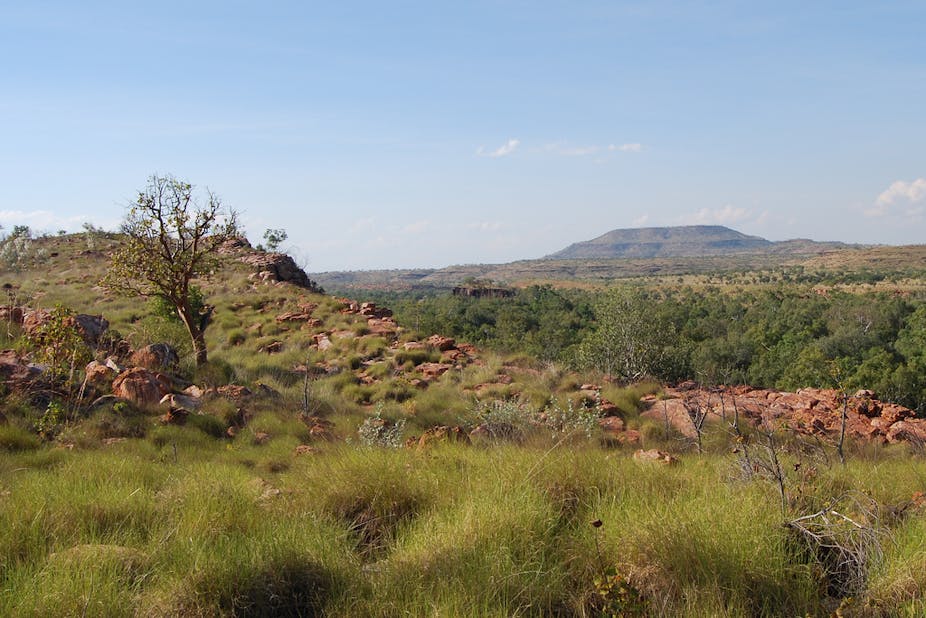
Landowners are in a unique position to contribute. Programs of conservation on private land can be complementary to National Parks and Reserves and protect a similar diversity of habitats.
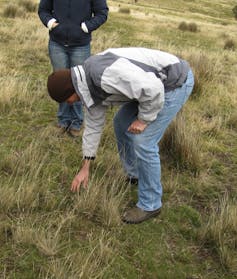
One example is the program led by Humane Society International Australia (HSI), directed at private landowners and properties in regional Australia. With HSI guidance and support the landholders (who have often instigated their own flora and fauna conservation programs) become members of a national network of sanctuaries.
The WildLife Land Trust program contrasts with large-budget conservation projects such as those of the AWC or Bush Heritage. These large projects are fantastic and beneficial but so are entry-level, low risk programs.
Wildlife Land Trust has made some impressive achievements since its inception in Australia in 2007. Today the program has a register of 188 sanctuaries throughout Australia that have committed their resources and properties to conservation. Of the 188 properties 96 are in NSW, 49 in Queensland, 19 in Victoria and 12 in WA. In total they cover 34,277 hectares of land.
The Wildlife Land Trust properties resemble miniature national or state parks but are privately owned and operated, committed to restoring and maintaining the unique biodiversity on these lands. The owners become dedicated custodians of the land, protecting it and saving its resources for future generations. As custodians and conservationists, these programs resemble the land management of Indigenous Australians prior to European settlement. Their efforts contribute to the development of important environmental corridors across Australia.
The individual members of the land trust agree to work and protect their private ecosystem. In some instances they are prepared to place a legal covenant over the land ensuring their sanctuary will be permanently protected for generations to come. This private workforce now ranges between 400-500 volunteers that potentially offer a huge contribution to the welfare of their environment. This is just the beginning.
The Wildlife Land Trust also works to strengthen the sanctuary network by seeking protection for millions of hectares of threatened ecosystems under Commonwealth and State law by nominating threatened species and communities, which anyone can do.
Yes, as Flannery states there must be an alternative to the failures of government to protect our biodiversity. There are alternatives that warrant publicity and further community support. That will ensure that the losses incurred over the last 200 year don’t continue, and that somehow we can reverse the trend of extinctions to our flora and fauna.
Michael Shand
Michael Shand is a Friend of The Conversation.
Software Tester
Private business is run by money, money will almost always win all the time.
So whilst I respect Tim and can see the value in getting local land owners involved - if a property developer comes along with the right price and the land isnt legally preserved as a conservation site - BANG, its all gone
ie. a good hearted farmer might develop a very diverse and productive ecosystem no his land - after he dies or has to sell the property - all that hard work will likely be reversed without second thought
Wade Macdonald
Technician
Sorry Tim Flannery,
Privatising large areas of land will not maintain biodiversity because private interests change with the latest money making ventures.Once the carbon trading fad is no longer a valuable investment market for polluters and bankers, they will look underground or on top of it for the next cash cow. This will not likely be environmentally friendly.
Bernie Masters
environmental consultant at FIA Technology Pty Ltd, B K Masters and Associates
Sorry, Michael and Wade, the reality of the world we live in is that, unless governments accept the need for private land conservation, then Australia's biodiversity will continue to diminish. If you look at a map of remnant vegetation around the continent, more than half is privately owned. Such land contains immense biodiversity values, in addition to cultural values. By excluding such land as being a useful, indeed critical, part of the conservation estate is to deny our future as responsible land managers for future generations.
Ian, thank you for a very important article. I have some issues with HSI's involvement in private land conservation - they're a preservationist organisation and far too radical for most landowners - but your article otherwise raises many important and relevant points.
Wade Macdonald
Technician
Bernie,
I agree with Michael's sentiments about the risks when you also consider the political connections such magnates have and their influence on policy here in OZ.
We all know legislation's can be amended to deny land owners control to their own lands.
On the flip side I don't like radical conservation zealot organisations buying up large areas with anti human ideals either.
Keep it in the hands of government where we can all have a say at the very least on what is equitable for both the environment and society.
Michael O'Keeffe
Ecologist
Private reserves give no protection from mining. Just as freehold land can end up under mining leases, so can a private reserve. Do an Internet search on Bimblebox. You'll see how a very important reserve in Qld, given over by amazingly generous landholders, is about to be first surrounded, then undermined and ultimately completely consumed by one of Clive Palmer's coal mines.
Of you are going to set up a private reserve, until the legislation is amended to give true protection, better pick a site that has no coal or coal seam gas.
Bernie Masters
environmental consultant at FIA Technology Pty Ltd, B K Masters and Associates
So, Michael, are you saying we may as well mine or clear all of our remnant vegetation on private land because the legislation doesn't protect every piece of privately owned bushland? No, I don't think this is what you're suggesting but I hope you can understand that encouraging the 1000s of private bushland owners around Australia to better manage their land so as to protect biodiversity values is highly desirable, even if a few such bushland remnants are lost along the way.
Michael O'Keeffe
Ecologist
Look at a map that shows how much of the country has coal seam gas or coal. The deposits cover huge areas, all of which are unprotected. Furthermore, the resources are in areas supporting ecosystems under serious threat. This means that more than 'a few bush land reserves' could be lost. Bimblebox is about to be lost, and it is of enormous importance.
If a 'few reserves' are lost on private land this will have a knock-on effect. Landowners are unlikely to support any scheme if it appears…
Read moreEuan Moore
Retired
Here in Victoria we have Trust for Nature http://www.trustfornature.org.au which assists landowners with putting a conservation covenant on over their land and with managing their land for conservation purposes. There are over 1100 covenanted properties ranging from a few to several hundred hectares. All have important conservation value. Many protect rare and threatened species in landscapes that are severely fragmented. Others are close or adjascent to state owned conservation areas where they…
Read moreAngus Hume
logged in via email @hotmail.com
All very good discussion and lets not forget the covenanting of private land (Trust for Nature, etc).
With true covenanting property changing hands carries forward the protection permanently.
Evan Quartermain
Program Officer at Humane Society International/Wildlife Land Trust
An excellent article Ian. Conservation efforts on private land certainly play an integral role in preserving ecosystems, and private landholders with a concern for wildlife and habitat protection are in a position to make a very real contribution to conservation efforts across the country. Readers may also be interested in taking a look at Wildlife Land Trust Director Michael Kennedy's response to Tim Flannery's essay - http://goo.gl/xS6Cj
I have to say that I'm somewhat confused by Bernie…
Read more