
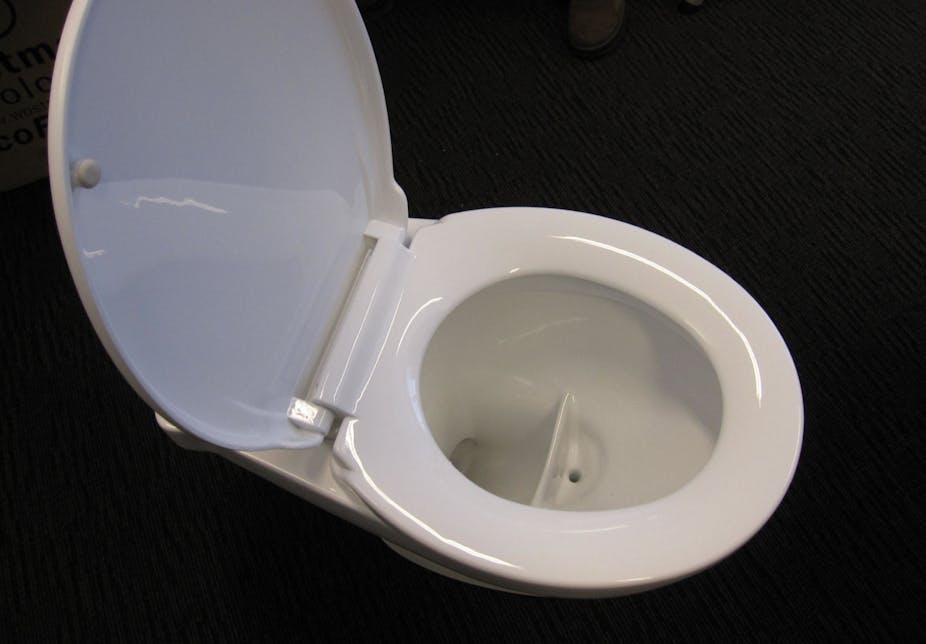
Collecting and reusing urine to grow crops may raise some eyebrows. But as the negative consequences of modern day sanitation systems become more significant, so does the relevance of research and innovation in sustainable sanitation.
Modern day sanitation systems (in the form of piped-water and toilets) have well-deserved recognition as “the greatest medical advance in the last 150 years”, for their critical contribution to public health in cities. But they also waste and misplace valuable resources.
They require large quantities of (mostly drinking quality) flushing water. This particular concern has led to more water-efficient toilet designs and “recycled water” pipe networks – but this is only the tip of the iceberg. Concerns about the looming scarcities of essential agricultural nutrients such as phosphorus are on the rise, even as our sewers carry phosphorus and other nutrients from the food we eat and discharge them to aquatic ecosystems where they can cause eutrophication and algal blooms.
In addition, the increasing consumption of pharmaceuticals and personal care products accompanying our rising affluence has led to the presence of these endocrine-disrupting substances in our wastewater, and as micro pollutants that persist in our waterways. Processes to remove these substances from wastewater are very costly. And although nutrient removal is provided at our inland sewage treatment plants discharging to rivers, it is seldom provided at our coastal plants.
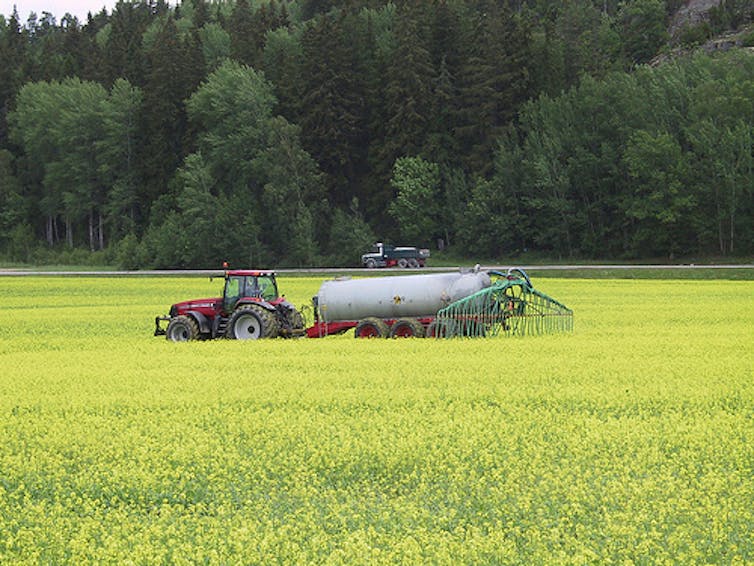
Pee harvesting
Innovation towards more sustainable sanitation systems that demand less resources, enable nutrient reuse and protect aquatic ecosystems are therefore urgently needed. Although ecological forms of sanitation that use little or no water and return all nutrients back to the soil would top a theoretical list, the new cultural attitudes and personal and logistical practices they require would be too great to be feasible for our cities today.
Urine diversion (UD) is however worth exploring. Urine contains the majority of nutrients as well as the pharmaceutical residues we excrete, and contributes a very significant proportion of these substances to the wastewater stream (typically around 80% of the nitrogen, 50% of the phosphorus and 90% of the potassium).
Thermodynamically, diverting nutrient-rich urine at the toilet and collecting it for treatment and reuse while keeping it out of the wastewater stream makes greater sense than mixing urine nutrients with everything else and then removing them at a sewage treatment plant. While micro pollutants remain a complex problem, indications are that they persist much longer in aquatic environments while more likely to be broken down by soil organisms.
Managing the change
The award winning project led by UTS’ Institute for Sustainable Futures recognised that transitioning from current systems to more sustainable sanitation systems is more than a matter of technology. It requires new cultural attitudes and practices as well as regulations, institutions and markets. The research project sought to take a first step in exploring some of these issues taking multiple disciplinary perspectives.
It brought together a large cross-disciplinary team of collaborators including academics from three universities representing design, built environment, engineering, law and agriculture. Key industry partners Sydney Water, bathroom products manufacturer GWA Group (Caroma), and Nursery and Gardens Industry Australia were involved. Government partners from NSW Health, plumbing regulators and City of Sydney, as well as practice-based partners AKA the Plumber, and UTS’ Facilities Management Unit also took part in the project.
The study involved researching the technology, regulatory and social aspects of urine diversion. Two models of Swedish UD toilets were trialed on the 11th floor offices of the Institute for Sustainable Futures. This was primarily to test the user experience and installation issues around the toilets, which do require some behaviour change.
Waterless urinals were trialed in a ground floor male toilet block with plumbing connection to a urine collection tank, to test issues around collection and overflow to sewer. A small agricultural pot trial was also carried out to test the efficacy of urine on a range of plants. There was a dedicated research strand for using visual communications to engage with users, involving students who created a suite of resources such as information posters, logos and multimedia resources (see video at http://vimeo.com/13365354).
The research concluded that waterless urinals represent a mature and feasible UD technology, but the present models of UD toilets are not yet ready for public spaces. There is need for targeted training for plumbers and installers, since some departure from code-compliant plumbing arrangements are required.

The plan for now
There is a long way to go before urine diversion becomes feasible at scale, so large building owners should not be rushing out to start collecting urine right away. However, when new buildings are being constructed, the urine pipework can be added at a minuscule additional cost (relative to the cost of the building) in anticipation of the time in the future when urine diversion is feasible, and necessary as resource scarcity really bites.
With just this view, the new Engineering and IT building under construction at UTS will have urine pipework installed. And designers of the premier Barangaroo development in Sydney are committed to doing the same to “future-proof” their commercial buildings.
The authors' project trialing “urine diversion” systems in urban Sydney recently won a Green Globe award for Excellence in Leadership and Innovation from the NSW government.
william hollingsworth
student flinders university
All males should urinate outside whenever possible.
Chris Booker
Research scientist
might need a law change for that idea too....
Dena Fam
Research Consultant, Institute for Sustainable Futures at University of Technology, Sydney
Hi Chris,
we're not advocating that all men urine outside, that could be a disaster! Especially in areas that have a high water table...
Part of our research actually focused on regulatory requirements for the transportation of urine and we had the NSW Department of Health and Sydney Water as project partners to help us understand from a regulatory perspective what would need to change for this system to be more widely adopted. Regulations (and more research) are still needed in this area to ensure both environmental and public health are maintained.
Mike Swinbourne
logged in via Facebook
Hi Dena,
You might not be advocating it, but there is nothing wrong with the concept.
I don't think anyone is advocating wacking it out and peeing in the street, but doing it your own backyard on the garden or lemon tree - absolutely! To flush away 10 litres of clean drinking water every time you pee is wasteful in the extreme, especially in a water starved country like Australia.
Dena Fam
Research Consultant, Institute for Sustainable Futures at University of Technology, Sydney
Youre right Mike. Theres nothing wrong with the concept, I suppose thats why urine has been used for centuries across Asia and Greece in agricultural production. And there is increasing empirical evidence of the benefits of urine in plant growth (have a look at the Sustainable Sanitation Alliance for more info on whats happening in developing countries)
The problem is men ARE wacking it out and peeing in the street which has prompted Sydney City Council to set up mobile urinals on the weekends…
Read moreWil B
B.Sc, GDipAppSci, MEnvSc, Environmental Planner
Mike, 10 litres! Dual flush toilets have been mandatory for many years, and the half flush button is 3 litres. Even then, I know lots of people whose approach is "if it's yellow, let it mellow, if it's brown, flush it down"
Michael Bailes
logged in via Facebook
far too much sexism here :)
http://www.go-girl.com/
http://www.youtube.com/watch?feature=player_embedded&v=uBiift_rbLQ
Richard Ure
logged in via Facebook
...and shower too, it's getting warmer. Where decency permits.
Colin MacGillivray
Retired architect
If the urine is removed from faeces then the whole paradigm changes. Why use 5 gallons of water to dilute 300g of faeces and transport it kilometres to a wastewater treatment plant? Why not have a vacuum system (like planes and ships and the Netherlands) and collect the faeces where the vacuum pump is located in each suburb. Dry it and automatically bundle it in, say 50kg cartons in a subterranean container sized machine. And cart it away every week. Irradiate it and use it as fertiliser.
Sounds like a step backwards but present sewage systems are costly to build and run because the idea of pumping huge quantities of water is so out dated. Stormwater encroaches and magnifies the ineffiencies.
The article prompted the idea.
Michael Shand
Michael Shand is a Friend of The Conversation.
Software Tester
Great Article, every time we flush we take the nutrients from the ground into the food into our stomach and out to the ocean never to be seen again, we are going to end up in a desert unless we stop the mass export of water and nutrients
Michael Lardelli
logged in via Facebook
Guys - an empty 2L milk or fruit juice container works perfectly for collecting urine. Then dlute this treasure 1 in 10 and put on the vegetable patch or other parts of the garden. No need buy fertlizer! Why flush away such a valuable resource?
Stiofán Mac Suibhne
Contrarian / Epistemologist
I can immediately see problems with scalability and very sour faced men at the gym when they realise they have mixed up their piss bottle with their water
Kenneth Mazzarol
Kenneth Mazzarol is a Friend of The Conversation.
Retired
I have to admit that I urinate into our garden whenever I can. We don't have a lawn. I must admit it began to smell after a while but a sprinkling of bicarb soda, daily hand watering and the retic at regulated intervals helps to dilute and dispel the urinearoma.
Dena Fam
Research Consultant, Institute for Sustainable Futures at University of Technology, Sydney
Hi Kenneth,
yes you really need to add water if urinating directly on your garden. The general rule for fertilising with urine is 1:5 (urine:water).
Peter Davies
Bio-refinery technology developer
You mean I have to drink 5 litres of extra water! ;)
Wil B
B.Sc, GDipAppSci, MEnvSc, Environmental Planner
Surely every man knows to pee on the citrus.
but more broadly, isn't this a bit crazy? The money invested in sewerage infrastructure to pipe mixed urine and faeces is never going to be overtaken by a new system. Maybe, just maybe some new suburbs could get a separate urine pipe (if paid for by the beneficiaries) but the idea of ripping up existing streets and pipes is fanciful to say the least.
leaving aside the cultural aspects.
Now an interesting aside ... Saltpetre (potassium nitrate), an essential part of black gunpowder, was in part collected from cesspits, with the nitrates coming from urine. So Napoleon's successes in Europe were derived from an older version of this idea!
Dena Fam
Research Consultant, Institute for Sustainable Futures at University of Technology, Sydney
Hi Wil B,
You're right retrofitting a UD system to existing buildings would be ludicrous and extremely expensive. The trials of UD in Australia have primarily been installed in new builds where the pipework is integrated into the design of the home or building. The most recent examples of this being in Currumbin Eco-village in QLD where 16 homes were installed with UD, and the Kinglake Community, Vic, where approx 40 homes rebuilt after the fires were installed with UD
Our own project was modest in size with UD retrofitted to toilets in one university toilet block and this was not to determine the viabliity of UD for retrofits but rather to determine how viable the technology and system would be more broadly across multiple dimensons of the system.
For new builds the urine is collected before it hits the sewer so there is no ripping up of existing street and pipes and expensive infrastructural costs...which is really the ideal situation for installing UD systems
Dena Fam
Research Consultant, Institute for Sustainable Futures at University of Technology, Sydney
...and just to add to your comment about UD being fanciful :)
This technology is being researched and adopted in Sweden (over 110,000 systems installed to date), Switzerland, Germany, Singapore (just received a $1million grant to trial UD in conjunction with blackwater recycling), the Netherlands...(not to mention considerable uptake of UD systems in developing countries where urine provides a cheap fertiliser product to help secure food production in poorer regions)
We are not suggesting…
Read moreArthur James Egleton Robey
Industrial Electrician
Is it more ludicrous than starvation? Without Phosphates to make ATP plants don't grow.
Never mind.
The penny will drop.
Eddy Schmid
Retired
Talk about reinventing the wheel. Geez, it may surprise some folks on here, that urine played a very important part in the lives of our fore bearers.
Read moreThere is ample historic documentation available to support this.
Specificaly the fact that familes collected their urine and allowed it to evaporate over time, then used the concentrate as fertiizler and chemicals to treat skins ect, ect.
I'm quiet amused when I read article like this, that have no doubt received thousands and thousands of dollars…
Eddy Schmid
Retired
Oh, forgot to mention, urine is also a good DISINFECTANT.
For as long as I can remember, the underground miners in the nickel mines of Kalgoorlie would urinate on unjuries or sores they obtained furing their working hours, first adi kits in thise days were none existant, so the obvious thing to do if injured, would be to pee on it.
Betcha won't find that in the first aid books.
Michael Bailes
logged in via Facebook
A bush remedy for Tinea too?
easy to apply, you just need crook aim :)
Peter Davies
Bio-refinery technology developer
I am all for nutrient recycling but cannot help but feel angry reading articles like this, not at the authors but at the industry that keeps the current wasteful and expensive practices in place.
We were involved in very successful trials in Victoria to convert biosolids to energy and biochar. Everything was going extremely well until they seem to have realised what we had actually worked, and because of their own casual approach to the project it was working not just on composted biosolids but…
Read moreDena Fam
Research Consultant, Institute for Sustainable Futures at University of Technology, Sydney
Hi Peter
Thanks so much for sharing your experience. It really made me think that if we're going to try and facilitate a shift toward sustainability through these kinds of pilot projects we really need to focus on changing all parts of the system, including project management within institutions.
We've had nearly 150 years of doing the same thing with our sewerage. The system's characterised by a high degree of regulation with price regulation, service quality norms and environmental and public health regulations prevalent. Reinforcing regulatory arrangements and capital intensive assets (t'ment plants and pipework) and are a combination that has led to a considerable degree of resistance to change. And on top of that there arent insitutional arrangements to support these kinds of radical changes in managing, recycling and reusing sewage in more sustainable ways (even if they do occur at the backend of the system eg. reuse of biosolids)
Colin MacGillivray
Retired architect
Peter
You might try the third world. I live in Kuching Sarawak Malaysia where the central city will have a sewage treatment system commissioned shortly.
Today:
http://www.theborneopost.com/2012/10/26/manyin-assures-city-folk-fee-for-centralised-sewerage-system-affordable/
Currently all septic tanks discharge into open drains. 4m of rain and 280 rain days annually make this "work" but the river is deteriorating badly. I have known the chief engineer of the consultants doing this job for 30 years. Some bureaucrats follow "blue ocean strategies" = better solutions for less cost. I know a senior one of those too!
Contact me on macgillivrays@@@@@gmail.com (only one @ of course) if you want to know more.
Peter Davies
Bio-refinery technology developer
Hi Dena,
Our experience in this and other areas has highlighted that supposed "technical" barriers are often simply a convenient excuse for maintaining the status quo. Finding this out before wasting ones own time can save at least some frustration, and could lead to innovative approaches in enacting necessary change...
Whilst its beginnings were noble and led to great improvements in community health, Waste water management is now a multi-billion dollar industry with a "captive" market that…
Read morePeter Davies
Bio-refinery technology developer
Thanks Colin,
Interesting link, our expectation is that the vast majority of our business will be done overseas and we are now structuring the product to be able to do this.
Green fields development is one of the few ways the system will ultimately be able to change, it will be very difficult in the future for the industry to maintain particular approaches when out of necessity less well resourced areas adopt more efficient, sustainable and cost effective methods.
PHHANI MOHAN
DIRECTOR
SEI has come up with article on Practical Guidance on the use of Urine in Crop Production with field trails in various countries to improve Cereal and Vegetable production.
William Raper
Mr.
Quite a few years ago I did a rough calculation of the amount of Phosphorus which could be removed from Australian sewage using known (if advanced) technology. My back of the envelope calculations indicated that it would be around 10% of that used annually.
It might be worthwhile doing this again for both phosphorus and ammonia, and using the results to determine the contribution which redesigned toilets and collection systems could make and whether the costs of collection would be justified.
Peter Hindrup
consultant
Where did the investigation begin? Was it a wide open problem, with for instance a starting point of :
‘Public health must be the overriding priority in the management of human excrement. However the community can no longer afford the waste of resources inherent in the present system?’
My reading of it suggests that ‘cost’ and ‘cultural change’ rated highly in what was looked at, as this paragraph implies.
Read more‘Although ecological forms of sanitation that use little or no water and return all nutrients…
Peter Davies
Bio-refinery technology developer
Peter,
You make a good point about aging infrastructure, there is little in regional Australia (and much of the capital cities) that is less than 30 years old. The problem they now face is that for smaller towns (less than 5000) the capital cost of the conventional approach in the circumstances of tightened environmental legislation exceed the capacity of these communities to pay. We know of several who have sums of +$11 million put aside to upgrade their sewerage systems and have growth constraints…
Read morePeter Hindrup
consultant
Peter:
I don't actually expect governments, organisations or most older people to see that change is possible, or indeed necessary! Not many who have worked their way up to a senior position in the existing structure are prepared to see the structure changed, which could well see their skills/knowledge rendered obsolete.
Some of the young embrace the concept of change, and the population in fact is quite malleable/adaptable.
Over the years I have been told that things are not…
Read morePeter Davies
Bio-refinery technology developer
Peter:
Generally there exists tremendous inertia for change without it being driven by some crisis, this is not necessarily a bad thing (don't fix what isn't broke) though it can be wasteful of resources and other opportunity. What is happening now though is a recognition that we are approaching widespread critical shortages in even basic resources such as clean water in the next few decades, certainly "Peak" phosphorous and other fertilizers are also openly being discussed.
Secondly the GFC…
Read morePeter Hindrup
consultant
Peter:
A serious ‘thank you’ for taking the time to provide such a comprehensive answer. A clear and really interesting explanation.
Off topic, but associated: during the 1990's I organised a move that stood Bellingen Council on its ear. It took too long to accomplish, longer than necessary because I assumed that the problem was ignorance of the law and that once compelled to confront that fact they would, like any reasonable person, make the changes necessary.
I failed utterly…
Read moreEclipse Now
Manager of design firm
William Raper commented above. He asked an important question: how many NPK nutrients are we going to recover from this process anyway? I'm all for it, but will it meet our needs? What fraction will is supply anyway?
wilma western
logged in via email @bigpond.com
Both article and P Davies experience most interesting. The important thing to do especially in new semi rural settlements and fringe metro areas is to get the local authority up to speed on new approaches and this means converting the consultant engineers they rely on , and making sure such alternatives are part of the education / training of new civil engineers .Also environmental/health inspectors in local govt. Things might have changed a bit in recent times but it used to be par for the course that these officers insisted on 2 tank septics and insisted that rural homes could not have composting systems . A member of my family installed a composting system in a small flat built to augment their accommodation - against the wishes of spouse I might add, but they and we found the bathroom- installed composting toilet worked really well, no odour. Of course they also had a worm farm and ended up with more home fert than they could really use even in their large vegie patch.
Peter Hindrup
consultant
Wilma, Long ago I visited an old friend, 'alternative lifestyler' (hippy), an illegal building that had 'grown like topsy', no building skills, AND an inside 'dunny'!
He, and as was general in the area, used sawdust in the can, some in the bottom, some tossed in after every use. To my stunned surprise, no smell, no flies!
Having grown up with various types of dunnies that all stank to a greater or lessor degree, this was an eye opener!
They used eucalypt saw dust. I have seen the same system using pine saw dust,with the same result. No smell, no flies.
Some very simple things (surprisingly) do work!
Eclipse Now
Manager of design firm
It's seems the Malthusian's have taken over the peak phosphorus wiki. The end of that entry states:
Read more"These conservation and recycling practices would substitute the increased mining of phosphate rock, which is impossible after the global production peak of phosphate has been reached. Therefore, conservation and recycling is not a real solution and it is not even slowing down the inevitable decrease in global annual phosphate production. The global agricultural production could be sustained if the…
Arthur James Egleton Robey
Industrial Electrician
Count me among the unrepentant and unreconstructed Malthusians.
You just cannot get around the exponential curve.
http://www.youtube.com/watch?v=LqcHG7QUK9k
Peak phosphate is upon us.
Only Lattice Assisted Nuclear Reactions can provide the energy necessary to reclaim the phosphates necessary from the oceans in enough quantity to provide the ATP necessary to sustain the human population with a doubling time of 35 years.
http://coldfusionnow.org/lectures-from-daejeon/
Have a happy day :-)
Patricia Byers
retired
As I've been reading the article and ensuing discussion I couldn't help remembering the tv program a few years back about Joseph Bazalgette and his contribution to the health and well-being of 19th century Londoners.
Since those advances in sanitation, much has been learned about the causes of disease and how it spreads, and how human excrement might be dealt with. Somehow, more and more technological improvement in the provision of physical plumbing has become an objective in itself, rather than a means to an end. Maybe we're at a stage where we might pause and re-examine just what needs to be done to ensure that human waste is disposed of in an efficient (in all sorts of ways), and health-promoting manner.
As so often happens, how a problem is defined often contains the roots of the solution . . . but who defines, and continues to define, the problem?