


AUSTRALIA BY NUMBERS: The Australian Bureau of Statistics has released the first batch of its 2011 census data. We’ve asked some of the country’s top demographers and statisticians to crunch the numbers on Australia’s population: how we live, where we work, who our families are and how we spend our time.
Here, Associate Professor Anne Mitchell reflects on a milestone for the gay and lesbian community - being counted in the census for the first time.
What a treat this week to see the first data on same-sex couples in Australia emerging from the census. This is a moment of enormous importance in gay and lesbian history.
It is a huge milestone in a struggle that began with the arrest and beating of 53 men and women at the Gay Solidarity march in Sydney on June 24 1978, almost exactly 34 years ago.
This event, inspired by a similar stand taken against New York police at the Stonewall Bar a decade earlier, gave rise to the Sydney Mardi Gras and the regular celebrations now well-beloved by Tourism Australia. It stated to a hostile community that gay and lesbian people were no longer prepared to collude with the invisibility required of them to be left alone, to be safe.
It is a thread that ran through the Tasty night club raid in Melbourne in August 1994 when the gay, lesbian, bisexual and transgender clientele who were stripped, searched and beaten, successfully claimed more than $10 million in damages for their ordeal.
Decades of silence
Advocacy to get same-sex couples counted in the census has been a calmer affair but similarly motivated. For a long time, those of us who saw this highly significant inclusion as critical to recognition that we existed, could not get a seat at the table. Nobody seemed to know who could actually change the census or where the decisions (and this one was highly political) were made.
We had always missed a critical meeting by a month or two, or an opportunity for submissions which had already passed the deadline. While the mysterious census-makers revelled in numbering the glorious ethnic diversity of Australian society, and the social change that saw religion waning, education standards improving and divorce on the rise, there were some things they didn’t want to know.
Homosexuality might have been permitted in the form of the effete gay man in the TV soapy or the maiden aunt and her companion, about whom questions were never asked, but all this relied on silence. We didn’t really want to know how many of them lived in our street.
A new dawn
So times have changed, and while the same-sex marriage bill almost certainly faces defeat for the time being, we do have the census data to scare the horses a little.
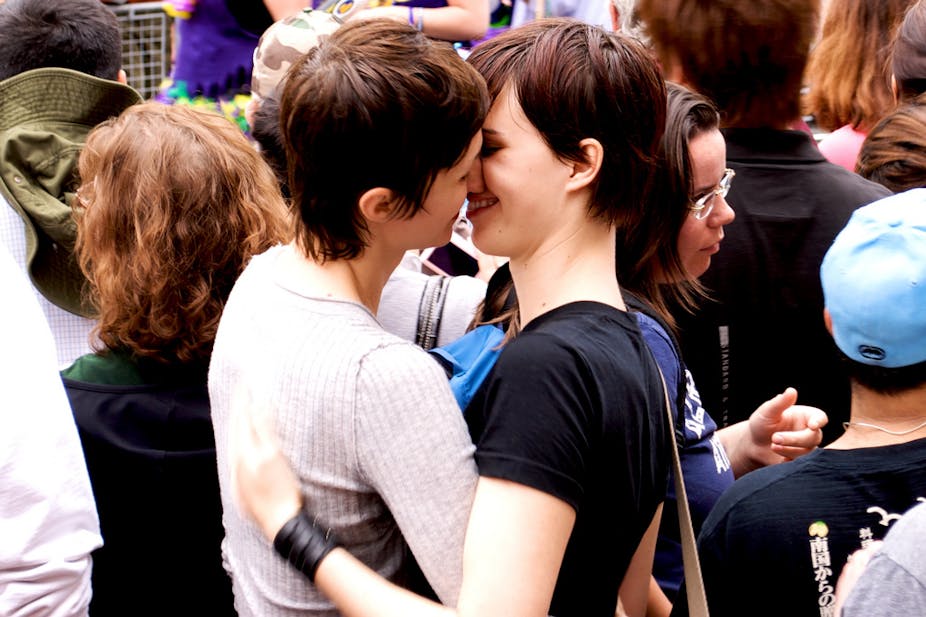
We are here in significant numbers, we are in couples (as well as single and uncounted), some of us brazenly call ourselves “married”, we own houses, we raise children.
Being counted in the census gives rise to a plethora of other benefits and flow-on effects that will make a difference. For example, local councils use census data as a basis for planning local services.
Census inclusion makes it more likely same-sex couples will be included in other large national data sets which are used to plan health services or aged care into the future.
Coming out, staying hidden
Among the latest census data, there is clearly a gross under-estimate of the numbers of gay couples. This is entirely to be expected.
When the legislative changes of July 2009 made same-sex couples the same as de facto couples for the purposes of Centrelink benefits, there was a range of reactions.
Some couples were through the door to declare themselves on the first day, celebrating the greater legitimacy the changes gave them. Others moved out from a domestic partnership rather than being forced to disclose and lose benefits.
By far the most common reaction was to weigh up the pros and cons of declaring ones status to a government who had so far done them no favours. How safe would it be? Who would find out about their status? How could it be used against them at a future time?
This was a particularly poignant question for gay and lesbian seniors, for whom a lifelong practice of secrecy and denial had been essential for their security. Why change it all now?
Standing up to be counted
If the government had met older gay and lesbian people half-way with a “grandfathering clause” that meant no one would be financially worse off in relation to the Age Pension, we might have seen more same sex couples in the 2011 census. But they did not, and the distrust lives on.
All power, however, to the 33,714 same sex couples all over Australia who did stand up and be counted: it is an important stand for visibility and social change.
I am certain that in the 2016 census there will be many more of us and that by then, those of us who aspire to such things will be able to report ourselves well and truly, legally married.