
Sorry, Apple: Samsung is winning the war on 4G platforms

In light of the much-publicised dispute over handset design patents between Apple and Samsung, many commentators have cast Samsung as the “fast-follower”, while Apple is pushing at the frontier of innovation. I would argue such commentators have things very wrong. Samsung is winning the broader and…

Hd4w4jft-1346647058
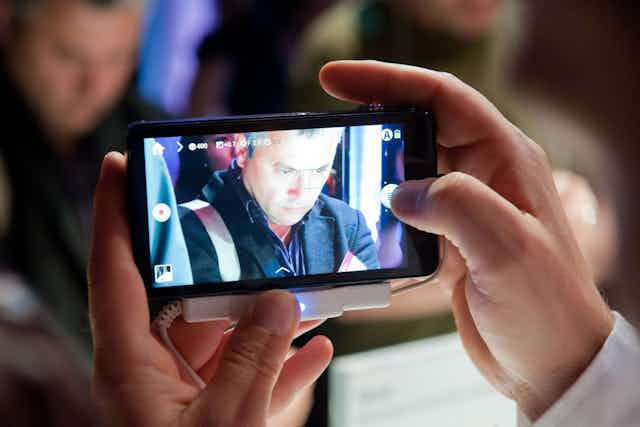
Samsung is a major player in technologies that will deliver future telecommunications services. Robert Schlesinger/EPA

In light of the much-publicised dispute over handset design patents between Apple and Samsung, many commentators have cast Samsung as the “fast-follower”, while Apple is pushing at the frontier of innovation. I would argue such commentators have things very wrong.

Samsung is winning the broader and more important war over patenting innovations, over the Fourth Generation (4G) technological standard or platform, which enables the use of today’s smartphones, including Apple’s widely applauded iPhone, and other manufacturers’ products.

Apple, on the other hand, has little control over the foundational technologies that will enable the delivery of future telecommunications services. This isn’t to take anything away from Apple’s enviable success in the international smartphone market but to explain, from a broader perspective, why Samsung has emerged as an innovation leader and how that has occurred.

Controlling tech platforms

The real winner of the patents war in the telecommunications sector will be the company that own patents related to the technological infrastructures on which all mobile devices are based. Why? Because any company that chooses to develop a product compatible with the underlying technological platform is required to make royalty payments to those firms who control the patents over that platform.

So the potential benefits of controlling the underlying technological infrastructure are enormous.

Samsung’s dominance in 4G patents

By the mid-2000s, three major international alliances had emerged to develop 4G standards, led by Nokia, which promoted Long-Term Evolution (LTE); Qualcomm, which promoted Ultra Mobile Broadband; and a somewhat unusual cooperative venture between Samsung and Intel, both of which focused on promoting a Korean-developed technology known as Mobile Wimax.

In recent years, Qualcomm has pulled out of the race to promote its own platform, focusing instead on promoting LTE – in part due to the perceived technological limitations of its technology relative to the advancements made by the Europeans and Koreans.

Today, Samsung owns the largest share of patents used in both the LTE and Mobile Wimax platforms while Apple holds very few patents over any of the network technologies.

According to one report published by the Wimax Forum, Samsung is estimated to own 15% to 20% of Mobile Wimax-related patents. Meanwhile, in a separate report by iRunway, Samsung commands 9.36% of all LTE patents.

Crucially, it seems a significant share of Samsung’s patent portfolio is related to the core technology that powers both 4G platforms, namely Orthogonal Frequency-Division Multiple Access (OFDMA), and is likely to be the foundation upon which future Fifth-Generation (5G) platforms will be based.

The Korean Intellectual Property Office reports that Samsung, as well as other Korean firms, holds the largest number of patents over OFDMA.

The closest competitor to Samsung in terms of its portfolio of patents is Qualcomm. In addition to being fierce competitors in patenting their respective innovations in telecommunications platform, it just so happens these two companies are some of the largest suppliers of chipsets supplied to Apple, HTC and other Smart Phone manufacturers.

Samsung’s impressive performance naturally begs the question of how a company that built its fortunes in the telecommunications sector based on a strategy of fast-followership – which entailed the payment of exorbitant royalty fees to Qualcomm, Nokia and others in the manufacture of 2G and 3G technologies – has undertaken such a dramatic shift into its present form?

Samsung’s transition

One could not explain Samsung’s transformation without at least mentioning its own entrepreneurship and its steady accumulation of in-house knowledge capacity – a story that could be repeated for many of Korea’s innovation champions such as Hyundai, and is probably beyond the scope of this article.

Instead, let me focus on the role of the Korean state. As Ha-Joon Chang discusses in the widely acclaimed 2007 book Bad Samaritans, Samsung began life in 1938 as an exporter of fruit and vegetables.

Things changed in the early 1960s with the coming to power of a President Park Chung-Hee, who sought to industrially transform the nation. With the full support of successive governments that bore many (but not all) the risks involved in entering new and ever increasingly knowledge-intensive industries, Samsung made its mark on the world in the manufacture of everything from ships to memory chips and telecommunications.

But since the early 2000s Samsung has made clear its ambitions to depart from a strategy based on fast-followership. Among other things, this involved the mass manufacture of handsets while paying handsome royalties to the innovation leaders from the United States and Europe, such as Qualcomm and Nokia respectively.

Samsung participated in the Korean Ministry of Information and Communication’s IT839 Strategy, a nationally coordinated project aimed at creating, commercialising and standardising internationally Korean-developed technological standards.

The company, as with thousands of other Korean firms, collaborated in the development of new technological growth areas. These included 4G technological standards such as Mobile Wimax, or Wibro as it is known in Korea.

While industry leaders may have initially harboured doubts about Korea’s ambitions, Mobile Wimax has been commercialised worldwide and is the main competitor to the LTE platform.

I don’t wish to imply governmental efforts to nurture new sources of techno-industrial growth will always result in “success”. But the Samsung story cannot be told without discussing the strategic role of the state in even an advanced economy such as Korea’s; a point discussed further by Professor Linda Weiss’s article on The Conversation.

The take-home message

Professor John Mathews, similarly to other astute observers, notes in his discussion of Korea’s current focus on promoting “green growth”: “Korea doesn’t do things by half”.

Samsung’s – and indeed, Korea’s – effective challenge and resulting dominance over the former innovation leaders from Europe and the United States demonstrates his point well.

Commentators on the current Apple vs Samsung debate should look beyond the surface of the dispute. Samsung is the innovation leader, not Apple – and not least due to the strategic vision and coordinating role of its home government.

Sign in to Favourite

Want to follow The Conversation?

Sign up to our free newsletter to get the day's top stories in your inbox each morning, with a special wrap on Saturday.

Spinner
Help us have better conversations — donate

Join the conversation

20 Comments sorted by

  1. Daryl Deal

    retired

    Folklore, in November 1983 at a special conference call by Steve Jobs.

    Steve Jobs :- "You're ripping us off!", Steve shouted, raising his voice even higher. "I trusted you, and now you're stealing from us!"

    Bill Gates in reply after looking directly into Steve's eyes:- "Well, Steve, I think there's more than one way of looking at it. I think it's more like we both had this rich neighbor named Xerox and I broke into his house to steal the TV set and found out that you had already stolen it."

    Reality check, Apple Computers Inc, have never invented anything, it is they who are the grandfather of all patent trolls.

    report
    1. Be For ME

      Observer

      In reply to Daryl Deal

      Daryl

      Go check out FOXCONN Technology - the maker of Apple products, the inventor of much of the gear that Apple uses, and owner of several key patents used exclusively by Apple.

      As you infer, the greedy operate by different rules.

      report
    2. Donncha Redmond

      Software Developer

      In reply to Daryl Deal

      Sorry Daryl, that meme has been shown to be false. Apple was invited to Zerox PARC and gave Xerox stock options in exchange for engineering access to their PARC facilities and detailed demos of their windowing system which they (Xerox) had no idea what to do with.

      report
  2. Robert Merkel

    logged in via Facebook

    Your argument kind of misses the point of what Apple does.

    They don't typically invent new underlying technologies. What they do better than just about any other company ever is wrap them in beautiful hardware and software design that makes them a pleasure to use.

    Daryl and yourself are making the fundamental mistake of seeing this final step as somehow window-dressing. I have to disagree. It's every bit as fundamental as the electrical engineering that has gone in to making LTE work.

    report
    1. Jonathan Maddox

      Software Engineer

      In reply to Robert Merkel

      Apple's packaging and user interface work is indeed one pillar of their business. It is very sound engineering and I heartily applaud their success in creating and marketing premium products for the moderately affluent masses that are very easy to learn to use (the market for this class of products is not the 1% or the 99%, it's the top 20%).

      Another big driver of Apple's business in the last decade has been iTunes and the app store(s) and the DRM that enables this market to work entirely under…

      Read more
    2. Robert Tony Brklje

      retired

      In reply to Robert Merkel

      No, what Apple really does is run a 24/7/365 advertising campaign, saturating every possible media point, including and especially forums, a social networks. This to convince people that they create "beautiful hardware and software design", which in reality is a completely nonsensical statement, functional being with a quality human–computer interaction, beautiful is just goofy and just shows a victim of marketing mentality.
      Apple's marketing is all based around the idea of purchasing exclusivity, of the illusion of good taste, the principle of creating in the consumer the illusion of being special for purchasing the device.
      Apple has started to drift off into the spoilt brat fashion statement market and that is certain death for a product because it becomes tasteless to purchase it, basically as you mark yourself as tasteless as the spoilt brats who throw tantrums when they don't get the right model, or the right colour or the current hot one as defined by Apple marketing.

      report
    3. Sam Barillaro

      logged in via Twitter

      In reply to Robert Tony Brklje

      If this were true, that all Apple do is run good advertising campaigns, then why can't any other company replicate its success. The ad and PR agencies Apple uses are used by other companies. The same people who work on Apple ads work on other ads.

      Illusion of good taste? Maybe they actually offer products people enjoy using. That sounds a little more realistic to me than some big advertising conspiracy.

      report
  3. Bruce Moon

    Bystander!

    Kim

    Thanks for an illustrative article.

    You note the Korean effort to foster innovation. Elsewhere I read Korea has an education system the envy of many (perhaps even Gronski). That surely will enhance future innovation.

    Given my cynicism that Apple won the current legal battle because the US legal system favours local over foreign, I'd like to know whether Samsung will pursue pricing strategies to enhance market share in 4G networks and so undermine the global reach of Apple. If so, Apple may become strangled by its own greed.

    Cheers

    report
  4. Comment removed by moderator.

  5. Tak Itaki

    logged in via Facebook

    Apple hasn't really invented anything. They are patent trolls over rectangulars with rounded corners.
    The real danger actually may come from cross-licensing with Samsung, effectively fencing off other smartphone innovators, stiffing competition and choice.

    report
  6. Donncha Redmond

    Software Developer

    Sorry Kim, while Samsung certainly is innovative in other areas, it's abundantly clear that their strategy around phones/tablets/laptops is to blatantly copy Apple.

    Since the iPhone was released Samsung have copied the basic phone design, the basic design of the iPad, the connector design, the packaging design and they've even launched their own Samsung Store where the employees also wear blue shirts, even the same shade of blue as Apple Store employees! Their latest slimline laptop also bears more than a passing resemblance to a MacBook Air.

    Innovation in one area such as network architecture/standards, does not preclude, or excuse, blatant copying in another area.

    report
  7. Jon Hunt

    Medical Practitioner

    As a proud owner of various apple products I will give my unbiased opinion. Who cares about the technology of 4G? What apple does is make products which can do what people want as simply as possible. Many people appreciate this. Most people don't care about technology. You may well have the best tyre on your mercedes but all you would really care about is that it's a mercedes. I suspect if it weren't for apple we would quite possibly still be using physical keypads on our phones with text-based displays. They are not the best at developing technology, but are probably the best at delivering this to everyday people.

    report
  8. Sam Barillaro

    logged in via Twitter

    Seems to me that if Apple uses their patents against the competition, they're the "bad guy", but it's ok if Samsung use their patents against Apple.

    What good is 4G technology if you can only use it on a Samsung phone due to patents? Seems to me Apple aren't the only greedy party here. This doesn't just impact Apple, it will impact all mobile phone companies and in turn it will impact consumer choice more than Apple's victory over Samsung will.

    report
    1. Sam Barillaro

      logged in via Twitter

      In reply to Gary Myers

      If that's the case, then why are Samsung already threatening to sue Apple if the next iPhone carries LTE: http://www.techradar.com/news/phone-and-communications/mobile-phones/samsung-well-sue-apple-over-lte-technology-1094279

      I couldn't find evidence that RAND/FRAND apply to the patents Samsung own on LTE. The fact that they're already preparing to sue using those patents leads me to believe that it doesn't.

      Companies will have to use LTE in a way that doesn't infringe on Samsungs patents unless they work out a licensing agreement. The same way they can still make phones, as long as they don't infringe on Apple's patents.

      report
    2. Christopher J Mischler

      logged in via Facebook

      In reply to Sam Barillaro

      It's not clear if this article is regarding Samsung's 3G or 4G patents, but in either case, it seems not everyone's happy with how Samsung is leveraging their wireless patents (and not just Apple).

      http://reut.rs/TZ7DAM - South Korea probes Samsung over Apple antitrust complaints

      The FTC is investigating whether Samsung is unfairly competing in the market by abusing its dominance in wireless technology patents. Apple filed its complaints earlier this year, said an FTC official, who is not authorized to talk to the media.

      European Union regulators have also been investigating Samsung for possible breaches of antitrust rules by accusing rivals of infringing its technology patents.

      Samsung pledged in 1998 to license its 3G patents to the European Telecommunications Standards Institute on fair, reasonable and non-discriminatory terms. Samsung said it has at all times met its obligations to the fair licensing of its telecoms standards-related patents.

      report
  9. Richard Helmer

    REsearch Engineer

    thanks for the contribution ...i have an emerging dilemna

    as a researcher who for now over 10 years contributes formal intellectual property I have begun to wonder if the current concepts and practices pertaining to intellectual property are actually delivering useful outcomes ... and to whom

    one aspect of this being the high degree of idea integration and complexity evident in new and emerging technologies ... another being the meaningfullness of purchasing monopolistic access from nation…

    Read more
  10. Christopher J Mischler

    logged in via Facebook

    The author's assertion that "Samsung is the innovation leader, not Apple" is the equivalent of claiming Space-X isn't an innovation leader because they licensed the ITU's (International Telecommunications Union) radio communications technology, rather than develop their own. After all, when you're building a rocket, it's only the communication protocol that's innovative, not all that other *obvious* stuff, right?

    report