
Tarkine mines could be last straw for Tasmanian devils

Just a week before Christmas, Environment Minister Tony Burke approved Shree Minerals’ mine near Temma in the Tarkine region of north-west Tasmania. Perhaps he hoped the announcement would get lost in the Christmas and New Year “silly season”, because this approval is likely to be extraordinarily controversial…

K9bs57gt-1357537690
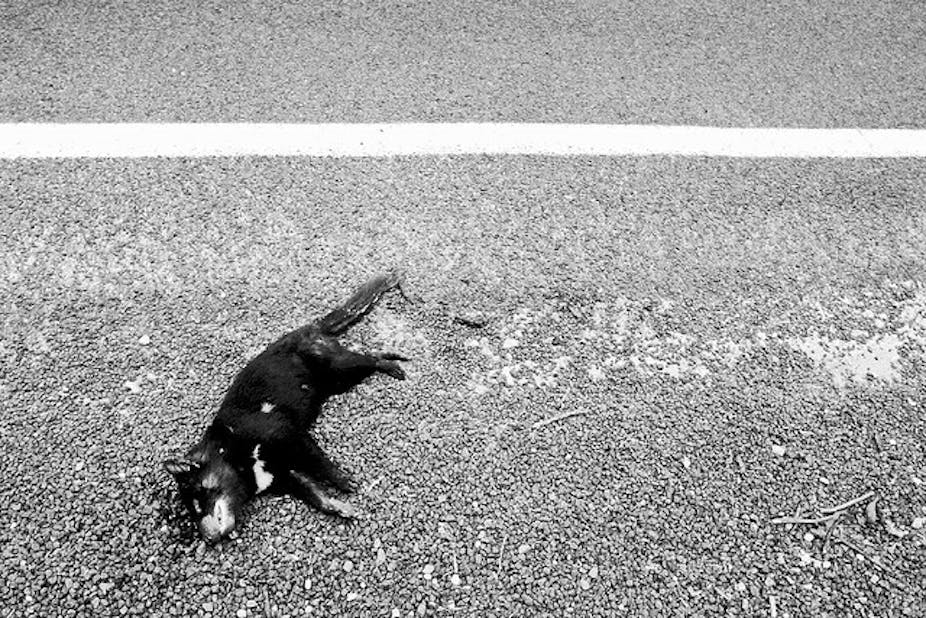
Road traffic is a threat to Tasmania’s few health devils – increased truck traffic in the Tarkine won’t help. Rhys Allen

Just a week before Christmas, Environment Minister Tony Burke approved Shree Minerals’ mine near Temma in the Tarkine region of north-west Tasmania. Perhaps he hoped the announcement would get lost in the Christmas and New Year “silly season”, because this approval is likely to be extraordinarily controversial: the mine is in an area currently proposed for World Heritage listing and is also in the last remaining stronghold of the Tasmanian devil.

The Tasmanian devil is threatened with extinction by an infectious cancer. Since its first discovery in north-eastern Tasmania in 1996, the cancer has inexorably spread westward, reducing Tasmanian devil populations by at least 80%.

Only the north-west remains undiseased. There are indications that the devil populations in the north-west have slightly different genetic composition from those in the remainder of Tasmania and may perhaps harbour some individuals with genotypes resistant to this lethal disease.

Tony Burke’s press release and his approval of 18 December explicitly recognise the threat that this mine will pose to Tasmanian devils: the developers are required to donate $350,000 to the Save the Tasmanian Devil Program Appeal to compensate for the mine’s unavoidable impact.

Within the limited area of the mine site itself, there will certainly be impacts on wildlife, including devils. More seriously, the ore will need to be trucked out by road for about 150km. Almost all of this distance will be through habitat of undiseased Tasmanian devils.
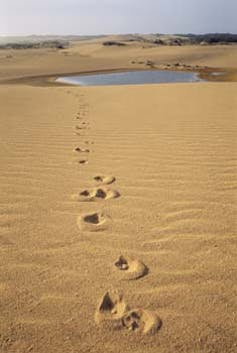
North-western devils may be resistant to facial tumours. Greens MPs/Flickr

As scavengers, devils are particularly susceptible to being killed on roads, as they feed on the carcasses of other animals, such as possums or wallabies, which have previously been run over. As anyone who has driven in Tasmania will know, roadkill of Tasmanian Devils is not new. The problem is that its impact on the viability of the species as a whole is much greater now than it has been in the past, given that roadkill is additional to mortality imposed by facial tumour disease. This and other proposed mines will substantially increase total vehicular traffic in the remote north west of Tasmania.

The approval contains several conditions intended to mitigate this threat of roadkill to devils. These include an obligation to report all incidents of roadkill, a requirement that most travel to and from the mine site must occur during daylight hours and reduced speed limits of 50 km/h or less close to the mine site. But most of the distance mine trucks will travel through devil habitat on their way to port will be outside the reduced-speed-limit area.

A penalty of $48,000 will be applied to each Tasmanian devil in excess of two per year killed on the road by mine vehicles. This sounds a strong disincentive in principle, but I wonder what will happen in practice. There will be an even stronger incentive for vehicle operators to simply throw a carcass off the road into the bush rather than admit to killing a devil and incurring this substantial financial penalty.

More generally, this example highlights a problem with Australian environmental regulation. Up to 10 mine developments are currently proposed for the Tarkine area. The impact of each one individually might perhaps be acceptable in terms of increased risk of impacts on Tasmanian devil populations. But the impact of all 10 in aggregate will certainly be much less acceptable.

If mines are evaluated individually, we risk a scenario of “death by 1000 cuts”. The appropriate way to evaluate the risk would be to take all of the proposed developments together and assess whether the joint effect of all can be handled without unacceptable risk to biodiversity conservation.

The fact that this mine development has been approved individually does not give me confidence this approach will be taken.

Articles also by This Author

Sign in to Favourite

Want to follow The Conversation?

Sign up to our free newsletter to get the day's top stories in your inbox each morning, with a special wrap on Saturday.

Spinner
Donate and become a friend of The Conversation

Join the conversation

48 Comments sorted by

  1. John Newlands

    tree changer

    Tasmania needs the money from these mines. I suspect the northwest devils would eventually succumb to the disease. If so a mine moratorium simply delays the inevitable. Like the New York flu and humans we're all going to get it eventually. The devils may have to be protected in refuges as with other iconic species. Hopefully some road-smart devils will survive and pass on their survival instincts.

    report
    1. Mike Swinbourne

      logged in via Facebook

      In reply to John Newlands

      No John. Tasmania does not 'need' the money from the mines at all. Tasmania - or some people in it - 'wants' the money from the mines, and will continue to survive without it.

      On the other hand, the devils 'need' the mine to stop, otherwise they may not survive.

      I think that makes the choice pretty clear. People should stop being greedy - there is more to life than a bigger flat screen TV you know.

      report
    2. Roger Simpson

      logged in via LinkedIn

      In reply to Mike Swinbourne

      Well said Mike. As with previous govt industry support in Tassie; such as logging, mining, ship building, casino's etc... these projects gain govt support and benefit a few investors. The average Tasmanian ends up footing the bill and watching their natural heritage disappear. Much of Macquarie Harbour is poisoned from tailings continuing to flow down the King River. You would think the decision makers would have learned from the Gunns fiasco as well.

      report
    3. Rob Duggan

      logged in via Facebook

      In reply to Roger Simpson

      Roger Simpson, how and where is "most of Maquarie Harbour poisoned by tailings continuing to flow into the King River", if you are going to comment, please get your facts correct.

      report
  2. Jeremy Tager

    Extispicist

    The same pattern occurs over and over again. We have an environment minister who makes big announcements suggesting he cares about something - heritage listing for the Kimberley, protection of Tassie forests, strategic assessment for the great barrier reef, the world's biggest marine reserves - and then it turns out they are fig leaves behind which it's business as usual; give the mining industry everything they want; impose conditions that are 'stringent' or 'rigorous' (vomit words!) - and probably…

    Read more
    1. Daniel Boon

      logged in via LinkedIn

      In reply to Jeremy Tager

      spot of Jeremy .... Bourke is a right Bourke ... he is at the top of the deceitful spin game ... one can but hope the people who voted him in can rectify the mistake ..... were it that simple, for environmental decisions ...

      report
  3. Whyn Carnie

    Retired Engineer

    Too many conditionals in this article that is more about stopping mining than saving Tassie devils. I wonder what the ratio between roadkill devils and diseasekill devils is?

    report
    1. Mike Swinbourne

      logged in via Facebook

      In reply to Whyn Carnie

      "...I wonder what the ratio between roadkill devils and diseasekill devils is?..."

      In what way does it matter Whyn? Devils are threatened by disease - and it would be foolish to add to that threat with a totally avoidable process.

      report
    2. Bill Thomson

      logged in via Twitter

      In reply to Mike Swinbourne

      It matters to any sensible evaluation of risk. To answer Whyn's question, the ratio is very roughly 1:10 (if figures at http://en.wikipedia.org/wiki/Tasmanian_devil are reliable). Let's assume a way over the top worst case scenario, and say mine traffic will constitute an extra 1% traffic in NW Tas (it's actually orders of magnitude less than that; NW Tas is quiet, but not that quiet). That might make the ratio 1.01:10 (notwithstanding the mine traffic is only during the day, and devils are nocturnal). Even if you got all 10 or whatever mines up, it's then 1.1:10.

      A significant additional threat? Seriously?

      report
    3. Mike Swinbourne

      logged in via Facebook

      In reply to Bill Thomson

      Well Bill, if you want to have a serious discussion about risk, you can't just make up numbers. And if you are going to quote from a source (well - Wikipedia anyway), then you should not just cherry pick the bits you like and discard the bits you don't.

      Why didn't you use this quote, for example:

      "A study in the 1990s on a localised population of devils in a national park in Tasmania recorded a halving of the population after a hitherto gravel access road was upgraded, surfaced with bitumen and widened."

      or this one:

      "The vast majority of deaths occurred in the sealed portion of the road, believed to be due to an increase in speeds"

      or this:

      "Devils have often been victims of roadkill when they are retrieving other roadkill."

      A signifiant addtional threat you ask? The evidence would say yes.

      report
    4. Bill Thomson

      logged in via Twitter

      In reply to Mike Swinbourne

      The reference I gave (chosen mainly because it gave the most accessible summary of the information I utilised) cites the paper you list, among many others. Far from being contradicted by it, it has been used in deriving the estimates I represented. The key is difference in scale, and the word 'localised'.

      I note you didn't quote the part of the abstract which goes on to talk about the effectiveness of countermeasures to minimise devil impacts. These have clearly informed the conditions imposed by regulators e.g. the requirement for mine operators to remove devils from the road even if they didn't hit them.

      report
  4. Bill Thomson

    logged in via Twitter

    Utter bilge. One example: "the ore will need to be trucked out by road for about 150km". Just one minor detail the author left out: almost all of this is ALREADY PUBLIC ROAD. In other words, the ore trucks are only an incremental addition to existing traffic. This is why 'most of the distance mine trucks will travel through devil habitat on their way to port will be outside the reduced-speed-limit area', otherwise you'd have the ludicrous situation of mine trucks crawling along at 50 km/h with traffic banked up behind struggling to overtake at 80 or more.

    And for those as keen as the author to impugn the honesty of truck drivers, there will be frequent inspections and vehicle camera monitoring for compliance with the roadkill conditions.

    report
    1. Mike Swinbourne

      logged in via Facebook

      In reply to Bill Thomson

      Bill - Please stop building strawmen. No one is impugning the honesty of the truck drivers.

      But we are all saying that the mine is unnecessary, and will add to the threatening processes for the devils. And we - almost all of us - think that should not occur.

      report
    2. Bill Thomson

      logged in via Twitter

      In reply to Mike Swinbourne

      Sorry, but impugning the honesty of truck drivers is exactly what flagging "incentive for vehicle operators to simply throw a carcass off the road into the bush rather than admit to killing a devil" is doing.

      report
    3. Mike Swinbourne

      logged in via Facebook

      In reply to Bill Thomson

      No Bill, it isn't. It is simply a statement of fact. No-one said they will actually do it - not the author, and certainly no-one posting has suggested it either.

      But then, what the author has suggested was just a statment of the bleeding obvious. Large fines are a disincentive to reporting - or do you report yourself to the police every time you go over the speed limit?

      report
    4. Rob Duggan

      logged in via Facebook

      In reply to Bill Thomson

      Well said Bill, the author also neglected to mention that these truck are limited only to travel from or to the mine site in DAY LIGHT hours, not dawn or night or dusk, but day light. Don't see too many devils about during the day.

      report
  5. Bill Thomson

    logged in via Twitter

    Demands that all mining projects in the region be 'assessed together' are also utterly unworkable and unreasonable. The various projects are at very different stages of development and certainty, and are being undertaken by several different companies. It's also condescending and ignorant in the extreme to assume that the various (many) approval processes and regulators for any future mines won't take the impact of existing and simultaneously developing operations into account.

    report
  6. Anthony Nolan

    Ruminant

    The mine in question is run and owned by Shree Minerals whose board of directors consists of Mr Sanjay Loyalka, Mr. Arun Kumar Jagatramka, Mr Mahendra Pal and Mr Andy Lau.

    It ought to be obvious that this board of directors is deeply linked to Tasmania and have only the best interests of the Tasmanian economy and forest ecosystems at heart.

    Apparently Brian Bourke has offered to supply the butter whenever these mining wise guys need.

    report
    1. Anthony Nolan

      Ruminant

      In reply to Carol Chenco

      That's right Carol. I'd say that this mob have the same deep commitment to the people and forests of Tassie as Freeport or Rio Tinto have to Papuans. I see Bill Thomson, Brian Bourke and their ilk in pretty much the same relationship to the miners as any Papuan headman is to foreigners offering cargo cult riches.

      report
    2. Bill Thomson

      logged in via Twitter

      In reply to Carol Chenco

      It's hardly a stunning revelation that company directors are concerned primarily with the interests of their shareholders. Indeed they're obliged to be, by law - no matter what their nationality. That's why we have regulations and conditions. But what Nolan is effectively saying is 'it doesn't matter what conditions you set, we don't trust you to comply with them anyway, because you're miners, and you're foreign.' Not a sustainable starting point for rational evaluation.

      report
    3. Whyn Carnie

      Retired Engineer

      In reply to Anthony Nolan

      Anthony, you have forgotten reference that leading green economist and Labor advisor, The Eminent Prof Dr Garnaut, whose corrupt machinations on behalf of BHP Biliton over the transfer of OK Tedi to fictional PNG ownership have finally gotten him banned?
      There are few truly clean members of the anti-mining push.

      report
    4. Anthony Nolan

      Ruminant

      In reply to Bill Thomson

      The conditions imposed by Tony Bourke (not Brian, as previously written) are totally inadequate because open cut mining and nature conservation are antithetical; they cannot co-exist. Open cut mining, you may have noticed, leaves little but a hole in the ground and toxic run off.

      The foreignness issue is significant in so far as there is now a global professional bourgeoisie whose commitment is only to its own engrossment. This class knows no national, regional or local interest; it is not accountable to any community or constituency.

      Still, I daresay that the board of directors of Shree Minerals could point to what the East India Company did to India as the source of their inspiration.

      Plus ca change.

      report
    5. Mike Swinbourne

      logged in via Facebook

      In reply to Bill Thomson

      "...It's hardly a stunning revelation that company directors are concerned primarily with the interests of their shareholders. Indeed they're obliged to be, by law - no matter what their nationality..."

      Good point Bill. But of course, the converse equally applies.

      So you will have to forgive us all if we say that we don't actually give a damn about the interests of the mining company, the directors, or their shareholders. We are concerned primarily with the Australian environment and it's native animals.

      Therefore - by your own argument - you would have to support us when we look after our own interests, and tell the mining company and its shareholders to go to hell.

      report
    6. Bill Thomson

      logged in via Twitter

      In reply to Mike Swinbourne

      So 'your own interests' don't include hospitals, schools, public transport facilities? Because that's what revenue and economic activity ultimately generated by mining helps provide. Remember this is the same Tasmania that's regularly described as a 'basket case' economy. It DOES need the money. Unless you're happy for the rest of the country to fund half a million people to manage the place as a national park. And please don't come the 'conservation generates wealth through tourism'. It's…

      Read more
    7. Mike Swinbourne

      logged in via Facebook

      In reply to Bill Thomson

      No Bill - it does not NEED the money. It wants it. I think you need to look up the definition of 'need' and 'want' in the dictionary.

      And you ask: "Unless you're happy for the rest of the country to fund half a million people to manage the place as a national park."

      First of all, that's a nonsensical statement; no-one is proposing that half a million people become park rangers. But if you are asking if I am happy for my taxes to fund the protection of the Tasmanian bush - you betcha!!!

      Some parts of the country are always going to cost more then they generate in taxes and wealth. That is the way it is now, the way it was in the past, and the way it will be in the future. And we should be making rational decisions about what we are going to protect from development, and be prepared to pay the cost of doing so.

      I am - and I strongly suggest that a lot of others are happy to do so as well.

      report
    8. Anthony Nolan

      Ruminant

      In reply to Bill Thomson

      Oh noes, trickle down economics! We all must be grateful to mining engineers and entrepreneurs because their vigorous pursuit of their own engrossment is really the basis of all social existence without whose efforts there wouldn't even be electricity or stuff. The end of civilisation! Panic!

      Has Andrew Forrest paid any taxes yet?

      As of November 11, 2011 it was calculated that Forrest hadn't paid any corporate taxes for the previous seven years.

      http://www.heraldsun.com.au/news/victoria/twiggys-tax-bill-a-blank-cheque/story-fn7x8me2-1226190659022

      He's no exception.

      report
    9. Bill Thomson

      logged in via Twitter

      In reply to Mike Swinbourne

      "we should be making rational decisions about what we are going to protect from development"

      Damn straight. That means quantitative risk evaluation - see above.

      report
    10. Anthony Nolan

      Ruminant

      In reply to Whyn Carnie

      Yes Whyn I'm aware of the issues but but why would I need to mention Garnaut in this instance?

      report
    11. Suzy Gneist

      logged in via Facebook

      In reply to Anthony Nolan

      ...plus ça change, plus c'est la même chose - truly we now have a global pluto/aristocracy and maybe it is time again for la revolution? Or maybe we can just redesign the systems completely in line with historic lessons and future generational aims...

      report
    12. Whyn Carnie

      Retired Engineer

      In reply to Anthony Nolan

      Anthony, you may notice I was really referring to the Papuan situation that you first raised and using a particularly sad instance of greed and corruption.

      report
    13. Felix MacNeill

      Environmental Manager

      In reply to Bill Thomson

      Bill, it might also be worth noting that, while mining does generate export revenue, it seems to do so largely at the expense of other Australian industries (note recent downsizing at Bluescope Steel as an illustration) because high commodity prices have, in the end, been jacking up the Oz dollar on international exchanges and thereby making other export industries uncompetitive.

      Frankly, mining starts to look like little more than economic churn.

      And, while I don't inherently object to foreign investment, the evidence of the percentage of profits going overseas from mining versus many other industries is unimpressive. Add in the residual damage that the locals get lumped with remediating and it starts to look as if mining, though profitable in the short term, is not that smart an economic strategy at all.

      report
    14. Bill Thomson

      logged in via Twitter

      In reply to Felix MacNeill

      "mining does generate export revenue, it seems to do so largely at the expense of other Australian industries"

      Really? Do you have any figures to support that statement, or any of your others?

      report
    15. Felix MacNeill

      Environmental Manager

      In reply to Bill Thomson

      Ask Bluescope steel for starters. Then ask any competent economist.

      Do you have any figures to support the contention that gravity exists?

      report
  7. Suzy Gneist

    logged in via Facebook

    Future generations will look back on this time and the decisions made with disbelief at the callous disregard of our common assets other than short-term profits. We are selling out the future, of not just our own race, for the comforts of today. I despair at the use we put our intelligence to...

    report
  8. Phil Dolan

    Viticulturist

    Tasmania with one more mine. Well, no difference really. Tasmania with no devils. That is a huge difference.

    report
    1. Bill Thomson

      logged in via Twitter

      In reply to Phil Dolan

      False dichotomy. Show me someone who thinks there is the remotest possibility that any mine will result in Tasmania having no devils, and I'll show you someone who hasn't looked at any data, or any maps.

      report
    2. Brad Farrant

      Adjunct Research Fellow in Early Childhood Development at University of Western Australia

      In reply to Bill Thomson

      With all due respect Bill, yours is the false dichotomy - Show me someone who thinks mining hasn't, isn't and will not further negatively impact the remaining number of Tasmanian devils, and I'll show you someone who hasn't looked at any data, or any maps.

      report
    3. Bill Thomson

      logged in via Twitter

      In reply to Brad Farrant

      Me: "no devils:
      Brad "negatively impact the remaining number of Tasmanian devils"

      Very. Big. Difference.

      Pretty much everything we do has the potential for a 'negative impact', the question is whether it's likely to be significant. The project in question clearly isn't.

      report
    4. Brad Farrant

      Adjunct Research Fellow in Early Childhood Development at University of Western Australia

      In reply to Bill Thomson

      I guess the difference is that you seem quite prepared to further endanger the small number of remaining healthy Tasmanian devils so that some people can make a short term profit whereas I think that is unacceptable and irresponsible. I suspect we also disagree to a large extent as to what a "significant" negative impact is.

      report
  9. Geoff King

    Tour Guide/farmer

    There are a number of problems with the conditions imposed on this mine .Condition 10 is ambiguous as to wether it includes the Smithton Marrawah Arthur river access to the mine site.Condition 7 is also unclear as to what constitutes an authorised vehicle.There could be substantial numbers of mine related vehicles travelling at night.The Arthur river -mine site section and Kannunah -mine site section are proposed to be sealed as a tourist drive in the near future.When the Woolnorth road was sealed for windfarm construction devil roadkill rose by 400%.When the 12 km section of the Arthur river road was sealed in 2003 devil roadkill reached a peak of 35 animals per year. I'm concerned about the mines impact on devils,moreso having read Hamish MaCallums article

    report
  10. Trevor Ellice

    logged in via Facebook

    Tasmania does need the money - before the disease the devils were as think as possums and as somebody who has lived and worked in NW Tassie I know. The devild probably benefted from the roadkill as a food source. The rise of disease has little to do with roads and since migration of populations would seem unrelated to roadbuilding what is the problem

    report