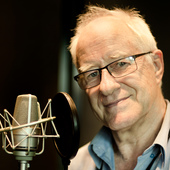
A new free online education platform has been launched in Canberra today, by tertiary education minister Chris Bowen.
Open Universities Australia, a private distance and online education organisation, has stepped into the world of Massive Open Online Courses (MOOCs) with a new online platform called Open2Study.
Mr Bowen, who signed up for a course on anthropology at the launch, said “we don’t yet know what the full impact online forces will have on the delivery of higher education. But we know it’s going to have a big impact… and we know that any university or any institution that doesn’t respond and offer flexible programs is going to fall behind.”
Paul Wappett, Open Universities Australia CEO, said students wouldn’t “pay a cent” for courses with no hidden costs for textbooks, student admin or exams. “We’re focused on delivering outstanding quality, but without the price tag”, he said.
But, he maintained, these courses would not be a replacement for tertiary studies. The courses were designed “unashamedly to let the student taste what is available, getting them familiar with higher learning, so they can build the confidence to go onto further study.”
Mr Wappett said the platform was an experiment of sorts and that Open Universities Australia “would be learning alongside the student about what works”. He also said he would be open to providing accreditation or course certificates once the platform was more established.
Open2Study courses will be available entirely online with short video lectures, quizzes, student discussion forums and the ability to earn “badges” for learning and helping other students.
The courses will be taught by academics and industry professionals from a range of institutions, including Macquarie University, RMIT University and the Central Institute of Technology.
The platform will initially only offer 10 courses including nursing, anthropology, financial planning and management to begin on 22 April this year. Each of these will run for four weeks but once up and running, up to 50 courses will be available with 10 intakes per year.
Free online education has boomed since eminent universities like Princeton and Stanford created their on MOOC startups, with American ventures Coursera and edX dominating so far.
Mr Wappett said the Australian response to these changes had been “slow compared to our counterparts in the United States.” Australian universities had engaged in “a lot of gnashing of teeth but not a lot of action.”
Roland Sussex, Research Fellow at the Centre for Educational Innovation and Technology said, “Open2Study had combined some of the valuable features of American providers like Coursera with a shorter study time per unit of 4 weeks, while keeping the cost-free feature intact.”
“It’s excellent to see a substantial Australian presence in what will soon be a very crowded and competitive field. But we won’t know how right they have got the mix until we see some of their study units in action,” he said.
According to Mr Sussex, Open2Study looked even more flexible than its US counterparts and said the emphasis on social collaborative learning was a plus.
Darren Parker
logged in via Facebook
I wanna study "anthrolopolgy" too.
In all seriousness...
The ONE THING I hate about Coursera is the video lecture format.
Just give me some stuff to read and then quiz me on that - I can read quicker than you can talk and I don't have to listen to all the ums and ahs and fillers!
So get on that Open2Study.
Sunanda Creagh
Editor at The Conversation
Well spotted Darren -- have fixed that typo now!
Cathy Easte
Disabilities Service Officer
Agree stuff to read is needed, for Accessibility. As severely hearing impaired person I can not access the uncaptioned videos - so these MOOCs are only for the those without disabilities... bad call. Where is the access for all?
David Glance
Director, Centre for Software Practice at University of Western Australia
Most, if not all, MOOCs have transcripts of the videos specifically to support screen readers etc. Edx in particular has transcripts that are guided by the video.
David Glance
Director, Centre for Software Practice at University of Western Australia
"The first Australian free online education platform has been launched in Canberra today" apart from the ones already launched by UNSW and UWA that is.
https://www.openlearning.com/
https://www.class2go.uwa.edu.au
Tim Mazzarol
Winthrop Professor, Entrepreneurship, Innovation, Marketing and Strategy at University of Western Australia
It is good to see some local MOOCS emerging even though Australian universities have yet to really understand where all this is heading.
For my part I think online "e-learning" is going to be a key feature within the future of our education and training landscape. With so many people now online and also mobile, it will be easier to access education outside the mainstream institutions' walls.
However, so far nobody has identified a clear business case for these MOOCS. They were initially an…
Read morePrabhu
logged in via Twitter
Good point. I tossed around a business model for UK elite universities as part of my thesis - http://prabhus.com/media/Subramanian-P-2012-WEMBA-thesis.pdf
Should be interesting to find out how such a decision got made by UWA and others.
Tim Mazzarol
Winthrop Professor, Entrepreneurship, Innovation, Marketing and Strategy at University of Western Australia
Hi Prabhu
David Glance will be able to give you more details on the approach being taken at UWA.
You've most likely seen this before, but Sir John Daniel's discussion paper "Making Sense of MOOCS" is a good backgrounder:
http://www.academicpartnerships.com/research/white-paper-making-sense-of-moocs
If he is to be believed the strategy is chasing the technology.
Andrew Jakubowicz
Professor of Sociology and Codirector of Cosmopolitan Civil Societies Research Centre at University of Technology, Sydney
Now we know what prompted Chris Bowen to resign as minister. He signed onto O2S Anthrop, checked out the 4 week workload (quite heavy if done with serious attention), fell in love with the intro video, and decided the next few months would be of more value to him learning new stuff than watching the train wreck around him. Given his seat's likely to go in the western sydney avalanche, a few new skills and insights can come in handy. Prof Downey will introduce him to evolutionary biology, which would be very useful in working through the alpha male chimps that inhabit parliament house.
Darren Parker
logged in via Facebook
This comment does not meet the standards required by the Conversation. It contains personal and defamatory statements and is unrelated to the topic.
Tim Mazzarol
Winthrop Professor, Entrepreneurship, Innovation, Marketing and Strategy at University of Western Australia
Hi Darren & Andrew,
Darren, I agree Andrew's comment is naughty, but it is funny.
Darren Parker
logged in via Facebook
I'm just poopy cos they keep deleting my "inappropriate" comments.
Maybe I need to learn to be funny? ;-p
Tim Mazzarol
Winthrop Professor, Entrepreneurship, Innovation, Marketing and Strategy at University of Western Australia
Hi Darren,
Don't worry, you could be trying to post to the ABC Drum or even "god forbid" one of the mainstream media outlets websites.
Gavin Moodie
logged in via LinkedIn
It will be interesting to see how much of moocs' attraction is the technology (I, like Darren Parker, find it far more efficient to read than to hear a (recorded) lecture) and how much it is the status of the institution offering the mooc.
Tim Mazzarol
Winthrop Professor, Entrepreneurship, Innovation, Marketing and Strategy at University of Western Australia
Hi Gavin
I think we need to transition towards a genuine e-learning 2.0 model where the control is with the learner not the institution. That way the learner can decide what format they wish to use for learning, they can move at their own pace and explore their own interests without having to jump through the hurdles that a teacher or institutional manager feels they should.
The accreditation model we currently have in place needs to give ground (not entirely I feel, but substantially) to a model focused around the individual rather than the institution.
Ivan Ilich's 1970s vision of "deschooling society" remains as current today as it was then. However, today we have better technology to allow for self-directed and self-determined learning.
MOOCS are a start but not a finish for this process.
Chris Bigum
logged in via Twitter
The rush to name and tame new stuff is a long-standing pattern in IT in Ed. When you look at it the current state of the game is interesting (the massification) but remains the same old model. Accreditation is one of the elephants in the room (lots of rear-view mirrorism to be seen here).
The interesting developments will be around different forms of pedagogy. Some of which will depend upon opening up what might be loosely dubbed "secret academic business", i.e. how folk read, how they write, how they tackle new ideas, how they use digital stuff etc. Teaching abstractions of these intellectual habits is the same old, same old. All students get to see is the finished product, not how the pie was made and all the decision making that went into it. There are bits and pieces of this style of sharing, learning in public "out there". It is a kind of DIY but it is supported by the detailed sharing of how others did it.
Leigh Blackall
logged in via LinkedIn
Good on you Tim.. I would invoke Illich as well.. but our institutions are so very .. very far from "Learning Web" thinking, or networked learning, that I dispair.
And then The Conversation driven hype in Australia, toward "MOOCs" without anyone seemingly willing to call BS. MOOC = Massive (ho hum) Open (does anyone know the meaning of this?) Online (read distributed, networked, webism values), Course (problematic, I know). I'm fixated on Open at the moment. Open as in invitational, collaborative, transparent, and legally reusable. The MOOCs that The Conversation writers fixate on are nothing of the sort: https://www.open2study.com/legal/copyright
Danny King
logged in via LinkedIn
This is great news - MOOC platforms are emerging from all over the world and it's great to see an Australian answer. Futurelearn (http://futurelearn.com/) is about to launch in the UK and I'm eager to see more from other parts of the world.
This will mean that many more students or lifelong learners will have the opportunity to learn from the world's best teachers using very high quality content, which really gets me excited. Currently, students who are learning for learning's sake can get much…
Read moreTimothy Devinney
Professor of Strategy at University of Technology, Sydney
There are a few things about this that I find fascinating:
(1) In Australia such things are launched by ministers. In the US they are simply done without such fanfare. I attribute this to the fact that the activity is not so much aimed at the market but at Canberra. It seems that our universities spend most of their time and energy trying to prove they are valuable to Canberra rather than to the more appropriate stakeholders.
(2) I was recently at a BHERT function on Moocs and found it…
Read moreLeigh Blackall
logged in via LinkedIn
Gold Tom. Best yet.
Mark D. Roberts
failure
I've done coursera, makes one realize the value of a good old-fashion text book, pen and paper...