
The ethics of parenting: children vs bugs

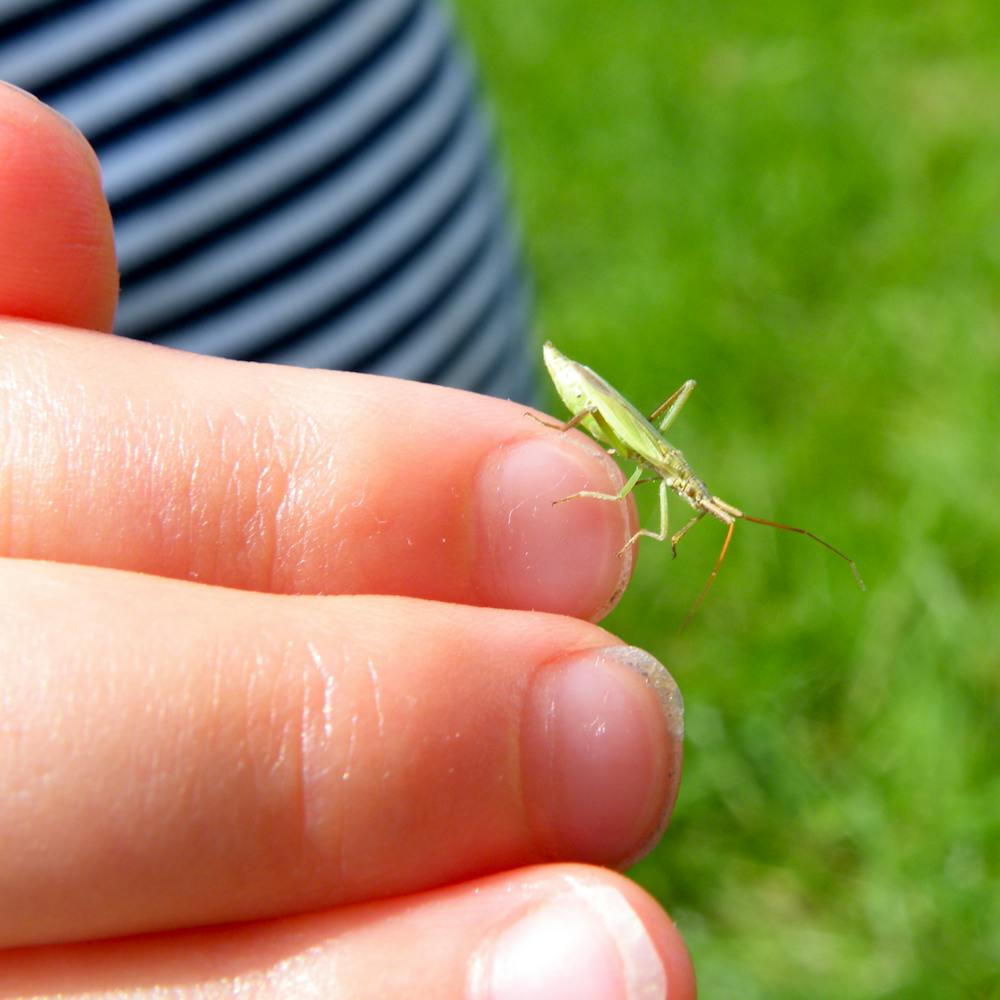
A bug enjoying its last moments of freedom. barrockschloss

Holidays are officially over … I can finally catch my breath!

The summer has been a blur of kids, swimming, BBQs and cousins. There were a few days at the in-laws' holiday house with 10 little cousins – nine aged five or below – and all of the parents camped under a single roof. I think the ratio of laughter to tears was in the right direction, though it was sometimes hard to tell whether the screams were of ecstasy or agony based on the pitch and volume of ear-piercing squeals coming from the rooms.

The three-to-four-year-old cohort of cousins (numbering five across my husband’s family and mine) seem to have all simultaneously become obsessed with bugs – the wigglier and slimier the better! Consequently, it was the first time my role as mother has included ethicist.

As a researcher who has previously conducted experiments involving giving healthy adults hallucinogenic drugs in Switzerland, testing Tibetan monks in India and psychiatric patients here in Melbourne, I am quite well versed in the ins and outs of ethics committees and the need to ensure that the knowledge gained outweighs any risks or harm experienced. I never expected I would be forced with such conflicts on my holiday.

It began innocently enough, with my daughter declaring she had a pet bee as she held up a jar containing a dead fly for me to inspect. Within a few hours the collection had gown to beetles and caterpillars. These poor little guys were having their life squeezed out of them by well-meaning, but poorly-coordinated three-year-old fingers. Then the screaming started as two of the bugs started to attack each other … “GAME OVER!! …The bugs have suffered enough! Everyone outside, lets find a new game!”

In the chaos, baby Max has been a little overlooked. As the screaming and laughing has carried on around him he has learnt to crawl up (but not down) stairs and pull himself up on anything he can hold on to. Of course, as he becomes more and more adventurous and mobile, I need to watch him closer and closer … for his sake as much as mine.

Max at nine months old is starting to get into more and more trouble.

Max is still a very happy kid but seems to hurting himself constantly by squashing his fingers or falling over obstacles. I guess he learns with every new bruise.

With warnings in the media about our generation turning into “helicopter parents,“ hovering over our children, protecting them from everything in the world, it is hard to know when to intervene – either for the sake of the children or the world’s bugs. As a scientist I hope my children will always want to explore their world and learn from new discoveries or mistakes.

Join the conversation

5 Comments sorted by

  1. Alan Stenhouse

    Chief Monkey

    "will always want to explore their world and learn from new discoveries or mistakes." - exactly what life is - though it's often nice to have a guide, isn't it?

    report
  2. Lyndal Breen

    logged in via Facebook

    I always wanted my children and grandchildren to be open to the wonder and beauty of the 'bugs' which are the living wild things most accessible to us all. At the same time, I also stressed that these were living things, that rough handling could injure/hurt and kill and that it was best to look with the eyes and not touch. This approach also prevents bites and stings. Over Christmas we entertained the young ones by having a number of fine Christmas beetles in captivity for a day or two, changing their gum leaves and sprinkling water - but then we freed them, and it was lovely to see them fly off strongly.
    My youngest daughter (now an adult) was the most confident child with handling insects, and I used to fear that she would get hurt. I was reassured
    by a baby health nurse that "kids like her never get hurt" - quite true.

    report
  3. Rachel van Someren

    logged in via Facebook

    My youngest (just turned 6) has always had a fascination with bugs, and is almost always extremely gentle, having been taught that they are good for the environment & the only time we might kill one is if it is actually a risk to us (so this rarely happens - except the mosquito in the middle of biting).
    Over Christmas, while on Fraser Island, he found a stick insect and, for over 1/2 hour let it crawl over his head and shoulders while he showed the other kids & parents. Then a week or so later, camping again, we were fortunate to watch a cicada emerge from the nymph stage, again he sat watching for a good 20 minutes. They will be wonderful memories for him in the future, just like similar ones I hold from my childhood. He loves watching our native bees too.

    report
  4. Pat Moore

    gardener

    Are you writing of Australian "insects" or USA "bugs"? Observation should respect life, not destroy it.

    In my experience as a parent, life is under threat when tribes of boys (especially) start competing with one another to find/kill the biggest/scariest insect. Rules of engagement & respect have to be laid down, especially in the human boy 'kingdom'....remember "Lord of the Flies"?

    Sufficient baby/toddler supervision & education safeguards their later exploits. Some characters need a lot more work than others? But a lot of trouble is avoided when the environment is crawler/toddler-proofed in the first place?

    report
    1. Rachel van Someren

      logged in via Facebook

      In reply to Pat Moore

      I would usually write Australian 'insects', but the article calls them bugs so I guess I did too, and of course bugs could include other small animals such as arachnids, worms, centipedes etc I guess, which would also be relevant here.
      I'm not quite sure where your comment was directed - at the article or as a reply to one of the other comments?

      report