Wicked problems, so we are told, are everywhere. Climate change, conflict, an ageing population, obesity… the list goes on. The debate over asylum seekers, difficult and important and politically charged as it is, is the latest to be categorised in this way.
Researchers talk and write about these “wicked” problems all the time. The term has become a kind of catch-all, a shorthand used to describe the big challenges facing Australia and the world, and the role of research responding to these challenges.
Policy-makers are equally fond of the term – in 2007, the Australian Public Service Commission released a guide to “Tackling Wicked Problems” as part of its series on Contemporary Government Challenges. Along with climate change and obesity, the Commission added indigenous disadvantage and land degradation to its list of the most pressing problems.
The Commission noted the continuing “rise and recognition of wicked policy problems”, pointing out that since Rittel and Webber coined the term in the 1970s, there has been a “steady increase” in discussions of, and research into, wicked problems.
Now we even have climate change classed as a “super-wicked problem”.
But where has all this discussion and work got us? Why, despite the fact that lots of smart people – in academia and government – have been thinking about wicked problems for 40 years, do we feel just as stuck as ever?
Perhaps the answer lies deep within the nature of the problems themselves, and the ways in which we expect policy-makers to deal with them. If this is the case, labelling the big problems that society faces “wicked” is only going to make things worse.
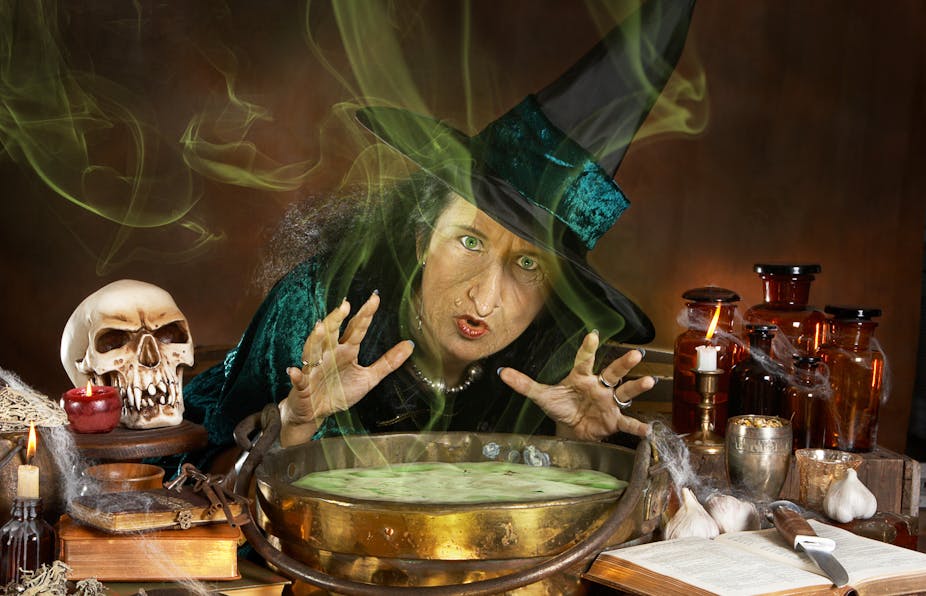
Witches are wicked. Even though the Public Service Commission’s report is at pains to define wicked as “resistant to change” rather than “evil”, the word still carries overtones of malfeasance and irrationality. It also betrays a sense of disappointment that we are still stuck with things that – surely – we should have shaken off long ago? We hear the same pejorative tone when people talk about the “pathologies” of the policy process.
The Commission’s report usefully discusses the characteristics of wicked problems, drawing on the burgeoning literature – among other things, they are complex, hard to define, multi-causal and often require changing people’s behaviour. Attempts to address them can lead to unforeseen consequences. There is no definitive “solution” or fix.
Being clearer about the dimensions and characteristics of a particular policy problem or question can surely help in identifying effective responses. It can also help researchers to understand how their work can inform the policy process. But why does everyone insist on bundling up these characteristics and labelling them “wicked”?
The ancient Greeks knew that uncertainty and complexity were facts of life, to be lived with rather than managed away. As was irresolvable disagreement over values and ideas.
Indeed, to think that human knowledge or technology could ever transcend plurality was a prime example of hubris. And besides, isn’t a commitment to this very plurality a core part of our modern democracies?
American academic Roger Pielke Jr reminds us that many questions have to be resolved through politics. This may take time and may on the surface seem messy, but it is not a bad thing, not a failing of “rational” decision-making or “evidence-based policy”. It’s the way we get things done in a pluralistic world.
Pielke quotes American intellectual Walter Lippmann, who famously said that “the goal of politics is not to get people to think alike. The goal of politics is to get people who think differently to act alike”.
Pielke has written more consistently and eloquently than most about the relationship between science, policy and politics. He makes it clear that in some circumstances, uncertainty is fundamentally irreducible and that the politicisation of policy is unavoidable and in fact desirable. This is of course not to say that things couldn’t be improved.
Science in particular finds itself in the slightly sticky position of claiming to be central to the solution to the world’s most “wicked” problems – climate change, food security, global health, sustainable economic growth, etc. – but then also complaining about the “irrationality” of political decisions and the politicisation of science. (See for example the speech earlier this year by Sir Paul Nurse, Nobel Laureate and President of the UK Royal Society – the speech, and Pielke’s response, are on his blog.)
Justifying investment in science based on its ability to “solve” such problems is setting everyone – scientists and policy-makers alike – up for a fall. But the problem goes deeper than just the risk of raising unrealistic expectations, to a threat against democracy itself.
Eminent scientists – such as James Lovelock of Gaia fame – have argued that the overwhelming complexity of issues such as climate change, and the stupidity and “inertia of humans” mean that it “may be necessary to put democracy on hold for a while”.
There is a broader trend here – the most recent Lowy Institute poll showed that Australians – and particularly younger Australians – seem “rather indifferent to democracy”. Writing recently in these pages, John Keane reported on a growing “ambivalence about parliamentary democracy”, with surveyed CEOs hugely critical of the US administration and Congress, and longing for the certainty provided by the Chinese government.
What can be done? Keane suggests that it might be time for a “call to democratic arms”. Fifty years on from Bernard Crick’s classic, perhaps we do need a few more doing an “in defence of politics”. We need better democracy, not less democracy.
And this is not just an issue for government. Keane has previously addressed “hyper-complexity” and described how universities can turn it into a positive rather than a negative. First and foremost, this requires humility, but universities can play an important role in supporting “the public ethos of pluralism”.
In a different kind of way, Paul Humphries comes to a similar conclusion when he suggests that we have to admit that in trying to “manage” a system as complex as the Murray-Darling Basin, we will make mistakes. The outcomes of our decisions will necessarily be less than perfect, but that is actually okay.
So let’s also agree to stop using the term “wicked problems”. If everything becomes “wicked” or “super-wicked”, then everyone will just give up. We need to work at our democracy, to encourage bright young people – in research and in government – to be filled with enthusiasm for spending their lives working on the big difficult problems of the time.
Progress doesn’t mean getting everyone to think the same, and the messiness and plurality of democratic politics isn’t irrational. Sure, things could be better, but calling them “wicked” doesn’t do much to help.
Ian Donald Lowe
Seeker of Truth
"Even though the Public Service Commission’s report is at pains to define wicked as “resistant to change” rather than “evil”, the word still carries overtones of malfeasance and irrationality."
Read moreWell yes it carries overtones because the word has the following definition;
wick·ed/ˈwikid/ Adjective:
1.Evil or morally wrong.
2.Intended to or capable of harming someone or something: "his wicked driving".
Perhaps you could tell me when exactly the Public Service Commision started re-writing our dictionaries…
Grendelus Malleolus
Senior Nerd
Ian, The concept of 'wicked problems' is neither new, nor a concoction of the Public Service Commission. The phrase was created by Karl Popper and then borrowed by Horst Rittel, who from the 1960s was using it as a descriptor of problems in design theory that have the following properties:
(1) Wicked problems have no definitive formulation, but every formulation of a wicked problem corresponds to the formulation of a solution.
Read more(2) Wicked problems have no stopping rules.
(3) Solutions to wicked…
Ian Donald Lowe
Seeker of Truth
Re-read my post, the first paragraph is a direct quote from the article.
Dennis Alexander
logged in via LinkedIn
Ian, "wicked" is not just one word. There are both homophones and homographs. The etymology of them all is quite interesting, ranging from derived from 'wicca' in terms of the religion - which acquires its "evil" meaning from the ex post facto connotations of christianizing influences - not christian, therefore evil, though the "wick" (candlewick) meaning of intertwined and and interwoven and capillary acting fronds and the "wic" meaning village or farm, so "wicked life" (both these last two probably pronounced "wict"), to my favourite Yorkshire meaning of "alive", probaly derived from 'cwic' like 'quick'.
So, what the coiners of the phrase meant and what you read into it, and how the Public Service Commission chooses to define it have no necessary connexion (yes, an acceptable spelling). I suggest your pedantry may be a little misplaced in relation to the term itself and to the PSC playing in the puddle.
Marc Hendrickx
Geologist
"Why, despite the fact that lots of smart people – in academia and government – have been thinking about wicked problems for 40 years, do we feel just as stuck as ever?"
Probably because of the ridiculous solutions these groups end up advocating.The carbon tax a grand example of an absurd method of tackling climate change.
Grendelus Malleolus
Senior Nerd
Does this mean that you accept that AGW is occurring and we should be doing something about it - just not the carbon tax?
Marc Hendrickx
Geologist
never have said otherwise. The issue surrounds the degree and rate which feed back into an appropriate policy response.
This sort of subtlety is beyond a serial alarmists like yourself who are inclined the smash the panic button at the slightest provocation.
James Walker
logged in via Facebook
This is a common viewpoint: frex the belief that the carbon tax, by punishing our moderately polluting businesses, will drive these industries offshore to countries with no environmental standards - resulting in increased pollution.
Gerard Dean
Managing Director
Mr Malleolus
Hey, watch the word 'we', I deny that humans make a large, even medium impact on the earth's weather.
Actually, I guess you mean that to address AGW, 'we' should do something in addtion to the carbon tax.
How about 'we' all stop choosing to fly overseas for holidays and academic conferences. That way 'we' will save billions of litres of JetA1 fossil fuel every year.
Excellent idea Mr Malleolus, excellent. But I must warn you, whenever I have raised the idea, all of the Red Tickers come out of the crevices and tick me red every time.
Funny isn't it. The very people who most publicly proclaim we should act on climate change and reduce our fossil fuel usage, then choose to fly overseas or interstate for holidays. They could choose to stay home. But they don't.
Actually, I think that this a truly wicked problem.
Gerard Dean
Grendelus Malleolus
Senior Nerd
Perhaps you and Marc should discuss your difference of opinion on climate change.
Gerard Dean
Managing Director
One can only aspire to reach the heights of Mr Hendrickx
Indeed, he was sorely missed for several weeks, during which the standard of comments on The Conversation fell. I myself, often enquired after his health to such luminaries such as Mr Hansen and Doctor Harrigan.
Now, Sir, back to that Wicked Problem, buring JetA1 fuel on holidays.
Actually, it is time to duck off and watch the closing ceremony on the Paralympics.
TTFN
Gerard Dean
Grendelus Malleolus
Senior Nerd
1. Avoid the issue
2. Ignore all other points raised in other comments
3. Raise default JetA1 position
4. Run away
Excellent.
*golf clap*
Ian Donald Lowe
Seeker of Truth
http://www.youtube.com/watch?v=mEfJO0-cTis
Man-made climate change is really happening, watch this video.
Michael Bolan
Systems practicioner
My understanding of 'wicked problems' in this context is that changes in one domain (e.g. industry policy) have unforseen consequences in some entirely different domain (e.g. climate).
To answer to the author's question - "Why,...do we feel just as stuck as ever? I could point out that we insist on trying to divide up the real world into 'portfolios' that fit our political desires (reductionism).
Politicians also filter the information from the real world to produce distorted views that fit…
Read moreTom Ritchey
logged in via LinkedIn
Re: Wicked Problems, you might like to know about this recent publication:
“Wicked Problems – Social Messes: Decision support Modelling with Morphological Analysis”. Springer, 2011.
You can see a description at:
http://www.springer.com/business+%26+management/technology+management/book/978-3-642-19652-2
Regards,
Tom Ritchey
SweMorph
John Coochey
Mr
Eminent scientists – such as James Lovelock of Gaia fame – have argued that the overwhelming complexity of issues such as climate change, and the stupidity and “inertia of humans” mean that it “may be necessary to put democracy on hold for a while
And who decides this and implements it? Would that be why the Americans passed the Second Amendment so their constitution and democracy could be maintained? I wonder when Lewankowsky will do a survey of scientists (or people claiming to be scientists for the purpose of the survey) to prove that they are planning a military coup?
Gerard Dean
Managing Director
Mr Harris,
Do you live in the same Australia that I do?
I have never heard anyone refer to climate change as a wicked problem or the asylum seeker debate as a wicked issue.
The word wicked was an old fashioned word to describe the nasty witch who trapped Hansel and Gretal. The word now means cool, classy, good.
Gerard Dean
Grendelus Malleolus
Senior Nerd
Gerard, just because you personally have not seen it happen, does not mean that it has not. Try pasting this n your google search bar: Wicked problem site:Theconversation.edu.au.
Also, read the original article again, and failing that perhaps read my comment on the origins of the term.
You flaunt your ignorance with pride apparently.
Gerard Dean
Managing Director
No Mr Harris.
"Why, despite the fact that lots of smart people – in academia and government – have been thinking about wicked problems for 40 years, do we feel just as stuck as ever?"
You might feel stuck because a few of your pet projects such as action on climate change and asylum seeker are not progressing to your satisfaction, however the number of successful projects far outweighs the duds.
There are too many to mention, but a few might be: Alice Springs to Darwin rail link; drastic reduction of the road toll through better cars, roads and public education; the Paralympics which has vaulted disabled people into the international sporting arena; Collingwood winning the flag in 1990; the release of the 427 cubic inch V8 Commodore; The founding of The Conversation; shutting down coal burning Hazelwood Power station, oops, strike that one out and the purchase of Abrams tanks.
So, things are not as bad as they seem, Mr Harris.
Gerard Dean
Gerard Dean
Managing Director
Mr Harris
You said, 'So let’s also agree to stop using the term “wicked problems”. If everything becomes “wicked” or “super-wicked”, then everyone will just give up.'
Firstly, I have never heard or seen in writing on The Conversation the term 'wicked problems' to describe a difficult issue. As I said above, 'wicked' now means cool or good to the younger generation.
Secondly, do you honestly think that future generations will give up addressing or wanting to work on difficult issues just…
Read moreGrendelus Malleolus
Senior Nerd
"Firstly, I have never heard or seen in writing on The Conversation the term 'wicked problems' to describe a difficult issue. As I said above, 'wicked' now means cool or good to the younger generation."
Dozens of times... Including some with the term in the title. https://theconversation.edu.au/wicked-problems-and-business-strategy-is-design-thinking-an-answer-6876
Gerard Dean
Managing Director
Grendelus
I understand where you are coming from, I too googled 'wicked problems', however the word wicked has been so taken over by the younger generation to mean cool, that its use by a few obscure scientists to describe a tough problem has failed to capture the public's imagination.
In closing, it has been wicked talking, sorry, cool talking to you, but I must away.
Gerard Dean
Grendelus Malleolus
Senior Nerd
No Gerard, you have no idea. Learn to use google dude. Use the advanced settings and you can search for a term within a specific website. Place inverted commas around a phrase to search for that specifically.
Dennis Alexander
logged in via LinkedIn
Hi Gerard, amongst youth sub-cultures and sub-registers, "wicked" is old hat and probably on the decline. It was a superlative extension of the ironic sense of "bad" and "sick" from the 80s, probably peaked in the 90s and has been in slow decline ever since. "Awesome" seems to have taken over much of the territory previously occupied by "wicked", but that may also be an inter age-group contrast with the two in competition for the same semantic space.
David Arthur
n/a
After 40 years of some people worrying about issues, the world seems just as stuck as ever.
I can think of a couple of reasons.
1) Adverse impacts of human-driven climate change have only started to become apparent over the last couple of decades, by which time the people making lots of money out of fossil fuel use have had ample time to throw out confusion.
2) Adverse impacts of over-population have been apparent from time to time in various places for some centuries. However, these…
Read moreSarah Clement
PhD Candidate
Whilst I agree that the term "wicked problem" is being used too broadly in recent years, I do think the original meaning of the term is a useful one. I see a wicked problem as Rittel and Webber originally defined it: as a policy problem that cannot be defined completely and where most solutions are less than optimal. Sure, some people can feel stuck if they use the term without really grappling with what it means. But starting with this definition - and thus acknowledging that no single solution…
Read moreFred Pribac
logged in via email @internode.on.net
I loved this article. Thank you for such a clear critique, particularly of the position science finds itself in in regard to the largely self-imposed vexed expectations it bears when it enters the world of the policy maker.
A lovely example of this is the recent furore over the Margiris. There is a complete disconnect between the managements trust of the commissioned science as the authoritative final word and the complete disdain and distrust for the same by recreational fishers and conservationists.
Peter Davies
Bio-refinery technology developer
I have always viewed "Wicked" problems as those issues where "the solution requires a solution", where common sense trips over reason and implementing the "obvious" solution is often an intractable problem in itself.
The problem for policy makers is this can send them into ever tightening circles as their "straight and true" course gets deflected by human gravity till it eventually meets its own tail...
Daniel Bishop
Research Associate
In response to the very valid comments about the complexity of the problem(s) facing humanity and following on from the observation by Michael Bolan,
Read more" "Why,...do we feel just as stuck as ever? I could point out that we insist on trying to divide up the real world into 'portfolios' that fit our political desires (reductionism)."
I get the feeling that we are currently in a position where the average Joe feels helpless and overwhelmed by the seeming insurmountable issues facing humanity, and the…
Dianna Arthur
Dianna Arthur is a Friend of The Conversation.
Environmentalist
I think "fracking" is truly "wicked".
Rajan Venkataraman
Citizen
Great article Paul
Read moreI look forward to reading it again and following some of the links. I attended one of Roger Pielke's talks when he was in Australia recently and I liked his take on the intersection (and sometimes vexed relationship) between science and politics. One of the "characteristics of wicked problems" that you don't list in your article is surely that there are groups in society for whom the solution to the problem may cause financial or other disadvantage - at least in the short term…
Marc Hendrickx
Geologist
Paul,
Are you aware of Judy Curry's work in this area? If not her blog is a good starting point...
see for example
http://judithcurry.com/2012/03/11/messes-and-super-wicked-problems/
Keith Thomas
Retired
Michael, I think you'll find the common characteristic of all "wicked" problems is where cultural or personal preferences conflict with biophysical reality. The two (or more) sides exist in different realms and are incommensurable in their basic forms.
The sad thing is we talk of 'compromise' as if biophysical reality can bend to suit the passing preferences of one passing species at a passing piece of time.
And that's where democracy falls down: it appears that - on major issues like climate…
Read more