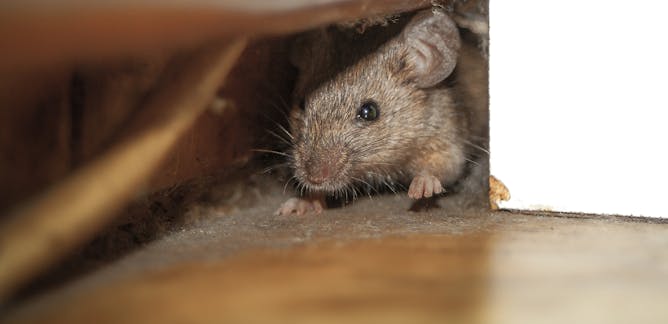
An evolutionary biologist is studying what these resilient urban pests can teach us about adaptation and evolution.
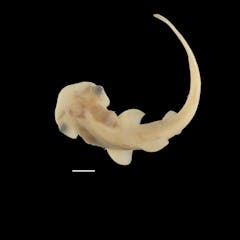
The characteristic hammer-shaped head is just becoming visible in this image of an embryonic bonnethead shark. Scale bar = 1 cm.
Steven Byrum and Gareth Fraser, Department of Biology, University of Florida
Because hammerhead sharks give birth to live young, studying their embryonic development is much more complicated than harvesting some eggs and watching them develop in real time.
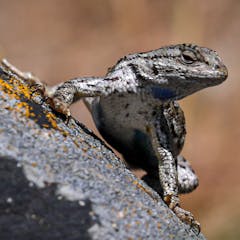
Temperature sensitivity makes western fence lizards vulnerable to climate change.
Greg Shine/BLM
From dark dragonflies becoming paler to plants flowering earlier, some species are slowly evolving with the climate. Evolutionary biologists explain why few will evolve fast enough.
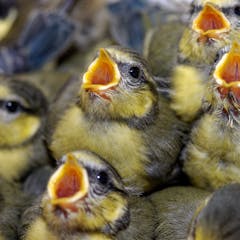
How do siblings affect the size of baby blue tits? It depends whom you ask.
Shutterstock
The heat and chills that come with fever are not only uncomfortable but also metabolically costly. Increased body temperature, however, can make all the difference when you’re sick.
There are areas of biology that may be considered optional at younger year levels, such as botany, entomology and marine ecosystems. Evolution is not one of these.
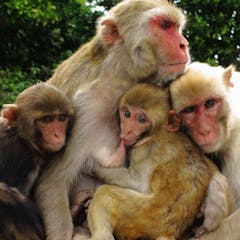
Older monkeys still hang out, just with a smaller circle of intimates.
Lauren Brent
Many older people tend to trim their social circles and focus their social efforts on family and close friends. New research on our close primate relatives may help explain why.
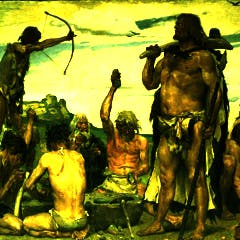
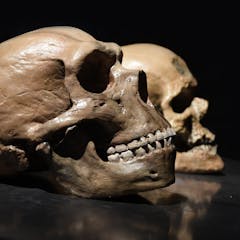
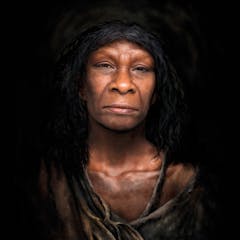
Human evolution is typically depicted with a progressive whitening of the skin, despite a lack of evidence to support it.
Viktor Mikhailovich Vasnetsov/Wikimedia Commons
From Aristotle to Darwin, inaccurate and biased narratives in science not only reproduce these biases in future generations but also perpetuate the discrimination they are used to justify.
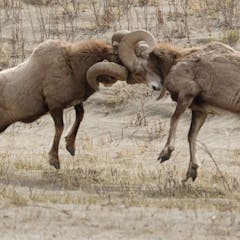
The battle for power in the animal world isn’t always about brute force.
photofellow/iStock via Getty Images Plus
Life can be a struggle for power – not just for people but for nonhuman animals, too. An animal behaviorist explains how this quest can be more Shakespearean drama than boxing match.
There is more to evolution than the genes species inherit.
Tibetan monks at a monastry in Gansu province in China. New research shows sending a child to a monastery can have surprising evolutionary advantages for a family.
Matyas Rehak/Shutterstock
Listen to the first episode of Discovery, a new series available via The Conversation Weekly podcast, telling the stories of fascinating new research discoveries from around the world.
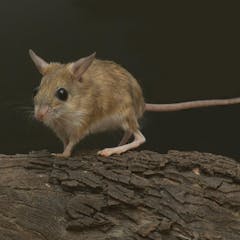
A hopping mouse from the arid desert of Australia (Notomys). Hopping mice have evolved highly efficient kidneys to deal with the low water environments of Australia’s deserts.
David Paul/Museums Victoria
Australia has more than 60 species of native rodents found nowhere else in the world. New research used museum specimens to find out how they got here.
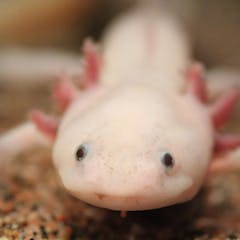
Axolotls are a model organism researchers use to study a variety of topics in biology.
Ruben Undheim/Flickr
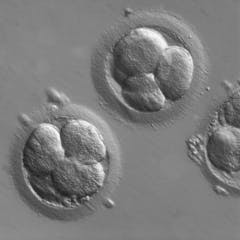
Human embryos are far more likely to die than come to term, an evolutionary trait seen across species. Laws granting personhood at conception ignore built-in embryo loss, with potentially grave consequences.
A vast array of species, including people, use slime for a variety of essential bodily functions. Studying the genetic ancestry of slime surprisingly showcases the role of repetitive DNA in evolution.