Lab-grown meat seems green, ethical and quirky – but at industrial scale, it’s likely to cause unforeseen problems.
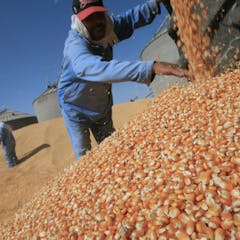
An Egyptian worker gathers the crop at a maize field, the country’s first harvest of genetically modified maize in 2008.
Khaled Desouki/AFP via Getty Images
Nuclear bombs use reactions that can occur naturally, but that is a nonsense argument to deregulate them. So why are these same arguments used to promote deregulation of gene technology?
GM proponents say the technology leads to better crop yields and may solve food shortages and reduce pests. Opponents say GM is a threat to the environment and humans. So where does the truth lie?
People are faced with a lot of misinformation about both GMOs and COVID.
Evan Clayburg
For anyone who has worked on crop improvement in Africa over the last three decades, the flood of misinformation around vaccines evokes an eerie sense of déjà vu.
The quest for a tasty decaf may change the way we think about GMOs.
(Shutterstock)
Genetically modified organisms can help address current agricultural challenges, but public opinion is against them. Maybe the search for delicious decaf coffee could lead to widespread acceptance.
Can plants signal to us when they are sick or detect radiation?
Sebastian Kopp/EyeEm via Getty Images
Researchers are figuring out how plants respond to the presence of human cadavers. The findings could prove important for discovering the locations of murder victims or mass graves.
What determines whether a genetically modified vegetable or fruit is natural?
VICTOR HABBICK VISIONS/SCIENCE PHOTO LIBRARY
What criteria should be used to determine whether a food is natural? What if gene-editing techniques produce changes indistinguishable from those that evolve naturally? Is the food still natural?
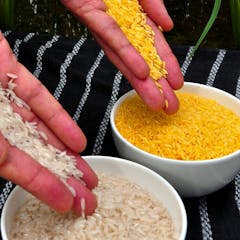
Golden rice, right, compared to white rice, left.
IRRI/Wikimedia Commons
Golden Rice – a controversial genetically modified product designed to combat malnutrition – has been approved as safe in the Philippines. But key questions remain unanswered.
There are plenty of fish to choose from, but many aspects to consider.
(Shutterstock)
Consumers are increasingly concerned about the sustainability of their fish.
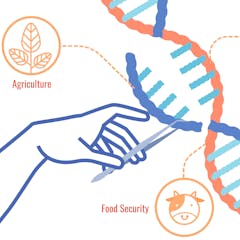
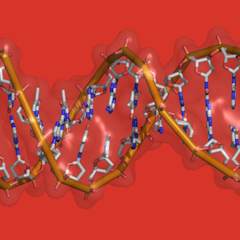
CRISPR/Cas9 gene-editing technology is being used in field from agriculture to medicine to food security and disease control.
TotallyMJ/Shutterstock.com
You may not agree with using the gene-editing tool, CRISPR, to alter the DNA of human babies. But what about using it to engineer plants? Or wipe out one of the world’s most dangerous creatures?
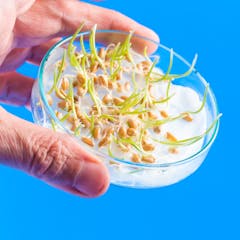
GMO crops have been rejected by many countries and consumers. Now, an international team of researchers are creating better crops using DNA editing–without inserting foreign genes into the plant.
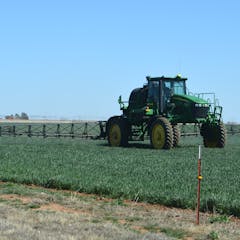
Critics fear the merger of agricultural giants Bayer and Monsanto will drive an increase in use of pesticides.
AgriLife Today/flickr
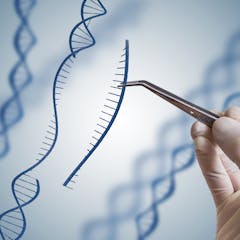
Researchers are starting to harness the potential of this much-hyped gene editing technique – with coming applications in medicine, biology and agriculture.