

Once again, petrol sniffing in Indigenous communities is in the headlines. And once again, sadly, the restraint that newspapers normally exercise in reporting drug issues among non-Indigenous Australians has been thrown aside.
A July front page of The Australian showed two young Aboriginal men, both identifiable, one with a hose in his mouth siphoning petrol from a car, the other clutching a soft drink bottle apparently containing petrol.
“The scourge is back”, declared Nicolas Rothwell at the beginning of his accompanying article: “confronting the eye, disturbing the heart, exposing the failure of remote community management in the Northern Territory after five long years of intervention”.
And so on until, in a concluding paragraph, he pronounces:
All that is clear is failure: after millions of dollars, reports, studies and programs, the combined efforts of the commonwealth and NT governments to stop the plague have come to nothing.
What are we to make of this denigrating outburst, this narrative of hopelessness in which Aboriginal petrol sniffers and those aspiring to help them alike are ensnared in delusion, and in which the only one who can really see what is going on is, by implication, the omniscient journalist? What an extraordinary conceit, in several senses of the word.
Rothwell’s article and the photographs appeared the day before the Senate Community Affairs Legislation Committee commenced two days of hearings in Alice Springs on the Low Aromatic Fuel Bill 2012, which had earlier been introduced into the Senate as a private member’s bill by Greens Senator Rachel Siewert.
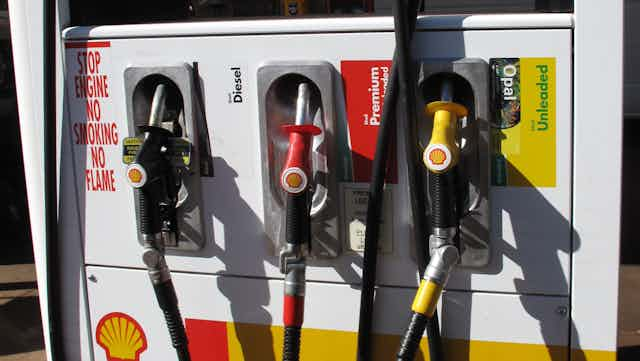
The purpose of the bill is to enable the Commonwealth to compel petrol retailers in designated areas to sell Low Aromatic Fuel instead of regular unleaded petrol. (“Low Aromatic Fuel” is the officially preferred term for what up to now has been more widely known as Opal fuel. The shift signifies a policy commitment to support a particular kind of fuel, regardless of who manufactures it, rather than the particular brand manufactured by BP.)
Most of those appearing before the hearings expressed support for the bill, as did The Australian in an editorial.
As several submissions make clear, however, the reason why Low Aromatic Fuel should be mandated is not because everything that has gone before has failed, as Rothwell claims, but rather because the rollout of Opal fuel to date has been successful in reducing petrol sniffing, and because these successes continue to be undermined by the refusal of some outlets to stock the fuel, and by the reluctance of the Rudd and Gillard governments to compel them to do so.
In 2005 and again in 2008, Gillian Shaw and I were engaged by the Commonwealth Department of Health and Ageing to assess the prevalence of petrol sniffing in Indigenous communities prior to and following the introduction of Opal fuel.
In our initial study we gathered data from 74 communities; the 2008 study examined trends in 20 of these communities located in NT, WA, SA and Queensland. In 17 of the 20 we found a decline in petrol sniffing, attributable at least in part to the introduction of Low Aromatic Fuel.
Overall, the number of current sniffers in the 20 communities fell by 70% from 622 to 187. Because individual communities are identified, the reports themselves have not been released. An executive summary of the 2008 report is, however, here.
We are now engaged in a further follow-up survey of petrol sniffing patterns in 40 Indigenous communities for DoHA. While not at liberty to disclose results to date, we can say they do not support the catastrophic picture conjured by Rothwell. In particular, the community he singled out for attention, Yirrkala in north-eastern Arnhem Land, where petrol sniffing is indeed a serious problem at present, is by no means typical of communities in the NT or elsewhere.
In 2009, the Senate Standing Committee on Community Affairs conducted an inquiry into petrol sniffing in central Australia, in which it recommended that in the event of continuing resistance by individual retailers to stock Low Aromatic Fuel, the Commonwealth should legislate to compel them to do so or, failing that, state and territory governments take similar steps.
In the following year, DoHA commissioned the South Australian Centre for Economic Studies to conduct a cost-benefit analysis of mandating supply in designated areas. The authors of the study concluded that over 25 years the benefits of mandating the fuel would exceed costs by $780 million.
Despite these arguments, the Commonwealth Government has continued to baulk at mandating Low Aromatic Fuel, although it has substantially increased budgetary commitments to the rollout of Opal and to other measures under an eight-point plan to combat petrol sniffing.
Whether these latest moves will shift the government’s stance remains to be seen. Even if they do, two notes of caution should be sounded.
First, and this should go without saying, supply reduction is a necessary but not a sufficient condition for the prevention of volatile substance misuse; measures to reduce demand are also needed.
Second, most of the discussions about mandating Low Aromatic Fuel have focused on isolated roadhouses in central Australia. In several communities where petrol sniffing continues to cause problems, however, the source of petrol is not a remote roadhouse, but a nearby town, such as Katherine or Nhulunbuy. These towns have several outlets, and the social, economic and political dynamics implicated in any move to mandate Low Aromatic Fuel are considerably more complex. Legislating in these settings will need to be accompanied by sound community engagement if they are not to generate the kinds of resentment and resistance that, if nothing else, frighten politicians.
In the meantime, is it too much to ask that journalists who report petrol sniffing in Aboriginal communities respect some of the conventions of privacy, use of evidence and balance that we take for granted when other people’s social problems are being aired?