Washing our hands of responsibility for hospital infections

Infections, like taxes, are inevitable (to paraphrase Benjamin Franklin). Most are acquired in the community and the dangerous ones are, in the main, very difficult to prevent. But many infections are preventable and, regrettably, most of these occur as a consequence of hospitalisation. It has been…

Dq9x6k7v-1354078805
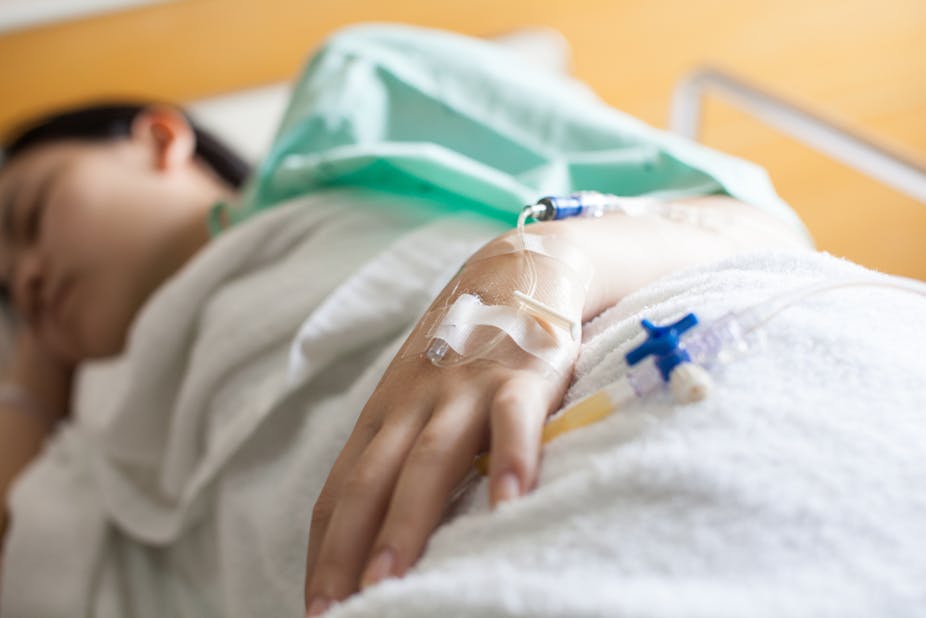
Around 180,000 hospital-acquired infections occur in Australia each year. Hospital image from shutterstock.com

Infections, like taxes, are inevitable (to paraphrase Benjamin Franklin). Most are acquired in the community and the dangerous ones are, in the main, very difficult to prevent. But many infections are preventable and, regrettably, most of these occur as a consequence of hospitalisation.

It has been estimated that around 180,000 hospital-acquired infections occur in Australia each year and these infections result in almost two million additional days in hospital.

About ten years ago, health systems belatedly acknowledged that the means of reducing the transmission of infection in hospitals was right before our eyes: on our hands, to be precise.

Even before bacteria had been identified as the cause of contagion, Dr Ignaz Semmelweis, a Hungarian-born physician working in the Vienna Hospital in the 1840s, proved that his dirty-handed medical staff were responsible for the high death rate of women after childbirth.

He observed that women who gave birth who were attended by medical staff had a 13% death rate from “puerperal sepsis” (now known to be caused by Group A Streptococcal infection). The women who gave birth in the midwife-led ward had a sepsis rate of only 2%.

Ignaz Semmelweis, 1858

When Semmelweis made his doctors and medical students wash their hands in a chlorinated solution after they had performed a postmortem on a recently deceased mother – and before they went next door to the delivery ward to attend another birth – the death rate fell to 2% within a month.

Semmelweis’ findings were rejected by his peers who refused to believe that medical staff could be responsible for the transmission of disease. Nevertheless, within decades the germ theory of infectious diseases had been universally accepted. The ability of invisible micro-organisms to cause serious illness and death became a plank of Western medicine.

By the turn of the 20th century surgeons learnt how to minimise (but not eliminate) the risk of surgical infection through sterilisation of instruments, the creation of clean operating theatres and the wearing of sterile gowns and gloves.

The introduction of antibiotics in the mid 20th century further reduced the risk of post-operative infection and the wards that had been full of patients suffering from dreadful infections soon emptied out.

But over the next two generations the medical community lost much of its previous respect for germs. The increasing availability of antibiotics moved the emphasis of infection control from “prevention” to “cure” and it would not be until rates of antibiotic resistance were too high to be ignored that the medical profession started to re-learn the lessons of a previous century.

Doctors with unwashed hands are like bees which move through the hospital, cross-infecting their patients. Image from shutterstock.com

In 2009 the World Health Organization released its international guidelines on hand hygiene in health institutions. They were inspired by the work of a modern-day Semmelweis, the Swiss-born Didier Pittet, who showed that increasing compliance with hand hygiene in his hospital from 48% to 66% reduced the rate of bacterial infection from 16.9% to 9.9% and more than halved the number of antibiotic-resistant Staph aureus (MRSA) infections.

Our antipodean Semmelweis, Professor Lindsay Grayson, leads the Commonwealth government-funded Hand Hygiene Australia. As a result of this program, which promotes alcohol-based hand rub instead of soap and water, hand hygiene compliance in Australian hospitals has increased from less than 50% to 75.7% in just three years.

Alcohol-based hand rub has been the “disruptive innovation” here. Washing hands with soap and water before and after every single patient contact takes too long. So staff apply hand rub and move between tasks while it is drying. Bottles of hand rub can be placed throughout the hospital, acting as constant reminders to perform hand hygiene.

But this remarkable achievement in hand hygiene was spoilt by one disturbing statistic – doctors only increased their compliance rate to 62.2% in 2012, showing us to be the poorest performing of all the health professions.

It isn’t entirely clear why doctors take a more relaxed approach to infection control than our nursing and allied health colleagues. One reason may relate to modelling of behaviour – health professionals are tribal and follow the lead of their professional peers. At our medical school, we provide intensive education about hand hygiene for our medical students but when they enter the hospital they are influenced by the example of their often unwashed supervisors.

Alcohol-based hand rubs are more convenient than using soap and water. Image from shutterstock.com

One of my infectious diseases colleagues, Paul Johnson, says doctors with unwashed hands are like bees which move through the hospital, cross-infecting their patients with micro-organisms instead of pollen. Medical cultures, it would appear, are much harder to change than microbiological cultures.

We are now entering a time when the end of antibiotics may be in sight for many bacterial infections. This will have terrible implications for people who are at increased risk of infection, such as those with kidney, heart and bone marrow transplants.

It may become too risky to implant total hip and knee replacements and the risk of death from previously simple-to-treat infections such as pneumonia and urinary tract infections may return to that of the pre-antibiotic era.

So, part of the solution is, well, a solution: alcohol-based hand rubs that cost only a few cents per treatment and which dramatically reduce the chance of transmitting infections from patient to patient. Seems simple, really.

This is the first article in Superbugs vs Antibiotics, a series examining the rise of antibiotic-resistant superbugs. Click on the links below to read the other instalments.

Part two: Superbugs, human ecology and the threat from within

Part three: We can beat superbugs with better stewardship of antibiotics

Part four: The hunt is on for superbugs in Australian animals

Part five: The last stand: the strongest of the superbugs and their antibiotic nemesis

Part six: Unblocking the pipeline for new antibiotics against superbugs

Part seven: A peek at a world with useless antibiotics and superbugs

Part eight: Trading chemistry for ecology with poo transplants

Part nine: New antibiotics: what’s in the pipeline?

Sign in to Favourite

Want to follow The Conversation?

Sign up to our free newsletter to get the day's top stories in your inbox each morning, with a special wrap on Saturday.

Spinner
Help us have better conversations — donate

Join the conversation

28 Comments sorted by

  1. Mark Dressler

    logged in via email @gmail.com

    Perhaps there is a sub-conscious belief by the medical specialists that they are a breed apart and somehow beyond infection.

    report
    1. Neville Mattick

      Grazier: Biodiversity is the key.

      In reply to Mark Dressler

      Weren't their neck ties part of the problem once?

      Always choose a surgeon with a bow tie.

      report
  2. Graeme Harris

    Director

    That is all well and good, but the base of the problem is poor cleanliness of the hospital and the penny pinching that allows the super-bugs from the old facility to be quickly transmitted to the new facility via equipment and staff.

    This then leads to the silo financial structure of hospitals, cleaning comes out of the administrative silo and its performance is not assessed by the rate of infection. Treatment comes out of the pharmaceutical silo, so there is a disconnect between the cause, cleaning and the effect pharmaceutical cost.

    Another disconnect is that you did not appear to draw out the compliance with hand washing to the incidence of infection generally and the rate of hospital acquired infection. One of the great problems with journalists is that they tend to confuse association and causation.

    report
  3. Gordon Angus Mackinlay

    Clinical Psychologist

    It is all well and good to blame medical practioners for not washing their hands, and it is perfectly true, but, the nursing staff are as much to blame, and possibily more so since they have greater patient contact and rapid physical interaction between patients. Added to which the standard of hospital cleaning (Mr Harris touched upon it), when I trained as a State Registered Nurse in the British Army in the 1960's cleanliness was god. Twenty years later whilst paying my way through Uni, I worked…

    Read more
    1. Kate Rowan-Robinson

      Kate Rowan-Robinson is a Friend of The Conversation.

      Registered Nurse/Sexology Student

      In reply to Gordon Angus Mackinlay

      While Registered Nurses have to be more conscientious than most with hand hygeine due to increased patient contact, I think you'll find that RN's have a far higher rate of hand hygeine compliance than medical staff (http://www.hha.org.au/LatestNationalData.aspx) - indeed RN's have been found to have the highest rate of compliance of all healthcare worker types audited. Also, in just about every hospital I have ever worked (one small private hospital allowed short sleeved shirts and skirts or trousers as uniform), scrubs are the standard uniform for RN's.

      I agree that permanent trained cleaning staff and ALL staff wearing scrubs would aid in reducing infection control.

      report
  4. Comment removed by moderator.

  5. Euan Tovey

    Associate Professor & Principal Research Fellow in Medicine at University of Sydney

    There was facinating lecture on infection control in hospitals at Healthy Buildings 2012, in Brisbane by Clive Beggs, University of Bradford.
    Briefly, prior to 2007 infection control proceedures in the UK focussed heavily on hand washing to control MRSA and Clostridium difficile; the two major pathogens thought to be predominanly spread by handborne routes, Despite increasing campaigns to enforce handwashing, the infection rates continued to rise. Only when infection control procedures were switched…

    Read more
  6. Sue Ieraci

    Public hospital clinician

    It's not impossible to change the practice of medical practitioners. In my thirty years in hospitals, hand hygiene practice has changed dramatically - mainly due to the ubiquitous presence of disposable gloves (which protect the provider as well as the patient). Clearly it is still not perfect, but there may be more complex reasons than simply arrogance (I would say that, wouldn't I?).

    Doctors respond to evidence and reason more than attempts to shame or force compliance (don't most adults…

    Read more
    1. Kate Rowan-Robinson

      Kate Rowan-Robinson is a Friend of The Conversation.

      Registered Nurse/Sexology Student

      In reply to Sue Ieraci

      Concerning doctors and missed "moments" of hand hygiene I often wonder why the culture is not changing within the hospital I worked at. It was mandatory for every new employee taken on to complete the Hand Hygiene Australia online learning package. While I understand that orientation and all the mandatory workshops that are completed are often snooze inducing, many of the interns and residents cannot say they have never come across the "5 moments", yet so many of them were happy to follow their consultants…

      Read more
    2. Ulf Steinvorth

      Doctor

      In reply to Sue Ieraci

      If your reasoning is true would that not mean that doctors have a lower compliance with hygiene standards than other health workers because they have a more limited grasp on evidence and reason than e.g. nurses and allied health? Refreshing thought.

      Or has it more to do with the fact that we are not 'shamed and forced' into compliance as much as our nursing colleagues?

      Last time we raised this matter with a hospital they certainly 'washed their hands of it' simply stating that it could not be proven that medical staff hadn't washed their hands...

      Put that in your pocket and have a look at it - or just pretend you had a good hard look/think/wash

      report
  7. Mark Amey

    logged in via Facebook

    I work in Neonatal Intensive care, where we are religious about rolling up sleeves, removing watches/bracelets/etc, handwashing on entry then handrub before touching patients or equipment, and so on. We also have dedicated cleaners who are very diligent about ensuring all of the area is clened on a regular basis.

    One of the very real sources (we believe) are mobile phones carried by parents, visitors and, of course, staff. Mobile phones are ubiquitous and seem to accompany the owner, absolutely everywhere, including the toilet. Having said that, I think I've seen a mobile phone being cleaned once, by it's user on entry into the hospital.

    Perhaps they should be banned!

    report
  8. Yoron Hamber

    Thinking

    Is there a difference between washing your hands relative using alcohol-based hand rub? My daughter, being a Swedish nurse, told me recently that just washing ones hands do not guarantee them being 'clean'. the alcohol based hand rub if properly used will though. I remember reading a long time ago :) that a good hand wash (air drying) was expected to kill about 99 % of the bacteria though?

    So?

    report
    1. Kate Rowan-Robinson

      Kate Rowan-Robinson is a Friend of The Conversation.

      Registered Nurse/Sexology Student

      In reply to Yoron Hamber

      Performing a correct 15 second handwash (technique here: http://www.who.int/gpsc/5may/How_To_HandWash_Poster.pdf ) with an anti-microbial wash (such as chlorhexadine) and drying hands properly (disposable paper towel is fine) will reduce bacteria levels to 'safe' levels and hands will be considered 'clean'. Alcohol Based Hand Rubs (ABHR) are slightly more effective at reducing bacteria and are considered gold standard in healthcare settings, however in home settings soap and water with a 15 second handwash is perfectly adequate.

      report
  9. Peter Ormonde

    Peter Ormonde is a Friend of The Conversation.

    Farmer

    It's all very well to come over all Pontius Pilate and rinse off the whole business, but I suspect it's actually a lot more systemic and cultural than a few simple "wash your hands" remiders might have us believe.

    To wit:

    Those who keep up which such things may recall that I am newly returned from a short sojourn as a guest of Her Majesty - this time for health reasons in a big teaching hospital.

    Owing to refurbishment, the cardiac unit - mein hosts - were bunking down with the gastrointestinals…

    Read more
    1. Mark Amey

      logged in via Facebook

      In reply to Peter Ormonde

      Peter, glad to see that you are well enough to share some of your dry wit with us. Hope everything is OK!

      report
  10. Tom Hennessy

    Retired

    "High surface electron activity of a metal surface results in particularly strong interactions between the bacteria and the metal—the initial stage of biofilm"

    One might begin with painting as many surfaces as possible with a remedial paint , such as those used when painting lead impregnated walls ? Phosphate , starch based paint.

    report
    1. Tom Hennessy

      Retired

      In reply to Tom Hennessy

      "Horizontal gene transfer (HGT) in bacteria is largely responsible for the development of antibiotic-resistance"
      "HGT can take place in the environment, on frequently-touched surfaces, such as door handles, trolleys and tables, which are made from stainless steel"
      "We show prolonged survival of multidrug resistant Escherichia coli and Klebsiella pneumoniae on stainless steel surfaces for several weeks"

      report
    2. Jason Walters

      Researcher & perennial student

      In reply to Tom Hennessy

      There are a huge number of fundamental flaws in the design and implementation of our hospitals. They range from lack of facilities, all the way to poor choice of design and actual materials of construction.
      Carpet tiles or carpet of any kind (as an example), whilst lowering the noise level simply cannot be cleaned properly in any environment, let alone that of a busy hospital, where blood, faecal material and other fluids regularly make their way to the floor. Some of the built environment materials…

      Read more
    3. Tom Hennessy

      Retired

      In reply to Tom Hennessy

      Quote: Some of the built environment materials that we have long thought of as likely to be quickly fatal to micro-organisms (stainless steel as an example) are not at all so, except perhaps in the autoclave

      One really has to wonder about the abilities of those in the medical field who 'stood by' and allowed steel to be used when simple research shows the ability of steel to harbour and grow disease , even better than anything else , HOW , could this have been overlooked ?

      "The researchers looked at the transfer of the Hepatitis A virus and Norovirus between a range of fruit and vegetables and different kitchen knives or flat steel coarse graters. Tests were done with uncontaminated utensils on contaminated produce and contaminated utensils on uncontaminated produce.
      Results found that when using uncontaminated utensils, more than half of all knives and graters were contaminated after preparing the contaminated produce"

      report
  11. Graeme Harris

    Director

    It is interesting to note that most of the comments are fixated on the hand washing except one that relates that despite hand washing infections rose.
    It is easy to check on hand washing compliance, it is hard to look at the financial systemic problems of our hospitals particularly and our health care system generally.
    The superbug problem is an expression of a systemic problem of organization, thoughtless funding, administrative overburden and under funding. It is easy to check hand washing compliance and will employ many bureaucratic resources, getting money for clean hospitals will require thoughtful expenditure and a decrease in bureaucratic expenditure perhaps to pay for cleanliness.

    report
    1. Peter Ormonde

      Peter Ormonde is a Friend of The Conversation.

      Farmer

      In reply to Graeme Harris

      Buggers of things bugs. Doesn't seem to matter what we do eventually they will get through our best defences. It's what they're really really good at. Getting access to food and the conditions for furthering themselves. Better than us at it really.

      And yes you're right - it's a cultural and economic issue this attitude to cleanliness in hospitals. But the low fruit - the quickest, cheapest and most effective intervention - is hand-washing Graeme. Especially in a gastro ward. Especially…

      Read more
    2. Lorraine Muller

      PhD - eternal student

      In reply to Graeme Harris

      I spent a considerable time beside a loved one in hospital. He was in for an op but got a 'bonus' e-coli superbug. Thankfully, he survived. Me and my family got a handwashing lesson before going into the icu isolation room. It was hand wash and dry, then gloves and gowns, then wash hands on leaving. We were complimented on our compliance as they feared the bug would get into the icu and they would have to close it down for weeks. That would have been a disaster in the regional hospital.

      While…

      Read more
  12. Chris Booker

    Research scientist

    Good to see the historical mention of Semmelweis here, a true scientific and medical revolutionary. Of course, one of the reasons why his ideas were slow to catch on was not just that he proposed that medical staff were the source of infection (as covered in the article) but also that this was done by organisms so small you couldn't see them.

    As such, while he had a pragmatic medical intervention (hand washing saves lives) and some good data to back it up, the theoretical interpretation to explain…

    Read more
  13. Comment removed by moderator.

  14. Comment removed by moderator.

  15. Wendy Miles

    Director at NursesHeart

    There's a five minute video presentation on my home page that shows a new (world first) nurse uniform called Skantz™ that has been designed to potentially decrease the transfer of bacteria carried by un-washed nylon utility belts. We have removed the need for utility belts by building all the benefits of them into a single piece of uniform that will automatically be washed regularly. Every nurse washes their uniform. I hope we get enough support to see if we can make a difference.

    report