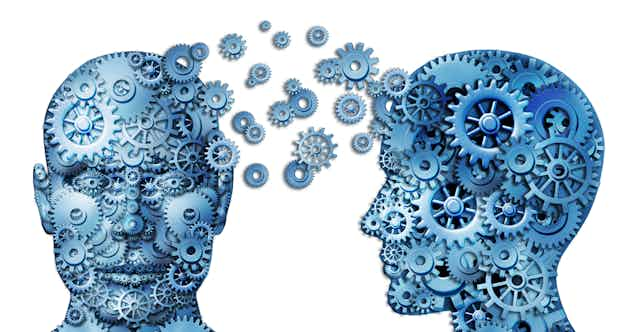

Neuroscience: the word oozes sophistication and intelligence – the very qualities we might want to nurture in our students, our children, our general populace.
Maybe that’s why many people involved in education around the world are persuaded that what neuroscientists have learned about how the brain works has important and direct implications for education and classroom practice.
This excitement around “brain-based learning” – as if learning could occur anywhere else – and “neuroplasticity” is irrelevant at best, and at worst has been a major distraction without any practical meaning for educators.
And yet some governments and schools are already considering high-cost brain training programs despite a lack of evidence of any educational benefits.
All the while, the people who actually do this brain research – the neuroscientists themselves – don’t think their findings can be applied in a classroom setting.
It’s time for educators, policy-makers and the public to realise the limitations of neuroscience in education and to see the hijacking of neuroscience for what it is.
In September 2007, Science published a statement signed by 119 prominent neuroscientists, which declared that brain science is not yet ready to relate brain processes to classroom outcomes.
In particular, the signatories wondered: “How did the myth of brain-based pedagogy become so pervasive in educational discussions? How did policy-makers, educators, and the public become so misinformed?”
This has happened for numerous reasons. I’ll mention just two.
The first reason is that enthusiasm for the idea neuroscience can contribute to an understanding of educational matters is largely based on research on brain imaging. But how brain-imaging research works is very poorly understood by educational policy-makers, educators and the public.
Accounts generally include drawings of the brain with certain regions coloured, and text that says “Brain region X lights up when we are doing Y”.
This gives the impression that while people are doing Y, a photograph is taken of the brain, and any region of the brain where there is a great deal of neural activity will look different from other regions in the photograph.
But brain imaging is nothing like that.
First of all, the measurements that a brain scanner gives you do not directly reflect how active a region of the brain is as a task is being performed; the measurements are much more indirect.
What is actually measured by brain scanners is the content of the blood that is flowing through each brain region – specifically, the ratio of haemoglobin in the blood that has oxygen bound to it to the amount of haemoglobin in the blood that has no oxygen bound to it.
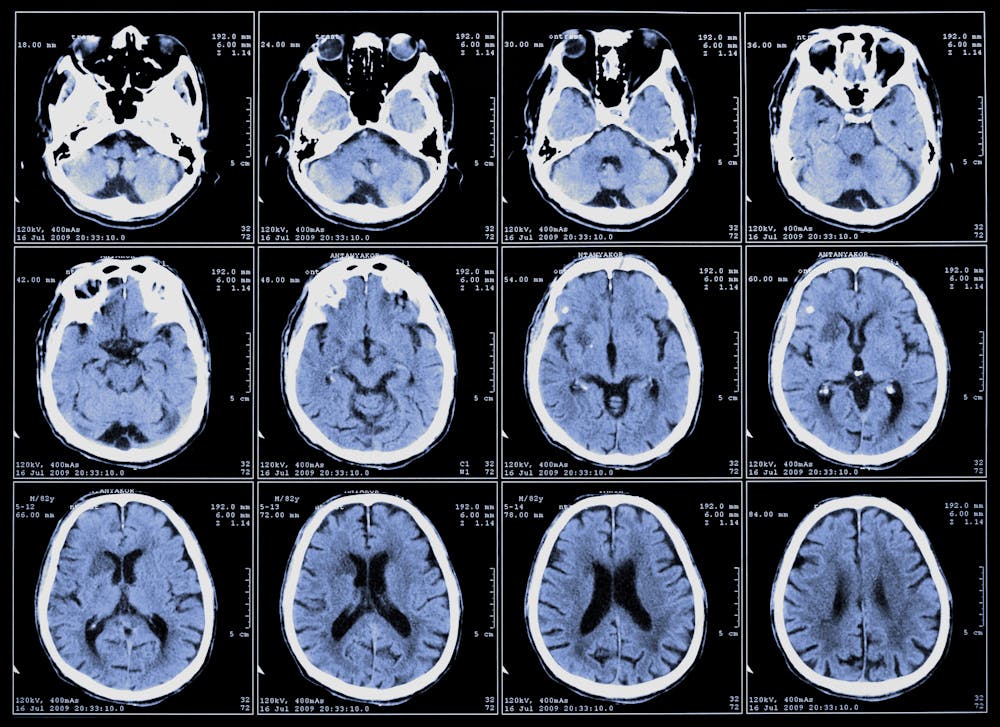
What’s the connection between brain scans and neural activity? Well, if some region of the brain has just been working hard, that region needs a supply of oxygen brought to it in the blood.
In such a region, the blood vessels will dilate, and so will bring in extra oxygenated haemoglobin. So a few seconds after this hard work has been done the haemoglobin ratio will be high.
So what do we mean by a “high” haemoglobin ratio here?
That can only be answered by comparing two conditions, or by comparing two groups of subjects.
So what the phrase “Brain region X lights up when we are doing Y” actually means is “Brain region X has more oxygenated haemoglobin a little while after we have done Y, compared to …”
What is being compared is crucial in this. But one rarely sees that stated in popular accounts of brain-imaging research, and that is the basis of many errors in these accounts.
Here’s an example. In one brain imaging study the brains of male subjects were scanned as they listened to male or female voices.
The neuroscientists who published this study reported that the presentation of female voices, when compared with male voices, produced greater activation of a particular small brain region, the right anterior superior temporal gyrus.
So if you subtracted the scanning data with male voices from the scanning data with female voices and presented the results via a brain picture, you’d see that this region “lights up” when the voices are female.
This does not, of course, mean that this region does not also respond when men are listening to male voices; it just doesn’t respond as much. But if you fail to appreciate that there’s always a comparison involved in these kinds of pictures, you might fall into the trap of concluding that men don’t use the right anterior superior temporal gyrus at all when listening to male voices.
This is exactly what a journalist writing for ABC Science in 2005 claimed this study showed.
Anyone who has taken Neuroscience 101 knows that the superior temporal cortex on both sides of the brain is called the “auditory cortex”, and this is because it is the region of the brain that is responsible for basic hearing – including the hearing of male voices by male subjects.
A second reason for over-optimism about what neuroscience might contribute to education is the failure to see that referring any psychological ability to a particular part of the brain does not have any explanatory value at all.
In 2007, the Guardian newspaper published an article that was called “Brain scans pinpoint how chocoholics are hooked”.
The brain imaging study on which this article was based showed that when subjects were exposed to chocolate, regions of the brain associated with the experience of pleasure and reward were more active in subjects who reported that they often craved chocolate than in subjects who reported that they never did.
The original article did not offer this as an explanation of why some people crave chocolate and some don’t; but the Guardian journalist did.
It isn’t an explanation at all, of course; it simply confirms that people who like chocolate show more activity of regions of the brain associated with liking when they are exposed to chocolate than do people who are indifferent to chocolate.
Such a finding tells us nothing about why these people like chocolate more than other people do.
In the same way, finding regions of the brain that are more active when people are reading than when they are, say, recognising faces (which has been shown) does not provide any explanation of how people achieve the task of reading.
So it provides us with no ideas about how children learn to read, why some struggle to do so, and how such children can be helped. In other words, it provides no insights into education.
The limitations of brain-scan imaging for education are clear to any neuroscientist, but somewhere along the way this message has been confused and mixed up.
But there’s a danger here – especially if governments and educators change their practice based on false information.
Could it be time we had our heads checked?
Geoffrey Edwards
logged in via email @gmail.com
Nice article.
I haven't really got anything to add, but I did read a nice quote the other day in relation to neuroscience and the increasing incidence of what was called "brain-porn."
"For now, our ability to understand how all those parts relate is quite limited, sort of like trying to understand the political dynamics of Ohio from an airplane window above Cleveland."
Article available at: http://www.newyorker.com/online/blogs/newsdesk/2012/12/what-neuroscience-really-teaches-us-and-what-it-doesnt.html#ixzz2EcRKqim8
Sue Ieraci
Public hospital clinician
Thanks for this well-argued piece. I agree that functional brain imaging - both perfusion scans and functional MRI - is being interpreted far beyond what it actually shows. We are measuring the physiological and assuming the intellectual. It's becoming tempting to take new bits of evidence from evolving clinical sciences and misapply them - gut flora being another example.
(Note to editor: the stock photo of a brain CT scan that you have used shows significant brain shrinkage (atrophy) as would be seen in someone with dementia. Maybe not perfect for the pedagogical theme.)
Lynne Newington
Lynne Newington is a Friend of The Conversation.
Researcher
I'm glad you've read up on Ulffe, it's a nine page study with all the magnetic resonances imaging, I wouldn't know present it for Michael or anyone else.
Read moreThe introduction by sociologist Max Weber, "in the classic study of charismatic authority, stressed the importance of followers recognising the charismatic healer or leader as endowed with special powers".
Even though most scholars of religion consider this recognition of powers to be a central aspect in the social and psychological dynamics…
Lynne Newington
Lynne Newington is a Friend of The Conversation.
Researcher
Professor Uffe Schjoedt, MR Research Centre Aarhus University Hospital Denmark Centre of Functuality Integrative Neuroscience,and Department of Sociology Anthropology, Study of Religion among other, on his paper on The Power of Charisma shows how much there still is to learn.
It is way above my head but my interest lay in the visible changes to the brain, when healing can occur through intercessory prayer, by those perceived to have the power and those who believe, especially by religious, promoted on the platform and the money it brings in to the respective religious orders.
I actually sent away for his thesis and been sitting on it for some time.
Professor Coltheart's article is the first time I have been able to bring it to light.
Amazing what science is discovering and dispelling!
Michael Shand
Michael Shand is a Friend of The Conversation.
Software Tester
"when healing can occur through intercessory prayer, by those perceived to have the power and those who believe, especially by religious" - Are you suggesting their has been a study which shows pray actually works, ie. not as a placebo? not jst the effect that a good social environment can have without pray - but that praying to a deity of some sort (I'm guessing Allah or Yawyeh) has some demonstrable effect on brain activity?
Cos that would be unreal
Sue Ieraci
Public hospital clinician
Uffe schjodt's publication is exactly what this discussion is about - physiological measurements of brain activity being over-interpreted with spiritual meanings.
Michael Shand
Michael Shand is a Friend of The Conversation.
Software Tester
Good article, I think at the very least we could inform kids that conciouness comes from brain activity - we know this much, we can inform kids that if you damage certain parts of the brain you can damage specific functions such as sight or the ability to recognise face's. Something along the lines of Pinker or Ramachandra. Whilst we dont know a lot, we know more than most people think we do and more than this article suggests.
Seeing as conciousness arises from brain activity....and neuro science is the study of conciouness at the level of the brain.....it might be too soon to be able to incorporate our current knowledge into education but this is where we are heading and not having all the answers is very different from not having any answers
Diana Taylor
retired psychotherapist
There is no proof either way, that consciousness arises from neural activity or that consciousness determines neural activity. We only know they are interdependent, but not the causal relationship
Catherine Scott
Senior lecturer
Another couple of factors contribute to infatuation with neuroscience. One has to do with our culture's materialism. I don't mean wanting to have a big house and a Maserati but believing that everything has [only] a material/physical cause. If you want an elegant dissection of why that's wrong, read Thomas Nagel's recent book 'Mind and Cosmos' in which he shows that you don't have to believe in God to see the currently dominant reductionist explanations of mind, consciousness, etc as unsatisfactory…
Read moreMichael Shand
Michael Shand is a Friend of The Conversation.
Software Tester
Do you have any evidence, anything that shows a non material cause for conciousness? Science uses methodolgical Naturalism not philisophical naturalism
Meg Thornton
Dilletante
The infatuation with neuroscience on the part of educators (and indeed, the general public) is due to the way it's presented by science journalists in the mainstream media. Science journalists may be covering science, but at the heart of it all, they're journalists - they're after the story. Often, the story is one devised by the marketing people at the university or institute where the research is being done (they'll ask the academics in question to explain what their research is about, and pick…
Read moreTom Johnstone
Researcher
A very timely reminder of the dangers of over-interpretation and over-simplification of neuroscience, particularly neuroimaging findings.
As someone who uses neuroimaging in my own research and supervises and teaches researchers in the field, the question I always remind people to ask is "What does the neuroimaging component of the study actually add to the science?" In many cases, the answer is little to nothing. For example, the mere fact that some type of human behaviour can be "seen" to be…
Read moreheribert buerger
private
I agree to the point the brain-images can not tell a detailed story.
But there are very useful contributions made by neuroscience, each teaching professional should be aware of. To name just a few: the devastating effect of stress in cognitive processes on the one hand (http://www.cyberounds.com/cmecontent/art254.html?pf=yes) and the positive effect of testing on the other (S. K. Carpenter. Testing Enhances the Transfer of Learning. Current Directions in Psychological Science, 2012; 21 (5): 279 DOI: 10.1177/0963721412452728).
Or, the importance of states of resting in learning when it comes to set up structural context (http://pss.sagepub.com/content/23/9/955.abstract). This list is long, too long for this comment.
Jason Flom
logged in via Twitter
I appreciate the cautionary urging to be mindful of putting too many eggs in the basket of brain imaging. I agree to the extent that we often jump to conclusions beyond what the data tells us. (Baby Einstein, anyone?)
Yet, I also know there is much to be gained from neuroscience for educators. The way fear and stress affect cognitive development is of use when it comes to thinking about classroom environments, early learning programs, and education policy. The research on brain plasticity can…
Read moreAnna Bowden
logged in via email @iinet.net.au
Brain based education or an understanding that children's neurodevelopmental profiles influence how they learn and why even bright children can struggle mightly in an academic setting? Surely teachers need to understand at least that in relation to the brain. And that weak brain processes can be strengthened. Dyslexia does not need to be a life time sentence. It does, however, need to be recognised and treated. The current system is broken and perhaps brain based education as a concept is a good place to start
Michelle Stevenson
Lecturer
Might I suggest Professor John Geake's 'The Brain at School: Educational Neuroscience in the Classroom'. John co-founded the Oxford Cognitive Neuroscience Education Forum and conducted research at the Centre for Functional Magnetic Resonance Imaging of the Brain, Oxford, UK. This book exposes some of the myths and misunderstandings in education today. As an experienced teacher and cognitive neuroscientist he has written a very timely and empirically based book on this important topic.
Alexsandra Galic
logged in via Facebook
Some of the research may however prove beneficial....
http://www.goodatdoingthings.com/GoodAtDoingThings/Good_at_Doing_Things.html