


Bliss was it in that spring to be alive, and to be young, on the streets, was very heaven. Or so it seemed to millions of women and men in early 2011, shortly after the first protests in Tunisia rocked the foundations of the whole Arab world. Public ecstasy flourished. Freed from fear, often for the first time, citizens found themselves dancing, singing and kissing strangers in the streets. Dignity and justice, freedom and democracy, was the prevailing talk. Political exiles came home. The first fair and clean elections in living memory happened. Dictators were everywhere forced onto the back foot. Several were toppled; a few went on trial, or fled into exile; others, among them Gaddafi and al-Assad, fought back, like maniacs, using murderous tactics and weapons.
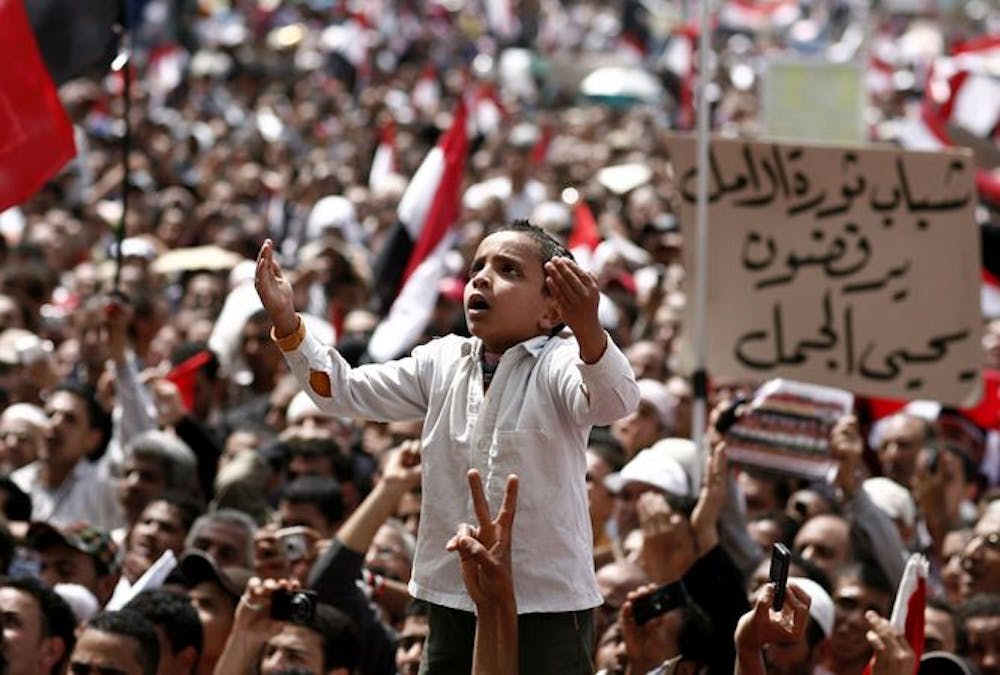
Exactly two years later, all things considered, have the convulsions in the Arab world been a boon for the spirit and institutions of power-sharing democracy? It’s much too early to tell. Revolutions resemble extended earthquakes. They take time. They have their own time. They alter people’s sense of time. Their impact and historical significance are known only well after their onset. As events unfold, the sense of liminality spreads. ‘Revolution fills life with unknowables,’ notes the Chinese writer Yu Hua. He adds that upheavals unpredictably break ‘the social ties that bind one person to another’, so that lives are often changed overnight: ‘some people soar high in the blink of an eye, and others just as quickly stumble into the deepest pit.’
Those words certainly apply to the Arab world. Look carefully at the present moment. Judged in terms of democratic principles, the most striking fact about the region is its utter contradictoriness. The fading imperial democracy, the United States, unconditionally backs Israel, a state that talks constantly about democracy and human rights yet in practice discriminates heavily against its own Arab subjects, builds walls and heaps terrible suffering upon its Palestinian neighbours. The American democracy brought massive violence and suffering to Iraq, which now resembles a comprador state aligned with Iran, which backs the criminal Syrian regime, which the United States wants to axe. In support of ‘democracy’ against ‘terror’, American drones, their use unauthorised by Congress, terrorise from above, kill and disrupt the lives of people down below.
The United States and its Western allies meanwhile back rich little Qatar. Home to al Jazeera, a vital contributor to the spread of democratic values, Qatar helps fund and support Hamas, which in the name of self-determination crushes dissent within its own ranks. The Western-backed Saudi Arabia dictatorship clings on for dear life, fears its own people, whom it plies with lavish handouts, knowing that they’re ultimately the source of its own repressive power.
That’s not the end of Western ‘democratic’ double standards. The United States and its Western allies silently consent to martial law and terror in Bahrain, whose oppressed Shiite majority refuse violence and champion the cause of democracy and human rights against a Sunni monarchy backed by Saudi Arabia and other Gulf states. The West finds a new ally in the Muslim Brotherhood government of Egypt. Its democratically elected president, Mohamed Morsi, declares: ‘I have no rights, only responsibilities….If I do not deliver, do not obey me.’ Before a huge crowd of cheering supporters, he goes on to defend his decision to grant himself near-absolute constitutional powers: ‘My duty is to move forward with the goals of the revolution’, he says, ‘and eliminate all obstacles from the past’.
Throughout the region, political Islamists are on a roll. They’re making history anew, beginning with the rejection of several ‘laws’ of Atlantic-region political science. Hussein Agha, Robert Malley and others are not impressed. They predict that things will turn out badly, but this is to understate the interim achievements of the upheavals in general, and political Islam in particular. It turns out that secularism in the American, French or British sense is not a basic precondition of power-sharing constitutional democracy. In the elegant phrase of Naser Ghobadzadeh, a young Iranian scholar, political Islam is a force for the new democratic virtue of religious secularity, what Sheikh Rachid Ghannouchi of Tunisia wisely calls a new compromise (wasatiyyah) between religion and politics.
Political Islamists also challenge the standard political science presumption that democracy requires a binding sense of national identity backed by a sovereign territorial state. They think differently. Whatever might be thought of the Iranian case, political Islamists have no particular love of armies, states, nations and nationalism. Their efforts to break the back of the old military dictatorships by spreading the spirit of democracy across borders therefore shouldn’t be underestimated. Public vows of support for brothers and sisters of the wider ummah are common. Regional political thinking is a felt imperative. How to re-shape the region politically is another matter.
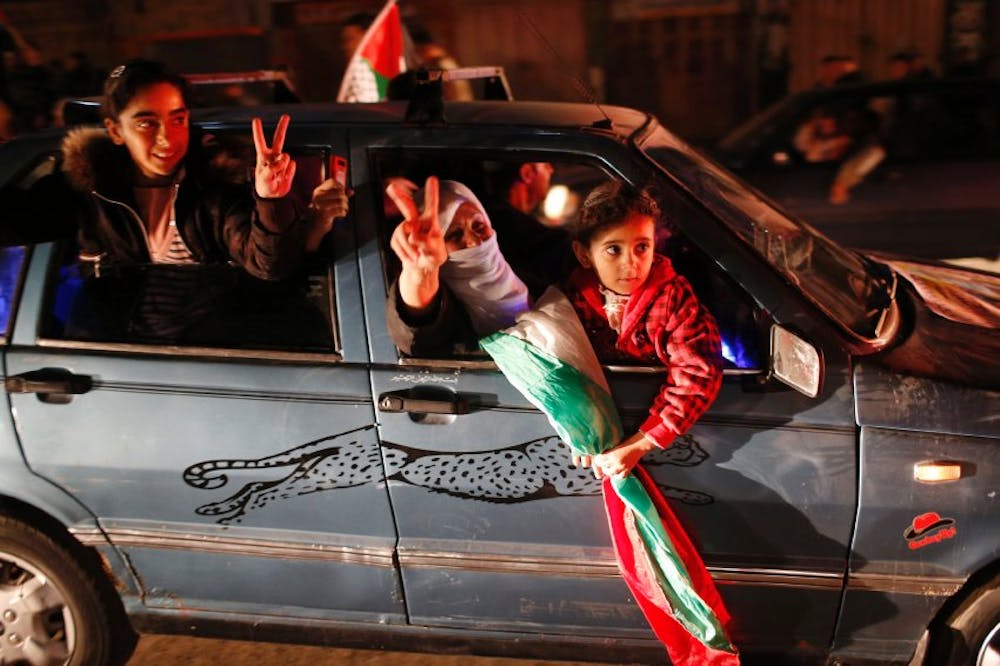
Political Islam has managed to breathe life into the body of ‘post-sovereign’ democratic ideals, yet the whole process is deeply conflicted. It knows that nationalism always greased the wheels of dictatorship and that’s the reason many supporters of political Islam dream of political forms beyond the territorial state. That’s why (for instance) they conclude that Fatah and the PLO have no future, and why they think that the people of Gaza and the West Bank, whose hearts ache for a durable truce with self-governing institutions, may come to realise their dream not through a weakling pseudo- state, but by means of a new regional settlement, of the kind championed by the present Muslim Brotherhood government of Egypt. For the moment, of course, that government remains trapped within the contradictory structures of the Egyptian state. Political Islam is forced to perform a delicate balancing act: it needs to satisfy its militant supporters with substantial domestic reforms; neutralise its military opponents; negotiate with the West; forge a different relationship with its neighbour state of Israel; and push towards a new and more dynamic regional settlement that remains undefined.
Political Islamists are also learning that democracy can be a wild horse. They hunger for state power; after a long history of underground resistance and suffering, they understandably don’t want to squander their deserved gains. Yet in Tunisia, Egypt and Libya, the engine rooms of last year’s upheavals, political Islamists are discovering that electoral victory and governing often require give-and-take pragmatism. As they set their sights on state power, they’re discovering as well that throughout the region, thanks to colonialism, state structures, where they exist, have been twice cursed: their efficiency and effectiveness are limited and, in the eyes of many people, they’re simply not legitimate. That’s why those who occupy the levers of state power in the name of ‘the people’ quickly find themselves opposed by long queues of real people - Arab nationalists, old-fashioned secularists, trade unionists, liberal minorities, Salafists hostile to women, atheism and ecumenicism.
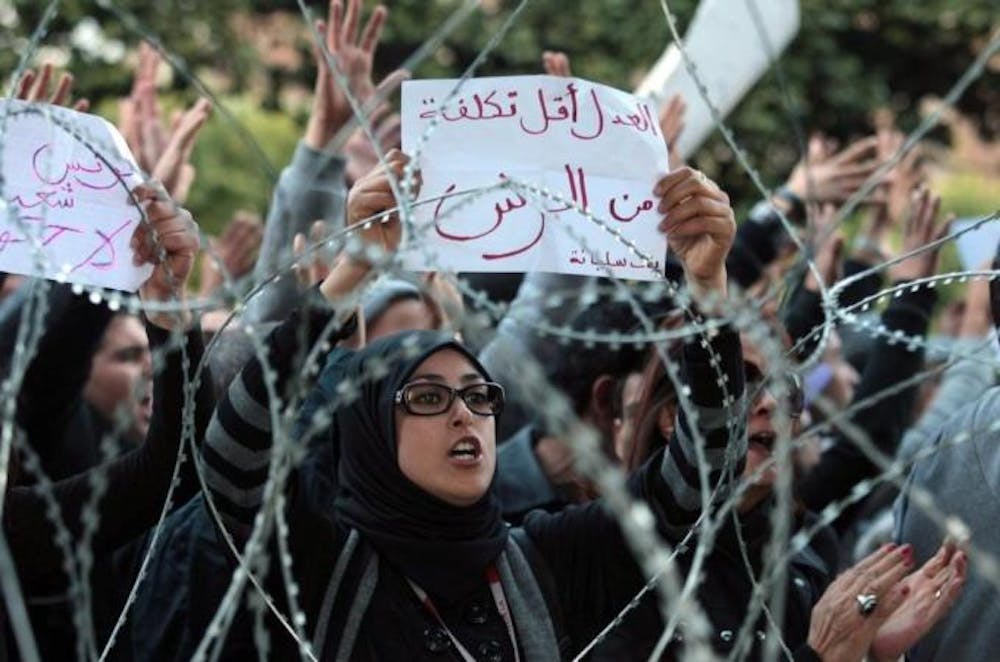
Unfamiliar dynamics result. Protests against the injustice of unemployment, government corruption and state violence erupt; as recent disturbances in the Tunisian city of Siliana show, Islamist governments committed to ‘justice’ are easily accused of propping up systems of injustice. Another example: buoyed by the shift towards political Islam throughout the region, Salafists fancy themselves as the new opposition. That’s why they’re tempted to contest elections, which they otherwise denounce as an insult to God’s sovereignty.
The new regional power, Turkey, itself caught up in an unprecedented democratic transition that defies most textbook descriptions, indulges the contradictions. Committed to destroying the al-Assad regime in Syria, sensing that the terrible violence in that country is a proxy regional war, the Turkish government finds itself in the company of a strange assortment of political animals, including militant Kurds, whose cause at home it does everything to crush. The ramshackle democracy called Lebanon, governed by a fragile coalition of parties backed by Hezbollah, helps forces hostile to democracy to flourish. Throughout the region, the rule is clear: without a vibrant civil society backed by respect for local versions of human rights and the rule of law, the push for democracy hands opportunities to militias, shadowy armed networks, criminal gangs, kidnappers, assassins. Strange but true: as in Yemen and Libya, the fight for justice through new forms of democracy breeds new patterns of violent death and destruction.
And so the contraries multiply. Two years after the first breakthroughs, democratic principles are everywhere contradicted by struggles for power that bear little or no resemblance to professed intentions, or defined strategies. Where will all this end? What will historians say in fifty years from now when they look back on the region? Everybody wants to be on the winning side of history, yet nobody knows which side is right, or what winning might mean, or how to get there. Only one thing is certain: the present trends, suffused with contradiction, are not sustainable.