
The Federal government’s High Court win on cigarette plain packaging is another sign that the carcinogenic mist is dispersing to finally reveal the smoking elephant in our collective lounge room. The pachyderm is the ban on tobacco that Australia wants, but can’t quite wrest from its subconscious and out into the light.
Australia now has smoking bans in workplaces, pubs, clubs, restaurants, educational institutions, entertainment venues, sports stadiums, patrolled beaches, playgrounds, cars carrying children, and on public transport. The dangers of passive smoke inhalation, including a nearly 30% increased risk of lung cancer in non-smokers, has led some jurisdictions to restrict hospitality workers entering outdoor areas where smoking is still permitted.
Why hesitate?
Such sweeping measures indicate a wide appreciation of the health threats posed by cigarettes. The practise kills up to half of those who indulge, and imperils those unlucky or unwary enough to share the same air space. Yet we still permit the sale and use of tobacco. It’s time we removed our tar-encrusted goggles, saw the smoking elephant in all its cankerous decay, and called a final halt to the decimation.
Nor would this be the act of a nitpicking nanny state meddling in the legitimately self regarding behaviour of adults. In On Liberty, John Stuart Mill laid a liberal foundation that most democracies embrace. He concluded the state was warranted in constraining individual liberty to prevent actions that harm others.
The stunning breadth of anti-smoking statutes is testament to the reality of smoking’s third-party harms. These extend to the public health burden from smoking-related lung disease, diabetes, stroke, and heart attack, and the extra taxpayer dollars needed to fund it. This is not nannyism but justified state paternalism.
If you’re unconvinced, consider how you’d respond should someone decide to spray particles of highly carcinogenic blue asbestos into the air at a major train station. Most would deem this an act of biological terrorism, call 000, and in quiet horror shepherd their children out of harm’s way. It’s a fascinating quirk of social psychology that we don’t automatically place smoking in the same category.
Nearly a century of advertising and product placement in films has positioned tobacco as the pursuit of the rich, glamorous, and rebellious. And some doctors even recommended it to their patients. All before a swathe of compelling research revealed its true and malignant nature. Yet those aspirational associations persist in our neural circuitry and may take many years to fade.
Increasing happiness
The unwavering response from Big Tobacco appeals to a consequentialist ethic. Ultimately, things will become worse if tobacco is banned. Tobacco sales will shift underground, ciggies bootlegged at exorbitant rates will further cash-strap smokers, organised crime will step into the breach to bolster supply, the rebellious at heart will take up smoking to protest tar totalitarianism, and so on. And indeed, there is a real live public health experiment that provides some support for such claims.
Tiny Bhutan, already a world leader in promoting Gross National Happiness as an indicator of citizen well-being, bravely implemented a ban on tobacco sales in 2005. And subsequently there were reports of tobacco products appearing on the black market at inflated prices. But if consequences are to be weighed in the ethical balance, it is surely public health benefits that will prevail.
A public smoking ban in Colorado was found to lessen the risk of preterm births; Arizona’s state-wide ban reduced hospital admissions for angina, heart attack, stroke, and asthma; Ireland’s veto on smoking in pubs led to improved pulmonary function in bar workers; hospital admissions for heart attack dropped by nearly 10% in New York State after their smoking prohibition; and a Swiss study estimated that anti-smoking laws could prevent the need for up to 41,000 hospital bed days, from the effects of passive smoking alone.
The anti-paternalist may still complain that we permit other risky practises, such as hang-gliding, which also place burdens on the health system when the inevitable crashes occur. But hang-gliding, like many sports, carries inherent risk that is significantly reduced by ensuring adequate training. By contrast, cigarette smoking is never without risk, even when carried out by skilled practitioners.
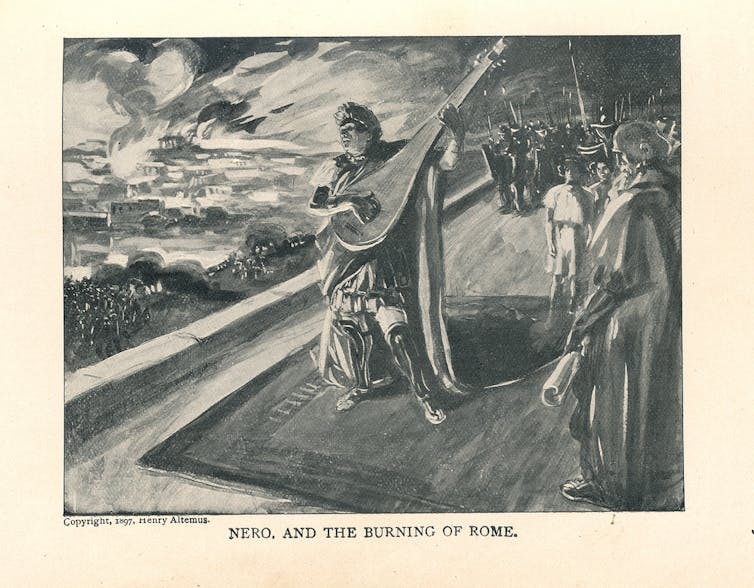
We are Nero, fiddling by inches towards a tobacco ban, but meanwhile Rome’s health continues to go up in smoke. Our intentions are honourable but they ignore their inexorable conclusion. If saving lives is the goal, a ban on tobacco looms large to anyone who cares to look.
Read the argument against banning cigarettes
Stephanus Cecil Barnard
Town planner and freelance writer at Kalahariozzie
I love it when people push their ideas and believes like this one. As a passionate anti-smoker a total ban would suit me fine. Two practical questions come to mind, one, how willl the proponents stop cigarette smuggling? The foundation rule of a sucessful illicit trade is banning something. Two, what willl the impact of enforcing the law banning cigarettes be on policing, already stretched to the limit in a nanny state country where the law loves to see every citizen as a wanna-be criminal?
Matthew Thredgold
Software Engineer/Secondary Teacher
It's a very good question: "how you’d respond should someone decide to spray particles of highly carcinogenic blue asbestos into the air at a major train station?"
When I was battling my neighbours and trying to get them to stop flooding my house with carcinogenic woodsmoke, I thought what was the most horrible exothermic chemical reaction I could heat my home with, sending toxic gas their way. I figured it would quite rightly get me arrested. But it did beg the question; why were they allowed…
Read moreGavin Moodie
Principal Policy Adviser
Prohibition didn't work with alcohol and doesn't work with recreational drugs, so why would it work with tobacco? In the end adults must be left to choose their own consumption of pornography, gambling, prostitution, alcohol and other drugs and vices.
Matthew Thredgold
Software Engineer/Secondary Teacher
But we can get it out of the public realm. We can get it out of our bus shelters, our train platforms. Away from our footpaths, and our public squares.
Give registered tobacco addicts the equivalent of safe injecting rooms if we must. But non-smokers right to not smell or breathe smoke should override any of their selfish, drug-dependent need to have access to their drug. We non-smokers are finding our voice. Out right to clean air shall not be denied. The rest is just details.
Mister Anderson
Student
Drinking has flow on effects and health costs to society, as do the other 'vices' you mention. However, not one of them will directly reduce the health and well being of a person in the vicinity. I don't give a damn what 'vices' people have, how they treat their bodies or live their lives. It's none of my business. I do however give a damn when a person can poison bystanders, including the already sick or children for example.
Smoking is a very different issue because it doesn't just directly impact the health of the user.
Ban it? No. Continue to have it banned in any public space? Yes.
Stephen Prowse
CEO at Wound CRC
The notion of making the sale and use of tobacco illegal is bizarre. History has shown over and over again that prohibition does not work so why is it even contemplated venturing down that path again.
The sensible path is to continue third party harm elimination through restricting use in public together with education/awareness on the health and economic implications to the user and their families. Users should also carry the full cost to the health system as well as for education initiatives such as plain packaging.
There are many other examples of socially acceptable behaviours that harm other people that we would never contemplate making illegal for example car exhaust emissions. Disgusting acts are often in the eye of the beholder.
Geoffrey Edwards
logged in via email @gmail.com
I will now practice my right to a fit of giggling.
I never minded smoking away from the public. Indeed, a great pleasure in smoking in this new era was that one rarely had to spend time with the morally righteous. Another vice which I would happily see removed from the public sphere.
Russell Walton
Russell Walton is a Friend of The Conversation.
Retired
Even though I'm another 'passionate non-smoker' I also disagree with Paul Biegler.
After years of suffering the effects of smokers' nicotine addiction I celebrate total restrictions on the public use of tobacco. However, we should not go beyond Mill's "harm" principle.
Any attempt to impose a ban on the use cigarettes would result in similar debacles to Prohibition in the US and the current "war on drugs". Why would the social and economic consequences of criminalising nicotine be any different from banning marijuana, cocaine, heroin or any other recreational drug? Drug use is a public health problem, so instead of banning cigarettes we should decriminalise the use of all current illicit drugs.
Jeff Haddrick
field manager
"Any attempt to impose a ban on the use cigarettes would result in similar debacles to Prohibition in the US and the current "war on drugs"."
I suggest that this argument by analogy is false. The glarign difference with tobacco is that over 80% of users (addicts) want to stop.
Btw, I'm a passionate smoker, passionate about ending tobacco sales in Australia that is.
"Why would the social and economic consequences of criminalising nicotine be any different from banning marijuana, cocaine, heroin or any other recreational drug?"
First up nicotine doesn't have to be criminalized, only the sale of tobacco products. Ending tobacco sales would have vastly different social and economic consequences simply because of the current scale of deaths and cost to the economy. It's our biggest killer and cost to the economy is rising sharply through $30million per year. Just one example, it would likely extend Indigenous life expectancy by 5 years.
Russell Walton
Russell Walton is a Friend of The Conversation.
Retired
The problem is not whether or not addicts "want to stop", but whether they are psychologically or physiologically capable of doing so. How many of those who are addicted to alcohol, marijuana or cocaine would, when surveyed, express their desire to kick the habit? You may be correct in asserting that nicotine addiction is intrinsically different from other addictions (from a public health perspective) however you haven't presented any convincing evidence.
Bruce Moon
Bystander!
Paul
Thank you for an overview of (1) a proposal to ban cigarettes, (2) the potential outcomes, and (3) the views of the opposition.
I note the opponent view about the consequences of banning tobacco are here being raised by contributors - each claiming to be a non-smoker. If big tobacco can influence them, then clearly there is a long way to go.
In response to the perceptions about prohibition, it is not that illicit means blossom. Rather, that by prohibiting the sale of tobacco, a majority…
Read moreJames Jenkin
EFL Teacher Trainer
The Conversation has a party line, as much as an Andrew Bolt or Quadrant - smoking should eventually be banned, gay marriage is good, carbon pricing is effective, we need government intervention to tackle obesity.
I often agree with the Conversation's take on the world. But it doesn't make very thought-provoking or challenging reading. You read the headline and ... ho-hum.
Byron Smith
PhD candidate in Christian Ethics at University of Edinburgh
You do realise this article is one of a pair? The other one argues against a ban. Perhaps if you'd got past the headline... (or looked at the next headline on the main page)
James Jenkin
EFL Teacher Trainer
Sorry Byron, the other argues for a ban 'but not just yet' - but 'possibly within a decade'.
Byron Smith
PhD candidate in Christian Ethics at University of Edinburgh
No it doesn't.
"We should undoubtedly be as hard as possible on an evil and lethal industry and its leaders who are knowingly trying to increase sales of a product that kills when used as intended. We should look for new approaches to curbing cigarette sales and discouraging smoking. We should maintain and increase our efforts, especially in areas where there is clear evidence of impact. And we should do all we can to expose and curb the tobacco holocaust facing developing countries as the tobacco industry focuses on promoting smoking there.
"We should do everything necessary to protect non-smokers and we can reasonably aim to end the commercial sales of cigarettes. Then we should not need to worry about a blanket ban on smoking."
No ban needed and indeed attempting to implement one would backfire. Instead, more regulation that reduces demand and limits supply until a ban is unnecessary. That is the argument.
Paula W
editor
It's a shame that some people in our society must be the subject to the rampant self-righteousness of so-called passionate non-smokers. The way in which Biegler and others regard those people who choose to smoke cigarettes is both unwarranted, offensive and ultimately without sound context.
Read moreThis commentary has an ideologically structured argument around what is actually a health issue for both smokers and non-smokers. Addiction of any kind is a health issue, not a moral one, and a discussion around…
David Arthur
n/a
Perhaps Mr Beglier will learn from our comments? They don't call it "The Conversation" for nothing.
Russell Walton
Russell Walton is a Friend of The Conversation.
Retired
Not all passionate non smokers support a ban on nicotine consumption or any other dangerous drugs, we simply want protection from the arrogance and irresponsibilty of nicotine addicts, or drunk or drug affected drivers for example.
When I started work in the 60s I was subjected to a continuous carcinogenic smog from smokers who didn't give a rat's for the effect of their habit on non smokers' health.
Yes, of course, nicotine addiction is a health problem, ideally, only for the smoker and no one else.
Matthew Thredgold
Software Engineer/Secondary Teacher
I don't view myself as self-rigtheous.I view myself as sticking up for myself and others in the face of assault. I think smokers' morality is in the toilet. It is a disgusting act. They know, or should know, that many, many people don't want to be exposed to tobacco, but they ignore that, and continue to force their disgusting act onto others. It is the moral equivalent of rape (if not of the same magnitude).
David Arthur
n/a
Ban tobacco outright?
Yes, it will succeed in driving tobacco use underground, so that exposure to tobacco fumes will no longer be a public health issue. However, tobacco use is already banned in many public spaces.
It may even decrease the exposure of impressionable youths to tobacco marketing. As we have seen with other recreational drugs, their public banning has made them more amenable to underground criminal marketing. They are no longer taxed appropriately, so that the public cost…
Read morealexander j watt
logged in via Twitter
Going 'all the way' and banning something actually is a huge step backward as you lose control of the market and and potentially erode smokers human rights.
Smokers who continue the habit by some means become criminals. this introduces them all into the criminal justice system, further ruining their lives. it doesn't help their problem, the punishment doesn't fit the crime.
who of us 'experimented' with smoking when we we younger, decided it was a bad idea, and moved on? at least we didn't get turfed into prison for it, which would have irreversibly ruined our lives.
illegal tobacco is by definition unregulated. we are much better keeping it legal but regulating it - places where it can be smoked, age limits, and taxes. you can't make a drug problem disappear by banning it.
Lisa Ann Kelly
retired
A ban on smoking in public or at home should be instituted tomorrow. Then provide "smoking rooms," where all those who refuse to give up their tobacco god can go and puff away. They can thus immerse themselves happily in the haze of their poisonous fumes. (This would also keep all the cigarette butts in one place, easily disposed of.)
The smokers who want to save money can sit and inhale the smoke from others around them. It should be quite a party. They all have something in common----a desire to commit suicide using a slow, but sure, tried and true method.
StrangeRelationship
logged in via Twitter
And we used to be so proud of our tobacco industry.
http://tinyurl.com/smoko
Geoffrey Edwards
logged in via email @gmail.com
I gave up smoking a few years back for a number of reasons.
I envisaged a time when those reasons would no longer be relevant. A time when could once more be alone with my thoughts and a cigarette.
Ban them if you will. It would be all the more precious to me to know how just how thoroughly offensive to prevailing standards my actions will be.
I am all aquiver just thinking of it.
Chris Borthwick
Writer
The proposal, in brief, is that we move from the discouragement method, which has been shown to work over the years, to the prohibition model, which our experience with, say, pot, has shown to have failed consistently. This does not seem to me to be evidence-based. Instead, we should decriminalise pot, thus allowing us to try the methods that have worked on tobacco.
And the Nero analogy is just peculiar. In fiddling while Rome burned Nero wasn't taking small and ineffective steps to deal with the problem, he was expressing a total lack of interest in doing anything at all. More and better fiddling - a symphony orchestra, perhaps? - would have had as little effect as the fiddling he actually did.
And, of course, it's a myth anyway.
stib
logged in via Twitter
Sure, ban cigarettes. That worked just great for marijuana, heroin and cocaine – we certainly don't have any problems with those drugs…
Why not ban the *sale* of tobacco? In fact why not make that the standard for all recreational drugs. You can use 'em, you can possess them, you can share them with your mates, but you can't sell them. Difficult to implement I know, but then again so is the current policy.
Reinhard Dekter
logged in via Facebook
Where are all the economists? It is a factual certainty that the government cannot physically stop people smoking. No matter what the taxes, how severe the penalty, a ban on cigarettes will result in more harm than good. Cigarettes will become stronger and more harmful, be sold to more children and very likely will be consumed by more people in greater quanatities.
When will reason and science become the norm for public policy? Every economist can tell you that banning something lowers the supply only, not the demand, and hence prices and therefore profits increase. Ever heard of Al Capone? Examine the stellar success of banning all the other "recreational drugs". Most of them can be bought with a few minutes looking. The evidence is in: banning does not stop the use of drugs.
Jeff Haddrick
field manager
Your claim that "Cigarettes will become stronger and more harmful, be sold to more children and very likely will be consumed by more people in greater quanatities."
is contradicted by your assertion that "Every economist can tell you that banning something lowers the supply"
I suggest that in fact given the vast majority of tobacco addicts want to stop, there would only be a small residual black market. If that is correct please tell me whether it'd be preferable to have tobacco related deaths in the low hundreds as soon as possible or proceed with the gradual reduction from 16,000 over the next 20 or 30 years.
Mark Goyne
Lawyer
This article is errant nonsense. If people want to smoke that is their business, and not self-appointed spokespeople. If the author does not smoke, that is fine, but leave the smokers alone.
PJ DNV
CEO
Let's detail the consequences of Dr Biegler's recommendations:
. When prohibition comes into force between 15 and 20 % of Australia’s adult population will require nicotine in their daily wellbeing. If the government tries to supply that requirement through nicotine patches, the pharma companies that supply that product will be able to name their price. That will either require a massive government subsidy to meet the need, or price controls leading to reduced supply. If that happens, others…
Read moreMatthew Thredgold
Software Engineer/Secondary Teacher
What a lot of unsubstantiated rubbish. It reads a lot like a tobacco company press release.
If the remaining addicts are patched up (from "big pharma" - a helluva lot more honourable industry than the tobacco industry I must say) then that'll be great. Our public spaces will be smoke free. As far as I am concerned smokers smoking in public are already criminals committing assault on every passer by, so I am quite happy to formalise the arrangement amongst the recalcitrant unreformables. Anything to get rid of the stench.
PJ DNV
CEO
Wow. You're so stupid you don't even engage the argument.
I defy you to justify the characterisation of an individual smoking as a criminal. You realise what the consequences of criminality are, don't you? Imprisonment, marginalisation, unemployment? Huge public expenses from the dole for the new class of criminals whose only crime is to inconvenience you?
Like I said, tobacco is a problem, but it has to be dealt with in the context of a democratic culture with individual human autonomy. You are simply an advocate for a charnel-house approach to anyone who sullies your precious sensibilities (look it up). Their was a name for your type in the twentieth century - totalitarian.
Matthew Thredgold
Software Engineer/Secondary Teacher
Smoking is more than an inconvenience. It is assault. It limits where I may go. It limits my movements. It has stopped me from taking some employment. Smokers don't care about me, not one bit. And since it is a physical assault on my body I do wish the act was criminalised.
The sooner we get rid of tobacco out of our society the better off we will be.
You are just an apologist for those who would profit from the deaths of thousands? You are completely morally bankrupt. An apologist for corporate murder. Pathetic and unprincipled.
PJ DNV
CEO
What I am trying to do - and you are wilfully failing to realise - is to point out that the costs of "ridding tobacco from our society" are higher than those advocating such a course will admit. If someone advocates an intrusion on liberty they should generally have to justify its benefits either in philosophy or in evidence. That's why we have debates about boat people, internet filtering etc.
If collectively Australia decides to go down that path, OK. I don't care for the fate of tobacco…
Read moreMatthew Thredgold
Software Engineer/Secondary Teacher
All your arguments are overblown and your numbers unsubstantiated. You overestimate the downsides, and completely ignore the moral case for prohibition. It adds up to time wasting. And if you've never even noticed tobacco smoke on "city streets" I doubt you've got all your senses. I cannot go a day without being assaulted going to and from work. Try engaging a smoker in conversation and ask them if they think it is fair that they are causing assault and all you get is the threat of being stabbed, or shot through the head. I can't wait for legislation to be protected from smokers and their acts of bastardry.
PJ DNV
CEO
All I can say is you are ignorant of history and human behaviour. Read Daniel Okrent's "Last Call" about America's experience with prohibition and the scales of ignorance will fall from your eyes. The ardent advocates of prohibition made an impeccable moral case. It took them fifty years to achieve their goal. Once they accomplished it, it took ten years for the whole country to realise its mistake and reverse it, after an orgy of violence, criminality, intrusive police power and unwelcome taxation. All the points I made. There are simply better and wiser ways to deal with tobacco than prohibition which simply emboldens scolds and totalitarians like yourself.
Matthew Thredgold
Software Engineer/Secondary Teacher
It's not analogous.
Jeff Haddrick
field manager
PJ - your pro and con points aren't really credible
"some people won't die of lung cancer" hello, it's our biggest killer bar none.
"criminalising up to 20% of the population" firstly tobacco addicts are about 16% of the population, secondly prohibition of tobacco sales crminalizes none of them.
Regarding you point about "intrusion on liberty", I'd like to mention what may be an even more fundamental ethical prinicple, i.e. the imperative to prevent harm coming to others. We no longer have…
Read moreMark Goyne
Lawyer
If people want to smoke that is their choice and not for the rest of us to ban.
Where is all this going?
Matthew Thredgold
Software Engineer/Secondary Teacher
Except for the harm and annoyance it causes others.
Except for the thousands of dead.
Where it is going is to a better and more just place for us all to live in.
It is very much for us to ban, and anything less would be a failure of civil society.
Gabriel Macy
logged in via Facebook
This article just shows that we are step closer in tobacco control. Cigarette smoke that evades non-smokers’ personal space can cause harmful effects to health. A restaurant business near my area first banned cigarette smoking inside the restaurant. Then after a while, they also banned alfresco smoking. It was part of their green initiative, which at first was not welcome by the smokers. However, as time passed by, more and more people came and patronized the restaurant. Because of that, more and more restaurants are emulating the initiative. It may not control tobacco directly, but more and more people are now enjoying a smoke-free environment.
Princess Katy Charlotte Starshine
logged in via Facebook
People should have the right to smoke if they want to, and people who disaprove should just avoid them if they're bothered by it. We all pay taxes so one group of people shouldn't have precedence over anyone else. Not to mention the fact that there are only a few places now where people can smoke - so it's hardly like the streets are over-run with smokers.If they ever do ban smoking entirely (which is highly unlikely considering the VAT charged), then they also should ban vehicles as the fumes produced by a car causes far more polution than a measly cigarette. Not to mention banning fast food and alcoholic beverages!
Matthew Thredgold
Software Engineer/Secondary Teacher
Oh Princess, I absolutely don't agree with any of your points.
Every time someone breathes unwanted tobacco fumes it is an injustice.
Your attitude is completely selfish, and please, please, never smoke around me. How come you and other smokers just won't listen? Do NOT smoke around other people.
Mark Goyne
Lawyer
I am a non-smoker but the anti-smokers have gone too far. If people want to smoke that is their business, they know the risks and should be left alone. The anti-smokers exaggerate the effect of smoking around others and should be put in their place.
Matthew Thredgold
Software Engineer/Secondary Teacher
Absolute and utter rubbish Mr Goyne. According to you I don't get a say in what I want to breathe? You want to take away my control of my own body and what I put into it?
And the effects of second hand smoke aren't exaggerated. It kills. It maims. It is also very unpleasant.
But good to know as a lawyer you don't give a damn about natural justice.
Smokers should respect everybody else's right not to smoke. Until they do they can't expect to be treated with any respect in return.
A complete ban in public places inside and outside is a minimum. And in some forms of accommodation such as apartments where stray smoke is a problem then it should also be banned. Then in private homes with children also banned.
Current restrictions are completely inadequate. Tobacco products are not benign. They kill, in the thousands for the purpose of corporate profits. If tobacco companies have got away with murder for profits for so long it means lawyers haven't been doing their job.