Why it’s time to lower Australia’s blood alcohol driving limit

Around one quarter of deaths on Australia’s roads involve drink-driving. Over a decade, this amounts to over 3,500 deaths, as well as many thousands of serious injuries. While the most common death in a drink-driving crash is the drink-driver, many victims are innocent pedestrians, occupants of other…

45m5sxbx-1348114383
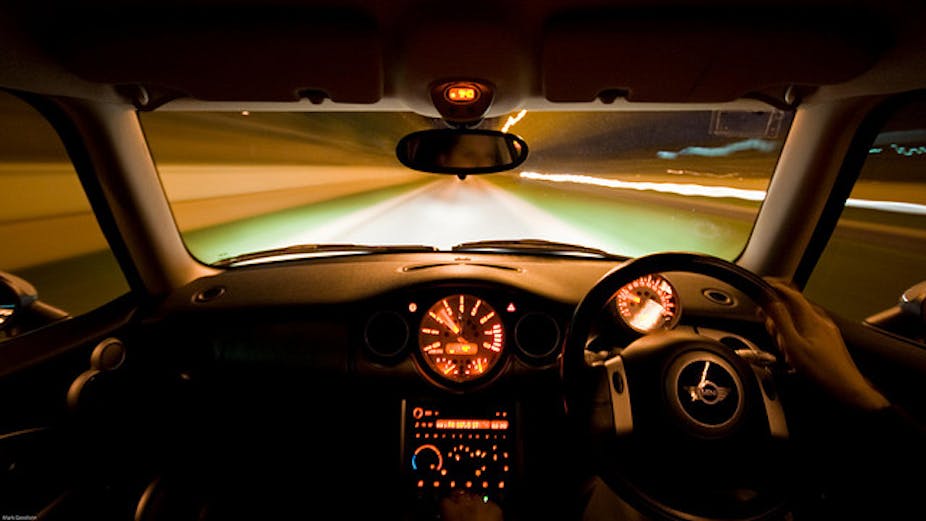
The aim of drink-driving reform is not to reduce drinking, but to disconnect drinking from driving. Flickr/M a r k

Around one quarter of deaths on Australia’s roads involve drink-driving. Over a decade, this amounts to over 3,500 deaths, as well as many thousands of serious injuries.

While the most common death in a drink-driving crash is the drink-driver, many victims are innocent pedestrians, occupants of other vehicles, and other road users who happened to be in the path of the drink-driver.

Far from improving, data on drink-driving trends (graphed below) show the problem is getting worse.
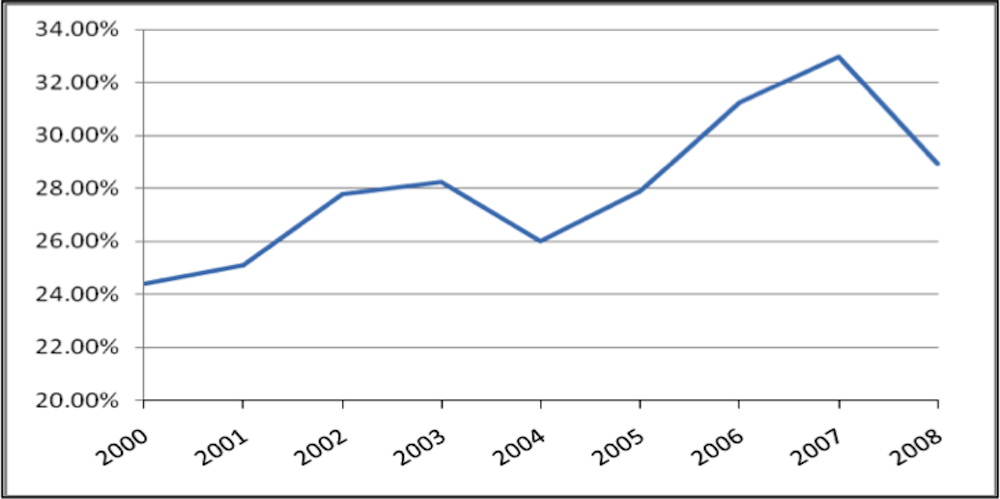
Proportion of killed vehicle operators over the BAC limit, 2000 to 2008. National Road Safety Strategy 2011-2020. Note: Percentages are based on cases with known BAC status. These data are from a study of BAC, which is otherwise not easily obtained.

Across Australia, the general driving and riding population has a legally allowed blood alcohol concentration (BAC) limit of .05, which has been in force for over 30 years. But technology, attitudes and knowledge have improved. So isn’t it time to reconsider this BAC limit?

Around 30 years ago and for many years, Australia led the world in drink-driving regulation and enforcement. Victoria led the introduction of random breath testing (RBT), and New South Wales was the first to run RBT on a massive scale and prove its power. The rest of Australia and many other countries followed those leads.

Now, despite widespread use of RBT, Australia has slipped behind many other countries.

The European Transport Safety Council’s 2012 Drink-Driving: Towards Zero Tolerance report recommends all European Union member countries move to zero BAC limits (possibly with a small tolerance). Many European countries have already made the move, with Sweden, Poland, Slovenia and Estonia enforcing .02 limits, and Hungary, Czech Republic, Romania and Slovakia adopting .00 BAC limits.

We may still see ourselves as different from these countries in that we simply drink more. Not so.

The World Health Organisation’s 2011 Global Status Report on Alcohol and Health placed countries into categories of pure alcohol consumption per capita, and found that Australians ranked in the 10-to-12.49 litres per person (per year) category. Of all the European countries mentioned above, four (Sweden, Belgium, Greece and Austria) ranked in the same range as Australia, while all the rest ranked in the highest consumption range (12.5 litres or more per person, per year).

It’s important to note that the aim of drink-driving reform is not to reduce drinking – though this may be of value for other health reasons. The aim is to disconnect drinking from driving.

Flickr/dphiffer

So what evidence is there to support a case for reducing the BAC limit to .02 or even zero?

We know alcohol affects behaviour and cognitive functioning, even at low concentrations. This increases the time drivers take to make decisions and reduces their capacity for precise motor movements. Alcohol also reduces inhibition and increases confidence and risk-taking.

Lower limits, especially a zero tolerance approach, reduce the risk of inaccurate estimates of BAC. The same level of alcohol consumption can affect individuals differently and result in wide variations in BAC. For this reason, counting drinks isn’t an accurate method for avoiding drink-driving.

Previous Australian experience in lowering BAC limits also offers support. When the ACT reduced the BAC limit from 0.08 to 0.05, random breath tests showed a 34% reduction in the number of drivers with a BAC between 0.15 and 0.20, and a 58% reduction in the number with a BAC above 0.20. Well beyond just affecting the low range drink-drivers, these results support the logic that lowering BAC limits reduces misjudgement and risk-taking decisions made under the influence of alcohol.

Internationally, Ireland’s large reduction in drink-driving deaths – from 37% in 2003, to 14% in 2007 – was largely achieved by lowering the BAC limit. And studies of the lowered BAC limit in Sweden identified a 10% reduction in fatal crashes related to drink-driving after the change.

The Australian National Road Safety Strategy 2011-2020, which was endorsed by the transport or roads ministers of the Commonwealth and each state and territory, references much of the evidence above in support of lowering BAC limits. It recommends that, in consultation with stakeholders and the community, we examine “the scope to reduce the legal blood alcohol concentration (BAC) limit for all drivers.”

There’s no doubt that a zero or 0.02 BAC limit would strongly reinforce the message that drinking and driving should be separate activities, and drinkers should plan alternatives to driving before they start drinking.

Assuming an effect of a similar size to Sweden, lowering the BAC to .02 could save the lives of 350 people over the coming decade, as well as saving many more from serious injuries. Is allowing the BAC limit to remain at .05 really worth these deaths and injuries?

Sign in to Favourite

Want to follow The Conversation?

Sign up to our free newsletter to get the day's top stories in your inbox each morning, with a special wrap on Saturday.

Spinner
Help evidence based journalism become the norm and donate

Join the conversation

43 Comments sorted by

Comments on this article are now closed.

  1. Bruce Moon

    Bystander!

    Soames

    I don't agree with your logic.

    You argue that a Zero BAC is to disconnect drinking and driving.

    The simple fact is that Point Zero 5 is sufficient to produce the same result.

    The problem is that when drunk, a potential driver doesn't assess their BAC and decide not to drive. Rather, they think they can get away with driving even though they've become drunk. I suggest a Zero BAC will not inhibit the alcohol affected person to say no to driving.

    Nothing will change.

    Personally, I believe Australians have developed a binge drinking culture. And, that Point Zero 5 ought be made mandatory for ALL public places. That way, drunkards walking the streets could be issued with a penalty. Over time, we would develop a view that drunkenness is not OK - anywhere.

    Cheers

    report
    1. Chris Aitchison

      logged in via Twitter

      In reply to Bruce Moon

      I would have agreed with you too, Bruce, until the author threw this out there:

      "When the ACT reduced the BAC limit from 0.08 to 0.05, random breath tests showed a 34% reduction in the number of drivers with a BAC between 0.15 and 0.20, and a 58% reduction in the number with a BAC above 0.20."

      Some doofuses will ignore drink driving laws, but it seems that inching down the limit has an interesting flow on effect.

      Of course that assumes the data is correct, and no source is linked to...

      report
    2. Bruce Tabor

      Research Scientist at CSIRO

      In reply to Bruce Moon

      I agree Bruce!
      I would go further and say the the logic is even more flawed. Just as we know that alcohol affects behaviour and cognitive functioning, we know that mild illnesses affect behaviour and cognitive functioning, we know that prescription medication affects behaviour and cognitive functioning, we know that tiredness affects behaviour and cognitive functioning & we know that testosterone and youth affect behaviour and cognitive functioning. In fact just getting behind the wheel affects…

      Read more
    3. lavinia kay moore

      child and family counsellor

      In reply to Bruce Tabor

      I agree with you that there are many other factors which cause many accidents/deaths on the road, some in combination with use/abuse of alcohol.
      i was wondering why it is that the reckless and feckless boys( and these days it sems girls) always seem not to have to be dealt with in a way that would appear to be necessary to reduce those horor crashes that wipe out the many passengers that seem to think it is fun to speed etc etc - until too late.
      I drive in the Adelaide Hills. Winding single lane…

      Read more
    4. André Brett

      PhD candidate, New Zealand history at University of Melbourne

      In reply to Bruce Moon

      "And, that Point Zero 5 ought be made mandatory for ALL public places. That way, drunkards walking the streets could be issued with a penalty."

      What an absolutely silly suggestion. Implement that idea and watch thousands of businesses across Australia go bankrupt overnight, since unless you possess a private door directly into a pub, you won't even be able to walk 100m home without a fine.

      I'm pretty sure that walking home one block down a very quiet street from my local after a few pints is doing absolutely no harm to anybody, and certainly doesn't warrant a fine.

      report
    5. Bruce Moon

      Bystander!

      In reply to André Brett

      Andre

      Are you really saying that drunkenness props up Australian business!!!

      There is nothing wrong with going to a pub and having a drink - or, for that matter, having a drink at home! I read recently that the Point Zero 5 laws have induced over 30's people to shift drinking from pubs to home.

      The problem in Australia is the support (especially amongst the young) that binge drinking is acceptable.

      For mine, it's only a very small step in an inebriated persons' mind to say 'I'm OK to…

      Read more
    6. Robert Tony Brklje

      retired

      In reply to Bruce Moon

      Here's a suggestion, first you demolish all Australian cities, including suburban satellite cities, then rebuild them all on the more compact European model.
      Multi-storey structures generally with retail, entertainment and eateries on the ground floor, office on the second floor and residential above that.
      It makes for wonderful living space, family living in close, employment often around the corner and a place to go out to just down the street.
      So pull our the sledge hammer and start tearing…

      Read more
    7. Robin Bell

      Research Academic Public Health, at University of Newcastle

      In reply to Bruce Moon

      I think if we go that far all we are going to realise is that we live in a police state where our freedoms are rapidly diminishing and our lives are controlled by statistical analysists.

      report
    8. lavinia kay moore

      child and family counsellor

      In reply to Robert Tony Brklje

      Lovely lateral thinking!
      despite being labelled as "out of left field"(?right field?) or impractical, too difficult, disruptive, intuitive,(another misbegotten insult) change often requires a dose of it.
      Question is whether australians really want to change. Or see a need for them to change.
      Do we need to? Why?
      Imagintaive lateral thinking could transform the great ugly McMansionalised sprawl to village groupings with local eateries, pubs , schools places of employment within walking distance and not requiring a four hou slice of the day to get from home to whatever....
      Ill drink to that!

      report
    9. Jack Arnold

      Director

      In reply to Robert Tony Brklje

      Perhaps the optimal solution is to abolish the original States & replace them with "Regional States" on modern geographic centres of interest. The build new cities to house the government jobs & employees required to run these regional states. Taking Canberra as a planning model would be a good start. Having stacks of Eastern Bloc "flats" is unacceptable in a country of 3,000,000 square miles.

      report
    10. Mike Cockburn

      The Pedestrian 08 Campaign

      In reply to André Brett

      Yes Andre, you are correct. Binge Drinking in Australia is an Industry. It is commercialized, advertised, marketed via a perplexing range of measures - including targeting the young via sporting sponsorships, Facebook campaigns etc. All in order to create the largest possible batch of younger and younger alcohol addicts.
      Big Liquor is an addiction industry and cannot exist in it's current size and form without it's current heavy reliance on binge drinking.

      report
    11. Richard Windsor

      Mycologist

      In reply to Chris Aitchison

      I believe this ocurred when the legislation changed, the pattern of testing changed from targeting higher risk situations such as post closing time for pubs etc to targeting low risk situations such as peak hour traffic. At the time there appears to have been certain pressure on the RBT squads to behave more rationally. A similar situation ocurred with the introduction of mobile speed cammeras where stupid camera placement precipitated a number of road accidents and the ensuing debate resulted in a significant change in policy

      report
    12. Mike Cockburn

      The Pedestrian 08 Campaign

      In reply to Bruce Moon

      Bruce, great suggestion.
      The Pedestrian 08 Campaign exists to do much of what you want and more:
      1/ Directly communicate to the public where "Responsible Drinking" ends. "Responsible Drinking Ends at Point 08" is a quickly, easily understood message that ought be written into law.
      2/ Provide the means by which "Responsible Drinkers" can quickly and accurately measure their inebriation. This technology exists - it is called a Breathalyser. Heard of them?
      3/ Provide a motivation for monitoring…

      Read more
  2. Terry Mills

    lawyer retired

    I believe that the .05 buffer is a false comfort to allow a driver to believe that even a small amount of alcohol is OK when driving.
    I went out to dinner with friends recently and had a pre-dinner drink and a glass of wine over dinner; driving home I was breath tested at a booze bus and blew .035 so I was legal. My point is, I really did not know, when I was blowing, which way the dice would fall.
    Had it gone the other way my whole life would have changed and I would have been convicted and branded a potential road hazard.
    I now settle for a self-imposed zero limit when driving.

    report
    1. Stephen Maher

      Investment Banker

      In reply to Terry Mills

      I use the same limit when driving: 0.0.

      But I find the point that alcohol "affects behaviour and cognitive functioning" to be quite salient. There are also other actions that many drivers take which produce not dissimilar outcomes. Eating, drinking, smoking, texting, and mobile phone use more generally are all examples of in car activities that can affect driver behaviours.

      I don't why this debate should be centred around alcohol. It should be more broadly inclusive of any actions that impact a drivers capacity to drive.

      I see driving as a responsibility, not a right. And those who do not "take responsibility" quite simply should have their license revoked - on the spot, and for a long time.

      report
  3. Tom Evans

    Geologist

    A lot more people would get booked on the morning after than currently do. It is simple enough to count your drinks on the night if you do plan to drive home, but if you decide to have a big night, judging how much alcohol is still in your system the next morning can be difficult. I suspect judging between 0.02%BAC, sleep deprivation, or a mild hangover would be tricky.

    Whilst I can see good reason to at least trial these laws, it always seems a shame to me to make laws that limit the freedoms of reasonable people in an attempt to curtail the excesses of idiots.

    report
  4. Peter Miller

    Digital Artist/Sound Designer/Composer at Scribbletronics

    You know what would be a much more effective way of decreasing road deaths than lowering the blood alcohol limit? Better driver training and more definitive penalties for people who break the already-existing laws. I can go for a trip into the city right now and see a hundred people driving badly and without any awareness of what they're doing wrong, and not a single one of them has alcohol in their blood. High blood alcohol limits simply make already-bad drivers and their vehicles into death machines.

    It seems to me that these end-point solutions like decreasing the speed limit and lowering the blood alcohol limit are band-aid remedies imposed on an insane situation where even the stupidest person has the 'right' to be able to drive a car. Get drivers smarter and you won't end up with people drinking to excess before they drive, or texting, or tailgating or speeding.

    report
  5. Danny Hoardern

    Analyst Programmer

    A method of achieving a 9% reduction in road fatalities should be of interest here. Full legalisation of cannabis should achieve an even higher percentage.

    ----------------------------
    From https://theconversation.edu.au/fewer-road-deaths-after-medical-marijuana-legalised-4561

    An American study has found that laws legalising medical marijuana have resulted in a nearly 9% drop in traffic deaths and a five percent reduction in beer sales.

    The economists analysed traffic fatalities across the US, including the 13 states that legalised medical marijuana between 1990 and 2009.

    In those states, they found evidence that alcohol consumption by 20- to 29-year-olds went down, resulting in fewer deaths on the road.

    The study showed that drivers under the influence of marijuana tend to avoid risks, in contrast to drivers under the influence of alcohol.

    report
    1. Dennis Alexander

      logged in via LinkedIn

      In reply to Danny Hoardern

      Hi Danny. I agree that legalising all drugs is preferable on a number of grounds. However, there is over 100 years of known experience and research on alcohol and driving. Other intoxicants and driving, especially where the intoxicant is illegal, are comparably under-researched. There are medical studies on THC and driving (http://casr.adelaide.edu.au/t95/paper/s1p2.html) but what we don't know are what kinds of intoxicant levels we might be looking at on the road. In the linked article 300 µg/kg THC is indirectly cast as roughly equivalent to 0.07% bac in terms of effect on lateral stability. There were positive aspects to the study in traffic, but, and it is a big but, we need to do a lot more research on actual usage habits, likely driving levels and so forth before Marijuana can be assessed on the same terms as alcohol - current research is not as deep, wide or long.

      report
    2. Jack Arnold

      Director

      In reply to Danny Hoardern

      Another proposal is to have offenders convicted of causing personal injury or property damage sentenced at the heavy end of judicial discretion when the voluntary ingestion of alcohol or another proscribed substance is tendered as evidence.

      At present defence lawyers can claim that an offending client was under the influence of a substance that impeded his behaviour and thus the sentence often receives the light end of judicial discretion because the behaviour is 'shown' to be out of character by numerous personal testimonials.

      report
    3. Danny Hoardern

      Analyst Programmer

      In reply to Dennis Alexander

      G'day Dennis

      Yes, there is much research into alcohol and driving. There is also quite a bit of research on cannabis and driving. There is also fairly strong evidence of a substitution effect between cannabis and alcohol[1-3], which shouldn't be dismissed just because there are more studies involving alcohol.

      A 9% reduction is a 9% reduction no matter how you look at it and if we want to reduce road fatalities, making available a safer[4] alternative to alcohol should be a priority.

      I…

      Read more
  6. Robin Bell

    Research Academic Public Health, at University of Newcastle

    Your evidence doesn't sound much like evidence at all. My understanding is that in most accidents involving alcohol as a factor, the driver at fault was well above the 0.05 limit. So the problem isn't that 0.05 is not severe enough, but that some drivers continue to drive at levels well above that.

    Evidence that a reduction to 0.05 reduced road mortality is not evidence that a reduction to 0.02 would also result in a similar reduction in mortality. The MAA and the responsible state minister receive quarterly reports on all MVAs from the 8 or so major trauma hospitals in NSW. Where is this data. Does it show any trends supporting 0.02?

    Applying your current logic, reducing all speed limits to 40kph, even onexpress roads, should also be considered. Where is your data, and what incremental saving in mortality could be expected from such a change?

    report
  7. Don Aitkin

    writer, speaker and teacher

    Soames,

    A good piece, and I agree with it. But I would add a progressive move to the alcohol interlock, first for recidivist drink drivers, and then for anyone found to be past the limit. In time the technology will advance to the point where all vehicles would be fitted with a device that would have the effect of barring driving to anyone who exceeds a given limit.

    report
  8. Roger Peters

    Psychologist

    In fact I do see some correlation between lowering the level of permitted BAL and drink driving. However I am not sure the graph is helpful. It would have been much more effective if it was historically up todate, it seems in 2008 the trend in terms of drink driving went down, It would be of some interest to know whether that continued, if it has then that weakens the argument for mandatory zero tolerance. Incidentally it should never be zero for a number of reasons that I could give, but I accept .02 might be more effective. I think .05 can be to tempting to put to the test as one writer points out.

    report
  9. Leslie Newsome

    Senior Lecturer in Psychology (retired)

    A confound here is the number of young 18-22 year-olds driving around, without much experience, and with only scant regard for road rules. They are more inclined to step on the accelerator and drive too close. One great ignorance is the speed/stopping distance rule - double your speed, stopping distance is four times longer. Years ago I developed a questionnaire device where respondents had to mark off in car-lengths, the stopping minimum distance at various speeds. While older driver tended towards…

    Read more
  10. Liam Lenten

    Senior Lecturer, School of Economics at La Trobe University

    Playing the devil's advocate, how can you definitively conclude that the problem is 'getting worse' on the basis of the chart? In a scientific sense, the chart does absolutely nothing to demonstrate that inference - it could actually be that the incidence of drink driving is falling, but that fatalities due to other causes are falling at an even faster rate (eg. improved saftey devices), causing the proportion due to drink-driving to increase in the graph.

    report
    1. Paul Savage

      Theme Leader, Biotechnology at CSIRO

      In reply to Liam Lenten

      Thanks Liam. I though it was just me -- the way statistics are abused in articles like this drives me to despair.

      report
  11. John Delong

    Engineer

    So if 34% of road deaths are caused by alcohol, then does that mean that 66% of road deaths are not caused by alcohol?

    report
  12. alexander j watt

    logged in via Twitter

    it always seemed to me that the .04 limit was used in australia because of the dearth of public transport in comparison to european countries. i live in the country and there is no other option to driving myself home, so it is a blessing that i am allowed to drive after one glass of wine. the current law seems to show an appreciation of the fact that it is possible to drink small amounts and drive responsibly.

    the consequences of losing my licence are extremely dire for someone like me in a rural locality, as i need to drive to work every day and there is no bus or train. so a 0 limit would mean an alcohol-free social life in my instance, quite a cultural shift. i am talking about small amounts of alcohol consumed with food not about drinking sessions, which are already verboten under .04 limits.

    report
  13. Craig Minns

    Self-employed

    The chart shows a sharp decline in 2007-08. Does that decline continue for the succeeding years? If so, what are we talking about? I'm also interested in the rider on the chart: "Note: Percentages are based on cases with known BAC status. These data are from a study of BAC, which is otherwise not easily obtained." How representative are the data of all cases? What proportion of the cases had a known BAC?

    I am happy to drive having drunk 3 XXXX gold. I have been tested several times after having drunk that amount and I have never failed the test, nor have I ever had an acccident after having drunk beer.

    It seems to me that a great deal of this is wowserist hysteria that ignores the responsible behaviour of most people in favour of an attempt to socially engineer a teetotal State. I'd say that applies to most of the public discussion around alcohol and other drugs.

    report
  14. Peter Hindrup

    consultant

    Driving ‘accidents’. But how many are not ‘accidents’ but simply lack of driving skills?
    Undoubtably drink affected drivers are a menace, as are those chatting on their mobiles, turning their heads to be sure that their passenger is listening, driving with their sound system blasting so that not only can they not hear any emergency vehicles siren, but as importantly not hear anything the has gone wrong with their vehicle.

    Are those who drive without sleep less a risk than those who are ‘drunk…

    Read more
  15. Richard Windsor

    Mycologist

    Soames Job wopuld do well to put his money where his mouth is
    http://tv.unsw.edu.au/video/media-and-morality-seminar
    This article is a classic piece of misleading utter bullshit
    With nothing to inform on the nature of recidivism, Job sets a straw man in arguing that drinking drivers are unremarkable except in the fact that they occasionally kill themselves. This is, in fact one of the utter failings of the whole road safety movement. Driver capabilities vary widely, both in the manner of mental…

    Read more
  16. Ryan Thistlethwaite

    logged in via Facebook

    There is one fairly glaring difference between Australia and most of those European countries. Our reliance on personal vehicles and lack of public transport infrastructure and problems. They are also in general decentralised with less of a reliance on massive suburban spread. ie. They have more options to travel shorter distances. Just a thought.

    report
    1. Eriks Velins

      Retired

      In reply to Ryan Thistlethwaite

      During the last decade some 1.3 million people died in Australia.Some of these deaths would have been preventable.Road fatalities were not among the top ten causes of death.

      I do hope that our policy makers direct the increasingly scarce public funds into those areas where they will do the greatest amount of public good.

      report
  17. Brian Byrnes

    Retired

    Whenever I have read reports of police RBT activities, I have noted that more than 99% of people tested are not over the limit. Of those who are, many are well over and repeat offenders. They are also often driving unlicensed and / or driving unregistered vehicles. It seems from accident reports that similar circumstances apply.

    This problem will not be solved by placing even more onerous restrictions on the 99% + of responsible drivers who are not recidivists nor will any message sent by lower BAC limits be heard by problem drink drivers.

    report
    1. Richard Windsor

      Mycologist

      In reply to Brian Byrnes

      Actually, I'd guess the proportion is between 95% and 96% :-)
      However, until someone capable of decision making actually decides it might be a good idea to find out, we'll all be guessing.

      report
    2. Brian Jackson

      Navel Gazer

      In reply to Richard Windsor

      Whatever the "real" statistics are, this article is mostly obscurancy. The chart shows that over 70% of killed vehicle operators are under the BAC limit. With no other data to go on, one might conclude it is much safer to be over the limit.

      report
  18. Mike Eddy

    Mediaman

    I would like to see the alcohol content of wines on restaurant and hotel wine lists stated beside each wine, There is a huge difference between 11% and 16%. Maybe other drinks such as beer could also be rated.

    report
  19. John Kelmar

    Small Business Consultant

    I would be keen to see a Zero level of alcohol as being mandatory for ALL drivers in Australia.

    I have no problem with going out and NOT drinking any alcohol as all it takes is a little willpower. If I want to have a drink, I don't drive.

    Actually a good cup of tea beats any alcoholic drink at any function, as it stimulates more intelligent conversation.

    report
  20. Jeff Haddrick

    field manager

    Soames: you've given no convincing information or argument to support the article headline.

    How about supplying the percentage of killed vehicle operators with a BAC between 0.02 and 0.05 but excluding those where the driver should legally have had 0.00

    All you've conclusively shown is that there was a steadily increasing percentage of killed vehicle operators over the BAC limit during the Howard years.

    report
    1. Peter Hindrup

      consultant

      In reply to Jeff Haddrick

      "All you've conclusively shown is that there was a steadily increasing percentage of killed vehicle operators over the BAC limit during the Howard years."

      Jeff: I missed that! We surely have to seriously consider that the deaths were in fact suicide, wouldn't we?

      report