


The search for life in extreme environments is an exploration not only of the robustness of earthly life, but also of our origins. And perhaps the biggest question here is whether the earth is a unique jewel in an otherwise dead solar system.
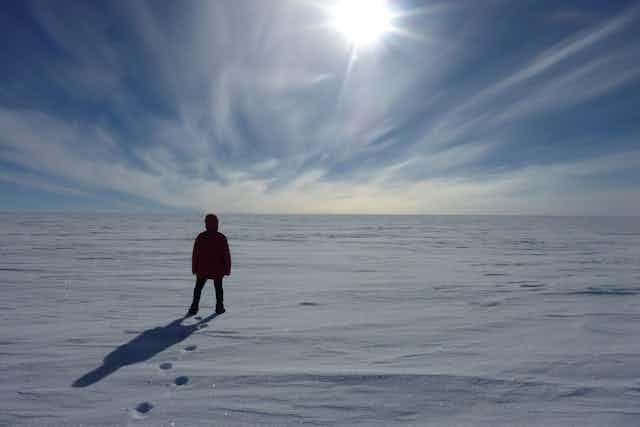
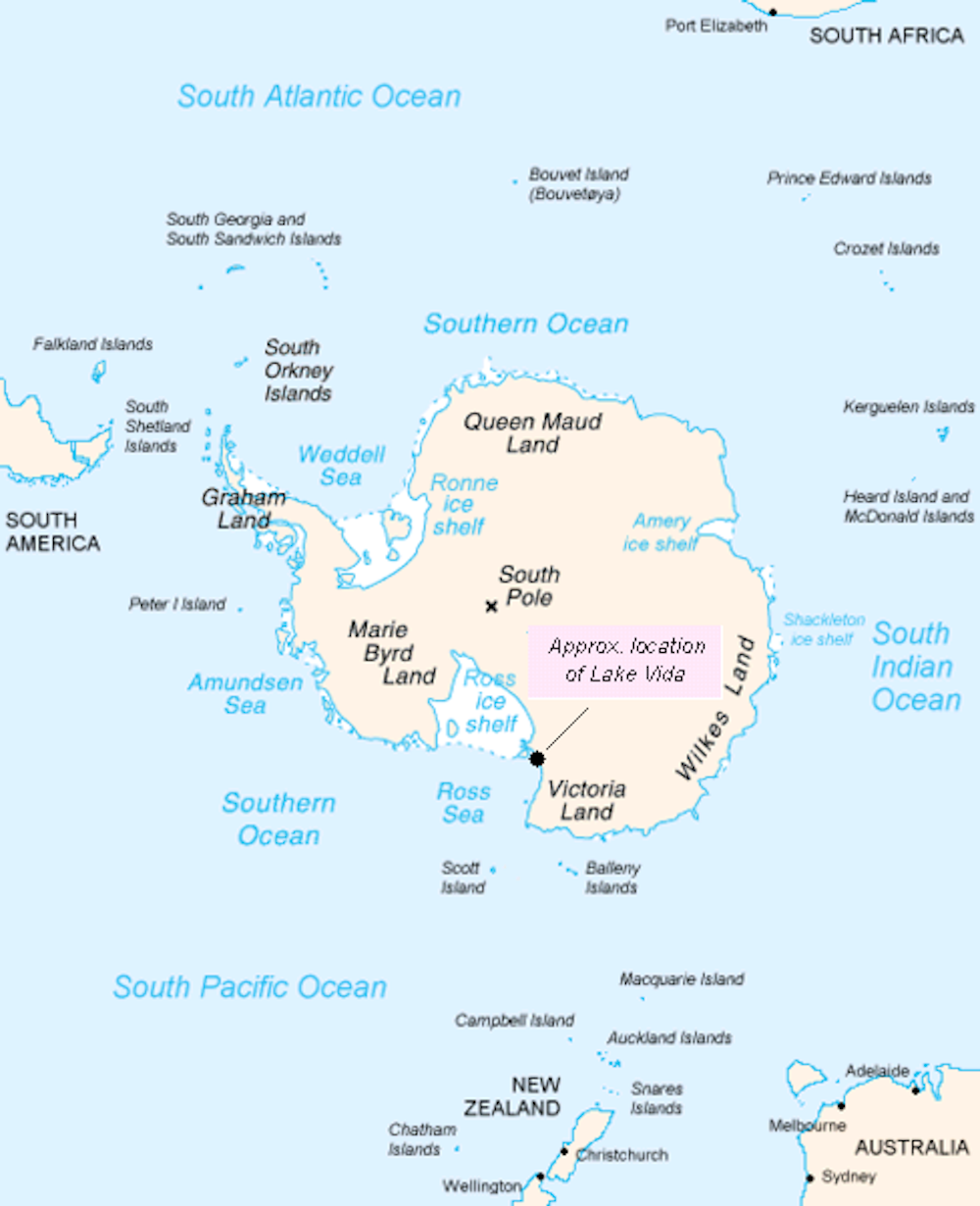
Recently my colleagues and I investigated life in a unique ecosystem beneath a frozen lake system (Lake Vida) in the Antarctic dry valleys.
The project was lead by Peter Doran at the University of Illinois at Chicago and followed on from many years of research by Doran and other Antarctic researchers.
This week a paper by Alison Murray from the Desert Research Institute in Reno, Nevada and other collaborators – including Peter Doran – presented intriguing results from a new project that involved drilling into Lake Vida.
It is important to emphasise the extreme care that went into the drilling and sampling of the lake in order to prevent contamination of the samples and, in turn, the frozen ecosystem.
Imagine scenes of researchers working in freezing conditions garbed as if to perform open-heart surgery. A sterilised drill system was used to break through the frozen surface of the lake to the brine 20m below. The drilling took place within a clean tent system and was performed by researchers wearing clean room suits and sterilised equipment.
The study found microbial life in the dark brine system under the lake’s ice cap. This life is extremely small and spherical, typical of aquatic bacteria.
These organisms manage to exist despite extreme conditions including temperatures of -13ºC, extremely high concentrations of dissolved metals and salt, laughing gas (N2O) and hydrogen (H2).
A major question posed by the Murray and colleagues was: “what is the energy source powering this ecosystem?”. The question is important since the ecosystem is sealed up and in the dark. Without new energy coming in the ecosystem could not support life.
This fundamental question has implications not only for the search for life in other parts of the solar system but also on the early beginnings of life on Earth.
Clues from Lake Vida’s unusual brine chemistry – such as the presence of laughing gas and hydrogen – suggest the energy comes from chemical reactions between the brine and the underlying rocks.
Other than being powered by chemical reactions between salty water and rocks, another interesting feature of the life found below Lake Vida is that it appears to be living slowly. That is, the chemical machinery within the organisms is cranking slowly.
This is not surprising given the extremely low temperatures. Other studies have found that the extremely slow metabolism displayed by the microorganisms is a good survival mechanism for low temperatures.
If we extrapolate from this study it would seem that life really could exist in other icy parts of the solar system. But any life we do find is likely to be very slow, much like the life we’ve found under Lake Vida.