

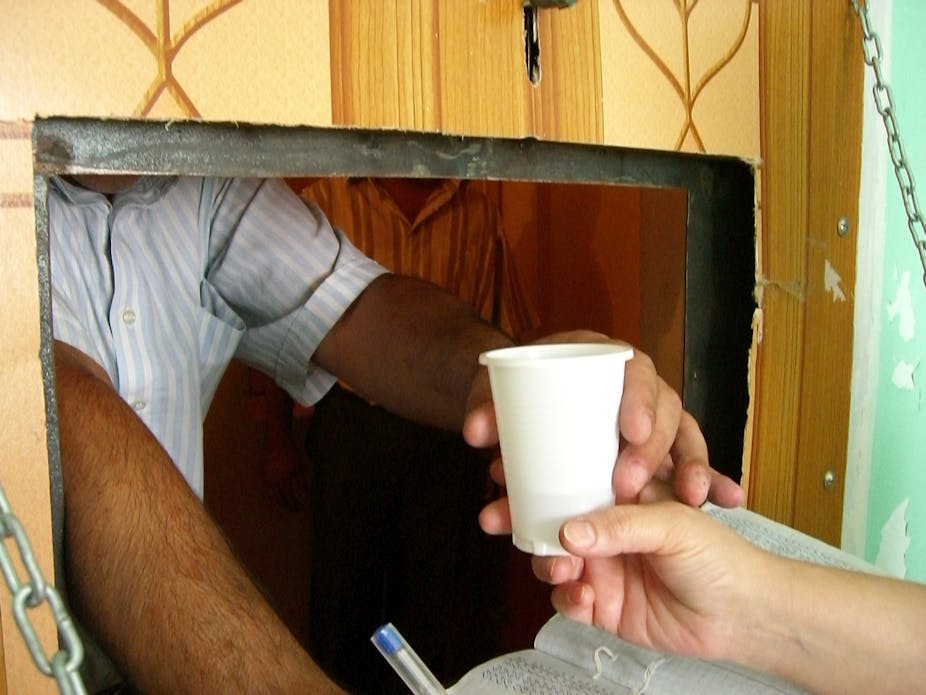
The Australian Institute of Health and Welfare (AIHW) released its annual report of the methadone and buprenorphine treatment programs operated by the states and territories today. On census day – June 2011 – 46,446 patients were being treated by 1,444 prescribers.
The number of patients in treatment increased by under 1% in 2011 following 5% to 6% annual growth between 2007 and 2010. And the number of patients in treatment nationally has increased 88% since 1998.
Dr Stella Dalton started methadone treatment for heroin dependence in Australia in 1969, with methadone. Methadone is a long-acting, oral and legal opiate. There’s copious research data, including much high-quality evidence, to demonstrate that this treatment is effective, generally safe, as well as being cost-effective. Up to $7 is saved for every dollar invested.
Buprenorphine is a synthetic drug, which has some methadone-like actions but which also antagonises opiate drugs. Buprenorphine is now combined with naloxone, a pure antagonist, to deter some of the unsanctioned injecting of buprenorphine.
The proportion of Australians who support methadone treatment has increased in recent years and was over 69% in 2010. But there’s a widespread perception that there are “no votes in methadone or buprenorphine treatment”. Consequently, programs still often struggle for funding.
Data sets such as the AIHW’s cannot, of course, give any indication of the number of Australians who would meet the criteria for treatment and would like to be in treatment but are unable to obtain or afford treatment. That number is likely to be considerably higher.
Although the Commonwealth pays for the cost of the pharmaceuticals (methadone and buprenorphine), patients undergoing this treatment often have to pay for other costs (including the dispensing of the medication). This “co-payment” amounts to a very significant sum for this low-income population.
Many opiate-dependent people are probably deterred from seeking treatment while others leave treatment early because of the resulting financial strain. Retention is much higher in New Zealand where treatment is free. There are now moves to include methadone and buprenorphine in the Pharmaceutical Benefits Scheme to increase the rate of uptake and retention.
Methadone and buprenorphine treatment also needs to adjust to recent changes in the nature of opiate dependence in Australia. Long-acting prescription opiates (such as MS Contin and OxyContin) are now consumed by many who previously only ever injected heroin. While the number of Australians injecting heroin is probably stable or perhaps even decreasing, the number using heroin plus prescription opiates or prescription opiates alone is probably increasing.
Most of the heroin reaching Australia is believed to arrive at Sydney airport or the nearby Botany Bay container terminal. Not surprisingly, New South Wales has always reported more heroin related activities than the rest of the country. NSW (2.6), Victoria (2.4) and the ACT (2.3) have the highest rates of methadone and buprenorphine treatment per 1,000 population with Tasmania (1.3), Queensland (1.2) and NT (0.5) having the lowest rates of treatment.
More than two-thirds (69%) receive methadone, 14% receive buprenorphine while 18% receive the combination drug (buprenorphine-naloxone). Males account for almost two-thirds (65%) of patients while more than a third (35%) are females. The proportions under 29 years (15%) and 50 or more years (16%) are now very similar. Almost 40% are now aged between 30 and 39 years.
The median age of patients in 2011 was 38 years. The proportion of patients aged 30 years and over increased from 72% in 2006 to 85% in 2011. This is now an ageing population presumably reflecting a decrease in recruits to heroin dependence since the onset of the heroin shortage in 2000. Almost one in ten patients (9%) identified as Indigenous, a far higher proportion than in the general population.
Almost 3,400 patients now receive treatment while in a correctional facility. This represents about 7% of all patients in treatment in Australia. The number of prison inmates receiving methadone or buprenorphine has increased by 32% since 2005.
Australian methadone and buprenorphine treatment probably compares well with similar treatment in many other rich countries. But the quality of this treatment is very inferior to the standard of health care provided to Australians who have conditions such as diabetes, breast cancer or hypertension.
This annual data set provides a mine of information for service providers and government officials who would like to narrow the gap between methadone and buprenorphine treatment and other forms of health care. But that’s hard to do when heroin and other forms of opiate dependence are considered forms of criminality.