Are GPs doing enough to help patients lose weight?

Almost two-thirds (62%) of Australian adults and one fifth (21%) of children aged five to nine years are either overweight or obese. The prevalence has increased by 5% in the last decade and is strongly influenced by the social determinants of health, with a higher prevalence among people from lower…

Phn4z4h3-1360628877
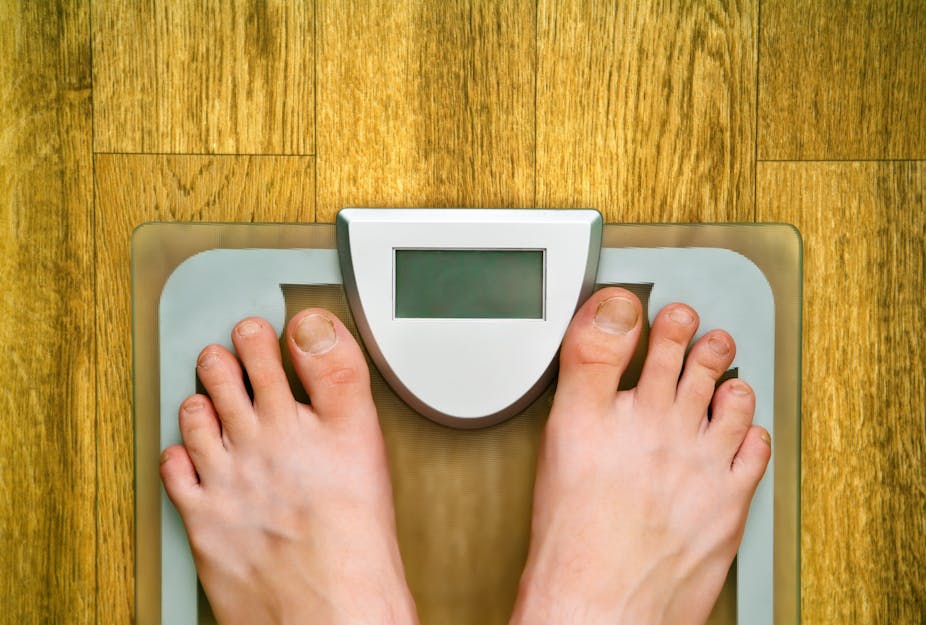
Some GPs are reluctant to broach the issue of weight for fear of offending their patients; others aren’t convinced by the evidence. Image from shutterstock.com

Almost two-thirds (62%) of Australian adults and one fifth (21%) of children aged five to nine years are either overweight or obese. The prevalence has increased by 5% in the last decade and is strongly influenced by the social determinants of health, with a higher prevalence among people from lower socioeconomic groups.

Overweight and obesity are strong risk factors for conditions such as diabetes and heart disease, which have also been steadily increasing over the past two decades.

Over 85% of the population visits a general practitioner at least once a year, so there is potential for GPs to have an important role in identifying, treating and preventing obesity. But many overweight or obese patients are not offered advice and support of sufficient intensity to help them lose weight.

A weighty issue

GPs may be reluctant to raise the issue if they think the patient will be offended. A study in Sydney GPs’ waiting rooms found most people saw their GP as having a role in identifying and treating overweight and obesity. But not all agree. An experienced GP colleague raised the issue of weight with a mother and her clearly obese adolescent daughter. Though well intentioned, his efforts offended the mother to the extent that she made a formal complaint.

There’s also little evidence to show that primary care-based interventions lead to substantial weight loss. A number of studies in the United Kingdom and United States have demonstrated that intensive education programs after initial assessment by GPs can assist patients to lose weight and maintain this up to 24 months. But success is usually modest: 5% weight loss in 20% of patients.

Primary care interventions for overweight and obesity differ from other health issues such as tobacco smoking, where there is clear randomised trial evidence that brief advice from a GP, plus offering treatment for nicotine dependence, can help substantial numbers of smokers to quit.

There’s a clear need for more research to find the best system of care to deliver effective interventions. Understandably, GPs can be reluctant to raise issues if they are not convinced they have a management option which is going to help. This is especially the case given the time pressured nature of general practice, where the average consultation length is approximately 14 minutes. The time available for discussing issues not directly related to the person’s presenting complaints has been estimated to be one to two minutes.

New National Health and Medical Research guidelines for the management of obesity are to be released soon and should at least make the evidence clearer for GPs.

Reduced television viewing is one of the most effective interventions but it’s easier said than done. Rev Dan Catt

Lifestyle factors

It’s important to recognise that health-care interventions occur in the broader context of the society in which we all live. To an increasing extent, we live in an obesogenic world where energy dense foods are readily available, families are busy and looking for convenient food options and where the necessity or opportunity for physical activity is limited.

Disadvantaged patients have the highest rates of obesity but also often have poor dietary and physical activity knowledge and skills (health literacy) which acts as a barrier to uptake and effectiveness of education programs. Reduced television viewing, for example, is one of the most effective interventions but it’s also one of the most difficult to achieve in a modern family.

Success in turning around the obesity epidemic will depend on addressing these factors as well as providing effective treatments.

Other options for care

Most of the people seen in general practice for excess weight and obesity do not fall into the severe (body mass index over 35) or morbidly obese (body mass index 40 or higher) categories. For these high-risk groups of patients, referral to specialised clinics and surgical intervention is becoming more common, especially where there is early evidence of complications such as diabetes.

But this is a recent phenomenon as evidence of effectiveness and safety of bariatric surgery has accumulated. According to a study published recently in the Journal of the American College of Surgeons, the in-hospital death rate from bariatric surgery in 1998 was just under one in 100. Over the following ten years this dropped to one in 1,000.

GPs are wary of referring patients for consideration for any procedure unless there is clear evidence of benefit and safety as one of the roles of the family doctors is to keep patients from harm.

Access to such specialised services also remains an issue, with centres of excellence rare outside major cities. Patients face high co-payments for private surgery (even with health insurance) and access government-funded bariatric surgery is limited in public hospitals.

Although overweight and obesity are high-priority national health issues and there is increasing evidence that prevention and management can be effective, GPs and their patients continue to struggle with difficult choices about how to best to tackle it.

For a legal perspective on this issue, read Don’t blame doctors for patients' failure to lose weight by Wendy Bonython

Articles also by These Authors

Sign in to Favourite

Want to follow The Conversation?

Sign up to our free newsletter to get the day's top stories in your inbox each morning, with a special wrap on Saturday.

Spinner
Donate and become a friend of The Conversation

Join the conversation

63 Comments sorted by

  1. Wendy Greene

    simultaneous translator

    To date, no one--including doctors, public health officials, nutritionists--has found any effective intervention to guarantee significant and, more importantly, sustainable weight loss for the vast majority of those who are overweight or obese.

    95% of those who lose weight will gain it back and many will end up even heavier than before they lost the weight. It is a wicked problem and there is no quick fix, no matter what any weight loss guru says. Moreover, public health campaigns based on shaming…

    Read more
    1. Carol Chenco

      Carol Chenco is a Friend of The Conversation.

      Research Officer

      In reply to Wendy Greene

      Agree Wendy,
      If you look at newsreel footage in Australia during the 60's everyone was so skinny! We didn't get driven to school, weren't able to buy snack foods 24/7, no computers so after school activity involved playing outside, no fast food, home cooked meals etc etc. I'm not suggesting going back to the 60s/70s, but a focus on health and curbing our obesogenic environment would go a long way.

      report
    2. Delete this account as requested!

      logged in via email @iinet.net.au

      In reply to Wendy Greene

      "Moreover, public health campaigns based on shaming and blaming have shown themselves to increase hatred and stigma against fat people while doing nothing to change their weight profile."

      Can you please provide a link to this, I'm curious to see the evidence for this statement? How was it gathered and what is its statistical puissance?

      It does seem to run counter to the actual results of the continuing association of criticism with bullying. Since we have stopped as a society in making these comments/criticisms the prevalence of excess weight/obesity has sky-rocketed. It's only a correlation but it seems worth further investigation.

      Though you appear to only be referring to Public Health advertising which is notoriously scatter gun in its effectiveness.

      report
    3. Bruce Tabor

      Research Scientist at CSIRO

      In reply to Carol Chenco

      Hi Carol,

      Strangely, back in the 60s and 70s when we were all so thin we were much more likely to die from cardiovascular diseases - like heart attacks, stroke etc. See Figs 4.1 & 4.2 page 22 of this document:
      www.aihw.gov.au/WorkArea/DownloadAsset.aspx?id=6442459697

      Nor is the difference is explained by modern treatments for cardiovascular diseases. There is more to this story than obesity.

      report
    4. Bruce Tabor

      Research Scientist at CSIRO

      In reply to Wendy Greene

      100% agree Wendy.
      At present the best doctors can do for anyone the morbidly obese (who should consider bariatric surgery), is encourage lifestyle changes - regular exercise (part of the routine day), quit smoking, healthy eating,...
      To encourage deliberate weight loss is likely to be counter-productive.

      Whole of society approaches are needed - including design of cities (public transport), bans on junk food advertising, a greater emphasis on preventative health, etc.

      report
    5. Robert Peers

      General Practitioner

      In reply to Wendy Greene

      well said, wendy!!

      but i have some very surprising news for you

      1. fatty maternal diet causes anxiety in the offspring

      2. this anxiety, affecting 1 in 4 westerners, often drives comfort eating or binge eating

      3. anxiety is easily treated with inositol supplement

      4. i have treated over 2000 anxious cases since 1999, among whom are many fatties, who lose 4-10 kg in 4-6 weeks, and keep it off [if they stay on the inositol

      5. some cases have lost 20 kg, and one big guy [196 kg] lost…

      Read more
    6. Matthew Curry Pye

      logged in via Facebook

      In reply to Wendy Greene

      That's simply not true.
      Calorie intake monitoring and adjustment is 100% effective.

      The flaw is in the method. Studies have shown that people are simply dishonest with themselves and others when reporting calorie intake and energy expenditure at all times, including during weight loss.

      Further studies have proven that people grossly underestimate the calorie content in "Healthy foods", often by 50%, in that if they see a food marketed as healthy, or recognisable as healthy, they will underestimate the calorie content of that food. It's possible to be obese on a diet consisting entirely of foods judged to be healthy and good for weight loss.

      Other studies have proven that the BMR calculated by peoples bodyweight and fat% is always accurate to within 200calories, exposing people who claim to have a "Slow metabolism" as one of those people who over report calorie expenditure, or underreport calorie intake.

      report
    7. Matthew Curry Pye

      logged in via Facebook

      In reply to Matthew Curry Pye

      So what that means is, even in cases where you can encourage people to eat less processed food, and exercise more, that will not correlate to weight loss, due to the flaws in peoples judgement when intaking calories, and the way they compensate for exercise, which they overestimate the impact of, with food.

      Active transport and healthier diet methods may be useful in preventing the spread of obesity in otherwise healthy individuals, but they will not help those already obese.

      It's also proven…

      Read more
    8. John Wright

      Director

      In reply to Matthew Curry Pye

      Matthew could you please reference your statement " other studies have proven........... to within 200calories, please.
      Do you mean comparing energy expenditure measured by some validated means (IC, DLW, etc) and then comparing that to predictive equations, (HB, MStJ, etc) creates these results or what? It would be great if you could send these references through to clarify the statement.

      Regarding your earlier statement "calorie intake monitoring..........The Minnesota starvation study suggests you are right, although I am not entirely sure how this helps.

      report
  2. Adrian Dudek

    PhD Candidate at Australian National University

    Years ago I went to a GP to get a medical for a job. At the end, he said something along the lines of

    "You're fine - you should try and lose some weight though."

    Of course, I was affronted at the time and left rather speechless. But then I thought that it was better for him to say it rather than any of my family or friends. I took his advice on and lost a stack of weight over the next year.

    I'm glad he intervened. And if anything, the shock of him blurting it out gave me a good stab!

    report
  3. Corinne Cowper

    general layabout

    Recently I changed doctors because my doctor told me she took a 'minimalist approach' which is fine if you haven't been asking for help re higher blood pressure reading, joint pain, and a back injury. When I went to my new doctor I had my osteoporosis and blood pressure medications changed and was a different person within 7 days.

    I've come to the conclusion from this and other experiences that a lot of doctors are just lazy. They figure they need to see a patient within a 15 minute limit so they can keep up their revenue quota for the practice. If a GP has a regular patient they should be working proactively with that patient to help them maintain their health. So discussing weight issues would be in the 'too hard' basket.

    report
    1. Bob Simpson

      Project manager

      In reply to Corinne Cowper

      Hi Corinne, Just wanted to say my doctor is not "lazy". But recently, I had a problem with my hand. He suggested two solutions. One is probably "folk medicine" that I've known of for years. The other was surgery, which my doctor suggested I not undertake. A couple of weeks later, the discomfort was more than I wanted to accept and I asked my wife to apply the "folk medicine" approach, which she did with glee. After a few moments of screaming with pain, I said "thanks"! Over the weeks since, it has improved immeasurably; both physically and in my mind! But it has caused me to ask, "Why would he not follow the folk medicine approach?" It wasn't laziness. Was it fear of the unknown consequences? I will ask him next time I see him. Thanks for your comments. Bob

      report
    2. Kim Darcy

      Analyst

      In reply to Corinne Cowper

      One area where Australia's Medicare system is better than the UK's National Health, is that our GPs are private practitioners, and we can go to anyone we choose, and still get the Medicare rebate. In the UK, you are basically assigned to a GP, who is paid a fixed salar by the state. You have the choice; if your GP sucks, go to another one; spread the word about your sucky/lazy GP. Let the market sort him out.

      report
    3. Corinne Cowper

      general layabout

      In reply to Kim Darcy

      Kim, I thank my lucky stars I do not have to live with the UK National Health system - being able to choose my doctor is a right I heartily appreciate.

      report
    4. Corinne Cowper

      general layabout

      In reply to Bob Simpson

      Bob, I'm glad you were given treatment options. My problem was that I wasn't. Kim's comment about us being fortunate not to be locked into a particular doctor is a right we should all fight to maintain.

      report
  4. Comment removed by moderator.

  5. Rosemary Stanton

    Nutritionist & Visiting Fellow at University of New South Wales

    It is not easy (and unlikely to be effective) for an overweight GP to discuss weight loss with a patient.

    It was only when doctors gave up smoking that they were prepared to be part of the solution to decreasing smoking rates.

    Might be a lesson there!

    report
  6. Bob Simpson

    Project manager

    My interest in this subject is because evidence indicates that obesity is mostly spoiling the lives of people in disadvantaged socioeconomic stratus. Therefore, an issue of justice, not only health and economics, is at play. My questions are these. What is "the message" that would change this situation? At what stages would "the message" best be heard from early appearance of obesity? Who would be effective messengers at these stages? How could you generally presume improvement without "unnecessary" delay? Is it possible to set up a wiki on the Conversation site to have some synergistic dialogue? Bob

    report
    1. Trevor McGrath

      Pharmacist Hobby:climatology

      In reply to Bob Simpson

      Hi Bob. I think the answer to that one is, how many tangents are there on a circle, as those in the health professions will attest it almost has to be an individualised approach, general awareness programs are a good start. But it appears that obesity is now a class issue, so it would appear that generational poverty is one of the underlying issues, with obesity just another one of the social indicators of economic status. If we can solve the poverty issues in Australia, along the way we may well be able to fix the obesity problem. Cheers

      report
    2. Rosemary Stanton

      Nutritionist & Visiting Fellow at University of New South Wales

      In reply to Trevor McGrath

      Trevor

      I don't disagree that solving poverty issues would help. It is a worthy and essential aim. Better education, more useful labelling on processed food and less time spent on crowded roads (making it easier to cook when you get home) would also help. So would less advertising and promotion of junk food.

      However, it's a mistake to assume that just because obesity is more prevalent among poorer people, it is confined to them. Plenty of well educated, high income earners are also overweight or obese - including many medical doctors.

      report
    3. Trevor McGrath

      Pharmacist Hobby:climatology

      In reply to Rosemary Stanton

      Hi Rosemary. Agreed. If it was up to Dictator Trevor all fast food advertising would be banned along with that for tobacco, alcohol and gambling. We have to accept these "evils” in the world but those who want them should have to seek them out, not have it in everyone's face. 24/7. Sorry rant over (I don't mind a cold beer on a hot day, and sometimes a plate of hot chips on a cold winters day is just so good). Cheers. Ps I've been following your contribution to the health debate for years, keep up the good work. Cheers

      report
    4. Bob Simpson

      Project manager

      In reply to Trevor McGrath

      Thanks Trevor. I'll ponder your thoughts and carry them into dialogue with my colleagues. It is a huge issue with frightening and unnecessary human and economic costs. As a matter of justice, I think thought leaders need to point to workable solutions that would solve the problem at the deepest level, even if they are not politically palatable. Thanks, again.

      report
    5. Bob Simpson

      Project manager

      In reply to Rosemary Stanton

      Hi Rosemary, a couple of further questions out of what you've said. Do you agree that "poverty" is a root cause of many socioeconomic problems? If so, does poverty need to be redefined in order to embrace the loss caused by obesity of well educated and high income earners? Hope the question makes sense. Thanks. Bob

      report
    6. Trevor McGrath

      Pharmacist Hobby:climatology

      In reply to Judith Olney

      Money and class are two different things. Rich bogans are a dime a dozen. Cheers

      report
    7. Judith Olney

      Ms

      In reply to Trevor McGrath

      Considering we are discussing socioeconomic status, not some sort of class system, my observation is a valid one.

      report
    8. Trevor McGrath

      Pharmacist Hobby:climatology

      In reply to Judith Olney

      Hi Judith, you are entitled to what ever observations you can make, but the view from the other side of the fence is different. I would see it as different things. In some circles Class does not equal the amount of money you have, but granted the current state of power, the amount of money you have seems to be the only thing that counts, regardless of how you got it or what your values are. But I am on this page to debate obesity, fat rich pricks and fat cats may pull all the strings in this country, but Gluttony is condemned in all the great faiths. The poor and dispossesed nead the help of those of us so inclinded to help . Cheers

      report
    9. Judith Olney

      Ms

      In reply to Trevor McGrath

      What are you talking about Trevor? What are you trying to debate? What other side of the fence is there, in fact, where is this fence?

      I made an observation, and agreed with Rosemary's post. That's it, please stop trying to manufacture an argument where there is none.

      report
  7. Yolanda Newman

    Learning support coordinator

    I am morbidly obese and have had lap band surgery which hasn't been successful in that I am still able to easily gain weight. I also have hypertension, arthritis such that I need joint replacement surgery and major depression. My GP occasionally talks about my weight usually in terms of lecturing me about 'bad' behaviour and questioning why I went ahead with the lap band when it hasn't worked. As you can imagine I don't find this helpful. I have regular psychotherapy and talk a lot about weight issues…

    Read more
    1. Bob Simpson

      Project manager

      In reply to Yolanda Newman

      Dear Yolanda, It is me who feels inadequate to respond meaningfully to your valuable contribution to this discussion. I'm certainly ill-equipped to offer advice. But I've got to say, for me you grounded the conversation with your story. Your story may become a provocation for others to find "the solution" for others in the future. If not for yourself... Because of the potential consequences of you sharing your story, please be open to the possibility that you should not feel blame, feel inadequate or feel you are a failure. Please, may I ask one question to further the discussion? If you had your time over again, what are one or two things that may have changed the course of events? Yolanda, once again, thank you. Sincerely, Bob

      report
    2. Trevor McGrath

      Pharmacist Hobby:climatology

      In reply to Yolanda Newman

      Hi Yolanda. Thanks for your story. you can be rest assured that the obesity problem we are discussing here has nothing to do with medically induced weight problems, There are many drugs that induce weight gain as well as deeper metabolic problems, often associated with thyroid or pituitary issues. Co-morbidities may have been an issue in your early years. With late Dx it may be hard to tell just what caused what. I.e. was your early weight gain caused by an undiagnosed metabolic problem, or do early life style issues induce later metabolic problems, if you know what I mean. Either way that does not change your current situation. Cheers.

      report
    3. Bob Simpson

      Project manager

      In reply to Trevor McGrath

      Trevor, when I think of walking in the street and seeing obese people... Like many people I think, I unconsciously judge them. What must my attitude do to people such as Yolanda. Yolanda, if you read this, I'm sorry. Trevor, your knowledgeable information helps me to understand there may be many explanations for people being obese (despite the statistics). I'll think about what you've said when i next see an obese person. This said, it still begs the question, what will be solutions to obese people having a truly fulfilled life? Bob

      report
    4. Trevor McGrath

      Pharmacist Hobby:climatology

      In reply to Bob Simpson

      Hi Bob. Your statement about "What must my attitude do to people such as .....” the first point is that although I am not a religious person my first reaction is always.... "That for the grace of God there go I"... you never know who you are talking to, or what their story is. I always think that stereotypes are stereotypes because they are true. But never judge, there are always exceptions to the rule. Kindness and respect will always draw the most useful information, if that is what you are after…

      Read more
  8. Andre Van Eymeren

    logged in via Facebook

    Fascinating conversation with many tangents as Trevor McGrath pointed out. However I'm interested in Bob Simpson's take on the issue and combining his thoughts with Wendy Greene.

    Not only is treating economically marginalised obese people a justice issue, it reflects on the rest of society. One aspect in particular is that we have become a consumer orientated society. The research is in that in part obesity can be linked to poverty (of course a sub question is how do you define poverty). With…

    Read more
  9. Henry Franceschi

    Director, NCD Treatment Centers

    As studies of the human genome have shown, except for the 5-10 percent of extremely rare severe obesity cases where genetic factors are involved, 90-95 percent of obesity is caused by lifestyle and personal choices. Since chronic disorders, as the World Health Organization says, are “outside the health sector,” what exactly are primary care docs doing pretending that they are responsible for personal behaviors that the patient knows more about than a physician who is not qualified in lifestyle modification…

    Read more
    1. Bob Simpson

      Project manager

      In reply to Henry Franceschi

      Henry, what does "let my people go!" look like in today's Australian society? What are one or two practical ideas to change the drivers that cause obesity? How would you progress "action" towards a goal of less poverty, less obesity? Bob

      report
    2. Trevor McGrath

      Pharmacist Hobby:climatology

      In reply to Bob Simpson

      Hi Bob. The KISS answer is exercise, food that has had as little processing as possible, and more exercise. Sitting on one's rear end is a deadly pass time. Cheers

      report
    3. Henry Franceschi

      Director, NCD Treatment Centers

      In reply to Bob Simpson

      "Let me people go" in Australia means that a lot of folks need to empower themselves to do it on their own, and not turn to Daddy government or Daddy Doctor for the answer. I have a real problem with babies in adult bodies because they will always be dependent on others to take them by the hand. Those are the ones who guaranteed will develop a chronic disease depending on what their susceptibility is and wind up disabled, unemployed, broke, probably alone and dying a painful, premature death. That…

      Read more
  10. George Naumovski

    Online Political Activist

    Only YOU can lose the weight.

    Your GP can tell you how to do it or refer you to a dietician but at the
    end of the day it’s up to you. People just want to blame others for their own problems and losing weight is very hard due to the addiction to the JUNK FOOD and the comfort it gives.

    To eat a lot is one thing but it’s what you eat is the problem, people would rather eat a whole big bag of potato chips plus fried takeaway food and a lot of it instead of the same amount of vegetables and fruits! And why because we crave the taste of junk!

    No one forces you to eat junk and healthy food is available 24/7, it’s just most people choose Junk over healthier.

    The only way most people will lose weight and keep it off is by force as in little food availability.

    For example; we feed our pets the way we think is good for them “small amounts” and 90% are not fat! So maybe we need to have food restrictions and when to eat and what to eat just like the family pet!

    report
    1. Trevor McGrath

      Pharmacist Hobby:climatology

      In reply to George Naumovski

      Hi George. what you say is all true. the main point is trying from a public health perspective to educate those with the problem to first acknowledge that their weight is a ticking time bomb for them. and to do something about it. But the main thing from an economic point of view is the long term and ever increasing costs of these life style diseases to the economy in terms of direct health costs and in lost productivity.. And as you rightly say, these people are in a social sense "addicted" to the rubbish that they are eating. The problem is to break their addiction , people like Jamie Oliver are making great head way in doing that. Cheers

      report
    2. George Naumovski

      Online Political Activist

      In reply to Trevor McGrath

      Trevor, people will only break an addiction or change only if they have to or a forced to. The person sitting at the McDonalds drive through at 11pm spending $20 on a snack for only themselves know exactly what they are doing but they blame society or whoever listens. Parents give their kids junk to shut them up and also they eat it as well. The kids have no power on what they eat because it’s the parents that make the food or give them the money to buy food, but if parents said no and only give their kids healthy foods, the kids will eat it! What needs to be done is drastic measures and people will cry about it but it’s the only thing that will work and these things are such as don’t treat fat to obese people at hospitals due to the illnesses they create for themselves! When you scare them you will see a massive reduction in people losing weight and people will not put on weight because of fear.

      report
  11. Kim Darcy

    Analyst

    GPs don't have a clue. One way to improve things would be to link GP income directly to patient outcome. Pay them according to how much weight the patient loses.

    report
    1. Kim Darcy

      Analyst

      In reply to James Jenkin

      It's one option, James. It would force GPs to be more honest about what they know/can do with obese people.

      report
  12. James Jenkin

    EFL Teacher Trainer

    Hi Nicholas, you show interventions by doctors have modest results - 20% of patients experience a 5% weight loss.

    So why write an article suggesting doctors should tell people they're fat?

    Is this some sort of moral crusade? Concrete results are irrelevant, as long as we feel we're doing something righteous?

    report
  13. James Jenkin

    EFL Teacher Trainer

    I tell you what, if I was being labelled by nice middle-class experts as 'disadvantaged' - and described as having 'poor dietary and physical activity knowledge and skills' (i.e. I'm too stupid to realise sitting around and eating junk food makes you fat) - I would feel mightily patronised.

    I might just order three Big Macs with fries and eat them outside their Northcote organic coop, just to annoy them.

    report
    1. Trevor McGrath

      Pharmacist Hobby:climatology

      In reply to James Jenkin

      Hi James. Don't forget the extra-large coke and extra-large ice cream (or whatever else they call it), and will you be having a couple of smokes between each burger, don't drop ash into your drink.
      The use of language is how we communicate ideas, everything we can conceive has a label, and it’s up to each individual whether they think they fit the labels others may give them. Each person I meet has a different idea about me, depending on the context of the meeting. Being categorised by a person or organisation has no public bearing on how you conduct your life. I.e. your bank manager thinks of you differently from your doctor or your sports buddies. Cheers

      report
    2. James Jenkin

      EFL Teacher Trainer

      In reply to Trevor McGrath

      I take your point Trevor.

      Just in this case, the labelling may have unintended consequences. When middle-class professionals publicly criticise the lifestyle choices of the 'disadvantaged' - and suggest they adopt their own middle-class habits and tastes - I imagine it doesn't go down well with a lot of people.

      report
    3. Trevor McGrath

      Pharmacist Hobby:climatology

      In reply to James Jenkin

      Hi James. I think that this is a very self-selecting audience, agreed that this forum is open to all. I don't think the "disadvantaged" are making lifestyle choices. (I did a sociology course a while back just for fun, so someone from social welfare can tell me the word I am trying to think of ...“determinism” may be it). . But to make informed choices you need the knowledge, the capital and the options you need. If you don't know any better you are not making choices. Choosing between KFC, Hungry Jacks, or Maccas is not exercising the option of eating something better if you don't know any better, or do not have the wherewithal to prepare proper meals. That’s why from my point of view, although better qualified people than me disagree, that obesity is mainly a poverty trap issue. Those who know better (our rich bogan friends for example) can rot in hell. Those who don’t know or have no options need all the help society can give to them. Cheers..

      report
    4. Keith Thomas

      Retired

      In reply to James Jenkin

      James, aren't GPs "nice middle-class experts"?

      The fact is, that despite all the science looking at human physiology, and others looking for the cure, the only way to lose excess body fat and keep it off for life, is to (a) eat less, (b) eat fundamentally different foods (esp in the first year of a fat-loss plan, while hormone production is normalised), (c) exercise more, (d) adjust the quality of the exercise (duration, type, intensity, frequency). We know that. It's a matter of making our social…

      Read more
  14. Yolanda Newman

    Learning support coordinator

    Thank you to Bob and Trevor and anyone else who has responded with kindness to my previous comment. It was a very interesting question which Bob posed 'What would have been the one thing which could have made a difference?'. In terms of my personality/psychological development a better childhood and marriage is the answer. But I won't talk about those situations. In terms of professionals - people who didn't judge and lecture. You waddle I was told by one dietician, you can't walk. As I mentioned…

    Read more
  15. John Wright

    Director

    The current GP service model is ill equipped to manage weight issues. They have little training in nutrition or exercise, have insufficient time for a complex series of consultations and find there main weapon in medicine, pharmacology, ineffective.
    Our group has some experience here and have developed a multi-disciplinary model, with nutritionists and physiologists, and the key is time. Time to diagnose (rarely as simple as too much food too little exercise), time to educate, time to individualise…

    Read more
    1. Kim Darcy

      Analyst

      In reply to John Wright

      John, I don't know what the deal is today, but medical degress (MBBS) have been 5/6 years long for decades, even back in the 1950s, I presume. In 2013, we are basically on another planet in terms of the advances in medical knowledge, diagnostic ability/technology, treatment options/meds, etc., and yet medical degrees are still the same length of time. In 2013, the med student still has to learn the same pre-clinical knowledge the 1950s student learnt (anatomy, physiology, biochem, pharmacology, histology, pathology, obstetrics/gynecology, psychiatry, pediatrics, gerontology), but on top of that they have to learn all these stuff that been's discovered since then - neuroscience, genetics, biostats, computers, MRI. And then on top of that, all the 'soft' skills that are so important nowadays.

      Surely, somewhere, in 2013, medical degrees must be leaving a hell of a lot of knowledge out of the curriculum.

      report
    2. Sue Ieraci

      Public hospital clinician

      In reply to Kim Darcy

      Kim Darcy, some of the "space" in the curriculum that was previously taken up with pre-clinical subjects (like comparative morphology, biomathematics, behavioural sciences) has now been given to more relevant topics. There is also less distinction between the clinical sciences (anatomy, physiology, pathology, pharmacology) and clinical practice (diagnostics, therapeutics, the specialties like paediatrics, emergency medicine).

      IN this era of mass information, there is also much less need to memorise…

      Read more
  16. Margo Saunders

    Public Health Policy Researcher

    Comments such as those from Yolanda and Adrian are incredibly valuable in highlighting the importance of qualitative research to inform initiatives designed to help people reach their health potential. This is not the first time I have been told of a GP who simply advised a male patient to 'lose weight' or to 'watch your diet'. Perhaps this was enough for Adrian, but it is definitely not for many others. While addressing the obesogenic environment at the community/policy levels are vital, there is obviously a desperate need to better understand the psychology and the 'lived experience' of food and other health behaviours so that specific, implementable and meaningful advice/tips can be given -- assuming, of course, that we can translate the qualitative findings into actual practice.

    report
    1. Trevor McGrath

      Pharmacist Hobby:climatology

      In reply to Margo Saunders

      Hi Margo. the same problem with all primary research.... turning the research into a useful tool, and or, saleable product. Cheers

      report
  17. Margo Saunders

    Public Health Policy Researcher

    May be of interest: Findings of a recent investigation into the relationship between socio-economic status (SES) and obesity and overweight in Victorian adults: For obese males & females, the prevalence of obesity decreased as income increased. For overweight females, no SES gradient was found. For overweight males, a reverse SES gradient was found, where the prevalence of overweight increased with increasing income. (A Markwick, L Vaughan & Z Ansari, Opposing socioeconomic gradients in overweight &obese adults, Aus & NZ J of Public Health 2013 37:1)

    report
    1. Trevor McGrath

      Pharmacist Hobby:climatology

      In reply to Margo Saunders

      Thanks Margo. I will find that paper and read it. Off the top of my head I would think that the adult male trend was only up to a certain income level and was well correlated ( although not proven) with education level not income level. I.e. Those with higher education trend to be less over weight or obese regardless of income than those of lesser education but higher income. Cheers

      report
    2. Trevor McGrath

      Pharmacist Hobby:climatology

      In reply to Trevor McGrath

      Hi again Margo. FIFO miners spring to mind. Cheers Ps I know that some of the mining companies are trying to address this problem through in-house programs. Cheers

      report
    3. Margo Saunders

      Public Health Policy Researcher

      In reply to Trevor McGrath

      Thanks, Trevor. The literature on men's health offers some possible explanations, as there have been fairly consistent findings that men's health-related attitudes & behaviours do not differ as we might think according to education, class, income, &occupation. (I have seen this myself in the form of identical views about health from 3 males with totally different backgrounds and SES: a uni professor, a police officer, and a builder.)
      One thing that has been identified as one of the most important…

      Read more
  18. Matthew Curry Pye

    logged in via Facebook

    Well, the main problem is that weight loss isn't something that the doctor can prescribe, have a patient take and then get better.

    People got obese by overeating, and there is no other solution for it than reducing calorie intake.
    People will say what they want about the models and very skinny people having eating disorders, and will try to convince themselves and those around them that the unhealthy habits of some skinny people indicate that the desire to lose weight is unhealthy.

    But this…

    Read more