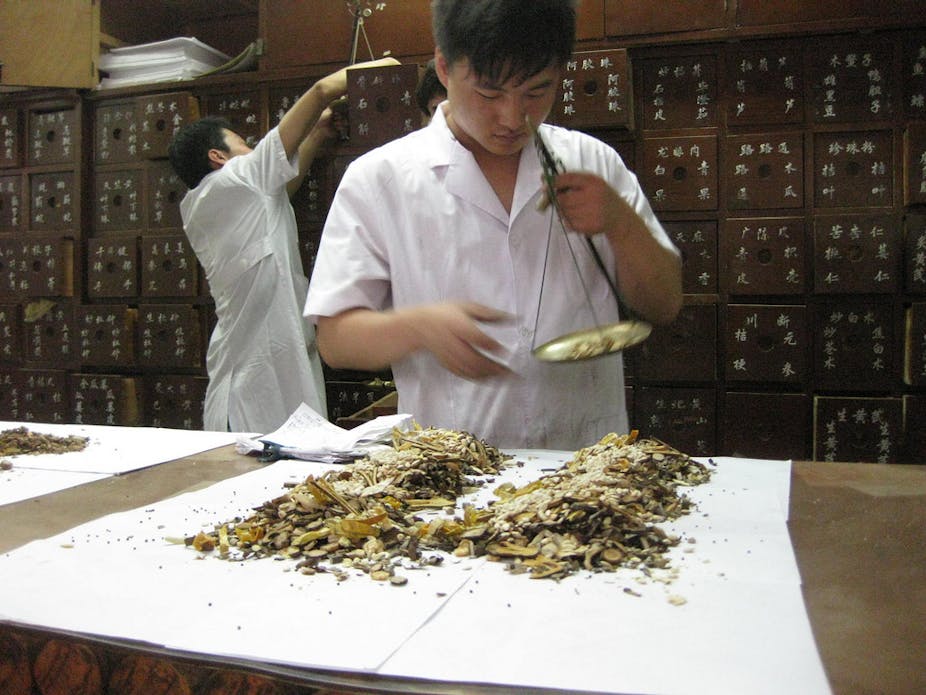
Cutting complementary medicine courses from universities would dilute the quality of the education available and threaten safe practice but have no impact on demand for it, according to academics writing in the Medical Journal of Australia (MJA) today.
In an emphatic response to recent comments by Friends of Science in Medicine (FSM), a body that is committed to stemming the spread of “pseudoscience” in medicine, the authors accuse some in the medical orthodoxy of trying to stifle divergent views.
Writing in the MJA in March, two founding members of FSM, Alastair MacLennan, a professor of obstetrics and gynaecology at the University of Adelaide, and Robert Morrison of Flinders University, wrote: “Pseudoscientific courses sully the genuinely scientific courses and research conducted at the same institutions. Their scientists and students should be concerned by any retreat from the primacy of an experimental, evidence-based approach in science and medicine.”
In today’s retort, Stephen Myers, a Professor of Complementary Medicine and Director of the Natural Medicine Research Unit at Southern Cross University, and coauthors warn that there is “great danger for the public if complementary medicine practice is allowed to develop outside mainstream education”. It would undermine “safe practice and critical appraisal”.
Among the coauthors is Kerryn Phelps, former President of the Australian Medical Association, and Adjunct Professor in the Faculty of Medicine, School of Public Health at the University of Sydney.
“Science sets out to rigorously eliminate bias, not to assert it,” they write. “The arguments mounted for the closure of complementary medicine courses in Australian universities by the Friends of Science in Medicine in a recent editorial … are highly emotive and, while having a gloss of superficial reasonableness, they do not stand up to critical review.”
Professor Myers said that complementary medicine was a broad field that could not be described with generalisations. It was important, he added, to distinguish the major professional and university-based disciplines of traditional Chinese medicine, chiropractic, osteopathy and naturopathy from “fringe practices, and the actions of rogue or unqualified practitioners”.
Two “comprehensive reviews” of complementary medicine practice and training in Australia over the past 15 years — one on traditional Chinese medicine and the other on naturopathy and Western herbal medicine – had both supported the movement of these professions into a university setting, “just as earlier reviews had done for chiropractic and osteopathy”, Professor Myers said.
“It is not melodramatic to point out that if the Friends of Science in Medicine were to succeed in their stated aims, they would achieve a dystopia — a medical ‘1984’ where only one way of knowing the body in health and illness is permitted in public discourse.”
But John Dwyer, President of FSM and Emeritus Professor at the University of New South Wales, said Professor Myers had misrepresented the position of his organisation: “A look at our website makes it clear we strongly support research into currently alternative approaches if they are credible and there is sufficient evidence to warrant science dollars being used to settle the question of efficacy.
“It is pointless to argue about who is right and who is wrong, who should be believed and who should not,” he said. “That is the whole point of our approach, to subject claims to proper scientific scrutiny, as science excels in determining impartially whether these supposed treatments are effective or not.
“The fact that many complementary and alternative medicines have been scientifically examined and found to be ineffective bears out our concerns, and no amount of assertion, declaiming, authoritative pronouncement, no matter whether it comes from exponents of complementary medicine or FSM is relevant in the face of good scientific research findings published in respected journals.
“The criticism of FSM for putting a forceful point of view on the need for scientific research sits very oddly with those who base their belief in many complementary and alternative medicines on the dogmatic pronouncement and descriptions uttered by sole individuals who have invented various medicines, often centuries ago, and who are still blindly followed to this day, despite centuries of scientific discovery and advancement in medicine.”
In a separate article in today’s issue of MJA, Paul Komesaroff, a Professor of Medicine at Monash University, and coauthors wrote that the views in the March editorial by FSM “exceed the boundaries of reasoned debate and risk compromising the values that FSM claims to support”.
Professor Komesaroff said that while there was now an extensive evidence base for complementary therapies, the concept of evidence-based medicine was highly contested within Western medicine itself.
It was not appropriate, he said, for doctors or scientists with a particular view of medicine to impose those views on the whole community.
“It is important that those who seek to be friends of science do not inadvertently become its enemies. We call on the members of FSM to revise their tactics and instead support open, respectful dialogue in the great spirit and tradition of science itself”.
Paul Storey
logged in via Twitter
"Attack on complementary medicine ‘undermines safety’ " Twaddle!
Kevin McCready
translator
Oh dear oh dear oh dear
I fully support FSM and am disappointed in Phelps, though not the least bit surprised by Myers.
Phelps faces the problem now of being in the same type of group of loony "scientists" who deny climate change. And behind a paywall at that!
Tim Scanlon
Author and Scientist
It shouldn't surprise anyone: Phelps won a Bent Spoon Award in 2008 from the Australian Skeptics.
http://www.skeptics.com.au/features/bent-spoon/
Phelps turned her back on science many years ago.
Joel Mayes
Bicycle Mechanic
Wow!
I just looked at a practice she is associated with, detox programs, "Integrative" cancer therapies to be used with "orthodox" medicine, acupuncture, naturopathy.
On twitter she is having a go at the HPV vaccine.
I'm very dispointed.
Angela Doolan
University trained Naturopath SCU, Law student UNE
Tim, I think you will find that Dr Phelps, like many of the public, turned her focus to natural and complementary medicine after a life threatening adverse reaction to medication. Yes, nothing like a near brush with death to sharpen the mind to other options.
Tim Scanlon
Author and Scientist
I think you will find that turning your back on science is folly.
This is also nothing more than a red herring. It doesn't matter that Phelps had an adverse reaction to medicine, the fact is medicine actually works. It isn't an option to take 'not-medicine', because 'not-medicine' doesn't actually do anything.
Rachel McDonald
logged in via Facebook
What's a little death between friends so long as it's scientifically proven? So what if you are now healthy - I can't find a journal article that supports it? All of you mustn't have been sick in the first place (even though scientifically trained doctors said you were) or you are just weak minded and that's why you got better.
I guess this is why scientists are not as highly respected as they used to be. Common sense has clearly left the building.
Sue Ieraci
Public hospital clinician
Rachel - have you never heard of an illness or a symptom resolving spontaneously?
Bruce Baer Arnold
Lecturer in Law at University of Canberra
'[A]n extensive evidence base for complementary therapies'. That depends what you mean by 'complementary'. Complementary therapies such as reiki? Homeopathy? Aromatherapy? Exorcism? Wristbands made from red string? Magnetic beds? Crystals? Remote healing? Why stop there, when you can use diagnostic tools such as aura diagnosis?
There's a difference between a respectful dialogue among academics and what's perceived by gullible - or desperate - people as university endorsement of practices that…
Read morejamie jardine
student
"Professor Myers said that complementary medicine was a broad field that could not be described with generalisations. It was important, he added, to distinguish the major professional and university-based disciplines of traditional Chinese medicine, chiropractic, osteopathy and naturopathy from “fringe practices, and the actions of rogue or unqualified practitioners”.
What part of this comment from the article do you not understand?
Laurie Willberg
Journalist
The UK Science and Technology Committee's report was underwritten by 3 individuals out of 17... what happened to the other 14 members?
The UK Government did not implement its recommendations.
This "Committee" was a knee-jerk reaction to a leaked WHO Report recommending the implementation of Homeopathy as a cost-effective alternative to pharmaceuticals in Third World countries. Very transparent.
Homeopathy is now being used in Cuba as prevention for annual outbreaks of Leptospirosis, in Brazil for Dengue Fever, and in India for Malaria. It is the second largest system of medicine used worldwide.
The homeopathic Banerji Protocol is used at Texas Anderson MD Cancer Centre.
Much to FOSiM's chagrin, Homeopathy is growing at a rate of 20-30% worldwide and hardly because it relies on a blind adherence to the genius of Samuel Hahnemann. A present line of research shows that homeopathic remedies work through the Rebound Effect, which is very much substantiated in medical studies.
Sue Ieraci
Public hospital clinician
Laurie Willberg - India has now celebrated a year without new cases of polio due to vaccination. Are they also celebrating the end of malaria due to homeopathy? I haven't heard that news - surely it would be widely celebrated?
Bruce Baer Arnold
Lecturer in Law at University of Canberra
1) I'm reminded of the delightful statement by a representative of the NZ homeopathic association that overdosing on a homeopathic remedy is impossible because "there´s not one molecule of the original substance remaining" (eg http://www.stuff.co.nz/national/health/3277310/Plea-for-pharmacists-to-ditch-stock). No molecule = no active ingredient ... unless you believe claims that water or alcohol have a memory. Presumably bricks and air and bits of string and the atoms in bobby pins or chewing gum…
Read moreDavid Colquhoun
Professor of Pharmacology, UCL
I don't understand "to distinguish the major professional and university-based disciplines of traditional Chinese medicine, chiropractic, osteopathy and naturopathy from “fringe practices,"
TCM, chiropractic and naturopathy ARE fringe practices. In the UK the evidence for chiropractic was destroyed when the British Chiropractic Association tried to sue Simon Singh for defamation, after he described most of their treatments as "bogus" and "without a jot of evidence". The BCA not only lost the legal case, but also lost all credibility
And it's hard to get much more fringe than naturopathy.
Laurie Willberg
Journalist
Simon Singh was rightly sued by the BCA. He lost the case and just managed to squeak by on an appeal. This hardly means the BCA "lost all credibility".
Read moreThe case for the validity of Chiropractic took place in the U.S. about 30 years ago http://www.familychiropractic.org/propaganda.htm
You seem to like to twist facts to suit your opinion.
Naturopathy is hardly "fringe". In many jurisdictions it's a registered health profession.... you know, like nurses, dental technicians, physiotherapists and…
Laurie Willberg
Journalist
The cases of polio you are referring to were caused by the vaccine -- or did you miss that part?
The mass Homeopathic treatment of malaria in India started last week. It's too soon to tell... But I'm sure when the positive results are in, the pseudo-skeptic crowd will be in the usual state of pathological denial.
Laurie Willberg
Journalist
You obviously do not understand enough Homeopathic theory or practise to be qualified enough to comment. No one has "debunked" the Banerji Protocol -- perhaps you should consult with the Texas Anderson MD Cancer Centre instead of posting silly opinions as fact.
"Science blogs" are not reliable sources of information, regardless of how arrogant their posturing is.
David Colquhoun
Professor of Pharmacology, UCL
Anybody who treats malaria with pills that contain nothing should be in jail (at least two are).
Fantasies about sugar pills do little harm in the case of minor self-limiting conditions, For the treatment of malaria, cholera and AIDS, it is simply homicide. You should be deeply ashamed of yourself.
David Colquhoun
Professor of Pharmacology, UCL
It really isn't much use citing 30 year-old references. And it's plain silly to say Simon Singh "squeaked by". His final appeal was heard by three of the most senior judges in the country, and they judged in his favour.
When, after a long delay, the BCA finally produced its "plethora of evidence" for chiropractic, the papers they cited were demolished within 24 hours. They were truly pathetic.
Pharmacology, as i say repeatedly, has failed to solve many important problems. But CAM has done…
Read moreBlair Donaldson
logged in via Twitter
Laurie, Simon Singh was sued by the BCA because they suffered from hubris and he called them out for selling snake oil and putting lives at risk. In fact the appeal found the first judge had made an erroneous finding and overturned the initial decision three nil, as I recall they were also critical of the first judge's decision.
Naturopathy along with homoeopathy, chiropractic and the other SCAM's should face the same tests for efficacy as Western medicine must undergo.
I think it's you who is twisting facts to suit your own opinion. Your tendency to resort to conspiracy theories doesn't help your argument.
Blair Donaldson
logged in via Twitter
What's to understand about homoeopathy? It's nonsense dressed up as medicine and defies everything we know about physics and chemistry.
jerry sprom
logged in via email @gmail.com
My understanding David is that the court found that Simon Singh was entitled to his opinion and he could use this as a defense (fair comment). In fact, in order for Simon to win the appeal, he had to plead with the court that what he said was not fact, but merely his opinion based on his interpretation of the evidence.
The court made no judgement on the level of evidence for chiropractic and in fact stated that it was not there role. So to insinuate (if that's what you are doing) that the courts in the UK agreed that there was not a jot of evidence for chiropractic treatment of children is not correct.
Blair Donaldson
logged in via Twitter
Jerry, the judge in the initial case focused on Simon Singh's use of the word "bogus" and effectively ruled that he had slandered chiropractors. Simon understandably appealed the decision and the three judges in the appeal overturned the initial decision and criticised the judge.
The BCA also fell foul of advertising guidelines and many enterprising UK sceptics took screenshots of the chiropractors advertising online and reported their false advertising and claims to the appropriate advertising body. From memory about one in four chiropractors were breaking advertising guidelines.
The whole saga was covered very well by the Merseyside skeptics on their blog and podcast, "skeptics with a K"
All up it looks like being a win all-round, the BCA has effectively destroyed itself and chiropractic has lost almost all credibility, many dodgy chiropractors have gone out of business and probably best of all, libel laws in the UK are being reformed. Thanks BCA.
Guy Curtis
Senior Lecturer at School of Psychology and Exercise Science, Murdoch University
"Science blogs" are not reliable sources of information,"
But the link you posted to chiropractic "propaganda" in response to another post is?
If you want to discuss reliable information that's great, that's what scientifically literate people do. We can talk all day about evidence and facts and all that. But if scientific discourse is what you want why then would you resort to the special pleadings fallacy of accusing people of being not qualified to comment?
jerry sprom
logged in via email @gmail.com
Yes Blair you are correct that the case was overturned. My reading is that the original judge based his decision on a few things. Bogus being one, but also "not a jot of evidence' and 'happily promotes' were the others. It seems somewhat ironic that Simon himself seemed to be pleading that his comments were not meant to be read as fact, but merely his opinion based on the evidence. Obviously I am not judge, but in reading his article it certainly seemed to me that he was stating his points as a fact.
For the record, I believe that over 91% of chiropractors had the allegations dismissed as not proven.
David Colquhoun
Professor of Pharmacology, UCL
@jerry sprom
You are right that the GCC rejected most of the complaints. but that's because they function as a sort of trade union for chiropractors, rather than as an effective regulator.
The GCC was in a tricky position because it had been endorsing evidence-free treatments itself. In the end, though, they were forced to admit that the mythical "subluxations" were no more than a "historical concept", thus removing the only thing that distinguishes chiropractic from other sorts of manipulation.
Sue Ieraci
Public hospital clinician
The report of the appeal judgement makes interesting reading:
http://www.bailii.org/ew/cases/EWCA/Civ/2010/350.html
jerry sprom
logged in via email @gmail.com
The GCC have said that the subluxation complex is an historical concept but remains a theoretical model and that there is no evidence that it is the cause of disease. This seems to me to be a strange statement. Of course the subluxation complex is historical, it has changed significantly since the bone out of place model and I would expect that it will probably continue to change over time as our understanding of the body changes. The subluxation complex as it is taught now is considerably different…
Read moreJoel Mayes
Bicycle Mechanic
There is no need to debunk individual homeopathic protocols as the underlying concept of homeopathy has been falsified.
Rachel McDonald
logged in via Facebook
It seems that homeopathy is of enough interest to Nobel Prize winner Professor Luc Montagnier to warrant further investigation.
Quote from the Huffington Post: "Montagnier, who is also founder and president of the World Foundation for AIDS Research and Prevention, asserted, "I can't say that homeopathy is right in everything. What I can say now is that the high dilutions (used in homeopathy) are right. High dilutions of something are not nothing. They are water structures which mimic the original…
Read moreDavid Colquhoun
Professor of Pharmacology, UCL
You have to remember that a substantial number of Nobel prizewinners go a bit bats after getting the big prize (though not any of the four I know personally). There is another Nobel winner, Brian Joseph in Cambridge who claims to believe in homeopathy (and you can't get much battier than that).
More seriously, Montagnier's has been thoroughly debunked (I'm sure you can find it if you want). His experiments were just (poor) physical chemistry and certainly didn't show "dramatic biological effects"., or any biological effects at all, speaking from memory.
Laurie Willberg
Journalist
"Western medicine" is hardly the paragon of effectiveness you would like (mostly unsophisticated consumers) to buy into. No "conpiracy theories" here. Patients who are prescribed drugs are advised to come back in a couple of weeks to report (this is anecdotal) on how the drugs are doing -- as if they have sophisticated lab equipment to report on the differences before and after in terms of their own physiology.
Wow, is this scientific or what?
Laurie Willberg
Journalist
What you are belabouring are RCTs that are supposed to indicate what can be expected with drugs that are suppressive of symptoms. When the system of medicine, like Homeopathy or TCM, does not rely on symptom suppression, RCTs are irrelevant because they were never designed to test effects other than symptom suppression. Hope this sorts out your confusion. Simple as that.
Laurie Willberg
Journalist
Nobody has "debunked" Montagnier's research, however it's telling that he had to go to China to continue his research to evade persecution from arrogant nobodies who have achieved nothing. I believe he referred to people like you as "intellectual terrorists".
Please let us know when you have been even nominated for a Nobel Prize so we can consider you in the same league as previous winners.
It must be frustrating to just be another runofthemill lecturer in pharmacology, but until you have some critical insight into some research discipline or another that's going to be your lot in life.
Laurie Willberg
Journalist
You have opined that what you disagree with is a "special pleading"? Cute. The Wilks case in the U.S. settled the issue about Chiropractic effectiveness. The fact that you either didn't know about it or selectively choose to ignore it removes you from the arena of people who have enough knowledge to comment from an educated point of view.
How have you missed the fact that a BSc is required for entrance to a Chiropractic College -- same as an MD? How have you missed the reams of studies that show muskuloskeletal injuries can't be fixed with pain medications?
You are not as "scientifically literate" as you would like others to believe, and in any event, health care technology is not science. You are not a clinical practitioner, and psychology (your specialty) has nothing to do with anything but statistics.
Laurie Willberg
Journalist
The "underlying concept of homeopathy" has hardly been "falsified".
Laurie Willberg
Journalist
One of the problems with the treatment of malaria with pharma drugs was the "watering down" of those drugs by unscupulous pharmacists. In a lowered dose, those drugs alllowed malarial mosquitoes to develop a tolerance to anti-malarial drugs, as if they had been vaccinated against them. There are similar events recorded in the early prescription of anti-biotics where smaller doses were given in cases of drug shortage -- the recipients of the smaller doses developed the bacterial infections the antibiotics were supposed to eliminate and died.
The fact that the Cuban government is using Homeopathy for the control of Leptospirosis, Brazil the control of Dengue Fever, and India the control of malaria, makes your posts a testament to your ignorance.
Ian Musgrave
Senior lecturer in Pharmacology at University of Adelaide
There is a thing called 'noble Disease" where respected and intelligent Nobel prize winners go totally off the rails in areas they have no expertise in.
http://www.sciencebasedmedicine.org/index.php/luc-montagnier-and-the-nobel-disease/
http://scienceblogs.com/insolence/2011/01/14/the-nobel-disease-meets-dna-teleportatio/
Ian Musgrave
Senior lecturer in Pharmacology at University of Adelaide
http://www.sciencebasedmedicine.org/index.php/luc-montagnier-and-the-nobel-disease/
http://scienceblogs.com/insolence/2011/01/14/the-nobel-disease-meets-dna-teleportatio/
http://scienceblogs.com/insolence/2010/11/23/luc-montagnier-the-nobel-disease-strikes/
Ian Musgrave
Senior lecturer in Pharmacology at University of Adelaide
It's currently cheaper and faster that the $1000 plus DNA test to find out if you are a ultra rapid metabolizer, rapid metabolizer or normal metabolizer.
(seriously, the fastest way to find if you have a broken CYP2D6 enzyme, and so won't get pain relief from codeine, is to take a codeine tablet, rather than wait the wee or so for a DNA test, in the future, this will be much faster and cheaper, but until we have DNA chips on our SmartPone, for most drugs this is the quickest way. For some other drugs, the wait for the DNA test is worthwhile, it depends on the drug)
Ian Musgrave
Senior lecturer in Pharmacology at University of Adelaide
Oh, so we can't have RCT's for antibiotics? Oh wait, we do. (any dieases which has a measurable objective outcome can be tested by RCT's 2whether it is amelioration (insulin) or cure (antibiotics, Growth hormone for dwarfism, iodine for goitre etc.) or prevention (folic acid fro neural tube defects)
Guy Curtis
Senior Lecturer at School of Psychology and Exercise Science, Murdoch University
Questions of science are not determined by court outcomes. Courts have awarded compensation to children with autism based on their decisions that vaccines caused autism even though the scientific evidence for this shows no link and, in fact, the best known "scientific" evidence turned out to be fraudulent. I like it when courts ruling accord with scientific conclusions and shake my head in disgust when they don't, but unlike you seem to be, I am not so naive of science that I would take a court ruling…
Read moreGuy Curtis
Senior Lecturer at School of Psychology and Exercise Science, Murdoch University
Just looked up some of the details of the Wilks case, rather than just relying on memory as I did for my post about about its dates. Justice Getzendanner said "This finding is not and should not be construed as a judicial endorsement of chiropractic". Laurie said " The Wilks case in the U.S.settled the issue about Chiropractic effectiveness"??? Hardly! And, again, I note, in any case, courts are not where scientific questions are determined.
Sue Ieraci
Public hospital clinician
Rachel - when you say "Vioxx, anyone?" - do you actually know what rofecoxib is, and why it was withdrawn?
Rofecoxib is one of the range of cyclo-oxygenase inhibitors that was developed to have reduced gastro-intestinal (stomach ulcer and bleeding) side-effects than the previous non-steroidal anti-inflammatories.
We know that aspirin - simple, cheap and plant-derived - is a good drug for relieving the pain of a range of types of arthritis, particularly if there is inflammation. Unfortunately…
Read moreSue Ieraci
Public hospital clinician
Laurie Willberg - that is your best yet!
The problem with pharma drugs for malaria was "watering down"? But surely you believe that dilution makes them more potent?
The you say that giving them these potentised drugs made the mozzies develop a "tolerance, as if they had been vaccinated against them"? Truly - tolerance is like immunity? So you accept that vaccination is effective - that's a start in the right direction.
And then you tell us yet again about Cuba, Brazil and India. Your assertion that homeopathic water does anything to control malaria - or anything else other than thirst, is a testament to your gullibility.
David Colquhoun
Professor of Pharmacology, UCL
That's interesting. Lauri Willberg seems to have gone quite after you pointed out that "This finding is not and should not be construed as a judicial endorsement of chiropractic"
he describes himself as a journalist. Aren't journalists meant to check their sources?
David Colquhoun
Professor of Pharmacology, UCL
The "underlying concept of homeopathy" was discredited in the 19th century by Oliver Wendell Holmes, in his essay Homeopathy and Kindred Delusions, The fact that it's had a bit of a resurgence in that last 30 years doesn't change that. I guess it got sort of fashionable to believe things that aren't true (like WMD and homeopathy), but that era is coming to an end. You've been rumbled (yet again).
I suspect that Hahnemann himself would have renounced his 30C dilutions if he'd known the value of Avodadro's number. Sadly that was not discovered until 22 years after he died. See "Hahnemann would have thought modern homeopaths were barmy" http://bit.ly/MdT9e6
Laurie Willberg
Journalist
Perhaps the most important reason that conventional physicians disliked homeopathy and homeopaths was well expressed at an A.M.A. meeting by one of the more respected orthodox physicians who said, "We must admit that we never fought the homeopath on matters of principles; we fought him because he came into the community and got the business."
Martin Kaufman, Homeopathy in America. Baltimore: Johns Hopkins 1971, 53
Oliver Wendell Holmes? Really? You have to do better than that. Sir William Osler, the "father of modern medicine" stated "No individual ahs done more good to the medical profession than Samuel Hahnemann" in 1919.
You are circulating nothing more than nasty opinions, David.
Laurie Willberg
Journalist
You'll notice the courts don't provide any endorsement of any form of medicine... you're just playing semantics boys.
David Colquhoun
Professor of Pharmacology, UCL
I see no point in continuing this discussion. Nobody but a few homeopaths is willing to defend homeopathy now. No doubt remnants of it will hang on in the High Street, and that is fine as long as they refrain from making false claims. The UK Advertising Standards Authority has made it clear that homeopaths can't claim to treat any named disease. As far as serious medicine goes it's essentially dead. It really isn't worth wasting breath on it any longer.
I'm sorry if this affects your income, but you lost.
Laurie Willberg
Journalist
My income does not depend on Homeopathy. The UK ASA is now aware of the pseudo-skeptic internet tool called "fishbarrel" whereby members of this cult inundated the ASA with a bunch of whiny complaints. They have now been cut off. The UK Science and Technology Committee's insane 2010 report has been completely debunked by no less than the Earl of Bewdley. So now it's time to expose the "skeptics" as nothing more than bad philosophy-peddling know-nothings and let the more enlightened medical people of the world advance integrative medicine for the benefit of patients.
Homeopathy is growing at a rate of about 20% a year worldwide. Goodness knows where you get your information, but I suspect it's just wishful thinking to support your pathological bias.
You obviously seem to think that you can declare some kind of peremptory victory... some people's egoes frequently bash their brains out.
Guy Curtis
Senior Lecturer at School of Psychology and Exercise Science, Murdoch University
Playing semantic Laurie? It was you who said that "The Wilks case in the U.S. settled the issue about Chiropractic effectiveness", the case did no such thing, this is not semantics. As for courts not endorsing any form of medicine, in the case of Thomas Sam, in sentencing the judge said "Gloria suffered helplessly and unnecessarily ... from a condition that was treatable". The clear implication here is that the judge recognized that proper treatment was available and that homeopathy was not it. The…
Read moreGuy Curtis
Senior Lecturer at School of Psychology and Exercise Science, Murdoch University
I can add that in recent memory a court in Australia ruled that a child should be vaccinated when one of their parents opposed the vaccination and the other was in favour. The court effectively endorsed the treatment and disbelieved the vacuous and unscientific anti-vaccination arguments posited by the child's mother.
Luke Weston
Physicist / electronic engineer
Shockley has a very well deserved Nobel prize, which is responsible in large part for most of the technology in the modern world.
And Nobel laureate Shockley says we should have all the inferior black people sterilised.
Is it right because Shockley is a Nobel laureate?
Montagnier believes that magical enchanted water has a magical memory and it can actually be put next to the telephone and transmit its magical memory to ordinary non-enchanted water over the phone.
Pauling believed in all matter of non-evidence-based pseudomedicine.
Josephson believes in ESP.
Curie had an affair with a married man.
Does having a Nobel prize make those things right?
Joel Mayes
Bicycle Mechanic
From the article
"“It is not melodramatic to point out that if the Friends of Science in Medicine were to succeed in their stated aims, they would achieve a dystopia — a medical ‘1984’ where only one way of knowing the body in health and illness is permitted in public discourse.”"
This is a Strawman fallacy. The goals of the FSM are to promote good evidence based medicine and push back against the growing acceptance of unproven or disproved treatment methodologies. If the evidence show TCM or Homeopathy worked I have no doubts that they would support it.
jamie jardine
student
There is plenty of evidence that TCM and acupuncture work well for some conditions, the problem is that the evidence is never enough for those who have a philosophical prejudice for anything that falls outside of their materialist and mechanistic worldview. Many people like myself have a different view of the universe and what it means to be human, the nature of consciousness etc. this is why a large portion of society continue to seek out alternative healing practices. And this is what is meant by the authors 'dystopia' comment. Science has given us much over the last couple of hundred years, but for some it is inadequate at answering many of the big questions, the nature of consciousness for example or morphogenesis. The probability is that the answers to these questions exist outside the current materialist paradigm, but limiting discourse to that which only confirms to this worldview would most definitely - for me anyway - be extremely dystopic.
Joel Mayes
Bicycle Mechanic
Anecdotes and un- or poorly blinded trails are not evidence.
Acupuncture may have some efficacy as a pain relief, however as the trials achieve better blinding the efficacy decreases.
That is what the evidence says, but that is not what is taught in acupuncture courses. Students like yourself are being paying good money to be lied to.
Laurie Willberg
Journalist
The plural of "anecdote" is DATA.
Joel Mayes
Bicycle Mechanic
I know some one who read one of your posts and got cancer. You should stop commenting here before you kill us all.
Angela Doolan
University trained Naturopath SCU, Law student UNE
Wake up Joel, the dystopia is already here. A large amount of clinical trial evidence support St Johns Wort for depression. Why is not first line treatment in this country like in many European countries?
David Colquhoun
Professor of Pharmacology, UCL
Oh dear, please try to get the evidence right.
The evidence says that St John's Wort has similar effectiveness to SSRIs. Sadly, the evidence also says that SSRIs are essentially placebos for mild and moderate depression. That emerged from the analysis by Kirsch et al 2008, when all the negative data that had (wickedly) been suppressed by GSK were included in the analysis.
The corollary is that St John's Wort doesn't work either. It seems that the pharmacological treatment of depression just doesn't work. That's sad but it doesn't help anyone to pretend otherwise.
David Colquhoun
Professor of Pharmacology, UCL
Science indeed can't answer questions like the nature of consciousness. Possible it never will.
But the answer to that problem is to say "we don't know". The answer is not to believe fairy stories, and still less is it acceptable to inflict fairy stories on patients.
jamie jardine
student
"It seems that the pharmacological treatment of depression just doesn't work."
Then why are these drugs still being prescribed for the treatment of depression?
David Colquhoun
Professor of Pharmacology, UCL
I suppose that the answer to that is that they continue to be prescribed because of ignorance about the evidence, and because of desperation.
In other words, they continue to be prescribed for much the same reasons as ineffective herbal treatments continue to be prescribed.
It's also true that commercial interests distort judgements. That is true not only of GSK and other big pharma companies who have suppressed data. It is also true of the huge alternative medicine industry (some of which is owned by big pharma), which has exploited ruthlessly the waek standards of evidence that prevail in CAM to make huge profits.
Angela Doolan
University trained Naturopath SCU, Law student UNE
I'll get the evidence right if you do also.
http://www.ncbi.nlm.nih.gov/pubmed/20708905
Joel Mayes
Bicycle Mechanic
Now I'm just a Artisan, so one of the actual medical scientist here might need to correct me here...
St. Johns Wort is no more efficacious then pharmaceutical medication, has more side effects and has more adverse reactions with other prescription drugs particularly with HIV and cancer medications then the currently used anti-depressants.
Angela Doolan
University trained Naturopath SCU, Law student UNE
Ignorance about the evidence is an understatement. You don't read the Cochrane Collaboration summaries Prof Colquhuon? I'd say the evidence points to anti-cam skeptics having sadly distorted judgement. http://summaries.cochrane.org/CD000448/st.-johns-wort-for-treating-depression.
David Colquhoun
Professor of Pharmacology, UCL
Oh dear, you are making it much too easy for me.
The Cochrane review to which you refer says that St John's Wort was "similarly effective as standard antidepressants", which is precisely what I said. Since it is now known that SSRIs are not effective for mild/moderate depression, that leaves St John's Wort as being equally ineffective.
May i suggest that you read references more carefully before you cite them.
David Colquhoun
Professor of Pharmacology, UCL
It may be perfectly safe (we don't really know because herbalists haven't developed a proper reporting method for suspected side effects). But it doesn't work. That's the main point. Neither does real pharmacology. Nobody regrets that more than me, but there is no point in denying it.
Angela Doolan
University trained Naturopath SCU, Law student UNE
Your inability to accurately analyse a most basic research summary is concerning. But thank you. You're poverty of analysis is on the record. Not only do anti-cam skeptics have sadly distorted judgement, your last response is evidence that some of them lack even basic comprehension skills.
David Colquhoun
Professor of Pharmacology, UCL
I think perhaps you should read my statistics textbook before you accuse me of being unable to read Cochrane reviews. You can download it (now free) from http://www.dcscience.net/
Your anger is very obvious but your grasp of statistics seems to be slim. I guess that sort of thing wasn't taught on your naturopathy course. That's one thing that's wrong with them.
Angela Doolan
University trained Naturopath SCU, Law student UNE
I think perhaps you should read the course overview of what the naturopathy course at SCU actually entails. Woops, looks like there are couple of subjects covering statistics available http://www.scu.edu.au/coursesin2013/?action=matrix&command=matrix_temp_load&spk_no=301766#award-rules-hdr
Edward John Fearn
Edward John Fearn is a Friend of The Conversation.
Hypnotherapist and Naturopath
Hi David, sorry to jump a little off topic here. Just in regards to your statement that it seems that the pharmacological treatment of depression just doesn't work, what you say may be 100% accurate or it may not be a slight overstatement. I haven’t really looked at all the available evidence.
However it might be prudent to refer those readers who may be thinking about stopping their medications to first consult with their doctor. He or she may discuss other alternatives such as “cognitive behavioural therapy” which has shown great promise in this area. For many people suffering with depression their medication may be an important part of just getting through each day. To take that away would be akin to removing a life jacket from someone already treading water.
Another valuable resource for those suffering with depression is “beyond blue”.
http://www.beyondblue.org.au
Guy Curtis
Senior Lecturer at School of Psychology and Exercise Science, Murdoch University
From what I can make out from your site, students doing naturopathy have to to do one of two research methods type units. One seems to be focused on sport and exercise science, the other mentions data analysis among a ranger of topics - that can't really entail very much coverage of statistics in a single unit. I can't seem to find prerequisites for the unit, which makes me think it may be at 1st-year level. Frankly, this probably amounts to something like learning to do a t-test and hardly constitutes sufficient statistical knowledge for a health professional. I'm in psychology, a registered health profession, where accredited 3-year undergraduate courses have a minimum of 3 research method units, where research methodology and statistics are embedded in most other units. And where completion of 4th-year and a subsequent 2-year masters (with further training in research methods and statistics) is needed to register to actually practice!
Sue Ieraci
Public hospital clinician
Angela Doolan, naturopathy graduate and student, argues pharmacology and statistics with David Colquhoun, professor of pharmacology and author of a textbook on statistics.
Did that SCU course include any units in insight?
Sue Ieraci
Public hospital clinician
Your reference says this:
"However, since the constituents of Hypericum extract differ between the individual manufacturers, the efficacy cannot be extrapolated from one extract to another."
Once you take a therapeutic substance, purify and standardise it, you have.....a pharmaceutical.
Sue Ieraci
Public hospital clinician
David was referring to MILD depression. There is no doubt about the efficacy of anti-depressants for severe depression. This paper explains it well:
http://jama.jamanetwork.com/article.aspx?articleid=185157
Sue Ieraci
Public hospital clinician
I agree, David.
Ironically, the move away from paternalism in medicine has left a void which is being filled by the "New Paternalists" - the non-science-based providers who market the sort of simple, directed solutions that some people still crave.
How many homeopaths will say that they don't know how to help you, or that they don't think you need any remedy at all? They tend ot be good communicators, who sell you simple, directed solutions under the guise of choice.
David Colquhoun
Professor of Pharmacology, UCL
I agree that it isn't totally settled yet, but the Kirsch 2008 analysis looks pretty convincing to me. It's very sad when medicine can't do much for people.
It still seems likely that they work to some extent for severe depression, and you are quite right that nobody should stop them without seeing a real doctor. He/she may not be able to help much, but they should be aware of the dangers.
Luke Weston
Physicist / electronic engineer
It often seems important to remind people, because they seem to forget that... IF St John's Wort does have some efficacy in the treatment of depression, which maybe it may but I'm not convinced it does, then it does NOT have this efficacy because it's a plant that contains some sort of "natural organic happy plant energy field", or something.
If that efficacy exists, then St. John's Wort has that efficacy because the plant contains a CHEMICAL (or several) that gets into your brain and interferes with the serotonin transporter, and/or the reuptake of the other monoamine neurotransmitters.
Luke Weston
Physicist / electronic engineer
"It seems that the pharmacological treatment of depression just doesn't work."
To state these research findings more accurately, it seems that SSRIs *alone* are no more effective than placebos *alone* for the treatment of *mild* depression.
(And of course some non-standardised flower containing some sort of ill-characterised and less effective, less selective SSRI or non-selective neurotransmitter reuptake inhibitor or modulator is even less effective.)
For the treatment of moderate to severe depression, we know that SSRIs are valuable and useful.
What is the optimal course of treatment for mild to moderate depression?
Not SSRIs alone, but how about the appropriate combination of consultation with a qualified psychiatrist/psychologist over a period of time, SSRIs, cognitive behavioural therapy with a qualified practitioner, and those sorts of things together?
David Colquhoun
Professor of Pharmacology, UCL
Well, perhaps for severe anyway.
I don't envy the doctor who has to deal with a desperate patient, for whom he can do little. There are many cases where this is true, specially for CNS conditions, and low back pain etc.
If, heaven forbid, I were in this situation, I guess I'd have to say "try this, some people find it helpful" but it would be old-fashioned and paternalistic to lie to patient about efficacy of treatments.
No doubt some people like to have their feet rubbed, but to call it reflexology (with it's absurd made-up diagram of make-believe connections) may fool some people, but it's grossly offensive to others. My wife was recently offered some such nonsense after she'd had a mastectomy. It harmed her wellbeing (and can't have done much for the person who offered it who was told to take her nonsense somewhere else).
Angela Doolan
University trained Naturopath SCU, Law student UNE
I don't know who you've been talking to Luke, but as a university qualified naturopath, we have been aware of multiple mechanisms of action for SJW since 2003. Check it out http://www.ncbi.nlm.nih.gov/pubmed/12775192
Sue Ieraci
Public hospital clinician
Exactly, Luke. The reason herbs or plants can have both a therapeutic and a toxic effect is that they contain a range of chemicals. The Castor Bean plant, for example, contains the poison Ricin, as well as "castor oil"(not that that is therapeutic!). Teenagers use plants to induce hallucinations - like Angel's Trumpet, which can have toxic levels of Atropine, as does Belladonna. Anticholinergics have both therapeutic and toxic effects.
The problems with using unprocessed plant materials include extreme variability in the desired chemical content as well as the mixture of inhibitory and/or toxic substances.
That's why people take a standard dose of Digoxin instead of eating or brewing foxglove.
Sue Ieraci
Public hospital clinician
You describe an interesting irony, David.
Our community has encouraged doctors to become better communicators and behave in a less paternalistic way, respecting their patients as partners in the process, and promoting overall well-being.
At some level, though, many of us crave the simple, directed advice that saves us having to wade through lots of complex evidence or make difficult decisions while we are stressed or sick. We want someone to decide for us, and take it out of our hands, but…
Read moreSue Ieraci
Public hospital clinician
(I said that more succinctly below - apologies for the repetition.)
Sue Ieraci
Public hospital clinician
Poster says "we have been aware of multiple mechanisms of action for SJW since 2003."
but her reference says:
"Although St John's wort has been subjected to extensive scientific studies in the last decade, there are still many open questions about its pharmacology and mechanism of action."
When the active ingredients are found, it would make sense to purify and standardise them. And voila' - a pharmaceutical antidepressant!
Angela Doolan
University trained Naturopath SCU, Law student UNE
Sue, there are already standardised extracts of Hypericum with good evidence of clinical efficacy and safety. They are however standardised to a level of one or two marker constituents and are made from whole plant extracts which is quite different to a pharmaceutical. http://www.ncbi.nlm.nih.gov/pubmed?term=ze%20117
Angela Doolan
University trained Naturopath SCU, Law student UNE
Most herbs do not contain cardiac glycosides like foxglove or atropine like belladonna that have very narrow therapeutic windows of use. Most medicinal herbs contain potentially hundreds of active constituents that when used as whole plant extracts generally do not have the litany of side effects that pharmaceutical drugs have due to isolating, concentrating and manipulating single active constituents.
David Colquhoun
Professor of Pharmacology, UCL
I'm sorry, but you just made that up. There is no good information to suggest that undefined mixtures of chemicals have fewer side effects, or that they show synergies.
Michael Jude Peter Barnes
logged in via Facebook
"where only one way of knowing the body in health and illness is permitted in public discourse.” Not sure what is meant by 'one way of knowing' though if it means by knowing what has been proven to work then I say bring on the dystopia. Particularly liked the succinctness of the above comment 'twaddle', .
Joel Mayes
Bicycle Mechanic
I wonder if any of the CAM supporters, who will no doubt arrive any minute, will call out SCU and Stephen Myer as a shill for Blackmores. They seemed pretty quick to attack Ian Frazer for receiving payment for his work.
Sue Ieraci
Public hospital clinician
Joel - you never seem to see them calling out their own - and yet providers like homeopaths will never let you leave the room without selling something. ANd then come back and see me next week. And if that didn't work, I'll sell you this.
Big Tincture makes enormous profits by selling infinitely diluted little bottles of water and/or alcohol at substantial profit. This puts the profit-margin of any pharmaceutical company in the shade.
Joel Mayes
Bicycle Mechanic
There is only one way to win an argument with someone with a closed mind
http://www.xkcd.org/1081/
Sue Ieraci
Public hospital clinician
Good one!
And then there's this:
http://xkcd.com/971/
Angela Doolan
University trained Naturopath SCU, Law student UNE
Really Sue? Perhaps you can supply some evidence for your statement. See if you can find a homeopathic company that has a bigger profit margin than GlaxoSmithKlein? Even after their recent 3 billion dollar fraud payout they still should have a a couple of billion in after tax profits.
Sue Ieraci
Public hospital clinician
Really, Angela Duncan - look up the financial statements of the multinational homeopathic manufacturer Boiron - you can see how little they spend on R&D in comparison to pharmaceutical companies.
It is easy to see how huge the profit margins in the homeopathic-industrial compelx are. You can buy a bottle of Mother Tincture wholesale for a few dollars, dilute it infinitely, and sell little bottles of the resulting water and/or alcohol at essentially infinite profit. I'm not making this up - I've…
Read moreSue Ieraci
Public hospital clinician
And another example:
German Homeopathy Companies Pay Journalist who Smears UK Academic
at http://www.quackometer.net/blog/2012/07/german-homeopathy-companies-pay-journalist-who-smears-uk-academic.html
Rachel McDonald
logged in via Facebook
Clearly you have never been around a group of natural therapists for long, Joel. We are well aware of who works for who and who gets paid by who and they are called out on it repeatedly.
Tim Scanlon
Author and Scientist
Why would CAM develop outside of universities? Isn't the idea that this is age old wisdom handed down from people who understood the body before they knew what a body was?
The idea that CAM is somehow legitimate and should not be allowed to be taught outside of an educated institution for fear that it will degrade is laughable. Degrade to what exactly? If it doesn't work then the worst it can do is harm people, which it already does because it doesn't work (since you aren't actually getting treatment when you need it).
This entire argument is redundant and just shows how much money there is to be made from quackery. Right after CAM has been proven to work it'll be called medicine, then it can be taught at a university.
Luke Weston
Physicist / electronic engineer
"the authors accuse some in the medical orthodoxy of trying to stifle divergent views."
There is no "medical orthodoxy". There are only things that are plausible and consistent with science and make sense scientifically and which can be shown to work in an evidence-based fashion consistent with the scientific method, and things that are not.
"the concept of evidence-based medicine was highly contested within Western medicine itself."
This ridiculous idea that science, the scientific method…
Read moreGuy Curtis
Senior Lecturer at School of Psychology and Exercise Science, Murdoch University
As soon as someone enlists the idea that there are "different ways of knowing" in relation to questions of facts big sirens and flashing lights should go off. Yes, there are many different things that are believed to be true and many ways of looking at problems and arriving at answers to questions. However, to suggest that the answer to the question of whether a treatment treats a condition beyond a placebo or not is a matter of point of view rather than true or false is errant nonsense.
Seamus Gardiner
Citizen
Yes Guy,
I agree, the statement:’ where only one way of knowing the body in health and illness is permitted in public discourse.” is problematic to credibility.
The only way you can get away with this is in anthropology or sociology, in ese disciplines it Is correct in reference to some traditional societies. The attitude to 'health' in a member of some traditional society encompasses more than just physical disease but may extend relations within their society. Now this is a completely different paradigm to what we may perceive as health so it is injudicious to use this as a lever to justify CAM as a university discipline, and certainly for CAM as a western health treatment.
Perhaps CAM could reorient itself as religion or spiritual therapy for some of its more intangible elements (ie homeopathy, reiki) as it more properly lies in the realm of faith healing.
Sue Ieraci
Public hospital clinician
Tired old tropes from the anti-scientists like "scientists don't know everything" and "doctors used to advise people to smoke" show a fundamental misunderstanding of what evidence is.
Many things in science are directly observable and measurable. So, for example, we know the chemical structure of iron oxide (rust). We know the shape and size of the earth - we have seen it from space, orbited it, flown over it, sailed around it - nobody will discover in future that the structure of iron has changed…
Read moreDavid Colquhoun
Professor of Pharmacology, UCL
Oh dear, he we go again. The mystery is how anti-scientific attitudes of CAM people ever got into universities in the first place.
CAM "degrees" in the UK have been closing since the utter nonsense that's taught on them has been revealed to the public. It would be laughable if it were not so tragic (and dangerous).
You can't stop people believing things that aren't true. But you can (and should) fire the vice-chancellors who allow this sort of thing in their universities.
Who can take RMIT and the rest seriously? They are meant to be devoted to learning. But they have turned themselves into jokes.
Ken Harvey
Adjunct Associate Professor of Public Health at La Trobe University
I agree that complementary medicine consists of various practices some of which are evidence-based and all of which deserve critical appraisal in universities.
But does Prof Myers and colleagues, who wrote the MJA Editorial "The legitimacy of academic complementary medicine", believe, for example, that the practice of homeopathy should be taught to university students of health sciences (as distinct from its critical appraisal)?
Do they agree with the awarding of degree courses in homeopathy practice as currently offered by the Endeavour College of Natural Health?
Could they please explain how such a course can, "develop critical thinking and fulfil the criteria for legitimate university disciplines"?
Bruce Moon
Bystander!
Justin
I do like the way you have melded together the various views into a cohesive whole.
From reading the responses here, we can add this to the growing list of polarising topics in Australia.
Like many here, I too have doubts about some of the quackery claimed as a complimentary medicine. But, on that I'm reminded of the 'white coat syndrome' evident in the 2nd half of the 20th century as advocates for a product claimed 'scientific assessment' as their legitimation.
I suggest one…
Read moreKen Harvey
Adjunct Associate Professor of Public Health at La Trobe University
Bruce Moon said, "Until or unless the community agrees on assessment criteria to validate claims of effectiveness, this subject will continue to polarise"
Homeopathy provides a nice case study in this regard. A long and empathic consultation with a homeopath has been shown to provide benefit to certain patients while their medicines do not, see: http://rheumatology.oxfordjournals.org/content/early/2010/11/08/rheumatology.keq234.abstract
So, should homeopathic medicines be sold in isolation by pharmacists and others?
And what should be taught in universities to students of health sciences; empathic consultation or homeopathic practice?
Sue Ieraci
Public hospital clinician
I can accept that a consultation with an empathic listener can help a person feel better. What I can't accept are (i) the vested interest in prescribing and then retailing "remedies"; and (ii) the deception involved.
Does counselling help people feel better? OF course, it can. Counsellors need regulation for competence and code of conduct - otherwise they have the potential to be destructive or take advantage of vulnerable people. ANy therapist can do that - that's why we require clinicians to be registered and work within a regulated and governed system.
David Colquhoun
Professor of Pharmacology, UCL
The usual protests from advocates of magic medicine fail to take account of the fact that NCCAM has spent over $2 billion of (US) taxpayers' money on investigation of alternative medicine and it has failed to find anything whatsoever that works well enough to be a useful treatment.
Do you want the Australian government to spend another $2 bn. just in case they have better luck?
Angela Doolan
University trained Naturopath SCU, Law student UNE
Time to actually look at the NCCAM results David. http://nccam.nih.gov/research/results
David Colquhoun
Professor of Pharmacology, UCL
I have looked. Please point out to me any useful treatments that have emerged from the $2 bn spent by NCCAM. All they have done is to show that a variety of implausible treatments don't work.
That has some value of course, but it doesn't do much for naturopaths, and other folk who don't really care about evidence. I suppose that's natural, because caring about evidence could seriously affect your income.
I don't really blame you, but I do blame SCU for giving you a poor education.
jamie jardine
student
It is comments such as this that give science and scientists a bad name, the absolute arrogance is astounding. Sitting up there in your ivory tower smoking your pipe and throwing insults at the ignorant peasants, you should be ashamed. Is it little wonder that there is a major move away from your 'scientific' medicine with know it all doctors like you!
Shame!
David Colquhoun
Professor of Pharmacology, UCL
I asked for evidence. you reply with abuse. I guess that says it all.
jamie jardine
student
If the shoe fits..
You see professor the only insults and abuse so far has been directed at alt med practitioners like me, so far just on this page we have been labeled quacks, charlatans, practicing voo doo, gullible and desperate and thats just off the top of my head. This site is supposed to be about having a conversation, all views should be welcome, but when ever this topic comes up it's the usual tirade from the same old tired bunch slinging the same old insults, without a care for the opinions or feelings of other who hold a different viewpoint. Like I said, shame!
Angela Doolan
University trained Naturopath SCU, Law student UNE
As an evidence based naturopath I'll just ask you to just actually look at the evidence, again, because for anyone who actually bothers, there are multiple examples of successful evidence for CAM at the NCCAM website http://nccam.nih.gov/research/results
Sadly, your grasp on the CAM evidence base is as lacking as your knowledge of SCU training in naturopathy.
David Colquhoun
Professor of Pharmacology, UCL
It is really very easy. You produce evidence and we'll believe it.
Science isn't about "viewpoint". it's about data.
I agree that the term charlatan is often not appropriate because it implies intentional dishonesty. I have the impression that many practitioners of evidence-free medicine are really convinced by anecdotes and are entirely honest in their beliefs.
It was in Australia that two homeopaths were jailed for manslaughter (of their own daughter) and perhaps that should happen more often. However honestly they believed that pills which contain nothing would cure their daughter, they were culpable.
If anyone deserves the description of charlatan, it isn't (usually anyway) the practitioners. It is the vice-chancellors of the universities who are happy to make money selling BSc degrees in things that are not science, and which often are often actively anti-science.
jamie jardine
student
See my posts below for evidence, it's not my job to handfeed you the evidence. I have nothing at all to prove to you anyway, acupuncture and Chinese medicine can stand on its own thank you whether you approve or not.
jamie jardine
student
The professor said: "I have the impression that many practitioners of evidence-free medicine are really convinced by anecdotes and are entirely honest in their beliefs."
No what we are convinced by is clinical evidence, it never ceases to amaze me the fantastic results that I have seen and achieved personally in clinic. For my clients and myself this seems to be enough..
Sue Ieraci
Public hospital clinician
I went to the NCCAM site referenced by Angela Doolan and started reading reviews - I didn't get to any that found any good evidence for the "therapies" being examined.
I guess that's why an "evidence based naturopath" would have to go and study law...
Angela Doolan
University trained Naturopath SCU, Law student UNE
David and Sue, let me help you. At the NCCAM website under NCCAM- funded studies in Pubmed you will find around 5000 articles, many of which have positive findings for CAM products and strategies.
http://www.ncbi.nlm.nih.gov/sites/entrez?db=pubmed&cmd=Search&term=AT%20%5Bgr%5D%20or%20NCCAM%20%5Bgr%5D&doptcmdl=Abstract
Ian Musgrave
Senior lecturer in Pharmacology at University of Adelaide
I fail to see who teaching about complimentary medicines critically, and making sure that only evidence based medicine (of any flavour) makes its way into our clinics. See my article "What CAM courses at universities should look like" for more details.
https://theconversation.edu.au/what-cam-courses-at-universities-should-look-like-5339
Blair Donaldson
logged in via Twitter
The title of this piece is oxymoronic. How is it possible to make an already unsafe product, unsafe? Complimentary medicine is a scam. If its proponents and producers want to be taken seriously, it should undergo the same tests for quality and efficacy as prescription drugs need to undergo.
Chinese medicine in particular does immense damage to efforts to save endangered species by promoting the use of animal parts purely for the doubtful benefit of deflated male egos. We need to move on from the dark ages and nonsense of "medicine" whose use is justified by little more than wishful thinking.
If Kerryn Phelps and Prof Myers want to believe in the medical equivalent of voodoo, good luck to them but they shouldn't demand CAM receive the same attention and support as evidence-based medicine unless they agree CAM must be assessed by exactly the same critical analysis of so-called Western medicine.
jamie jardine
student
"Chinese medicine in particular does immense damage to efforts to save endangered species by promoting the use of animal parts purely for the doubtful benefit of deflated male egos."
Please provide evidence of any TCM practitioner in this country who promotes or uses parts of animals from endangered species as medicine..
Sue Ieraci
Public hospital clinician
Jamie - that practitioner is called "The Internet".
Blair Donaldson
logged in via Twitter
Jamie, I didn't specify practitioners in this country but in any case, can you prove they don't use animal parts?
jamie jardine
student
You made the claim, prove it yourself..
Joel Mayes
Bicycle Mechanic
I think importation is reasonable evidence that there are some practitioners in Australia who use TCM products containing endangered species.
https://theconversation.edu.au/are-traditional-chinese-medicines-safe-and-legal-6373
IIRC there was also a conviction in Sydney around 2006
jamie jardine
student
BTW Blair should we also move on from modern biomedicine because of organ harvesting in the third world, or to rid the world from disgusting practices such as this?
http://www.theage.com.au/opinion/political-news/human-corpses-harvested-in-multimilliondollar-trade-20120717-2278v.html
You see my point here, tarring a whole system of medicine because of the unscrupulous practices of a few. China has a population of over a billion people, by those odds there a bound to be many that operate outside of the limits of what we in society generally consider acceptable. I personally find it offensive that you would have me or my collegues in this country associated with such practices..
jamie jardine
student
Wow, you pull me apart on the evidence regarding RCT's on acupuncture, yet you pull out this bullshit piece of evidence to demonstrate that TCM practitioners here are using products containing endangered species.. Anything to support and maintain your worldview, hey Joel..?
Joel Mayes
Bicycle Mechanic
Are you really claiming the TCM products seized and analysed in that paper were not for use? Remember I'm not say that the practice is wide spread or common, but at least one TCM practitioner tried to import Saiga Antelope horn powder.
And here is the CDPP Annual Report which details the 2006 conviction.
http://www.cdpp.gov.au/Publications/AnnualReports/CDPP-AnnualReport-2006-2007.pdf
jamie jardine
student
Are you really claiming the TCM products seized and analysed in that paper were not for use?
It's up to you to provide the evidence that they were to be used in commercial practice, that is an assumption you are making. Many Chinese self medicate using traditional medicines, this is the most likely reason for there importation.
Michael Bunce
ARC future fellow researching in the fields of ancient DNA and wildlife forensics at Murdoch University
Hi Jamie - I am sorry to say that there is a lot of TCM material being imported into Australia that is deemed to be illegal as it contains trade restricted species. I have seen rooms of this stuff that is scheduled for destruction. It is not uncommon to see very large shipments which is not consistent with 'personal use'. As Sue mentioned - the internet is responsible for much of this.
You are correct though - direct evidence is required to see if such products are actually for sale by practitioners here in Australia. We will soon find out as we are currently auditing locally purchased products using DNA.
Blair Donaldson
logged in via Twitter
Jamie, congratulations on missing the point - again. Believers in and practitioners of TCM do use materials from endangered animals in their potions, not all maybe but certainly enough to threaten the survival of the rhinoceros and tigers. That's an undeniable fact. You are naive if you think nobody at all in Australia employs those products from time to time. It's bad enough that magical thinking is responsible for this sad outcome but what's worse is that these potions don't even work as advertised…
Read morejamie jardine
student
Hi Michael, thanks for your reply, products sourced from China can be a problem because you don't always know what you are getting. I'm not a herbalist so I'm no expert, but most practitioners I know source their herbs from Taiwan which are supposed to be better quality and free from impurities. I also believe that many herb gardens are being set up in Australia now, but these will take some time to be established but it is something to look forward to.
I think it is important to keep in mind what Professor Myers states in the article, that is not to confuse 'mainstream CAM' with rogue practices or practitioners.
Ian Musgrave
Senior lecturer in Pharmacology at University of Adelaide
Ahem; Up to 24% of herbal medicines from Taiwan have been found to be contaminated with standard pharmaceuticals.
http://www.ncbi.nlm.nih.gov/pubmed/12190885
Aristicholic acid contamination in Taiwanese herbal preparation is also an issue.
http://www.ncbi.nlm.nih.gov/pubmed/21508072
Safety of all TCM products is an ongoing issues
http://www.ncbi.nlm.nih.gov/pubmed/19683045
jamie jardine
student
Thanks for the links Ian, I'll check it out..
Michael Bunce
ARC future fellow researching in the fields of ancient DNA and wildlife forensics at Murdoch University
I'll add one more (open access) paper to the list regarding Taiwan. The incidence of urinary tract cancer is strongly linked to herbs containing Aristicholic acid... so the purity of herbs from Taiwan should also be examined more closely.
http://www.pnas.org/content/early/2012/04/03/1119920109
Guy Curtis
Senior Lecturer at School of Psychology and Exercise Science, Murdoch University
Jaime, recent research shows that many TCMs imported into Australia contain endangered species: http://media.murdoch.edu.au/illegal-ingredients-found-in-traditional-chinese-medicines This is happening even when these ingredients aren't labeled as being included.
I was at the zoo yesterday with my kids looking at the amazing rhinos thinking what a shame it was the western black rhino has recently disappeared due to TCM. Rhino horn is basically just hair and it doesn't even treat baldness!
jamie jardine
student
Guy I find the use of endagered species as medicine as abhorrent as you do, but this has nothing to do with mainstream TCM as it is practiced in the west. With national registration now under way nationally for TCM any practitioner found prescribing illegal products would rightly be thrown out of the profession and probably prosecuted.
Banning TCM will not solve the problem of endangered species being killed for medicine, this is something that is done by criminals and needs to by addressed as such. Tarring a whole system of medicine because of the acts of criminals is unfair, and a low blow in this debate..
Luke Weston
Physicist / electronic engineer
"Up to 24% of herbal medicines from Taiwan have been found to be contaminated with standard pharmaceuticals."
Well how else would you fake any degree of clinical effectiveness, Ian? :) :P
Guy Curtis
Senior Lecturer at School of Psychology and Exercise Science, Murdoch University
Jaime,
I was replying to your request for evidence that endangered species had been used in TCM in Australia. From there you go on to extrapolate from nothing that I have said TCM should be banned in Australia and that this was a low blow. Try reading my post again.
jamie jardine
student
I'm sorry you read it that way Guy, I was speaking generally about other posts that had been made disparaging TCM due to this practice. I'll try to be more clear next time, I was a little upset at the time..
Howard Lovatt
logged in via LinkedIn
If you can prove in properly conducted double blind trials that a medicine or treatment works better than the current treatments then it becomes science and should be taught in a university science faculty. If you can't meet that level of of proof, then it isn't science and shouldn't be taught. Anecdotal evidence and saying you can't prove it doesn't work doesn't make it science. Also saying it works but not as well as other treatments doesn't mean it should be taught, it is only worth teaching the best current practice.
If there is a plausible explanation for how something might work and that this plausible explanation has not been investigated then it might be worth studying more. But this is not to say it should be studied, there might be higher priorates when considering benefit and likelihood of success. Also just because there is a plausible explanation doesn't mean it should be taught as something to use now or even mentioned other than as a current research topics.
jamie jardine
student
"If you can prove in properly conducted double blind trials that a medicine or treatment works better than the current treatments then it becomes science and should be taught in a university science faculty"
Here you go.. http://www.ncbi.nlm.nih.gov/pmc/articles/PMC3057684/
Acupuncture for chronic low back pain..
both acupuncture and placebo acupuncture were statistically and clinically superior to mainstream care that included physiotherapy, exercises and non-steroidal anti-inflammatory drugs (p<0.001).
Joel Mayes
Bicycle Mechanic
Some comments on that paper, They base their claim of efficacy on two meta-analysis one of which concludes acupuncture is no better then placebo, the other is a deeply flawed study.
Before I can accept the conclusion of the paper you have provided, can you please give reason why the authors ignored the following flaws in the GERAC study.
You can find the full text of the GERAC study here:
http://www.essl-perl.at/fileadmin/downloads/misc/Study_back_pain.pdf
The sham acupuncture did just…
Read morejamie jardine
student
The American College of Physicians, The National Institute for Health and Clinical Excellence (NICE) in Britain and the German Federal Committee of Physicians and Health Insurers seemed to agree the the results were valid enough to recommend acupunture for treatment of chronic low back pain.
As for the GERAC study placebo or not, acupuncture outperformed conventional care by a country mile. Should the conventional care be dropped because it can't even compete with a placebo? BTW the Chinese have known about the placebo effect for over two thousand years, it is discussed in the Huang Di Nei Jing and has been utilized with great effect by physicians for millenia..
Joel Mayes
Bicycle Mechanic
Did you not read my comment?
"The conventional treatment group (group 3) where not given consistent treatment, the paper lists 8 different treatments for group 3 not all of which were given to every patient, I don't see how it is possible to compare outcomes between groups of patients receiving a consistent schedule of treatments, and a group of patients who's treatment chops and changes through out the trial."
Until you can explain this flaw in the study it is not good evidence to backup your statement.
jamie jardine
student
Well if it pleases you ignore the German study and go with the American one which replicated the results..
From that study..
Usual Care Comparison Group: Participants in the usual care group received no study-related care—just the care, if any, they and their physicians chose (mostly medications, primary care, and physical therapy visits).
The point is that conventional medicine doesn't deal well with chronic low back pain, acupuncture does. This is the whole crux of these studies which address this issue of pragmatism as well as efficacy. From a pragmatic POV acupuncture should be considered as an alternative therapy for this condition as it is 1. cheaper and 2. more effective than what conventional care can currently offer..
Joel Mayes
Bicycle Mechanic
You are again describing a paper where the "conventional therapy" group has an inconsistent treatment regime, without addressing the concern I outline above.
jamie jardine
student
That is because there is no consistant treatment regime for cLBP in conventional med, that is the point there is no one size fits all treatment for this condition. In the verum acupuncture group each patient was also individually diagnosed and treated according to the principle of TCM. As I stated the significance of these papers is their pragmatism, acupuncture may not have demonstarted efficacy, but it did demonstrate it's relative effectiveness over current mainstream care.
Sue Ieraci
Public hospital clinician
Jamie - how do you interpret the fact that acupuncture was equally effective with placebo acupuncture? Doesn't that make them both placebo?
Sue Ieraci
Public hospital clinician
Jamie - you say that "each patient was also individually diagnosed and treated according to the principle of TCM" - but then the carefully-honed TCM was only as effective as the sham needling - so what does the individualisation do?
jamie jardine
student
Pattern differentiation, lifestyle/dietary advice, exercise etc.. I believe this was also offered to the control group, but don't quote me on that..
If you are genuinely interested here is an exploration of the trials with responses from practitioners..
http://g.virbcdn.com/_f/files/59/FileItem-112513-KaptchukCJIMRESPONSES2010.pdf
jamie jardine
student
Refer to the pdf I posted..
I'm not denying that the placebo effect or I prefer the meaning response plays a significant role in an acupuncture treatment. But from my experience there are also effects that cannot be purley explained by the meaning response, but thats too much to go into here. But what seems to be missed is that acupuncture is only one tool that we as practitioners use, we also counsel on diet, lifestyle, exercise (Tai Chi/Qi Gong), meditation, herbs.. TCM is a whole system of medicine, and one that originally evolved to work best as a preventitive medicine..
All that aside though, if this treatment can help people suffering from cLBP (which you must admit is a difficult condition to treat effectively) reasonably cheaply and without the use of drugs shouldn't it be considered as an alternative?
David Colquhoun
Professor of Pharmacology, UCL
You say
"TCM is a whole system of medicine, and one that originally evolved to work best as a preventitive [sic] medicine"
I would prefer to say that it is a system of medicine that evolved in a pre-scientific age, before anything was known about physiology and before anything was know about how to conduct fair tests.
jamie jardine
student
Thats not entirely true David, basic functions of the Zang Fu (internal) organs is described fairly acurately in ancient texts written over two thousand years ago. The only mistake they made was confusing the role of the Pancreas with the Spleen. On top of that in the Nei Jing, written in the Han Dynasty (300 BCE) is described for the first time the continuous circulation of the Blood through the body, something that wasn't discovered in the the west until 2,000 years later. As well as over two thousand years of clinical observation and meticulous record taking, it is not to be dismissed as lightly. I'm sure being a pharmacologist you will recognise that many pharmaceuticals were derived from Chinese herbs, ephidrene from má huáng, Tamiflu from Star Anise..
Sue Ieraci
Public hospital clinician
Jamie - the main difference between the various forms of traditional medicine - whether Chinese, Greek or herbal - is that they are systems based on observation and theories that evolved without technology. In other words, they had macroscopic/real life observation, perahps long-term but in a limited population.
The evolution of more and more sophisticated technology - both laboratory and imaging, has added exponentially to our understanding of how the body works.
Hippocrates and the ancient…
Read morejamie jardine
student
"I suspect Hippocrates would be turning in his grave if he thought we clung onto ancient pre-evidence principels when we have so much evidence before our eyes now."
Hippocrates also laid out in his Hippocratic oath "Primum non nocere", so he's probably already turning in his grave considering that we now know, in the U.S. at least medicine is now annually the third leading cause of death.
I'm not stating this fact to try to get one up on you, but to highlight that modern scientific medicine…
Read moreAngela Doolan
University trained Naturopath SCU, Law student UNE
I reckon this address says it all really. http://www.who.int/dg/speeches/2008/20081107/en/index.html
Sue Ieraci
Public hospital clinician
Jamie - I know enough of "Eastern philosophy" to know that there is no such entity....The Eastern hemisphere contains a multitude of communities, nations, religions and cultures. Are you referring to Sri Lankan Buddhism, Southern Indian Catholicism, Chinese confucianism, the Islam of the Uyghurs?
Traditional Chinese medicine has not served its community well, nor has homeopathy in India. Chinese and Indians who have the means get access to effective medicine, and practice it.
You say "No new…
Read morejamie jardine
student
Wonderful! Thank you..
The polarisation I see in medicine saddens and frustrates me, as far as i can see we all have the same motives and that is to serve the community in whatever way we can. The sooner we learn to cooperate and work together the better, thank you again..
jamie jardine
student
Hi Sue, I was refering to East Asian philosophy, Daoism and Buddhism mostly.
"So what to do? COntinue to support people in good lifestyle choices, and back them up with effective medicine when it is needed. Stop being so risk-averse and expecting medicine to solve every anxiety. Stop prolonging the process of death in the very elderly who are at the end of life. Teach the community to be resilient and not reach for a remedy or go to a therapist any time they have a midl illness. COntinue to use…
Read morejamie jardine
student
Some background on Community Acupuncture.. http://www.youtube.com/watch?v=r9F5dtcN380
Angela Doolan
University trained Naturopath SCU, Law student UNE
Jamie, that was awesome! People wonder why I'm a naturopath studying law. Until the health care legislation and policy of this country moves to reflect the health care choices and needs of the population things will not change in any meaningful way. The social injustice issue of largely middle class access to CAM practitioners is huge. The Community Acupuncture approach is very inspiring however I think this does not translate so well for naturopathy as it is necessarily a one to one process.
Sue Ieraci
Public hospital clinician
Thanks, Jamie. Let me start by saying that I don't doubt your motivation or sincerity.
I do question, however, how realistic it is to idealise the "ancient ways". Life in ancient China was no paradise. Not only was health and longevity much poorer, but ancient China was a feudal society where women had no status. Rural China was largely impoverished. Living according to the seasons was not a philosophy for most people - it was a necessity. Many rural poor barely eked out a living. Yes, there were temples and monks, and some of those led a privileged life, but life for the ordinary farmer was short and hard.
Your aim of providing a low-cost community centre is admirable, and you may meet all sorts of unmet needs for support and counseling. What your customers will have access to when they need it, also, will be medicare-funded health care on demand - that's what we all are lucky enough to have as a backstop when we need it.
Justin Case
Gardener
Oh the FoSsils are out in force here today.
The Heartland Institute of Australian medicine.
All the tactics of climate denialists like Plimer and Bolt.
Did someone say something they didn't like?
Must be a slow period in all those research institutes for the Profs, with all this time and energy to expend on puerile internet arguments and derogatory campaigns, +1s and gaming online newspaper polls. It's all so much kindergarten level fun eh.
The uninformed twaddle passing as expertise from…
Read moreSue Ieraci
Public hospital clinician
It must be slow in the garden today.
The "well-conducted clinical trial" to which you refer is a small pilot trial that did not find a statistically-significant difference in the groups. They recommend further research - which is fine: if they eventually find that there is an effective therapeutic component in ginseng, let's standardise the dose and start using it.
The chemical constituents of ginseng are well-studied. If ginseng is to be routinely used, the formulation needs to be standardised - as many "herbal" products are highly variable and often contaminated.
It's not hard to accept that herbs contain therapeutic substances - purify and standardise them, and you have pharmaceuticals. It's another whole leap in logic to think that homeopathic "remedies", containing no identifiable molecules of the alleged remedy, would do anything.
Blair Donaldson
logged in via Twitter
Given that CAM proponents like to claim treatments/remedies are individualised according to the patient's needs, how do they explain the mass produced homoeopathic remedies flogged by many chemists (who apparently have little regard for ethics for their supposed professional standing?)