
Australian energy cost estimates: experts respond

Renewable energy sources such such as solar photovoltaic and onshore wind could generate the lowest electricity costs in Australia by 2030, according to a report released today by the Bureau of Resources and Energy Economics. The Australian Energy Technology Assessment (AETA), which provides cost estimates…

S3yc2782-1343723179
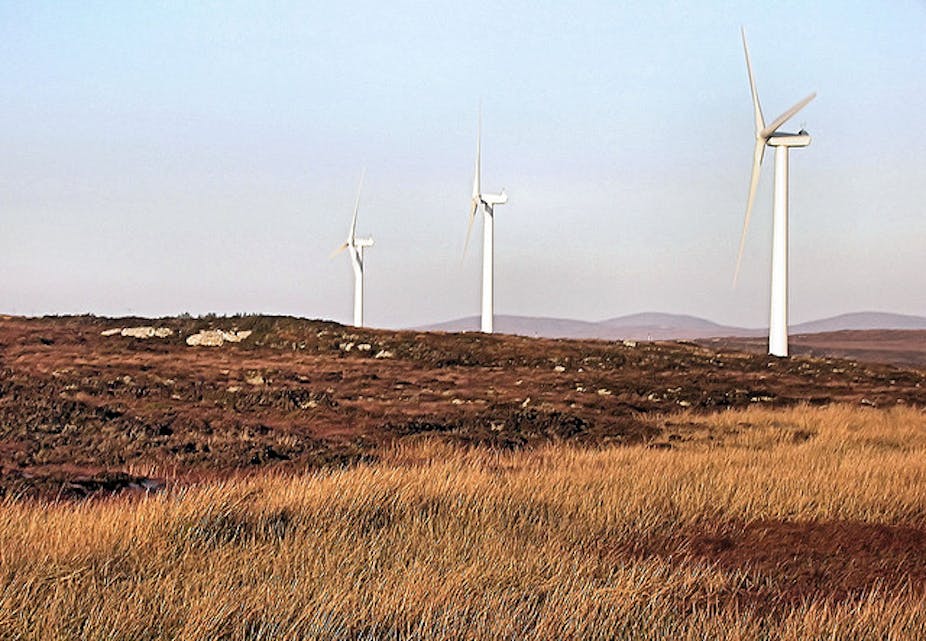
Solar photovoltaic and onshore wind could be the cheapest sources of electricity by 2030. SustainableDevelopment

Renewable energy sources such such as solar photovoltaic and onshore wind could generate the lowest electricity costs in Australia by 2030, according to a report released today by the Bureau of Resources and Energy Economics.

The Australian Energy Technology Assessment (AETA), which provides cost estimates for 40 electricity generation technologies, also found that the cost of combined-cycle gas was likely to remain competitive with lower-cost renewable technologies until 2050.

So what will these cost estimates mean for Australia’s energy and emissions future? The Conversation’s energy experts have unpacked the report and share their thoughts below.


Professor Andrew Blakers, Director of the Centre for Sustainable Energy Systems, Australian National University:

This is the first major government report to reflect the eye-popping reductions in the cost of photovoltaic (PV) electricity that have taken place in recent years.

PV has unlimited potential to supply most of the world’s electricity because it utilises the enormous solar resource, requires only a tiny fraction of the world’s land area, utilises only very common materials, has negligible environmental and aesthetic impact, and has minimal security and military issues.

PV is now cost-competitive with retail electricity throughout Australia – the simple payback time ranges from five to ten years compared with system lifetimes of 25 years. PV is also cost-competitive with off-peak electricity and gas for production of domestic hot water and space heat.

A solar revolution is taking place that will soon transform Australia’s energy system.


Professor Ken Baldwin, Director of the Australian National University’s Energy Change Institute:

The release of the Australian Energy Technology Assessment (AETA) is a landmark event, not only in Australia, but worldwide.

For the first time, a detailed study incorporating carbon pricing compares the levelised cost of electricity generated by 40 different technologies ranging from fossil fuels to renewables, biomass and nuclear power, and will inform decision making for the transition to a carbon-free economy all the way out to 2050.

Moreover, the process includes a number of variables, such as the market carbon price, or the investment discount rate, to enable a number of future scenarios to be played out. This provides an updatable dynamic tool that can be used for decision making by both government and industry to determine Australia’s energy future.

The report is policy and technology neutral. Flickr/lcrf

AETA has thrown up a few surprises. It indicates that a number of technologies – notably, nuclear energy and wind power – are already competitive, with other renewable technologies such as commercial solar cell farms joining the mix in the very near future.

The report is both technology neutral and policy neutral: it puts all technologies on the table, and enables a range of policy scenarios to be included.

This is important, as the challenge of climate change – to limit CO2 levels below 450 parts per million to keep temperature rises to two degrees centigrade – will require all the tools at our disposal. Ignoring or removing any one of them – including nuclear power – would be like fighting this challenge with one hand tied behind our back.

The AETA report shows that a range of technologies – wind, nuclear, solar and biomass – can all contribute to fossil fuel replacement, and also indicates how their relative costs play out over time and in different regions to allow informed decision making on Australia’s future energy mix.

Join the conversation

78 Comments sorted by

Comments on this article are now closed.

  1. John Newlands

    tree changer

    The report contains some heroic assumptions, for example that PV will be cheaper than coal by 2030. Somehow I can't envisage an aluminium smelter powered by solar panels. The LCOE estimates do not adjust for intermittency which have been allowed for in other studies such as those by the UK Academy of Engineering.

    Given that the world doesn't yet have a commercially viable carbon capture and storage facility nor a hot dry rock geothermal plant those LCOE estimates must contain some guesswork. Ditto costs for small modular reactors the first of which did a power test only last month.

    As to replacement of Victorian brown coal by gas the assumption seems to be the south eastern gas price will merely double by 2050. I'd assume the price will quadruple.

    report
    1. Neil Gibson

      Retired Electronics Engineer

      In reply to John Newlands

      Heroic assumptions indeed. As you said intermittency is the problem with solar PV and wind and without storage they generate non-dispatchable energy and are unsuitable for electricity grid use. So-called "free" solar and wind power is a green dream but any progress will depend on development of suitable storage cells and this should be the number one research project. Building huge wind and solar farms without storage is getting the cart before the horse. I agree that modular reactors are the future and they may happen quickly as the technology is close.

      report
    2. Alan John Emmerson

      Former chief engineer , Civil Aviation Authority

      In reply to Neil Gibson

      Dispersed "modular" reactors would need some redundancy They would also need dispersed accident response capability.for when the redundancy in the control systems proved to be ineffective.

      If the permissable catastrophic failure rate is to be less 1x E-9/hour as with current airliners, the manufacturers wil have to do a lot better than the plane makers do..(vide latest Air France Airbus report)

      Incidentally, how do you prove you have achieved the specified reliability. By testing for 10 E8 hours?.

      That said, small transportable reactors have been around for a while. SNAPSHOT in the 1960s was an example. Used liquid potasium as a working fluid and coolant mind you.

      report
    3. Michael Brown

      Professional, academic, company director

      In reply to John Newlands

      This sort of analysis has been turned out regularly since the first oil shock, and the predictions are always shown to be completely wrong a decade later. This is mainly because the assumptions are usually out by a long way. That's why the big global energy companies gave up on predictions and invented scenario planning. If you are a Victorian, a quick look at the low brown coal costs in this paper shows that any ideologcially-driven interference with the current arrangements will mean dramatically and unnecessarily high electricity costs, with consequent reductions in standards of living.

      report
    4. Benjamin Shepherd

      Researcher in the Food Security Program at the Centre for International Security Studies at University of Sydney

      In reply to John Newlands

      Why is it surprising that wind and solar will be cheaper (and a LOT not just slightly) than fossil fuels? Once the capital expenditure is paid off, the only operational cost is maintenance. No fuel cost. Of course it will be cheaper. In terms of aluminium smelting I'd say that's an exception rather than the rule compared to power demands for the majority of commercial, domestic and agricultural uses.

      Further to the "problem" of intermittancy, I understand this is just not the issue that it used to be: CSIRO-created technology, commericalised by and Australian company Ecoult, is used to "smooth" solar generation so it behaves like any other technology feeding into the grid including a multi-MW scale. See http://www.ecoult.com/applications/renewables/

      report
    5. Neil Gibson

      Retired Electronics Engineer

      In reply to Benjamin Shepherd

      Any power engineer will tell you that system loads are planned in advance and the grid would make no distinction between a gigawatt of domestic load or a smelter. What is obvious is that neither can be driven reliably with wind or solar energy which is intermittent and non-dispatchable. Any of the solar storage systems currently being sold to our gullible politicians and academics will not cope with cloudy or rainy weather and the grid will have to be powered from real 24/7 power stations. To build a parallel ,unreliable and expensive "green" power generation system which will not reduce conventional power requirement one iota is complete foolishness and an ideological waste of large amounts of money.

      report
    6. Leon Smith

      logged in via email @gmail.com

      In reply to Neil Gibson

      Perhaps so Luke, but designers have to remember to take them in to account!

      I think Neil will live to regret his assertion that solar and wind "will not reduce conventional power requirement one iota". And the better the grid at moving power across large distances (the kind of market perfection economists dream of and engineers will endeavour to create) the bigger the extent to which all power sources can compensate for non-generation by any other power source (conventional generators have down-time too you know).

      report
    7. Gary Murphy

      Independent Thinker

      In reply to Neil Gibson

      "What is obvious is that neither can be driven reliably with wind or solar energy which is intermittent and non-dispatchable."

      But they are predictable. Wind conditions and cloud cover can be forecast ahead of time. And if you have a distributed system of generators and generating methods the fluctuations will be smoothed out.

      "...which will not reduce conventional power requirement..."

      But it will reduce the amount of time that the already built and installed coal power stations will need to be running. Hence reducing the CO2 output.

      report
    8. Gary Murphy

      Independent Thinker

      In reply to Neil Gibson

      "Building huge wind and solar farms without storage is getting the cart before the horse."

      Not when it immediately reduces the amount of time that the coal-fired power stations need to be running.

      report
    9. John Coochey

      Mr

      In reply to Gary Murphy

      Problem is old mate that you have to run them anyway, it is called spinning reserve, the big turbines cannot be switched on and off like if you will forgive the comparison a light bulb, it can take many hours to bring one up to speed so it has to be run anyway so it is there if needed.

      report
    10. Neil Gibson

      Retired Electronics Engineer

      In reply to Gary Murphy

      Gary,
      John Coochey is right.I can assure you that the big machines have to be kept running as you cannot run a power grid on weather predictions. When the wind dies the spinning reserve must pick up the load and if you check you will find in the recent coldest UK winter the wind generation went to virtually zero at the most critical time.
      The big generators cannot be turned on and off as they take sometimes hours to run up. That is why they are scheduled for predicted loads up to 24 hours in advance and spinning reserve is calculated for the biggest machine on line. You cannot schedule wind generation perfectly and if you try you will have Earth Hour many times a year when all the lights go out.

      report
    11. Gary Murphy

      Independent Thinker

      In reply to John Coochey

      Many hours - yes. But wind conditions and cloud cover can be predicted ahead of time.

      report
    12. David Arthur

      n/a

      In reply to Neil Gibson

      Tomorrow will be sunny: we have a good idea of how much power will be not required in Sydney thanks to grid-connected solar installation.

      The day after will be a bit cloudy: again, we have a good idea of how much power will be not required in Sydney thanks to grid-connected solar installation.

      The day after that, lots of deep cycle batteries will be installed, and we can let those coal-fired turbines spin down once and for all.

      report
    13. Luke Weston

      Physicist / electronic engineer

      In reply to David Arthur

      Lots of deep cycle batteries?

      Are we really expecting that we can patch up the capacity factor of solar energy from 20% or so up to 90% or so, on the scale required to run our cities, with a whole bunch of lead-acid batteries?

      report
    14. David Boxall

      logged in via Facebook

      In reply to Luke Weston

      Luke Weston: "... a whole bunch of lead-acid batteries?" Is lead-acid the only battery technology?
      "Physicist / electronic engineer (logged in via email @gmail.com)" Would a real life "Physicist / electronic engineer" log in via gmail?

      report
    15. Alan John Emmerson

      Former chief engineer , Civil Aviation Authority

      In reply to Luke Weston

      That is true enough Luke , the laws of physics do not often prove to be ineffective. What does prove to be ineffective are the erroneous applications of the laws of physics built into the reliability analyses, especially of control systems maintained by humans..

      report
    16. David Boxall

      logged in via Facebook

      In reply to Luke Weston

      Why not? It's not as easy to falsify as gmail. Oh, that's why!

      report
    17. Peter Sommerville

      logged in via Facebook

      In reply to Michael Silverton

      Keep hanging in there Michael - despite the red tags. I have a PV system on my roof. It is paying for itself. But only because the subsidies I am being payed are from other consumers who cannot afford to do the same. One man's subsidy is another man's tax. Academics live in ivory towers - few of them would have a clue how to run a real business.

      report
    18. Peter Sommerville

      logged in via Facebook

      In reply to John Coochey

      A hard truth John - it is amazing how few really understand how the power they take for granted is actually generated. Carl Sagan in his book "This Demon Haunted Earth" commented that only 5% of Amercans are scientifically literate. I suspect the same number will apply here.

      report
    19. Peter Sommerville

      logged in via Facebook

      In reply to David Boxall

      David,
      Of course you are correct - better battery technologies are available. For example Vanadium flow cell batteries. But these are not without their problems - I will leave you to find that out for yourself rather than verballing you.

      report
    20. David Boxall

      logged in via Facebook

      In reply to aligatorhardt

      aligatorhardt: "... out of date "spinning reserve"system from decades ago."
      Looking backward is a good way to prevent us going forward. That seems to be the aim here.

      report
    21. David Boxall

      logged in via Facebook

      In reply to Peter Sommerville

      Peter Sommerville: "... better battery technologies are available." Are batteries the only potential solution?

      report
    22. David Arthur

      n/a

      In reply to Luke Weston

      Thanks Luke. Lots of deep cycle batteries indeed, rendering personal consumers independent of the power grid, as and when they can afford to so do.

      Bear in mind that renewable energy technology, and batteries, will continue to decrease in price with scale and technological advances, and centrally-generated fossil-powered energy is only ever going to increase in price.

      Sooner or later, something's got to give.

      report
  2. Lincoln Fung

    Economist

    Is't too good to be true?
    If the prediction is correct, then why should people worry about controlling emissions now?
    Why don't we wait to the stage when new investment on renewable energy is so efficient and productive that emissions will naturally fall?

    report
    1. Garry Claridge

      Systems Analyst

      In reply to Lincoln Fung

      Because the current cost of producing electricity does not include the real cost of externalities. Hence, its apparent "low-cost" is false. For this, future generations will have to pay a high price :(

      report
    2. Gary Murphy

      Independent Thinker

      In reply to Lincoln Fung

      "If the prediction is correct, then why should people worry about controlling emissions now?"

      Because that is what is driving the investment to improve and implement these technologies. We need to start implementing them now so that the problems can be identified and fixed and so that the manufacturing and installation can be scaled up over time.

      report
    3. Gerard Dean

      Managing Director

      In reply to Lincoln Fung

      Excellent point Lincoln

      Fantastic information. 2030 is only 17 years away. If PV systems make cheaper electricity for my factory than the coal-fired grid power we are using today, it is a no brainer that the ANZ bank will get a call in 2025 to lend me the capital to fit the panels.

      It sounds too good to be true, have I got something wrong?

      Gerard Dean
      Glen Iris

      report
    4. David Arthur

      n/a

      In reply to Gerard Dean

      Gday Gerard, what you've got wrong is that anthropogenic CO2 emissions need to completely cease when atmospheric CO2 gets to 350 ppm, ie in 1988.

      Because so much permafrost has thawed since 1988, and because solubility of CO2 in seawater has already decreased to such an extent, because the rate of heat retention in the lower atmosphere has continued to increase, we're already a quarter century along the way to runaway greenhouse warming.

      Lincoln seems to not understand this, either, perhaps I've been remiss in not explaining it to him in terms amenable to an education in economics?

      report
  3. Peter Ormonde

    Peter Ormonde is a Friend of The Conversation.

    Farmer

    Had a quick read of the Worley Parsons report ... a bit disappointed really - particularly on the comparisons between onshore and off-shore wind generation. Old data, old technology, unnecessarily limited options and a heavy emphasis on European experiences from an industry organisation that would much prefer to be doing stuff onshore.

    The main concern stems from the actual lack of output data - a comparison between installed capacity onshore and output from a similar set-up offshore. There are obviously additional costs to offshore installation - but the real issue is whether the improved output and reduced intermittency outweighs these initial costs.

    And yet again not a mention of vertical axis systems or mag-lev zero friction systems. The report takes the industry as given as optimal. Not necessarily so. I suspect that the current technology of wind generation will be regarded by future generations in much the way we perceive zeppelins in modern air transport.

    report
  4. Michael Silverton

    logged in via Facebook

    As far as I can make out one of the underlying assumptions of this work is that by 2030 the carbon price will be North of $100 per ton. This is an important factor in enabling nuclear and renewables to appear cheaper than fossil fuel based options.

    Any predictions based on CCS becoming economic must be treated with extreme suspicion.

    However if we have a choice between adapting to zero emissions or adapting to a world which is 5 degrees warmer and rising, I'd take the former option.

    report
  5. Paul Moonie

    PhD student, solar energy

    The AETA report is a much needed... and long overdue!

    The cost breakdowns it offers are invaluable to future policy making and public debate. Further- and most importantly- the results of the report offer a great platform for the further assessment studies needed for an actual low-carbon energy plan.

    Good points:
    - the generator types included are extensive (40+)
    - the cost calculations are realistic
    - with/without carbon pricing costs included
    - current and projected costs considered…

    Read more
    1. Philip Dowling

      IT teacher

      In reply to Paul Moonie

      A perpetual energy machine could always be added to provide backup power, along with a large forest of those money trees.

      report
  6. Eric Huttlestone

    Public

    Are you aware of the ITER construction of a nuclear fusion reactor in France?

    The first experiments are scheduled in 2020. The aim is to create a little “sun” on Earth.

    Have a look at http://www.iter.org/proj/itermission

    The cost benefits and safety issue of using ubundant and non-polluting hydrogen make this a very worthwhile project.

    report
  7. John Newlands

    tree changer

    On further reflection some claims of the report don't ring true. The year 2030 is conveniently just beyond our grasp in terms of the political landscape. Given that attempts will be made to drive the carbon price to $0 in 2013 it seems a bit of stretch to get to $100 or whatever by 2050. Even Greg Combet tells us we can buy foreign carbon credits for under $10 in 2015. And we'll get CCS to work.

    I'm glad PV will be cheaper than coal by 2030. I presume that's PV on demand. The imperial Roman army burned their bridges behind them so I think we should immediately dynamite Hazelwood power station to ensure there is no going back. Think of those aluminium smelters, hospitals and expresso machines running 24/7 on PV.

    report
    1. Zvyozdochka

      logged in via Twitter

      In reply to John Newlands

      "Think of those aluminium smelters, hospitals and expresso machines running 24/7 on PV" and "Somehow I can't envisage an aluminium smelter powered by solar panels" above.

      As proposed by whom?

      Two straw men in one comment section.

      report
    2. John Newlands

      tree changer

      In reply to Zvyozdochka

      Let me throw the question back to you....with what power source will we smelt aluminium in 2030?

      report
    3. Alan John Emmerson

      Former chief engineer , Civil Aviation Authority

      In reply to John Newlands

      Rather beging the question John, but an answer is "a power supply that will provide about 6kWh per lb of aluminium output"

      report
    4. Alan John Emmerson

      Former chief engineer , Civil Aviation Authority

      In reply to Alan John Emmerson

      This is not a straw man argument . The topic arose out of an earlier thread on PV panels and the use of performance numbers...

      I understand that Gladstone smelter draws 690,000 amps from six 280 MW generators. Seriously, is that within the capability of PV.

      report
    5. Zvyozdochka

      logged in via Twitter

      In reply to John Newlands

      Well, it won't be with 10-15c kWh nuclear power.

      We just completed a project where the onsite power generation price target CHP/CCGT was 1.2c/kWh.

      report
    6. Peter Sommerville

      logged in via Facebook

      In reply to Alan John Emmerson

      Not 24 hrs per day, 365 days of the year, which is what aluminium smelters require. At some point we need to get realistic.

      report
    7. aligatorhardt

      logged in via Twitter

      In reply to John Newlands

      Use natural gas for high heat needs.. Use PV and other renewable energy for electricity. It is not rocket science.

      report
    8. David Boxall

      logged in via Facebook

      In reply to Peter Sommerville

      Peter Sommerville: "... 24 hrs per day, 365 days of the year, which is what aluminium smelters require." Not quite.
      I live near the Kurri Kurri smelter and used to liaise with the owners. Pot lines don't run 365 days per year. That said, they do need reliable power.
      What evidence do you have that adequate storage cannot be developed?

      report
  8. John Coochey

    Mr

    Fantastic news! Now we do not need the carbon tax or any subsidies at all. Simple we wait for the cheaper renewables and normal price behavior will solve everything. One or two small issues, what happens at night when the wind does not blow?

    report
    1. Gary Murphy

      Independent Thinker

      In reply to John Coochey

      We switch the coal-fired plants to biomass.
      And/or we use stored energy.
      And/or hydro.
      And/or wave,geothermal,tidal, etc.

      report
    2. Luke Weston

      Physicist / electronic engineer

      In reply to John Coochey

      We use nuclear power, obviously. Might as well use it when the wind is blowing too, actually.

      report
    3. Gerard Dean

      Managing Director

      In reply to Gary Murphy

      Gary

      I agree that storage of energy is an option to balance varying power output from PV and windmills- molten salts in solar farms or pumped water (very inefficient) however swinging the coal-fired plants to biomass presents herculean problems.

      Firstly, every power station is built and tuned to its fuel to extract the maximum energy from that fuel. Brown coal stations are very different to black coal stations and bear no relation to gas fired stations.

      Secondly, and this is the biggest…

      Read more
    4. David Arthur

      n/a

      In reply to Gerard Dean

      Gerard

      I agree that storage of energy is an option to balance varying power output from PV and windmills- molten salts in solar farms, deep cycle batteries at domestic PV installations.

      report
    5. David Arthur

      n/a

      In reply to Gerard Dean

      Gerard, I forgot to add: by targetting FOSSIL fuels only with whatever carbon pricing mechanism at which we ultimately arrive, we allow the existing fleet of combustion engines and fuel refineries available for BIOfuels.

      Progress in biofuel technology and engineering is being made all the time: to keep up to date, subscribe to a daily newsletter from Reuters science news site, Science Daily. To get up to speed, search for the term "biofuel" at website www.sciencedaily.com

      report
    6. Gary Murphy

      Independent Thinker

      In reply to Gerard Dean

      Yes - converting gas turbines to biogas would probably be easier.

      On the question of quantity - it all comes down to how much electricity we would need to generate. If we got a good mix of generating technologies and some storage in the system then we would only need to use the biofuel/biogas option as a last resort on the hopefully rare occasion when the other generating technologies aren't producing enough electricity and the storage is getting low.

      report
    7. Peter Sommerville

      logged in via Facebook

      In reply to Luke Weston

      Luke,
      I well remember driving through southern France, passing 3 nuclear power stations. All were working hard, pumping out electricity, as evidenced by the plumes of steam emanating from their cooling towers.

      Interestingly these power stations were all surrounded by hundreds of wind turbines - every one of which was absolutely motionless as there was no wind.

      I have seen, and have video evidence of the same situation in Australia, USA and Canada. You cannot build a reliable electricity grid on unreliable intermittent generation.

      report
    8. aligatorhardt

      logged in via Twitter

      In reply to John Coochey

      The same thing happens as when nuclear power is offline for repairs or refueling, the power is drawn from a different source. There are not many days, or nights of the year that wind does not blow in good resource areas. There would be less windless times then there are hot times when nuclear power has to reduce because of high air and water temperatures not providing adequate cooling. http://www.ucsusa.org/nuclear_power/nuclear_power_technology/got-water-nuclear-power.html

      http://weblog.greenpeace.org/nuclear-reaction/2009/07/nuclear_power_cant_save_us_fro.html

      report
    9. David Boxall

      logged in via Facebook

      In reply to Peter Sommerville

      Peter Sommerville: "You cannot build a reliable electricity grid on unreliable intermittent generation." What evidence do you have for that assertion? What evidence do you have in support of the implication that storage, adequate to compensate for intermittency, will never be feasible?
      NASA has been doing interesting research on power-generating kites. Some fly at about 600 metres, where the generation is not so intermittent at all.

      report
  9. John Coochey

    Mr

    Another issue just crossed my mind, WhiteCliffs used to be the largest PV in Australia, obviously sunk costs because the system had already been built. But when it was connected to the grid the solar system got turned off. But if it was cheaper? Seems the marginal costs were greater than the average cost of using the grid.

    report
    1. David Arthur

      n/a

      In reply to John Coochey

      Thanks John.

      You cited the case of White Cliffs among your objections after the 30 June 2012 "Conversation" piece, "Australia under a carbon price plan: Q+A with Ross Garnaut", (https://theconversation.edu.au/australia-under-a-carbon-price-plan-q-a-with-ross-garnaut-8010).

      In reply, I summarised the history of the White Cliffs solar power supply as follows.

      1981 - solar THERMAL station constructed.
      1996 - solar THERMAL replaced with solar PV as experiment by people from ANU.
      2004 - station ceased operation; presumably the ANU research project was terminated (did we have a Howard government at the time?).

      I wonder if solar thermal technology has progressed since 1981, and if solar PV technology has progressed since 2004? I wonder if solar thermal or solar PV technology will further progress after 2012?1. PV economics are improving all the time.

      I hope this helps.

      report
  10. Keith Hammond

    Retired technician FAO of the UN

    A step forward but why no decommissioning costs included for all forms of generation, and valuation of risk?

    report
    1. Paul Moonie

      PhD student, solar energy

      In reply to Keith Hammond

      Chapter 2 of the report answers your question. There were several in-direct costs not included in the methodology for various reasons, some go in the favour of nuclear and some in the favour of renewables.

      Probably not to the extent you hope, but this report (IMO) is like a stepping stone to many others.

      In my view, it is only once the results of this report are expanded upon where these costs must be included, e.g. transmission costs for distributed renewable energy grids, or end costs for plant decommissioning for nuclear power plants.

      Evaluation of risk (i.e. accidents) on the other hand I would expect would need to be done on a case by case basis.

      report
  11. Eric Huttlestone

    Public

    I'm not an academic, so my input is basic physics.

    The problem I see with Solar and Wind generated energy; it's a reducible (and intermittent) resource!

    Global warming results in higher sea temperature e.g. 3-5 degrees.
    This would have the effect of much increased cloud cover.
    The cloud cover nearer the sea, the more densly populated areas, would thus produce less solar energy and, the land temperature would be higher thus, less wind!

    More storms and associated fronts would not provide consistency of either sun or wind.

    report
  12. Zvyozdochka

    logged in via Twitter

    These forms of report are interesting in some senses as they provide a sort-of "scoreboard" of various technologies if integrated into the existing power grid. There-in is the problem however. Where are the imaginative new power engineers that aren't attached to the old centralised grid system where selling per unit (ie waste) is the priority?

    report
  13. Mark Harrigan

    Dr

    An extremely welcome report. Not only because of it's comprehensive nature but also because it is both authorititative, objective and transparent in method and outcomes.

    Let us hope it will be used intelligently by all relevant decision makers to debate and explore (and ultimately implement) the better options, unfettered by ideological baggage

    report
    1. Neil Gibson

      Retired Electronics Engineer

      In reply to aligatorhardt

      Renewable energy use has only been driven by massive subsidies and the writing is on the wall when you look at the global picture.Germany is now building 23 new coal fired stations. If all the fairy tales I read here were true they would not bother and just build massive numbers of wind generators. The solar panel farce is nearly over as people wake up to the fact that the very poor ie renters are being asked to pay for those who can afford panels. China's major solar panel manufacturer's output is now down 80% because the world is finally waking up . If solar panels were such a great idea you would think they would use them locally but the Chinese are much to smart to do anything so silly. The UK is re-examining their disastrously expensive green power policies and the receivers have moved on the green power poster child,Spain.

      report
    2. David Boxall

      logged in via Facebook

      In reply to Neil Gibson

      Neil Gibson: "Renewable energy use has only been driven by massive subsidies ... Germany is now building 23 new coal fired stations. ... the fact that the very poor ie renters are being asked to pay for those who can afford panels. China's major solar panel manufacturer's output is now down 80% ... The UK is re-examining their disastrously expensive green power policies and the receivers have moved on the green power poster child,Spain."
      Lots of assertions; no evidence.

      report
    3. John Coochey

      Mr

      In reply to David Boxall

      And your evidence to the contrary?

      report
    4. David Boxall

      logged in via Facebook

      In reply to John Coochey

      John Coochey: "And your evidence to the contrary?"
      One mundane Troll tactic is to spew assertions, in the hope that people will waste time refuting them. I'm not about to pander to that behaviour.
      If there's any substance to Neil, he'll substantiate his assertions. Then, and only then, will I give them consideration.

      report
    5. John Coochey

      Mr

      In reply to David Boxall

      I think the evidence for the German situation is readily available a quick Google pulled it up. Regarding the record solar generation alluded to below that does not answer the question of conventional generation which has to be in reserve when the sun does not shine. And I know of no evidence that conventional generation is becoming more expensive, anyone disputing this must distinguish between wholesale at site and retail to the consumer. Wikipedia is sometimes not the most reliable source but it interesting to look at the case of White Cliffs which only supplied electricity to selected buildings had large battery back up and diesel generation in reserve.

      report
    6. Neil Gibson

      Retired Electronics Engineer

      In reply to Gary Murphy

      Germany has spent 130 billion Euros to get .3% of it's energy needs from solar ( supplied intermittently and unreliably) and still requires the same baseload generation as before ie fossil fueled.
      http://spectrum.ieee.org/energywise/green-tech/solar/have-german-solar-subsidies-failed
      As for Spain anyone who can read a newspaper knows what has happened there and it is an object lesson for other countries that want to pursue "green" power at any cost.
      http://www.businessweek.com/news/2012-05-29/spain-ejects-clean-power-industry-with-europe-precedent-energy
      The dreamers who want to run a modern economy on sunbeams and sea breezes should stand aside until the technologies to do that are available ,tested and ready for production. Half-baked projects like electric cars without adequate battery systems, solar and wind generation without storage should be still on the design boards until ready and the huge funds currently wastedcould be directed to solve the storage problem.

      report
    7. Gary Murphy

      Independent Thinker

      In reply to Neil Gibson

      Bjorn Lomberg - objective source? The guy who spends most of his time trying to convinnce us that global warming is not a problem?
      Try this:
      http://en.wikipedia.org/wiki/Energy_in_Germany#Electricity_production

      BTW China are using PV locally (and wind):
      http://en.wikipedia.org/wiki/Renewable_energy_in_China

      I think the AETA report is based on currently operating technologies. Have you read it?

      And before you start repeating the same old tired rhetoric about how you can't get a reliable electricity supply from renewables:
      http://www.sciencedirect.com/science/article/pii/S0301421512002169
      "A range of 100% renewable energy systems for the NEM are found to be technically feasible and meet the NEM reliability standard."

      report
    1. David Boxall

      logged in via Facebook

      In reply to Philip Dowling

      Philip Dowling: "... Australia should change its energy generation mix like Germany is planning."
      Do you really think fossil fuels are a way forward? Isn't that sort of thinking (or more accurately, failure to think) what got us into this mess? Just because somebody else does something silly, do you have to follow?

      report