



What role have dogs played in human evolution? Woof … now there’s a question.
Anthropologist Pat Shipman, in a recent issue of American Scientist, suggests dogs gave our human ancestors an advantage over Neanderthals when they arrived in Europe.
Dogs, she argues, made a real difference to the success of the hunt. They respond to human communication - even to the direction in which our eyes are turned. She also points out dog remains have been found – (controversially) – in sites in Belgium, the Czech Republic and as far east as the Altai Mountains in Siberia, going back as far as 33,000 years.

Of course Shipman, who works at Penn University, is not the first to have suggested a close relationship with dogs provided an advantage for humans. Catalyst presenter Dr Jonica Newby, in her 1997 book The Pact for Survival, proposed more or less the same thing, citing the then-unpublished work of veterinarian and author David Paxton.
Around the same time, I myself was impressed by a DNA study by Vila and colleagues that seemed to suggest dogs had separated from wolves at least 150,000 years ago, and that they and we had begun to establish a symbiosis as long ago as that, leading even to humans’ sense of smell being reduced because our association with dogs had rendered it unnecessary.
“Dogs”, I wrote, “acted as humans’ alarm systems, trackers and hunting aides, garbage disposal facilities, hot water bottles, and children’s guardians and playmates. Humans provided dogs with food and security.
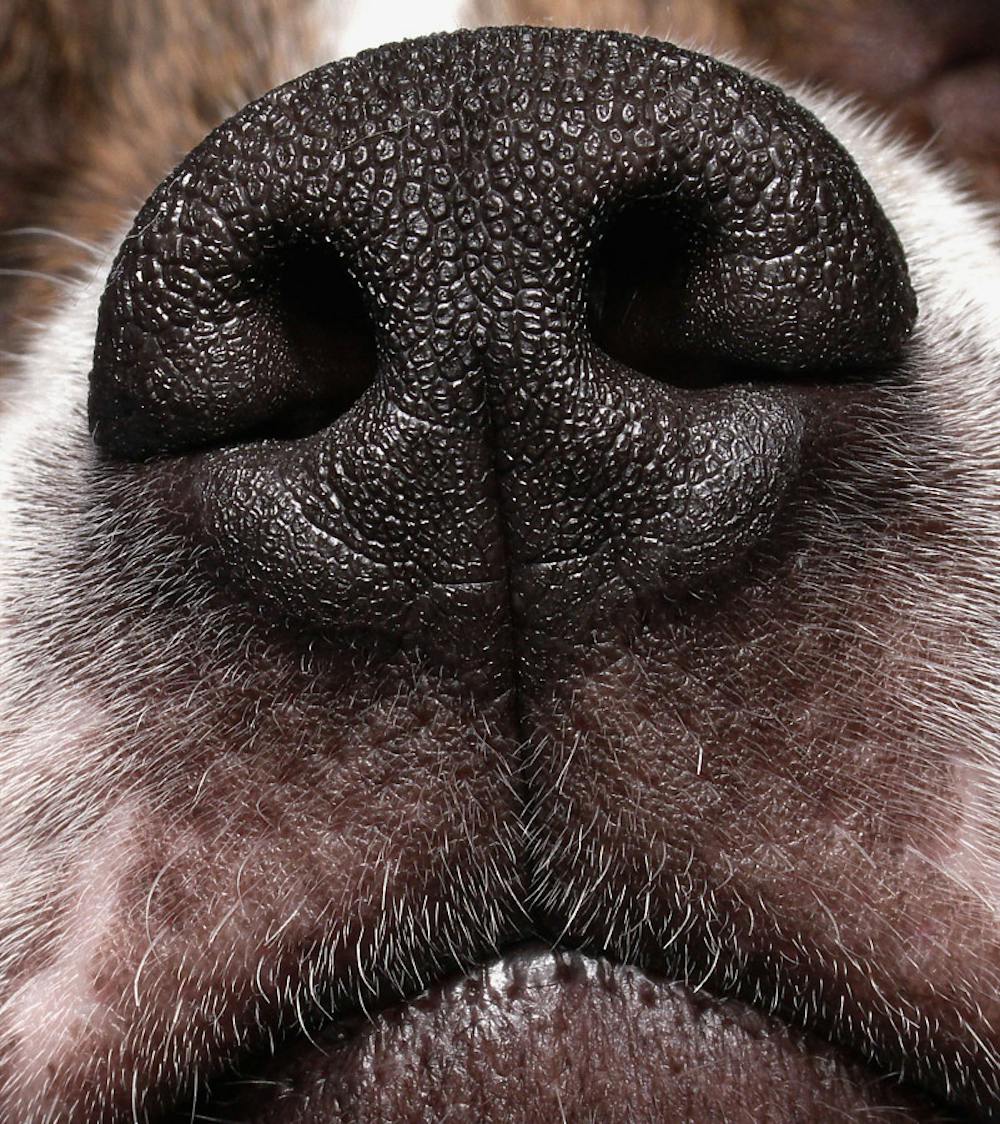
"The relationship was stable over 100,000 years or so, and intensified during the Holocene epoch into mutual domestication. Humans domesticated dogs, and dogs domesticated humans.”
Now David Paxton, cited extensively by Newby, has published his ideas himself, going into some depth about such things as the loss of the sense of smell, and the advantage that dogs helped our ancestors to gain over Neanderthals.
It turns out that the “at least 150,000 years ago” date is wrong. The geneticist Simon Ho and his colleagues have found the initial rate of DNA evolution appears to be extremely high, and slows down to the “molecular clock” rate only after 1m years or so.
They haven’t done the recalibration for the dog-wolf separation time, but under the conditions they set in their paper it has got to be less than 100,000 years. And the “sense of smell” idea will probably not hold either, because there are no wolves, so no potential ancestral dogs in Africa, where modern humans originated; yet the sense of smell is reduced (as I documented in my 1999 paper) in all humans, not just non-Africans.

So the human-dog symbiosis occurred in Eurasia, and dogs spread into Africa only after that. We don’t know how early this might have been, and it could indeed have been very early, so that it affected all modern human populations alike.
Where, actually, did this symbiosis occur, and when did it lead to domestication? Generally, it has been supposed that the dog is descended from the pale-footed wolf, Canis pallipes, which lives in the Middle East and India. On the other hand, the earliest apparent dogs come from Europe, inhabited then as now by the grey wolf, Canis lupus.
It has also been argued that these early Eurasian dog-human associations were dissolved when the Last Glacial Maximum forced the human populations to contract back to warmer climates, so that after the recession of the ice ages the dog-human association would have had to have begun all over again.
I do not see why dog-human associations could not have moved south along with the human populations when the ice came. Indeed, there’s no reason why such a symbiosis could not have occurred independently in different parts of Eurasia – dogs could also have been exchanged between different human populations – the descendants of grey wolves and pale-footed wolves intermixing (they used to be regarded as just races of one species anyway).
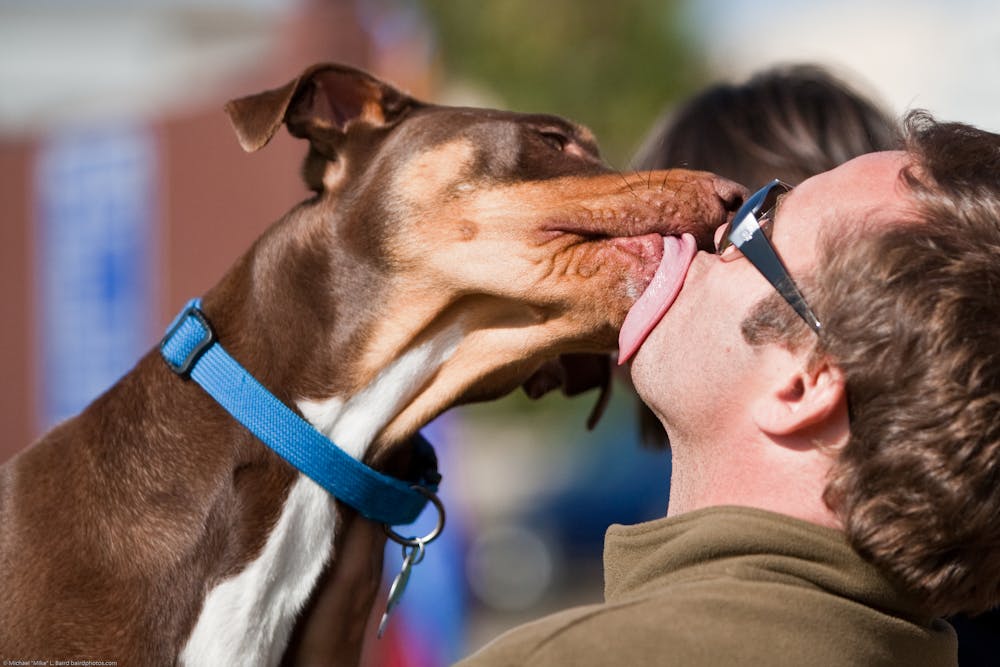
The final question is: when did the symbiosis become actual domestication? The earliest “real dogs”, that everyone would agree were domesticated, are buried along with their human owners in sites towards the end of the Pleistocene: first at 14,000 years ago in Bonn-Oberkassel in Germany, and just a little later in the Middle East.
But these signs of domestication, and close companionship between humans and dogs, very obviously do not denote the actual beginning of human-dog association, and this is quite consistent with those early dogs that have been claimed 33,000 years ago.
But the principle holds: dogs have made a great deal of difference to us. In a way, as Pat Shipman and David Paxton alike have argued, they really have made us human.