
Carbon capture can’t rely on fine-tuning old technologies

Carbon capture, for those who don’t know already, is the term given to various different technologies that can “capture” the carbon dioxide in streams of gases that would normally be emitted to the atmosphere. These streams come from any process or device that burns a fuel, from a petrol-powered lawnmower…

7fbsz7cp-1360642557
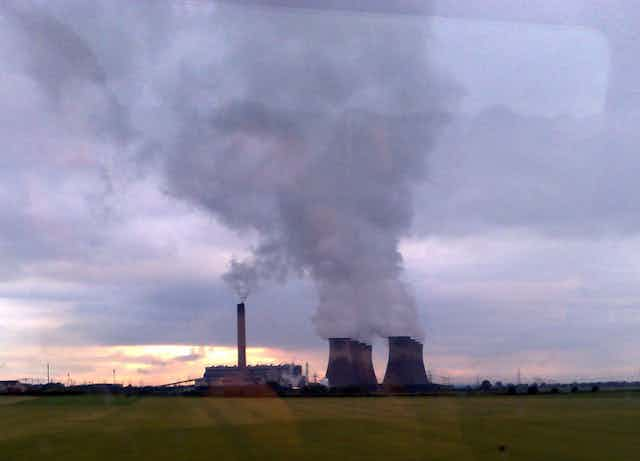
Removing CO2 from the emissions of power stations is going to have to get a lot more experimental. D1V1D/Flickr

Carbon capture, for those who don’t know already, is the term given to various different technologies that can “capture” the carbon dioxide in streams of gases that would normally be emitted to the atmosphere. These streams come from any process or device that burns a fuel, from a petrol-powered lawnmower, through cars and trucks, right up to the gas and coal-fired power stations that keep our society humming along.

Ideally, we could use some kind of carbon capture technology to remove the carbon dioxide from all those emissions, since everyone (with a few notable exceptions) knows that carbon dioxide is a greenhouse gas. It causes a small but significant rise in the global average temperature, which in turn has potentially disastrous consequences such as a greater incidence of highly variable weather events (flooding, cyclones, drought and so on).

The reality though, is that capturing carbon dioxide is difficult and certainly prohibitively expensive from small and intermittent sources such as car exhausts. In most cases the capture technology would be as large and complicated as the car itself. Even then, there is no obvious place to deposit the captured carbon dioxide.

It only really becomes technically feasible once the sources are large and not moving, such as a coal-fired power station. Even then the current state-of-the-art technologies would use a large proportion of the power station’s output, just to power the capture and storage technology. The storage question, of where to put captured carbon dioxide, is another discussion in itself.

So if this whole business of carbon capture and storage is so difficult, and the existing technologies are so energy-intensive, then why is anyone bothering with carbon capture research and development at all? Why not just pursue a completely renewable energy future, powered by solar, wind, and other emerging clean energy technologies? That’s a tough question, and there’s no straightforward answer, but there are a few key issues.

The most commercially advanced renewable energy technologies are wind and solar, which both suffer from intermittency (they don’t generate power when the wind isn’t blowing or the sun isn’t shining respectively). To a certain extent wind intermittency can be solved by having large interconnected transmission networks, but these are expensive to build, especially in a country as large and sparsely populated as Australia.

The holy-grail solution for these technologies is cheap energy storage, so that excess power could be stored and then used at times of high demand. At the moment, apart from some clever solutions involving pumping water to higher elevations and then releasing it through turbines, there are no cost-effective storage solutions. So until there are suitable energy storage options in place, there is a limit to how much intermittent energy generation can be used. Some places in the world, such as Germany, have probably already passed that limit.

The second issue though is related to cost and resource availability. Certain regions in the world (such as China, the USA and much of Australia) still have enormous coal deposits that could be used to generate electricity. The governments, corporations and individuals that own those deposits are understandably keen to exploit them, and this is where carbon capture really comes into play. If a truly cost-effective carbon capture technology can be deployed, then there is the potential to generate low-cost baseload electricity (or at least, lower cost than the alternatives), which suits those governments, corporations and individuals eminently well.

All over the world, researchers and organisations are working feverishly to optimise existing carbon capture technologies, especially those that have already been demonstrated at some scale. This includes the absorption of carbon dioxide into liquid solutions, which has been practiced for several decades in the oil and gas industry, and the use of solid materials which adsorb carbon dioxide onto their surfaces.

In both liquid and solid cases though, large quantities of energy must be used to release the carbon dioxide, usually in the form of heat or a pressure change. To put this into perspective, early estimates for a power station are that up to 40% of the power output would be consumed running the carbon capture apparatus.

Other groups are working on the use of thin membranes which can filter the carbon dioxide from emission streams, but these too have a myriad of problems. The membranes usually cannot operate at the high temperatures of the emission gas streams, and typically become soft and swollen after prolonged exposure to carbon dioxide, limiting their effectiveness.

Of course many researchers, myself included, have proposed novel carbon capture technologies. A report just published in the journal Angewandte Chemie International Edition describes a new approach using a metal organic framework.

This is a highly structured material with lots of channels inside it with very specific dimensions and properties. It can absorb carbon dioxide and then release it after exposure to light. This is particularly exciting because the light used is very similar to concentrated sunlight, so it could potentially be used in a process that captures carbon dioxide and releases it without the necessity of high temperatures or a pressure change, both of which are expensive. The material we used is expensive though, and may not be suitable for the very large scale technologies that will be required for coal-fired power stations.

Most research and development funding has been directed at the so-called “near-commercial” technologies, as the power generation industry is notoriously risk-averse and prefers to adopt a mature technology. The reality though, is that there are only marginal improvements to be made to the conventional carbon capture technologies, and in my opinion, it is entirely appropriate to designate them as “so-called” near-commercial. They are nearly commercial now, and they always will be.

In the meantime, my colleagues and I, and other aspiring researchers around the world, will continue working with whatever funding support we can obtain to find the next big thing in carbon capture and storage. Maybe it will involve metal organic framework materials, maybe something else we haven’t even invented yet. Two things are for certain though; it won’t be a slight iteration on the existing technology, and it won’t be funded by the power generation industry.

Sign in to Favourite

Want to follow The Conversation?

Sign up to our free newsletter to get the day's top stories in your inbox each morning, with a special wrap on Saturday.

Help evidence based journalism become the norm and donate

Join the conversation

72 Comments sorted by

  1. Alex Cannara

    logged in via Facebook

    "everyone (with a few notable exceptions) knows that carbon dioxide is a greenhouse gas."

    And, as "exceptions" themselves, the authors seem unaware that a more imminent effect than just atmospheric changes is CO2's ongoing acidification of oceans -- why no words on that?

    Ocean pH is now half way, to shutting down the natural carbon cycle, which depends on sea life and their abilities to form carbonate skeletal/shell structures. Problems are already seen in the N. Atlantic by Nordic fishermen…

    Read more
    1. Mike Hansen

      Mr

      In reply to Wade Macdonald

      An astute person (i.e. not a climate crank) would go to one of the world's premier oceanographic research organisations to find out about Ocean Acidification.

      For example The Woods Hole Oceanographic Institution is one of many where you can learn the basics.
      http://www.whoi.edu/OCB-OA/FAQs/

      report
    2. Wade Macdonald

      Technician

      In reply to Mike Hansen

      Mike,

      An astute person examines all perspectives.

      The basics on ocean acidification are only as basic as we presently understand them. However, there is still plenty in this world that we do not understand.

      I believe this planet still has many more tricks up its sleeve than the best minds in science can theorise.

      As I have explained to you before.....your own certainty and rhetoric is your own problem.

      report
    3. Mike Hansen

      Mr

      In reply to Wade Macdonald

      Wade

      You have just recited the climate science deniers creed - the belief that any science that offends your ideology will be overturned by magic in the future.

      Your statement is little more than belief in woo.

      report
    4. Wade Macdonald

      Technician

      In reply to Mike Hansen

      The certainty of your statements only exists in your own lunchbox.

      Predict the Russian asteroid did we?

      report
    5. Chris O'Neill

      Telecommunications Engineer

      In reply to Wade Macdonald

      "The certainty of your statements .."

      A strawman argument. One of the types of dishonest argument.

      report
  2. Ted Black

    Retired

    The solution might be the natural one - to recyle the carbon from the carbon dioxide as was originally done when plants used photosynthesis to absorb it. Storing masses of carbon dioxide "underground" or attached to other absorbent materials sounds a little crazy to me - it's still part of the biosphere and likely to pop out some time in these artificial schemes.
    I also wonder how our predecesors of a hundred plus years ago survived with lanterns and candles at night, then went to sleep in the dark. We current poor dears need 24 hour entertainment and electronic toys etc. Maybe focus on renewables during the day, and hold the peak useage at night for essential services could be worth a look?

    report
  3. Comment removed by moderator.

    1. In reply to John Newton

      Comment removed by moderator.

    2. In reply to John Newton

      Comment removed by moderator.

  4. Gerard Dean

    Managing Director

    Oh dear, dear me,

    First. This statement is just plain wrong, '... be solved by having large interconnected transmission networks, but these are expensive to build, especially in a country as large and sparsely populated as Australia.'

    The eastern and central states are connected so that power is shifted from state to state. Tasmania and Victoria are linked by an undersea DC transmission cable so that hydro power flows from Tasmania to Victoria in winter and brown coal power flows back in…

    Read more
    1. Mark Lawson

      senior journalist at Australian Financial Review

      In reply to Gerard Dean

      John
      didn't quite understand what your objection was on that one, but essentially the statement is right. Even with those big networks intermittency in renewable energy is very hard to solve. And its much, much harder for Australia than the US or Europe.. the european networks can get away with big chunks of renewables because they can shuffle conventional power around various networks that generate many times more power in a much smaller area than eastern states. Denmark, for example, can export power across the Baltic to Norway and Sweden where it can be used to pump water into dams and then later import the hydro power (for some reason, there have been attempts to deny this). Its costly but it works well.
      Australia's east coast is basically a small isolated but spread out grid with no real option but to build the wind farm/renwables network in addition to the conventional network. (some discount is allowed for renewables but not much.)

      report
    2. Gary Murphy

      Independent Thinker

      In reply to Mark Lawson

      "... intermittency in renewable energy is very hard to solve."

      Gas backup solves it. Not very hard and not terribly expensive.

      The capital cost of building gas plant is fairly low (around $1000 / kW). Most of the cost of gas-fired power is fuel cost.

      report
    3. Mark Lawson

      senior journalist at Australian Financial Review

      In reply to Gary Murphy

      Oh sure - stick in gas backup and no problems. In fact, that is what will have to happen. But that's an major extra cost for a plant that's already pretty expensive.. Basically you have to build the conventional network, mostly with gas plants that you can easily power up and down and then the alternative energy is in addition to that..

      report
    4. Martin Nicholson

      Energy researcher and author

      In reply to Mark Lawson

      Mark - not just an extra cost - we actually can't meet the emissions intensity target needed below 50 kg CO2eq/MWh globally by 2050 to meet the IPCC’s 85% reduction target. We can't do that with significant gas in the mix.

      report
    5. Gary Murphy

      Independent Thinker

      In reply to Gary Murphy

      I probably should clarify that is 10% of the wholesale price (equates to around $10 / MWh or 1c / kWh).

      report
    6. Gary Murphy

      Independent Thinker

      In reply to Martin Nicholson

      It all depends how often it would have to be used. If it could be reduced to around 10% (through distributed generation and some storage) it could be switched to biogas.

      report
    7. Gary Murphy

      Independent Thinker

      In reply to Gary Murphy

      Have to clarify again. I mean 10% of energy supply - not generation capacity.

      report
  5. John Newton

    Author Journalist

    Oh dear Professor Ludewig, don't you read beyond your discipline? You state the problems of solar and wind are intermittency and yes, but the problem is being solved - read here http://www.ecosmagazine.com/paper/EC10095.htm – for just one advance in solar thermal storage. Germany has a lot less sun than do we but they also use a lot more solar power (20 per cent of Germany's energy is from renewable sources).

    A few facts about German solar compared to the US (from a story on Cleantechnica…

    Read more
    1. Mark Lawson

      senior journalist at Australian Financial Review

      In reply to John Newton

      John
      see my post on Gerard Dean's comments. Intermittency in Australia is a vastly more difficult problem for Aus. As for that business about thermal storage you linked to - sure such systems are workable but the solar industry has been talking about them for years now with no apparent progress in sight. There are some pilot systems (one in Spain) that has on occasion worked through a 24 hour cycle, but they still require gas backup and no way are they a large scale solution like pumping water into dams. They are also vastly more expensive.

      However, I would agree that carbon capture is also not much of a solution..

      report
    2. Felix MacNeill

      Environmental Manager

      In reply to Mark Lawson

      Isn't that the key point Mark - no current technologies are 100% yet, but renewables are progressing pretty rapidly, are already pretty close to solving the intermittency problem and must represent the long-term future. On that basis, surely the sensible thing to do would be to focus research effort and resources strongly into renewables.

      There is nothing inherently insoluble about the storage problem - we've solved far harder technological problems in the past and there are quite a few promising…

      Read more
    3. Gillian King

      logged in via Facebook

      In reply to Mark Lawson

      Mark,

      I'm surprised that Bradley Ladewig glossed over the energy storage options that are making renewables compelling. It detracts from the objectivity of his article.

      You say 'no apparent progress in sight' for solar thermal - perhaps you need to look around.

      Solar Thermal + Storage plants are currently operating or under construction in Spain, USA, China, Morocco, Saudi Arabia, Dubai, India, South Africa, etc.

      Saudi Arabia has budgeted for $109 billion for solar power in the next 10 years and Solar Thermal + Storage is one of the technologies they are rolling out.

      Yes, they are expensive right now, but CSIRO expects the price to halve by 2020 thanks to deployment and R+D.

      Solar Thermal + Storage may be at the beginning of a wave of deployment right now. I don't see hybrid systems with gas or biomass back-up as a deal-breaker or draw-back for CST+ power plants, they are just part of the picture.

      report
    4. Mark Lawson

      senior journalist at Australian Financial Review

      In reply to Felix MacNeill

      Felix - I'm sorry, you must have misunderstood. the intemittency problem is no where near to being solved..networks have to be mixed conventional-green energy, with the conventional network built so that it can run for long periods with any green power input. That's what its going to be fore the foreseeable future, baring major breakthroughs. Although per unit output costs of green energy are coming down that means almost nothing. the costs of hooking it into a running network are horrendous and will remain so.. basically its an additional cost. Like the author I can't see any way around this..

      report
    5. Mark Lawson

      senior journalist at Australian Financial Review

      In reply to Gillian King

      Gillian
      Yes there are a number of pilot plants under construction or development around the world and that's encouraging but, regrettably, the installed capacity in all the projects you have mentioned across all those countries would equal perhaps one conventional power stations, two maybe? That's the point I was making that stuff sounds impressive but you look at the detail and its all counts as pilot plants, often with very small outputs.

      Then of course you have to take average output. for…

      Read more
    6. Felix MacNeill

      Environmental Manager

      In reply to Dianna Arthur

      Thanks Diana - you just expressed succinctly what I tried to get across in a more prolix way.

      What i think people like Mark are ignoring in their ostensibly 'rational' arguments is the fact that we really have two choices in the long-term:
      (1) be very economically short-sighted and delay early action merely because perfect solutions don't yet exist and thereby create a far greater cost in ten or twenty years' time, or
      (2) get moving, recognising that there are gaps that will need to be filled…

      Read more
    7. Dianna Arthur

      Dianna Arthur is a Friend of The Conversation.

      Environmentalist

      In reply to Felix MacNeill

      Thank you for your kind words.

      I am not the world's most patient person, a personality flaw that does bring the benefit of doing, saying and creating as efficiently as possible.

      Ironically, I also procrastinate to absurd lengths. But once I get going....

      I believe once enough will is displayed by our political and business leaders, we will find this incredible challenge not as insurmountable as the naysayers claim.

      Only when we start will we discover all the pros and cons. Meanwhile all we are doing is spinning our wheels.

      report
    8. Felix MacNeill

      Environmental Manager

      In reply to Dianna Arthur

      Of course, the ugly but potent demonstration of the power of human ingenuity under pressure is the incredible impact of the two world wars on aviation. If we achieved anything close to that level of rapid development it would be perfectly reasonably to hope that the storage question could be pretty much solved in ten years. Of course, you can't literally use progress in one field as a predictor of progress in another, but it certainly still gives me hope.

      report
    9. Dianna Arthur

      Dianna Arthur is a Friend of The Conversation.

      Environmentalist

      In reply to Felix MacNeill

      I ask myself why we are so clever with so much - I mean just look at the advance of technology in the past 50 years, yet still people claim we don't have the necessary technology and knowledge to start.

      50 years milk was still delivered in bottles to our doors - now it is all manufactured by Safeway. OK not quite the example I was looking for.

      We have gone from slate tablets in our schools to E-tablets. From manual typewriters to PC's. From thinking that we should apply butter to burns and finally catching on we should cool the burn and failing that we have spray-on skin invented by Australian, Dr Fiona Wood.

      Many discoveries are made while searching for something else, so lets not dismiss the probabilities of serendipity.

      Who knows what we will think of next? I'm willing to wager that the energy storage difficulty will be solved within the next 5 years, sooner if we start taking from the fossil fuel sector and re-investing in renewables R&D.

      report
    10. Mark Lawson

      senior journalist at Australian Financial Review

      In reply to Dianna Arthur

      Dianna - you missed the point with my earlier posts. I didn't say don't do anything, what I said was that the technology is no where near ready for mass deployment.. of course it may well be ready at some point, it is just difficult to see when.. arguably this technology is being pushed harder and faster than it otherwise would and distorting medium-term decisions for energy networks.. not so good..

      report
    11. Mark Lawson

      senior journalist at Australian Financial Review

      In reply to Felix MacNeill

      Felix - you make the point about the two world wars and technical development.. (I have a colleague who often makes this point), and the money being thrown at alternative energy is akin to war time development.. but we really have to guard against using it before its ready for mass deployment.. or it could do far more hard than good. that point is years away.. .

      report
    12. Felix MacNeill

      Environmental Manager

      In reply to Mark Lawson

      Sure, Mark, but what about my point that it doesn't have to happen 'all at once'? If we were trying to make a virtually instantaneous transformation, I'd agree about your point about 'using it before it's ready for mass deployment' - but that's nowhere near what's being suggested.

      Do you happen to remember the closing scene of Monty python's 'Holy Grail' where the heavily armed medieval French and English armies are about to clash, only to be interrupted by the police turning up to keep them apart…

      Read more
    13. Dianna Arthur

      Dianna Arthur is a Friend of The Conversation.

      Environmentalist

      In reply to Felix MacNeill

      Felix, exactly; we have to just start.

      Something about "a stitch in time saves nine" - a old saw I recall my grandmother saying. I do not want my family, nor other families to find out the cost of doing nothing; take a lot more than 9 stitches to repair the exponential changes to climate should we continue to pollute, use up all nonrenewable resources, continue to deforest, dump fertilisers into our waterways and ultimately oceans, really too depressing to think about. Particularly when we do possess the beginnings of a viable sustainable technology, but did not avail ourselves of this knowledge because a few people think it is too hard or too expensive.

      report
    14. Jonathan Maddox

      Software Engineer

      In reply to Mark Lawson

      Mark,

      While the costs of adding renewable energy to a running network are far from negligible, they are even further from "horrendous". Yes, additional generation of any kind is an additional cost. Yes, there are further costs for stabilisation over and above the cost of the generation itself. Yes, there are inefficiencies foregone opportunities to profit from pre-existing conventional generation which is required to reduce its output. But these costs are all manageable. None is any greater than eg. adding additional fossil-fueled generation, or replacing fossil energy with nuclear power instead.

      report
    15. Jonathan Maddox

      Software Engineer

      In reply to Mark Lawson

      Time to plug some other electric energy storage technologies which are in serious development around the world.

      Adiabatic compressed air storage (heat stored in a separate reservoir) : http://www.rwe.com/web/cms/en/365478/rwe/innovation/projects-technologies/energy-storage/project-adele/

      Heat-pump energy storage : http://www.isentropic.co.uk/

      Cryogenic energy storage : http://www.highview-power.com/

      Energy storage by electrochemical synthesis of fuel (hydrogen and/or synthetic methane can substitute for fossil gas and biogas) : http://www.pv-magazine.com/news/details/beitrag/250-kw-power-to-gas-plant-enters-operation_100009491/

      Synthesis of liquid fuels (much more highly priced per unit energy than electric power) from off-peak renewable electricity : http://www.dotyenergy.com/Home/Mission.htm

      report
  6. Bruce Laidlaw

    logged in via Facebook

    "The holy-grail solution for these technologies is cheap energy storage, so that excess power could be stored and then used at times of high demand. At the moment, apart from some clever solutions involving pumping water to higher elevations and then releasing it through turbines, there are no cost-effective storage solutions."

    Concentrating Solar Power, where rings of mirrors focus radiation on a central tower heating molten salt, can successfully supply energy round the clock, as the salt, at over 600°C, retains heat for up to 12 hours.

    report
    1. Mark Lawson

      senior journalist at Australian Financial Review

      In reply to Bruce Laidlaw

      Bruce
      see my earlier posts. Oh sure, such systems are around and at times have supplied energy around the clock, when conditions are favorable, but the industry has been talking about them for years with no apparent progress. Well, at least there a few running, so that's something, but the plants that are in operation are still pilot plants that often require gas backup and that's been the case for some years. If they can be made to work on a large scale with any degree of reliability its a long term solution.. medium term, (20 years, say), its difficult to see it happening.

      report
    2. Giles Parkinson

      Editor, RenewEconomy.com.au

      In reply to Mark Lawson

      Mark, rather than hanging on to the "oh, no, it can't possibly be true" approach to solar, perhaps you should acquaint yourself with the various IEA scenarios around renewables. Solar thermal with storage indeed plays a very significant role, and a lot sooner than 20 years. Within a decade, they will be cheaper than gas peakers. Alstom, the energy supply giant that provides nuclear, gas, coal and all sorts of renewables, says solar thermal with storage will be cheaper than solar thermal without. They are very serious about the technology.

      report
    3. Mark Lawson

      senior journalist at Australian Financial Review

      In reply to Giles Parkinson

      Giles
      hi, its been a while.. I wondered if you'd react. I regret that I've chased up the details of a few renewables now, like yourself, and been through a few scenarios.
      Regretably I'm still not impressed. I will have to rely on you to provide the positive thinking that might make these project real.

      Now I note that you refer to scenarios and future projects. When they get one of these working reliably over 24 hours (that means repeatedly) in anything other than extreme conditions (that is, Spanish alpine desert) then you are free to chide me about my negative attitude.

      Once they do achieve that goal.. what another five years to get it to market in large enough units to make a difference, at an absolute minimum? Another 10 years to gain operational experience befro they become standard? As I said in one of the other posts, medium term forget it.

      report
    4. Brad Farrant

      Adjunct Research Fellow in Early Childhood Development at University of Western Australia

      In reply to Mark Lawson

      Hi Mark,
      Given that you seem pretty adamant that renewables are not the solution I would be very interested to hear how you think we can protect our children and future generations from dangerous climate change?

      report
    5. Chris O'Neill

      Telecommunications Engineer

      In reply to Brad Farrant

      "that renewables are not the solution"

      I think the point is that storage of renewable energy will not be part of the solution for some time, even though renewables may achieve grid-parity while they're actually generating (e.g. solar cells when the Sun is shining).

      We should cross our bridges when we get to them, i.e. don't start making assertions about storing solar energy until solar cells are actually supplying most electricity when the Sun is shining. Until then, assertions about solar storage being cheap sometime are merely idle speculation.

      report
    6. Brad Farrant

      Adjunct Research Fellow in Early Childhood Development at University of Western Australia

      In reply to Chris O'Neill

      Hi Chris,
      I think if you check all of Mark's comments on this page you will find that he is arguing against all forms of renewable energy production, not just energy storage.

      My question still stands - "Given that you seem pretty adamant that renewables are not the solution I would be very interested to hear how you think we can protect our children and future generations from dangerous climate chnage?

      report
  7. Giles Parkinson

    Editor, RenewEconomy.com.au

    Your comments on renewable energy are staggeringly ignorant. You say "Some places in the world, such as Germany, have probably already passed that (renewable energy) limit." Actually no, they have around 20% renewables now, intend to double that by 2020 and double it again by 2030. Just a minute or two research would alert you to that fact.

    report
  8. Paul Reader

    independent researcher

    Perhaps anthropogenic atmospheric carbon should be approached in an entirely different way. If we ask; what ecosytem services to humans actually provide? we might be inclined to say; 'not many'. It seems to me that carbon, despite its low atomic weight of just over 12 has a nasty habit of migrating beneath the surface of the planet as dead organisms; trees, plants and animals etc. Humans are the one species that has spectacularly reversed this process, successful in returning carbon to the the atmosphere…

    Read more
  9. Ken Fabian

    Mr

    Storage - the holy grail - unfortunately get's the funding leftovers whilst CCS get's the lions share of Australia's emissions reductions R&D funding. I would be surprised if it gets a hundredth of the funding that CCS gets.

    Those enamored with the "don't want to, don't have to", fingers in ears approach to climate and emissions find much to be attractive about CCS - a solution that doesn't require limiting the use of fossil fuels means no need to limit the use of fossil fuels. That it's only…

    Read more
    1. Michael Shand

      Michael Shand is a Friend of The Conversation.

      Software Tester

      In reply to Ken Fabian

      Your totally correct in what your saying but from what I have read, I tend to believe that we have already passed the tipping point for the climate

      ie. its no longer enough just to stop polluting, we need to start finding ways to reverse it as well as stopping further pollution

      This is where CCS does become the holy grail as we will not have time to wait for the atmosphere to re-balance - although I take your point that it is used as a distraction by many to avoid facing a harsh reality

      report
  10. Dianna Arthur

    Dianna Arthur is a Friend of The Conversation.

    Environmentalist

    Agree with others regarding ocean acidification not being addressed - in fact this omission highlights the entire conundrum of safe sequestering of CO2.

    One of the safest options is to simply not release it to begin with. Putting an end to CSG before is becomes too entrenched, would be a good start. In addition, we need to be investing in "the holy grail...cheap energy storage" at the highest priority.

    Also, if we cannot effectively store the CO2 we are currently emitting, what then nuclear…

    Read more
    1. Michael Shand

      Michael Shand is a Friend of The Conversation.

      Software Tester

      In reply to Dianna Arthur

      Just a side note Dianna, I agree that like other industries, nuclear cannot be trusted to regulate itself and many of the regulatory bodies are corrupted or have weak standards.

      But if you have some time, look up LFTR, Liquad Flouride Thorium Reactors or any other Gen IV or Gen V nuclear plants such as Bill Gates Terra Power. - These are unbelievably safe and provide a stupid amount of energy, India already has one in operation, china I believe have plans in place and the US operated one in the 70's for 6 years without drama.

      report
    2. Dianna Arthur

      Dianna Arthur is a Friend of The Conversation.

      Environmentalist

      In reply to Michael Shand

      Thanks Michael, I will follow up your suggestion. I believe we need a diverse range of renewable and alternative fuel sources. If nuclear can deliver safely, then what is the hold up?

      I cannot believe we are still opening new coal mines and that hydraulic fracturing is even happening at all in Australia given the dearth of arable land, water and previous damage to our environment. We seem, as a species, intent on stuffing up as much as possible before even thinking how to fix the mess.

      report
  11. Comment removed by moderator.

  12. Martin Nicholson

    Energy researcher and author

    Of course CO2 is really only one problem with burning fossil fuels. There is also the issue of the health impacts of PM10, SO2 and NOX. Bradley, are these also removed with the CO2?

    No mention of nuclear power in this article. Pity because it is significantly cheaper than CCS and commercially available technology producing neither CO2 nor other health risking emissions. (Despite belief by some, properly operating nuclear power plants do not release health damaging radiation – and yes nuclear power is still the safest form of electricity generation).

    I can understand why politician in Australia are shy about discussing nuclear power but it is disappointing when scientists working in the energy industry seem to ignore it.

    report
    1. Felix MacNeill

      Environmental Manager

      In reply to Martin Nicholson

      Martin, isn't the problem really a statistical one, in the sense that, when properly operating (which they mostly do) nuclear reactors are indeed less damaging of human health than coal-fired generation plants, but the problem is that when they do go wrong (which, human fallibility being one of the few certainties in life, is bound to happen some time) the damage can be close to catastrophic.

      Also, is it really fair to say that nuclear is the SAFEST form of electricity generation - compared with wind or solar?

      report
    2. John Phillip

      John Phillip is a Friend of The Conversation.

      Grumpy Old Man

      In reply to Martin Nicholson

      Great link, Martin. Even if you dont buy into the AGW catastrophe, nuclear provide the cleanest, most practical and current solution to our energy needs. That may change in time as new technologies are developed but nuclear itself is only a relatively new player and has at least some 'maturity' left in it.

      report
    3. Martin Nicholson

      Energy researcher and author

      In reply to John Phillip

      Well not really that new. It is older that solar PV for example. Yes it certainly is maturing and with the introduction of fast reactors in Russia and China, I think we will see a significant shift away from light water reactors over time.

      report
    4. Felix MacNeill

      Environmental Manager

      In reply to Martin Nicholson

      Martin, they're interesting figures, but I think you're pushing it a bit!

      Obviously, coal is a disaster, with recent world averages of 161 deaths per TWh of generated electricity. This is apoint that needs to be made again and again, along with the evidence that coal-generated electricity actually has a net negative economic impacts - even when you weigh the economic benefits of the electricity generated against the collateral costs.

      But the difference listed in your linked piece between solar pv (0.44 deaths/TWh), wind (0.15 deaths/TWh) and nuclear (0.04 deaths/TWh) are, to say the least, very small. And most of the deaths from solar pv come from accidents installing rooftop systems - really nothing more than confirming the fact that roofing is a somewhat dangerous occupation.

      So, even ignoring the risks of major accidents, renewables and nuclear are all low-risk forms of power generation.

      But I'm yet to hear of a wind turbine going into meltdown.

      report
    5. Felix MacNeill

      Environmental Manager

      In reply to Martin Nicholson

      Martin, do you also have a video of yourself jumping the shark?

      I've seen that video before and your referencing it here is so profoundly idiotic that you've destroyed any credibility I thought you might have had. Are you actually so inane as to think there is a comparison of any meaning here?

      report
    6. Ken Fabian

      Mr

      In reply to Martin Nicholson

      The biggest political problem for nuclear is that, due to accidents of history and political expediency it's strongest political supporters are 100% behind fossil fuels and are opposed to action on emissions. They won't promote any energy technology intended to undercut the long term viability of fossil fuels.

      It's not the strength of organised opposition but the weakness of support that is the biggest obstacle for nuclear. Why do scientists in the energy industry ignore it? The energy industry…

      Read more
    7. Martin Nicholson

      Energy researcher and author

      In reply to Ken Fabian

      Ken I completely agree that any Australian government that doesn’t accept the dangers from climate change has no need for nuclear power or renewable energy – they are both more expensive than coal and gas when properly evaluated.

      I firmly believe that any government in denial about the dangers from climate change will eventually lose power. The new government will then be faced with the task of replacing all existing coal and gas plants with very low emission plants. This will be a very expensive task whether it be nuclear and/or renewables. A wise government will go with the most cost effective solution. Today that isn’t large-scale renewable energy. Tomorrow? Who knows.

      report
  13. takver takvera

    Journalist and Editor at Indymedia

    We really need the carbon capture and storage research like what Prof Ladewig and his colleagues are doing. We need to come up with cheap and efficient processes for carbon capture and storage, yes, but not so we can necessarily use more fossil fuels. Far more importantly we need the technologies to enable draw down and storage of carbon from the atmosphere or oceans in the longer term.

    The wet process of using nickel nanoparticles to capture CO2 and mineralize as carbonates sounds very promising…

    Read more
  14. Fred Payne

    logged in via Facebook

    It seems to me that burying carbon captured just creates another problem. Even if suitable stable, storage facilities can be found, there will be a point at which they are at capacity and its back to the problem that we are having with the atmosphere.
    Perhaps the funding might be more effectively directed into CST which seems to have gone a considerable way towards solving the 'intermittency' problem.

    report
  15. Paul Moonie

    PhD student, solar energy

    Intersting material research outcomes there, thanks for sharing Bradley.

    In relation to comments regarding commercial wind and solar penetration, it is a real issue and no point in pretending it does not exist. The AEMO in conjunction with CSIRO and other consultants due to release a comprehensive study on renewable penetration into our eastern grid. Due out May 2013 I believe.

    A study like this is long overdue,by about 15 years in my view. Nevertheless, it should be useful to move this debate along and evaluate our options in a more

    report
    1. Paul Moonie

      PhD student, solar energy

      In reply to Paul Moonie

      * cohesive and constructive manner for the future of Australian energy.

      report
  16. Jeremy cavanagh

    Engineer

    Bradley points out two things in his article that the power industry is very risk adverse and that various interested parties want to continue to make money from coal. Add to that the mindset in Australia that sees it is a great sin to leave any natural resource untapped and I think you see why those involved want CCS to work.

    However, isn't it better to try and work out whether CCS offer any advantages over the introduction of other forms of low carbon energy, money for coal not withstanding…

    Read more