China’s rise through the R&D ranks provides lessons for Australia

When it comes to innovation, China is not renowned for being cutting-edge; it is better known for adapting existing technology rather than creating its own. Yet, as Xi Jinping stated in his first speech as new Party Secretary General, as China rises on the world stage, it hopes once again to make a…

4bdnyc23-1354493342
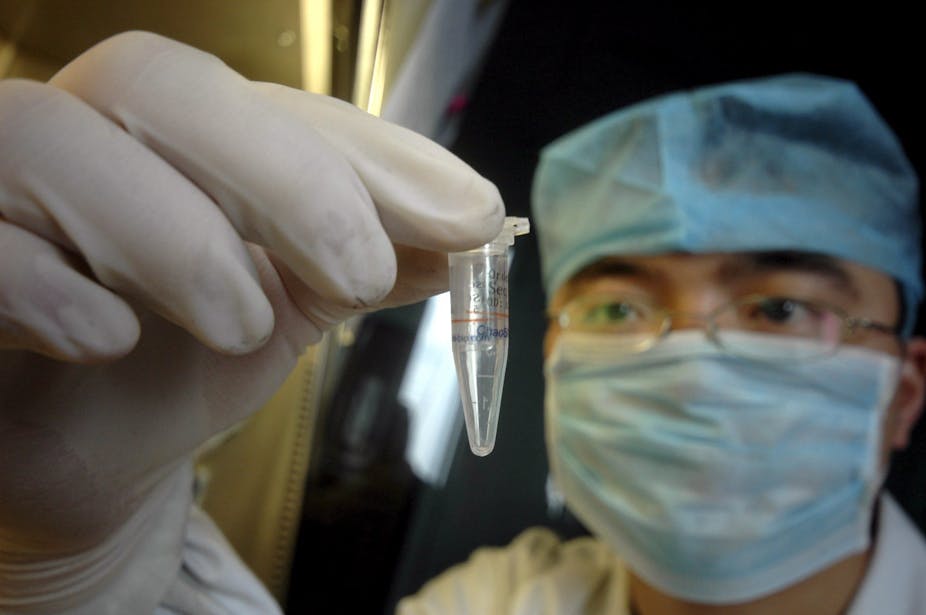
China’s growing investment in research and development could leave Australia by the wayside. AAP

When it comes to innovation, China is not renowned for being cutting-edge; it is better known for adapting existing technology rather than creating its own.

Yet, as Xi Jinping stated in his first speech as new Party Secretary General, as China rises on the world stage, it hopes once again to make a contribution to mankind by becoming a strong and prosperous nation.

One area in which China is hoping to compete is innovation. In tandem with its economic growth, China is also increasing its spending on research and development (R&D), with Chinese companies and the government investing heavily in R&D.

Chinese players are joining the global R&D arena

According to Booz & Co’s Top 100 Global Innovation List, PetroChina is the first Chinese company to enter the Top 100 this year. The overall number of Chinese companies on the list climbed to 47, up from 40 in 2011, and 23 in 2010.

Although the number of Chinese companies may seem small, the gradual increase in Chinese companies demonstrates how China wishes to assert itself in the global environment, not only in the traditional sectors of diplomacy and geopolitics but also in soft diplomacy areas such as technology and innovation.

What is further enlightening is that, when measured together, China and India’s combined spending on R&D investment in 2012 increased by 27.2% to a total of $16.3 billion. When broken down, China’s spending accounted for more than 90% of the two countries' combined spending.

Moreover, it is not only private companies investing in R&D, but also the Chinese government. According to the OECD Factbook, Chinese real growth spending on R&D has exceeded 18% since 2000.

In 2011, Chinese spending on R&D grew to US$139 billion, or 1.84% of gross domestic product, and it aims to increase R&D spending to 2.2% GDP by 2015.

Percentage of R&D expenditure over GDP, China 2000-2011 University of Western Australia

China’s R&D budget has now surpassed the combined budgets of France, Germany and the UK. In 2011, China became the world’s top nation for domestic patent applications – surpassing both Japan and the United States.

This is clear evidence of how China wishes to become a global leader in innovation, decrease its dependence on outside research and development, and become a global knowledge hub.

The goal is to make China an innovation-oriented society by the year 2020. This idea was further emphasised in China’s 12th Five-Year Programme (FYP) 2011-2015.

GDP Per Capita vs R&D spending as % of GDP, 2008. Data source: World Bank (2011) University of Western Australia

As Chinese nationalism rises and Chinese citizens take greater pride in their country, as illustrated by the recent awarding of the Nobel Prize in Literature to Chinese novelist Mo Yan, China will increasingly compete in areas traditionally dominated by Western powers.

What this means for Australia

As Australia enters the “Asian Century”, what does all this mean for Australians?

The White Paper on “Australia in the Asian Century” stresses the importance of innovation as a means to allow Australia to be a more “prosperous and resilient nation” that is fully integrated in the region.

Indeed, some experts – such as former Victorian Premier John Brumby who now sits on the board of Chinese telecommunications giant Huawei – are calling for Australia to not just compete, but partner with Chinese companies in the years to come.

Looking at the figures, the Australian R&D sector is punching above its weight, as recently pointed out by the Chief Scientist’s “Health of Australian Science” report.

As a percentage of GDP, Australia’s funding across all fields of research in 2008–09 amounted to 2.21%, and the nation was ranked 14th in the OECD on this measure – ahead of countries such as the United Kingdom, Canada and France.

Australia has 0.3% of the world’s population yet produces more than 3% of scientific academic publications and, in 2011, it received its first Australian Physics Nobel Prize in almost a century.

Julia Gillard releasing the Australia in the Asian Century White Paper AAP

However, efforts must be made to maintain this standard and expand our reach and expertise.

One of the White Paper’s objectives for 2025 is for Australia to have an innovation system in the global top 10. However, the treasurer’s decision to cut $1 billion of research funding in the latest budget review suggests otherwise.

Australian investment in R&D seems to take a distant second to political objectives — an alarming fact when China’s annual increase in spending is larger than Australia’s total annual R&D budget.

Unless Australia continues to invest in R&D and support greater innovation, it risks being eclipsed by a rising China reviving itself on the world stage and striving to become a global powerhouse in every way.

Join the conversation

8 Comments sorted by

  1. Gavin Moodie

    logged in via LinkedIn

    Australia does not 'risk[s] being eclipsed [in research] by a rising China' but has an opportunity to increase its research collaboration with a rising China.

    report
    1. John Canning

      Professor at University of Sydney

      In reply to Gavin Moodie

      When it comes down to it Australia has always needed international collaboration and China is set to play the role the United States has been playing for some time - there are opportunities as first pointed out by Garnaut decades ago and which the recent White Century paper is a less sophisticated rendition of that work, especially for this complex period we are entering where no consideration for the impact of US containment policies are mentioned. Unmentioned, for example, is the defence trade…

      Read more
    2. Marie-Alice McLean-Dreyfus

      Postgraduate Candidate in Asia-Pacific Studies at Australian National University

      In reply to Gavin Moodie

      Hi Gavin,

      Thanks for the comment. A very good point, as China rises, engaging with China, and our other regional neighbours, will become increasingly important and allow us to remain competitive. However, as Professor points out below, and also in his article, the recent passing of the Defence Trade Controls Bill (http://www.defence.gov.au/deco/legislation.htm#) has the potential to impact future collaboration. The passing of this bill, may (as Professor Canning also raises), limit the White Paper achieving its goals and also prevent future cooperation between Australia and its neighbours.

      report
  2. Jonathan Marshall

    Founder

    Innovation happens everywhere and is not reliant on just spending more.

    Having just finished reading a comprehensive book on the Industrial Revolution almost all innovation during that period was generated by engineering times (many with no formal qualifications) who had the vision and gumption to create.

    As I am privileged to work with a number of tech start-ups and early stage companies I am witnessing first hand the amazing innovative capability of people creating stuff that can have a…

    Read more
    1. Marie-Alice McLean-Dreyfus

      Postgraduate Candidate in Asia-Pacific Studies at Australian National University

      In reply to Jonathan Marshall

      Hi Jonathan,

      Thanks for the comment. Expenditure on R&D and increasing spending on the education sector is, of course, only part of the solution to increase innovation. Encouraging local start-ups and grass roots innovation is also essential to remain competitive in our increasingly globalised world. While government spending could assist in this area, there are a number of initiatives by the private sector which are aiming to support Australia's local start-ups and stem the flow to the Silicon Valley, a place seemingly full of opportunity. Private sector initiatives include: http://www.startmate.com.au/ and http://www.angelcube.com/

      Hopefully initiatives such as this can encourage R&D from another angle.

      report
  3. Dao Nguyen

    logged in via Facebook

    Innovations, creativeness are results of 1 per cent inspiration and 99 per cent action. Both inspiration and action are results of human ability to think, to learn and to be concerned with surrounding environment and people. The three factors are inter-related and mutually dependent. Education plays an essential role in the development of these three human abilities. I therefore think for long term progress in the next 88 years of this Asian Century, per capita education budget as proportion of per capita GDP needs to increase. Whether this increase being from either private or public funds does not matter but it must happen first to enhance enrich Australian brain power before throwing large sum of money into R&D.

    report
    1. Marie-Alice McLean-Dreyfus

      Postgraduate Candidate in Asia-Pacific Studies at Australian National University

      In reply to Dao Nguyen

      Hi Dao Nguyen,

      Thanks for the comment. I agree education is a critical factor in leading to greater innovation and creativeness. Australia currently spends 6% of its GDP on education, below the OECD average of 6.2%. http://www.oecd.org/edu/eag2012.htm

      If Australia wishes to remain competitive in the Asian Century and engage with its neighbours, increasing expenditure on education is crucial.

      report
  4. Firozali A.Mulla

    PhD

    Then Australis admits that BRIC Brazil India Russi and China lead in R& D and follow this as this is the cheapest way of doing things the right way I have nothing against India and Chaina ad the world depend on the cheaper everything including drugs and there is no harm in admitting that we need these I thank you Firozali A.Mulla DBA

    report