
Climate change requires national parks rethink: CSIRO

The government must consider expanding the network of protected national parks and reserves in order to address a climate change-driven loss of biodiversity, argue the authors of a new report from the CSIRO. In the first Australia-wide assessment of the size of the ecological impact that climate change…

Dgvmppb2-1347864076
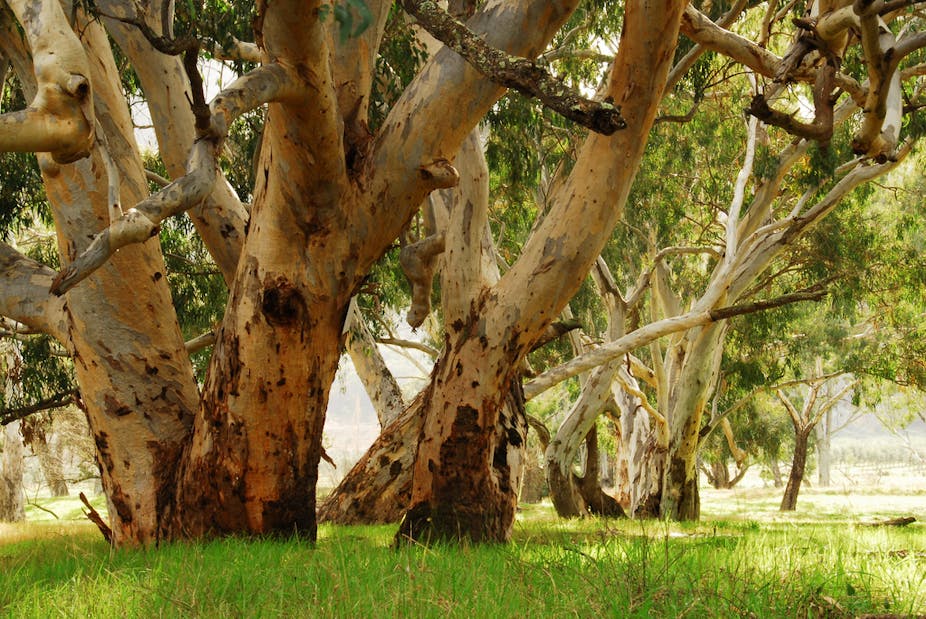
A new CSIRO report calls for a rethink on national parks management in the face of climate change. AAP

The government must consider expanding the network of protected national parks and reserves in order to address a climate change-driven loss of biodiversity, argue the authors of a new report from the CSIRO.

In the first Australia-wide assessment of the size of the ecological impact that climate change could have on biodiversity, researchers from CSIRO’s Ecosystem Sciences division found vegetation across much of Australia will be stressed by ongoing climate change.

“As the climate changes, many areas will find ecological communities in conditions which are outside their comfort zone,” said Tom Harwood, spatial modeller programmer with CSIRO.

Many places will eventually look different, function differently and have different biodiversity, aesthetic and economic values, said CSIRO principal research scientist David Hilbert. “Our research gives some suggestions about how we can best adapt to these changes and conserve as much of our rich and unique flora and fauna by considering how best to manage change.”

In a report on the implications for policy arising out of the project, the CSIRO makes several recommendations, including reassessing biodiversity objectives, creating management strategies that can adapt to species loss, measures to improve the public’s knowledge of the impact of climate change on biodiversity, and expanding the network of protected areas to accommodate significant ecological changes.

The report calls for a rethink on national parks and reserves, said Philip Gibbons, senior research fellow in land management at ANU.

“We look at national parks as these static entities that preserve distinct pockets of biodiversity, but that’s not the case according to this report,” Dr Gibbons said.

He said it was challenging and sad that we now had to think of the reserve system not as a place to preserve wildlife, but rather to facilitate change.

“We don’t know if (national parks) will become redundant but we may have to consider triage. It may be that with a new climatic regime some national parks won’t perform the same function and would be better replaced by a national park somewhere else.”

John Buckeridge, professor of natural resources engineering at RMIT, said the report is complex, timely and ambitious.

“Although it would have been useful to stress that it is not just climate, but other activities of humans that are placing biodiversity in danger,” Professor Buckeridge said.

“They do mention land use, but they could also have mentioned pollution as pollutants reduce the ability of organisms to adapt to change.”

Dr Gibbons said the issues raised in the report are inconsistent with the current government attitude towards more intensively used landscapes.

“The National Food Plan suggests the world needs 77% more food by 2050. Australia sees itself as having a natural advantage in this area. We’re going to see intensification of agricultural landscapes.

“When you’ve got landscapes managed intensively then that presents a double whammy for biodiversity.”

Sign in to Favourite

Want to follow The Conversation?

Sign up to our free newsletter to get the day's top stories in your inbox each morning, with a special wrap on Saturday.

Help evidence based journalism become the norm and donate

Join the conversation

20 Comments sorted by

  1. Peter Ormonde

    Peter Ormonde is a Friend of The Conversation.

    Farmer

    Might also require us to expand our notion of a National Park I suspect - given the attitudes of the States. In particular allowing some sort of mixed use buffers around and corridors between our existing remnants. Yep - parks with people in them and paying them not to do stuff. Heresy!

    But first up funding some serious effort into monitoring the impact of climate change via the EPBC Act would be useful.... as a warning to us if not purely for the Parks network. We've got indicators - let's look at them.

    report
  2. John Newton

    Author Journalist

    Anyone reading Bill Gammage's groundbreaking book The Biggest Estate in the World will have second thoughts about locking up landscape. Managing it yes, but locking it up? It may be too late to go back to the meticulous native Australian way of managing the island but we can take some lessons from them - and reduce the risk of catastrophic fires

    report
  3. Wil B

    B.Sc, GDipAppSci, MEnvSc, Environmental Planner

    This report is academic idiocy. No new parks and reserves are ever made out of freehold land, they're all made out of State forest and other Crown land. The only difference between national parks and State forests is that in most state forest you can collect firewood and walk a dog, and in a small part of State forest you can harvest sawlogs. None of these management issues are related to the authors concerns re climate change - timber harvesting of regenerating forest is considered by most carbon accounting experts to be a significant carbon sink (compared to building houses out of steel or concrete).

    Virtually ALL of the biodiversity threats are occurring in the largely disturbed landscape - farmland and peri-urban areas. No government can afford to contemplate buying this land from private sellers, but there is still lots they can do to improve habitat there. Creating new national parks is a very old prescription for a new problem.

    report
    1. Peter Ormonde

      Peter Ormonde is a Friend of The Conversation.

      Farmer

      In reply to Wil B

      Not here Wil, we've always relied on the state to do our protecting for us. Not everywhere though.

      I've been watching a rather excellent Ken Burns TV doco series on ABC - I think it's on at about 3 am someday or another - National Parks -America's Best Idea ... truly excellent history. It's on iview well worth a watch actually.
      The Great Smokey National Park was established when the land was purchased via public donations ... poor part of the country, local school kids, black schools without a shoe between them. Inspirational.

      Might have to be looking at that - shame the governments into it.

      report
    2. Wil B

      B.Sc, GDipAppSci, MEnvSc, Environmental Planner

      In reply to Peter Ormonde

      Peter, thanks for the reccomendation I'll try to catch it. But it just would not happen these days. No way, not anywhere. Maybe just maybe you'd convince a green government in QLD to resume pastoral leases. And a few hectares of critical habitat might get picked up here and there, but that's it - a hill of beans compared to what's called for.

      report
    3. Peter Ormonde

      Peter Ormonde is a Friend of The Conversation.

      Farmer

      In reply to Wil B

      A Green government in Queensland - only after Hell freezes over Wil!!!

      Wouldn't be too surprised to see a lot of pastoral leases falling over with changing climate and rainfall... marginal land getting more marginal.

      As I suggested above I'm not sure the only or the best option is to buy land and lock it up - but we might be able to scrape together enough money to pay landholders adjacent to parks to manage their land for conservation values as well as making a quid out of it from grazing etc.

      We need to develop some practical responses to integrating responsible management into farming. Difficult but hopefully not impossible.

      report
  4. Wil B

    B.Sc, GDipAppSci, MEnvSc, Environmental Planner

    Also, The Conversation, why the hell can't you link directly to the report? C'mon, it's the 21st century, there are these things called embedded hyperlinks, this isn't a dead-tree newspaper... I'm sick of all these sites that talk about recently published items but make you do your own work to find them - almost like you want them hidden.

    report
    1. Charis Palmer

      News Editor at The Conversation

      In reply to Wil B

      Hi Will, we certainly don't want them hidden, but we prepare stories in advance covering reports that are embargoed - sometimes there's a delay in adding the links in. This link has now been added.

      report
    2. Wil B

      B.Sc, GDipAppSci, MEnvSc, Environmental Planner

      In reply to Charis Palmer

      Thanks, sorry to gripe but it's a pet peeve - it happens far too often in Australian media.

      report
  5. Tim Scanlon

    Debunker

    I agree we need to have vegetation protection. But I'd like to take this a step further and not just look at parks. We should remember that farmers are the largest landholders in Australia, and wouldn't it be great to give them a grant of some sort to maintain remnant vegetation, replant some unproductive areas and maintain the environment?

    Do this in some of the places where clearing is still occurring and you stop biodiversity loss in its tracks. Do it nationwide and you go some way to dealing with the losses we are starting to see due to water access changes (some of this is climate change, some of this is ground water draw down from agriculture and cities).

    report
  6. Adam Reece

    logged in via Twitter

    This has been a topic for consideration among people in the know for some time. It was discussed by members of the Queensland Premier's Council on Climate Change before it was recently disbanded.

    The Austrlian Government has funded, in collaboration with state governments around Australia, the Designer Carrots program, which seeks to implement and foster market-based instruments or mechanisms to preserve and protect biodiversity and other 'ecosystem services' (see http://www.marketbasedinstruments

    Read more
  7. Chris Owens

    Professional

    Islands of habitat in a sea of agricultural land have limited prospects of protecting biodiversity against a background of rapid climate change. Providing the means by which species can migrate to more suitable habitat would seem essential. Biolinks in the form of vegetated corridors may be one option. Many species, plants in particular will have limited prospects of migrating.

    With our snowballing population putting ever greater pressure on finite resources, urban fringes and agricultural land in particular, it seems unlikely that the political will exists to set aside suitable habitat or migration corridors for those species capable of moving.

    report
    1. Peter Ormonde

      Peter Ormonde is a Friend of The Conversation.

      Farmer

      In reply to Chris Owens

      Limited prospects - yep that'd be about right.

      Not as limited as some however. Was talking to a mate of mine in Moscow the other night - sparrows and pigeons, that's the lot she reckons - a sparse bit of biodiversity indeed.

      I reckon we'll be needing quite a few loss adjusters in the near future... an excellent career choice.

      report
    2. Michael Hay

      retired

      In reply to Peter Ormonde

      If climate change is actually changing the aspects of our forests, I cannot see that we can do much about it except to let it happen. I agree that we should retain our national parks, but we should allow them to diversify and should not impose our own ideas as to how they should be allowed to develop.
      The big point in all of this is to massively increase our plantation areas. All of our timber needs should be specifically grown for a specific purpose, thus allowing the diversity of our native forests to expand in an uninhibited manner.
      Just image how many trees could be grown with Cubbie Station's water to give them a start in life.

      report
    3. trevor prowse

      retired farmer

      In reply to Michael Hay

      If the majority of agricultural land is privately owned ,and that area has been used to produce income , the farms usually have been over cleared to try and make the farm economically viable..Usually the conservation budget by farmers is used after a profitable income year when the conservation expenses can be deducted from your taxable income .There are government programs that help but they are no help if your income is not taxable--ie after a drought , fire , flood or frost. Many farmers in…

      Read more
    4. Greg N

      enviro

      In reply to Michael Hay

      I agree Micheal, any of Cubbies water allocation would be better utilized on anything other than cotton. Growing cotton in this country is bonkers.
      I also agree that sourcing timber from sustainable plantations is a good thing in principle.
      However the elephant in the room is our demand per capita and our penchant for the growth model. Our level of population growth and ridiculous Western lifestyle demands need to be reversed if we have any future as a species.

      Whilst we argue about 'if…

      Read more
    5. Tim Scanlon

      Debunker

      In reply to trevor prowse

      Don't forget we have terraformed the entire state Trevor. Add that change to climate change and we have a massive change in rainfall, rainfall distribution and temperatures.

      I'd also like to see where the forrester got that figure, because I haven't heard that one.

      report
  8. Gerard Dean

    Managing Director

    A couple of points that may interest the reader of the above.

    Firstly, contending that some national parks may need to be replaced by others may make good sense scientifically but it would be politically impossible. National parks have a special place in the community for all sorts of reasons, not only preservation of unique areas but for recreation and escape from the man made world. Communities and visitors to the threatened park would not lie down. The CSIRO should put forward evidence for…

    Read more
  9. Nev Norton

    Farmer

    I found this to be both an intriguing and bizarre article.
    More National Parks and Reserves? I can't speak for other
    States, but in NSW we have an abundance of reserves, all
    owned by farmers, doesn't anyone get out and actually travel
    around the State? All these Farmer owned Reserves that were
    confiscated by the Carr Government under Sepp 48, and with
    NO compensation, of which Farmers still have to pay rates on.

    As for producing a signifigantly additional amount of food and fibre.
    I believe…

    Read more