


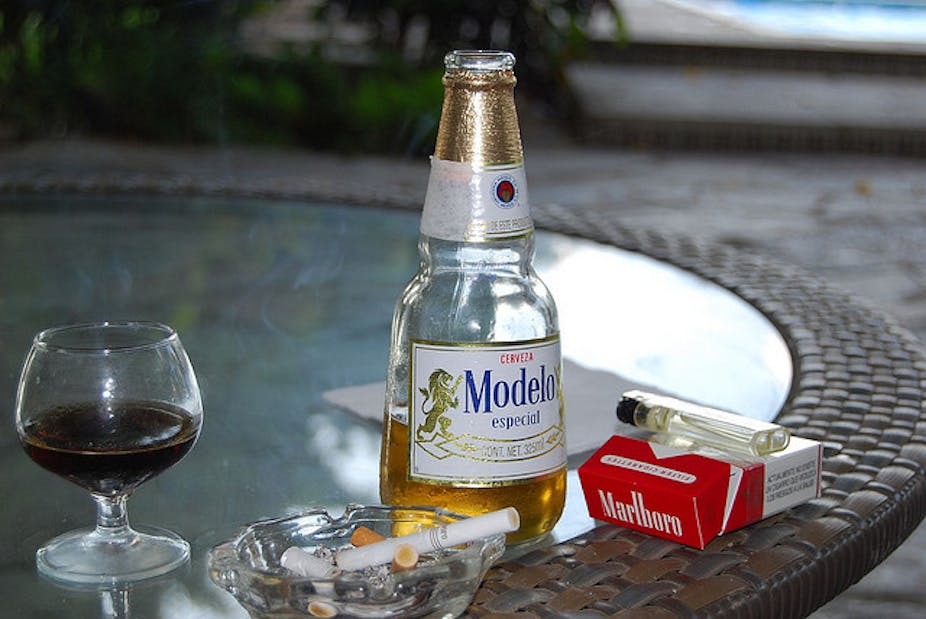
Australians are drinking and smoking less but putting on weight like never before, a national survey by the Australian Bureau of Statistics has found.
Results from the ABS Australian Health Survey, the nation’s largest and most comprehensive health survey ever, were released on Monday.
First Assistant Statistician at the Australian Bureau of Statistics, Dr Paul Jelfs, said that 63% of Australians were now overweight or obese.
“Men were more likely to be overweight or obese (70%) than women (56%) while one-quarter (25%) of our children are overweight or obese,” he said in a statement.
Around one in five men and one in seven women are smokers and just over 16% of adult Australians smoke every day, a decrease of almost three percentage points in four years, the survey showed.
“Australians are also drinking less, with a drop of 1.4 percentage points in the number of people drinking more than two standard drinks on average per day,” Dr Jelfs said.
Professor Sandra Jones, Director of the Centre for Health Initiatives at the University of Wollongong, said that this was the second consecutive period in which there was a decline in the proportion of adults who consumed more than two standard drinks per day on average - a fall from 21.9% in 2004-05 to 20.9% in 2007-08, down to 19.5% in 2011-12.
“This is a very positive outcome, and is likely the result of a combination of factors – including increases in the price of alcohol, effective social marketing campaigns, and increasing public concern about the health and social effects of excessive alcohol consumption,” said Dr Jones.
However, it is important to consider long term as well as short term risk, she said.
“First, in relation to ‘lifetime risk,’ this reduction brings us closer to – but still well above – the 2001 figure of 18.6% of adults who consumed more than two standard drinks per day on average,” she said.
“The fact that 44.7% of Australians aged 18 years report drinking at a level that increases their risk of ‘alcohol-related injury arising from that occasion’ at least once in the past year suggests that we still have a long way to go before we can claim that Australians are drinking safely.”