


The use of weak electrical currents to stimulate the brain is a safe treatment for depression and might even improve attention and reduce pain elsewhere in the body, an Australian study has found.
Medical researchers from the University of New South Wales and the Black Dog Institute found that up to half of the 64 participants in the study reported substantial improvements after receiving transcranial Direct Current Stimulation (tDCS) daily for six weeks.
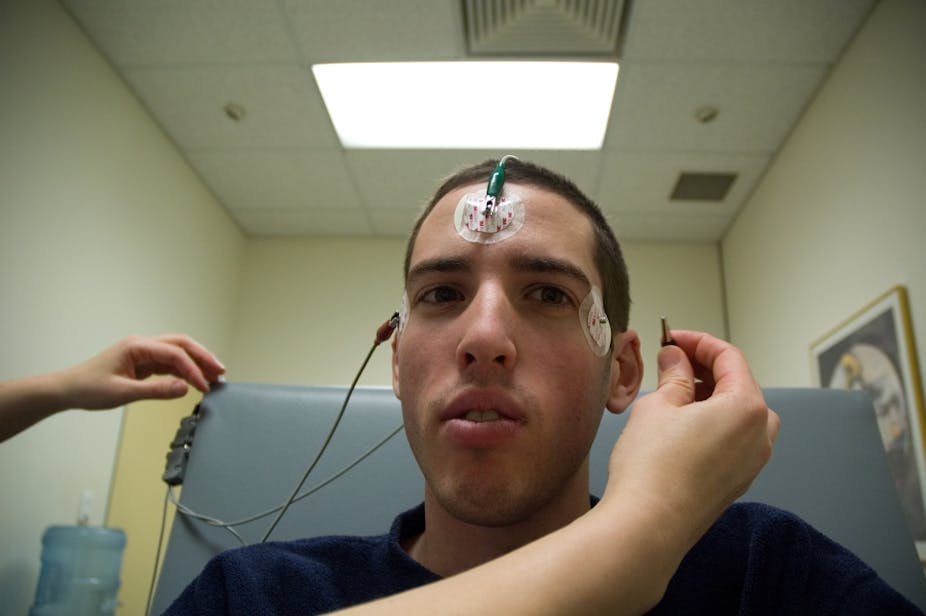
The treatment passes a mild, painless current into the brain through electrodes on the scalp. Patients remain awake during the procedure. Previous studies have shown that it may boost memory performance, and can also improve brain function in schizophrenia patients.
“We are excited about these results,” said trial leader, Professor Colleen Loo, from the university’s School of Psychiatry. “This is the largest randomised controlled trial of transcranial direct current stimulation ever undertaken and, while the results need to be replicated, they confirm previous reports of significant antidepressant effects.”
The findings of Professor Loo’s team have been published in the British Journal of Psychiatry.
Professor Loo said that participants in the study had not benefited from at least two other depression treatments.
“Most of the people who went into this trial had tried at least two other antidepressant treatments and got nowhere. So the results are far more significant than they might initially appear - we weren’t dealing with people who were easy to treat,” Professor Loo said.
The results improved gradually, suggesting the treatment is best applied over an extended period. Participants who improved during the trial were offered weekly follow-up treatments. Of those people, 85% showed no relapse after three months.
The research team also reported unexpected physical and mental benefits in participants, including improved attention.
“One participant with a long-standing reading problem said his reading had improved after the trial and others commented that they were able to think more clearly,” Professor Loo said.
“Another participant with chronic neck pain reported that the pain had disappeared during the trial. We think that is because tDCS actually changes the brain’s perception of pain. We believe these cognitive benefits are another positive aspect of the treatment worthy of investigation.”
The researchers are now considering an additional trial to include people with bipolar disorder. Early results from overseas suggest tDCS is just as effective in this group.
Paul Fitzgerald, a Professor of Psychiatry at Monash University, cautioned that although research into tDCS had produced some positive results, it was “still early days”.
“There have been some positive studies, but not all of them have been positive - there have also been some studies that have failed to show a difference between active treatment and placebos.
"A lot of the studies that have been conducted to date have been involved a relatively small patient population, and with limited duration of follow-up after the end of treatment. You’d really need to build up a greater series of studies with large patient numbers and longer-term follow ups to really get a handle on how effective this treatment might be.”
Professor Fitzgerald said that patients who suffered from very severe depression and who did not get better with the “standard treatment options” were often open to new treatment possibilites, including electrical brain stimulation.