
Fossil fuel subsidies up, nuclear power down: IEA

Market-distorting fossil fuel subsidies rose 30% from 2010 to 2011, stymying efforts to boost the renewables sector and reduce greenhouse emissions worldwide, a new global report has found. The 2012 World Energy Outlook, released by the International Energy Agency overnight, also noted that nuclear…

Xhfqyjwy-1352767727
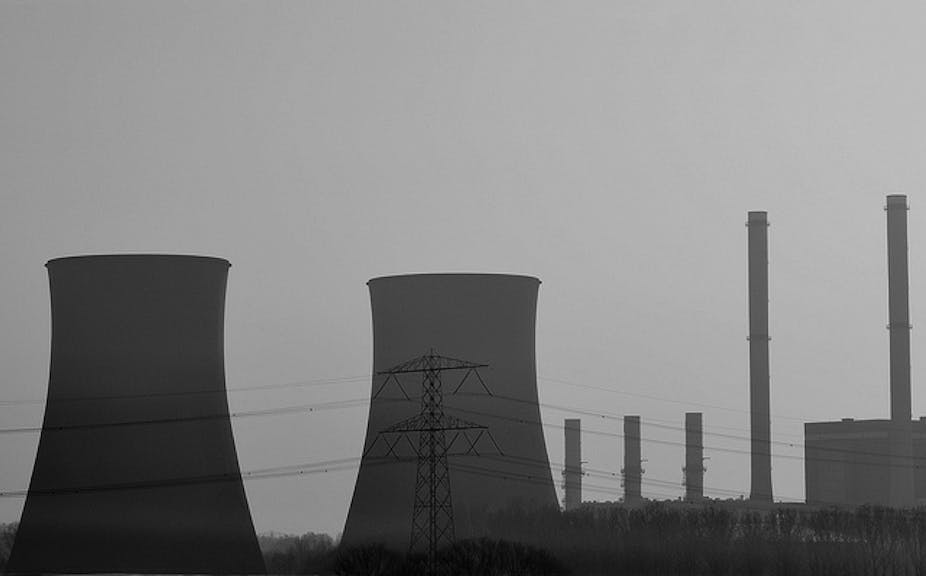
Several countries have backed away from nuclear power following the Fukushima disaster in Japan. http://www.theenvironmentalblog.org/, http://www.flickr.com/photos/environmentblog

Market-distorting fossil fuel subsidies rose 30% from 2010 to 2011, stymying efforts to boost the renewables sector and reduce greenhouse emissions worldwide, a new global report has found.

The 2012 World Energy Outlook, released by the International Energy Agency overnight, also noted that nuclear energy was on the wane in several countries following the Fukushima disaster last year.

The World Energy Outlook, which provides an annual snapshot of energy trends and projects their impact on the climate, said that fossil fuel subsidies totalled over $520 billion last year. Around $88 billion was spent worldwide supporting renewable energy.

“Taking all new developments and policies into account, the world is still failing to put the global energy system onto a more sustainable path. Global energy demand grows by more than one-third over the period to 2035 in the New Policies Scenario (our central scenario), with China, India and the Middle East accounting for 60% of the increase,” the report said.

“Energy demand barely rises in OECD countries, although there is a pronounced shift away from oil, coal (and, in some countries, nuclear) towards natural gas and renewables.”

Solar led the growth in the renewable energy sector but it is not until 2035 that renewables are expected to approach coal as the world’s primary source of electricity.

Production of oil, shale gas and bioenergy was on the rise in the US, the report said.

The report noted that “Japan and France have recently joined the countries with intentions to reduce their use of nuclear power, while its competitiveness in the United States and Canada is being challenged by relatively cheap natural gas.”

“Our projections for growth in installed nuclear capacity are lower than in last year’s Outlook and, while nuclear output still grows in absolute terms (driven by expanded generation in China, Korea, India and Russia), its share in the global electricity mix falls slightly over time,” a trend likely to drive up the fossil fuel import bills and make it harder to meet emissions reduction targets aimed at slowing climate change.

“Successive editions of this report have shown that the climate goal of limiting warming to 2 °C is becoming more difficult and more costly with each year that passes,” the report said.

“Almost four-fifths of the CO2 emissions allowable by 2035 are already locked-in by existing power plants, factories, buildings, etc. If action to reduce CO2 emissions is not taken before 2017, all the allowable CO2 emissions would be locked-in by energy infrastructure existing at that time.”

However, rapid and widespread deployment of energy efficient technologies would give the world until 2022 before that scenario eventuates, the report said, “buying time to secure a much needed global agreement to cut greenhouse-gas emissions.”

“No more than one-third of proven reserves of fossil fuels can be consumed prior to 2050 if the world is to achieve the 2 °C goal, unless carbon capture and storage (CCS) technology is widely deployed.”

John Cook, Climate Communication Fellow at the University of Queensland, said the report’s key message was that “if we continue on our current course, we’re committing ourselves to global warming of 3.6°C.”

“It’s commonly considered ‘safe’ global warming if restricted to no more than 2°C. To put this into perspective, the last time our planet was that warm, sea levels were at least 6 metres higher than current levels. On our current course, we are on track to go well beyond those conditions,” he said.

The good news is that we can achieve great progress in efficiency using existing technology by removing barriers that obstruct the implementation of efficiency measures, he said.

“The clock is ticking. Rapid deployment of energy efficiency measures will buy us five more years.”

Roger Dargaville, Research Fellow at the University of Melbourne’s Energy Research Institute said the report showed that high oil prices and lack of a price on carbon in North America are driving more investment in oil and gas, putting the US on track to become the world’s largest producer of oil by the end of this decade.

“Much of the world is moving in the right direction with improving carbon intensity of the economy, but the dramatic increase in projected fossil fuel use is putting us on a dangerous trajectory of unavoidable climate change and efforts the get the US and Canada onto a better path are urgent,” he said, adding that the recent US election result may be cause for optimism.

“I would expect that putting higher prices on carbon and energy will see a swing back in favour of nuclear. In the meantime, gas is the likely replacement [for nuclear power], but building new gas-fired generators now just locks us into a carbon intense trajectory.”

Sign in to Favourite

Want to follow The Conversation?

Sign up to our free newsletter to get the day's top stories in your inbox each morning, with a special wrap on Saturday.

Spinner
Help us have better conversations — donate

Join the conversation

20 Comments sorted by

  1. Zvyozdochka

    logged in via Twitter

    Hahaha, we're so screwed.

    The IEA scenarios (like our Govt paper) rely on 17% abatement from CCS by 2035.

    report
  2. John Coochey

    Mr

    As always the politically correct articles in the Conversation cite studies which purport to show heavy subsidies for coal and oil but do not cite what these actually are or how they are calculated. Can we have a few examples please and normal depreciation allowances or exemption from tax for certain purposes do not count when they are available for other activities.

    report
    1. Zvyozdochka

      logged in via Twitter

      In reply to John Coochey

      We have a local example; the diesel fuel tax rebate. It costs Australian taxpayers $5b per annum.

      report
    2. John Coochey

      Mr

      In reply to John Coochey

      PS is anyone seriously going to pay 120 Euros to read the original report?

      report
    3. Michael Wilbur-Ham (MWH)

      Writer (ex telecommunications engineer)

      In reply to John Coochey

      As with Australia, I suspect that most countries list their subsidies in their budgets.

      It is amazing how John just pulls things out of the air so he can criticise anything he does not agree with.

      report
    4. John Coochey

      Mr

      In reply to John Coochey

      Zvyozdochka makes my point for me as does MWH (as usual) would he consider the diesel rebate a concession of the tax were removed? It is not enough for MWH to suspect something (he is incorrect here anyway) but should state it with sources. In fact most subsidies do not appear in budget papers for example the massive subsidies to the PMV (car) industry was through tariffs which doubled their value added but increased costs to the motorists. Likewise when taxes on cars came down to match the GST was that a subsidy? If someone would like to go through a few budget papers and come up with some figures worth looking at I would be happy to do so. I am a retired economist and John Newlands is a retired econometrician, statistician and accountant so the expertise is available to analyse them.

      report
  3. John Newlands

    tree changer

    Some statements in the IEA report may be pearls of wisdom the trouble is knowing which ones. Today's The Oil Drum contains a thorough critique of IEA's prediction that the the US will overtake Saudi Arabia as an oil producer. As in most unlikely.

    I'm not sure transfers such as the diesel rebate can be regarded as a subsidy, in practice they're more of a concessional tax rate. A single blunt instrument such as the carbon price should apply to everyone.. coal, oil, nuclear, wind power then see what mix emerges. If only politicians could keep it simple and not tinker with it.

    report
    1. Zvyozdochka

      logged in via Twitter

      In reply to John Newlands

      The diesel rebate is exactly the sort of price distortion that the IEA capture as part of it's headline figure.

      report
    2. Jeremy Tager

      Extispicist

      In reply to John Newlands

      A 1999 IEA definition of energy subsidies (any government
      action that concerns primarily the energy sector that lowers the cost of energy production, raises the price
      received by energy producers or lowers the price paid by energy consumers. - http://www.oecd.org/site/agrehs/35217143.pdf) captures tax concessions and Treasury agreed. Unfortunately, the Treasurer decided he didn't want to redirect these subsidies to big business and claimed that we have no 'inefficient fossil fuel subsidies, backing out of a promise he had once made.

      report
  4. Jeremy Tager

    Extispicist

    While no state or federal government has ever conducted an audit of direct and indirect subsidies to fossil fuels, there have been a number of studies and substantial data released that gives at least a partial picture. When the Federal Government made a committment at G20 to phase out of eliminate fossil fuel subsidies, Treasury identified 17 tax breaks that constituted subsidies for the fossil fuel sector. The biggest for the mining industry was the diesel fuel rebate, which five years ago was worth around 2 billion dollars a year to the suffering mining industry. The total of just federal tax based subsidies identified by Treasury was between 12-13 BILLION dollars a year. That doesn't include subsidies for infrastructure (state and federal); research, pre-commercial work etc. Federal fossil fuel subsidies may be as high as 20 billion dollars a year and once state subsidies are included (road, rail, port and tax breaks), we may as well pay our taxes directly to Rio Tinto.

    report
    1. John Coochey

      Mr

      In reply to Jeremy Tager

      Interesting assertion but where are the actual facts? What other industries get the same concessions? I made this point at the outset but as always it is ignored. Once again if taxes go up doe that mean the "subsidy" (sic) increases or decreases? The firms pay more taxes but gets some rebate, is that a tax increase or decrease? I would suggest you do some research on the concept of the"B Index" which was developed largely in Canada. I note you seem not to have paid your 120 euros to read the original report. This seems to be an increased tendency in general and on the Conversation in particular to quote a source which is not available or to rely on a paper which will, but has not yet been peer reviewed such as the Gergis hockey stick paper or Lewandowsky moon landing paper, but then they are nor only not peer reviewed (let alone critically reviewed, because these are not synonymous) but are withdrawn from publication.

      report
  5. Geoff Russell

    Computer Programmer, Author

    Judging what is and isn't a subsidy is always tricky. What do you call $1.2 billion poured into lipid modifying agents on the PBS? I call it a meat and dairy industry subsidy, but there is no doubt it reduces medical costs.

    There are two great ironies in the current global response to climate change: gas and nuclear. Gas is still a fossil fuel and as more new deposits are found and exploited, the end result undermines any impact of reducing coal. Also the emissions cocktail is different ... less…

    Read more
    1. Zvyozdochka

      logged in via Twitter

      In reply to Geoff Russell

      "green groups are silent globally and locally on the dietary change needed to drive both changes"

      What a load of nonsense.

      Worldwide Green groups have said for years that we need sustainable and climate responsible agricultural practice, including the likely need to eat less meat.

      report
  6. Mark Harrigan

    Dr

    When will those who are genuinely concerned about climate change wake up to the fact that renewables alone, though they have a vital and major role to play, are not by themselves going to avoid potentially calamitous warming?

    If we do not contemplate an increase of nuclear power into the mix then we either have to pray CCS works (and on the performance to date that seems unlikely), accept much lower use of energy (extremely unlikely in practical terms since it is energy that frees people to avoid…

    Read more
  7. David Clerke

    Teacher

    Has anyone been able to identify any of the so called subsidies yet? And remember they must be unique to the fossil fuel industries and net not gross.

    report
    1. Zvyozdochka

      logged in via Twitter

      In reply to David Clerke

      What point are you trying to make David? Is the use of the word 'subsidy' annoying you?

      The IEA's/G20's definition is "any government action that lowers the cost of fossil fuel energy production, raises the price received by energy producers or lowers the price paid by energy consumers."

      report
    2. Jeremy Tager

      Extispicist

      In reply to David Clerke

      In 2009 the Government made a commitment to eliminate 'inefficient' fossil fuel subsidies. The definition Z gives you below (and which i gave above) was the starting point for an analysis by Treasury (other departments like Energy refused to do the analysis) of tax measures that constituted subsidies. They did not have to be unique to the fossil fuel sector (why should they be?). They identified 17 tax measures - including rebates and exemptions that were subsidies. Ultimately, the Treasure (contrary to the recommendation of his department) decided Australia has no 'inefficient' fossil fuel subsidies and therefore no commitment. Treasury's analysis showed between 12-13billion dollars annually in fossil fuel subsidies. That is only a portion of subsidies provided across all of Government.

      report
  8. Julien Benney

    logged in via Facebook

    The movement away from nuclear is a regrettable misunderstanding of the problems associated with nuclear power in the most seismically unstable region of the world.

    In seismically stable regions like Australia or Africa, nuclear power is not in the least bit dangerous. It is a pity with hindsight that the most powerful anti-nuclear lobby has been in Australia with its abundant uranium reserves and a great need for water- and carbon-efficient energy because of extremely fragile, low-productivity and biodiverse ecosystems. In such environments where earthquakes are no risk, fast reactors would potentailyl save a huge amount of fossil fuels and even uranium.

    report
    1. Geoff Russell

      Computer Programmer, Author

      In reply to Julien Benney

      Where was the safest place to be when the tsunami hit Japan last year? The safest place in the path of the tsunami? On any of the nuclear plants. The 4 plants hit by the tsunami saved about a thousand lives directly ... the people who were lucky enough to be working at these plants and not at any of the buildings/bridges/shops/ businesses that were totally destroyed. Had there been more nuclear plants, there would have been less deaths.

      report
    2. Jeremy Tager

      Extispicist

      In reply to Julien Benney

      Yeah, right. Nuclear power is safe except when it isn't. And after the disaster we all pretend we had spoken before about why it wasn't safe...As long as humans build them, run them, make the computers that run them, as long as we are capable of greed, boredom, anger, revenge, stupidity, carelessness, nuclear plants won't be safe. And the notion below that the nuclear plants saved lives - ask the workers about their levels of radiation poisoning; ask how many people will die because of the contaminated water poisoning their oceans and crops.

      report