
Frankenfood or crops of the future? Gaps in the perception of GM food safety

Humans have always faced tricky safety problems with food because we eat plants, which are the most ingenious pesticide chemists on the planet. Plants produce an amazing panoply of chemicals to deter animals from eating them. We’ve responded biologically to this challenge by evolving chemical detoxification…

C73yqgzh-1345441500
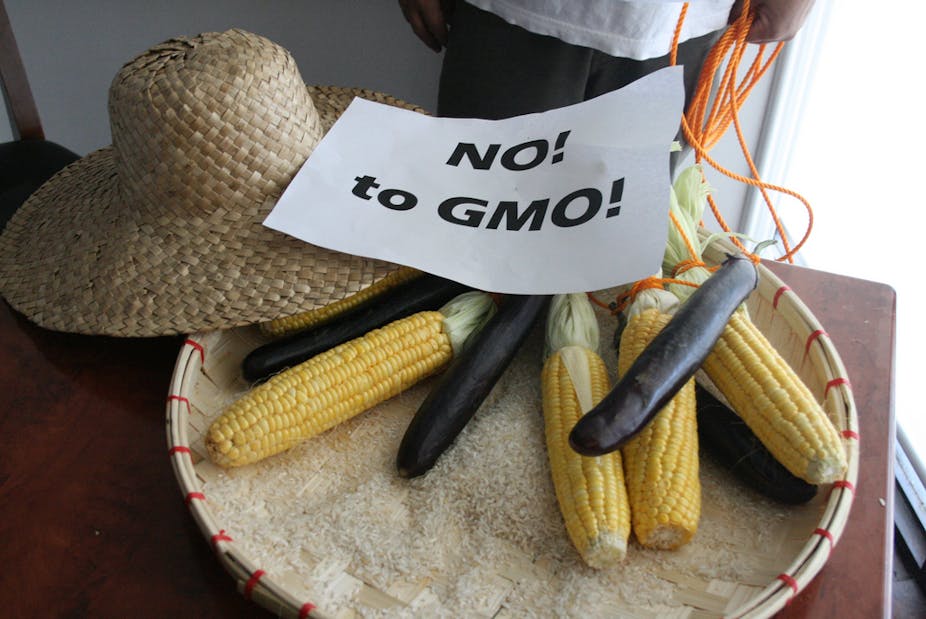
Many people continue to worry about unexpected changes to food when it is genetically engineered. asian farmer/Flickr

Humans have always faced tricky safety problems with food because we eat plants, which are the most ingenious pesticide chemists on the planet. Plants produce an amazing panoply of chemicals to deter animals from eating them. We’ve responded biologically to this challenge by evolving chemical detoxification mechanisms in the liver.

Culturally, we’ve responded by inventing cooking and other food pre-treatments that allow us to eat dangerous foods, such as kidney beans, rapeseed oil and tapioca.

We even add spice to life by adding low quantities of plant poisons to recipes to improve flavour. And we breed our crop plants to reduce toxins. In short, “natural foods” are not necessarily safe and most of our crops are not as natural selection produced them.

Safety regime

Cooking and other pre-treatments protect us from the chemicals in plants. Alpha/Flickr

Safety assessment of genetically engineered food (called GM or transgenic food) is yet another application of human ingenuity and the harnessing of past experience to obtain sustenance. It starts by careful comparison of the genetically-modified food (and any new components that are deliberately added to that food) against the safety record of existing dietary components for which we have a history of safe human consumption.

All new genetically engineered foods are assessed in a systematic way by food safety agencies (such as FSANZ in Australia), and detailed descriptions of these assessments appear on agency websites.

Assessments involve tests of proteins for toxicity in animal-feeding trials and tests for changes in the allergen content of the food. Scientists have completed numerous animal-feeding studies to ensure the safety of genetically-modified foods.

A comprehensive analysis of chemical composition is also carried out. The genetic stability of crop varieties is checked, as are the detailed structure of the DNA inserts. Extensive use of gene and protein databases enables better assessment of the chance of adverse outcomes.

Nagging doubts

Heavy spotting on corn kernels reveals the activity of a mobile DNA parasite. Celebrated American maize geneticist Barbara McClintock was awarded the Nobel Prize in 1983 for her discovery of the mobile DNA parasites that cause much genetic variation in plants. Damon Lisch PLoS Biology Open Access License

But many people continue to worry about unexpected changes to food when it is genetically engineered. This concern has caught the attention of many scientists, whose response has been to evaluate the odds of unexpected adverse outcomes by comprehensive chemical and genetic surveys of crop varieties (chemical fingerprinting).

The good news from 44 different genetically-modified crops' chemical fingerprinting studies (including work on maize, soybean, wheat and barley) is that the chance of unintended changes with transgenic crops is less than the risk of unintended changes occurring in new crop varieties created by conventional breeding.

These food fingerprinting investigations show the precise composition of a crop is readily affected by the position of the plant in the field in which it is being grown, climatic differences between farms, variation in soil chemistry and differences in crop composition generated by conventional breeding. These factors all produce more unexpected alteration of food composition than do the methods used to make GM food crops.

In a recent critical report by an anti-GM group, these major findings are not given adequate recognition. Indeed, one may reasonably ask why anti-GM reports should be given credence when they ignore well documented science from numerous independent laboratories.

Natural genetic engineering

A huge body of basic discoveries in genetics demonstrate that in nature and in farm fields, plant chromosomes are continually subjected to numerous DNA insertions and chromosome rearrangements that mimic the changes that occur when new DNA is introduced by genetic engineering.

These DNA changes come from a variety of processes, including radiation damage and the activities of numerous virus-like DNA parasites that are abundant in plant chromosomes. This frequent natural DNA scrambling is ignored by critics of GM technology.
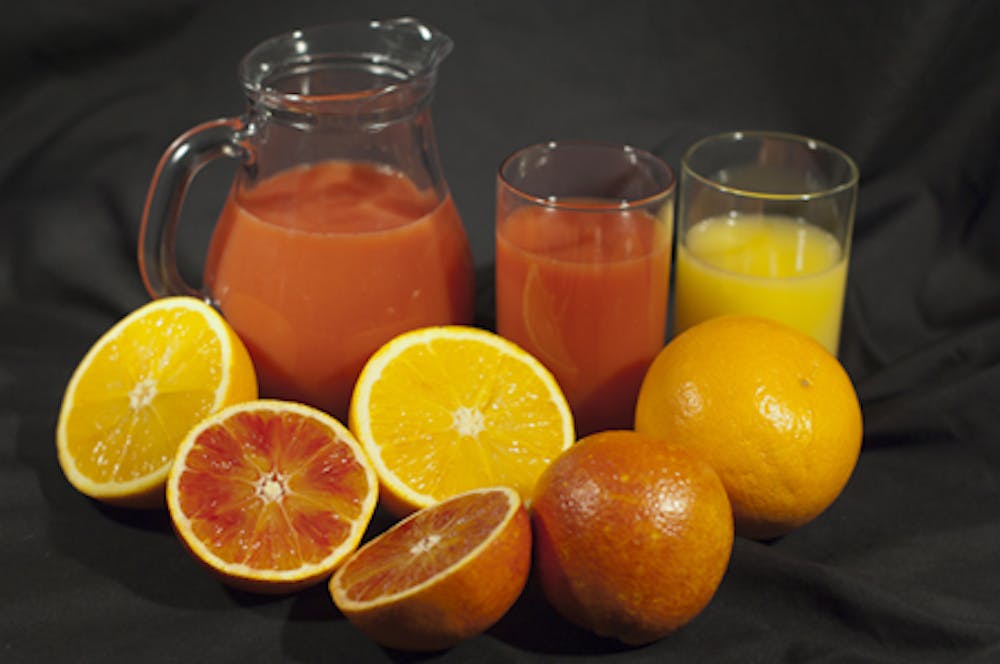
Orange juices blond and red. The red pigments arise from a natural DNA rearrangement that’s similar to what happens in laboratory-based genetic engineering of plants. John Innes Centre

One example of such “natural genetic engineering” was recently found in studies of an unusual (non-GM) orange tree variety growing in Sicily. This is a variety that produces blood-red oranges. The red fruit pigments are anthocyanin plant chemicals that are absent from the juice of conventional sweet oranges and may well have beneficial health properties.

Blood-orange varieties emerged several centuries ago as a natural mutation. We now know that this mutation occurred by insertion of a mobile genetic parasite near a key gene, called Ruby, whose activity is needed for successful red pigment formation. Ruby was turned on by the accidental insertion of parasitic DNA near her location in the chromosome.

This is the type of genetic manipulation that genetic engineers do in the lab but, in this case, a natural DNA parasite did it in a Sicilian orange grove.

Another example of natural genetic engineering was discovered in an Illinois soybean field in 1987, where a (non-GM) colour-mutated soybean flower appeared spontaneously in a field of soybeans.

This natural mutation was named wp. It’s interesting to crop-breeders and farmers because it produces larger soybean seeds that are richer in protein. Further investigation showed that in the wp mutation, a complicated new DNA insertion into the soybean chromosome triggered flower pigment formation. This complicated DNA rearrangement was catalysed by a natural DNA parasite.
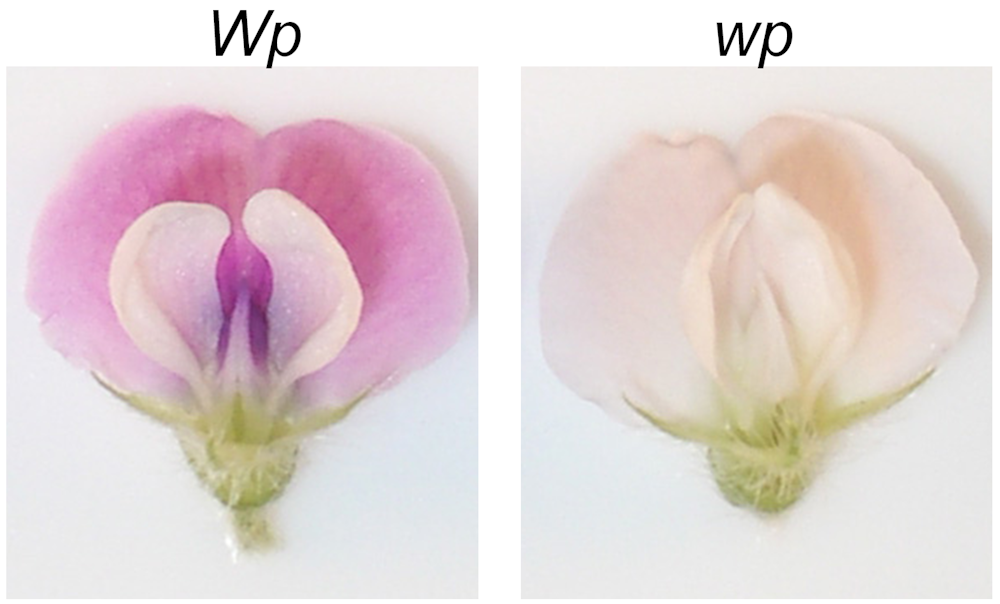
Pink wp mutant soybean flower on the right, parental purple on the left. Gracia Zabala and Lila Vodkin

DNA parasites?

DNA parasites are foreign DNA. They are triggered into movement to a new chromosome site when plant cells are stressed. This happens when inter-species crop hybrids are formed by cross-pollination (which is often the case in conventional breeding of major food or feed crops such as wheat or Triticale), or by the stresses of cold nights in Sicilian orange groves.

Geneticists have discovered numerous inter-species transfers of genetic parasites, but more to the point, they have discovered examples of movement across species boundaries of other types of genes, such as those involved in important crop physiological activities.

Mark Rain

Just this last February, for instance, scientists from Brown University in the United States showed that genes providing more efficient photosynthesis have moved between distantly related grass species.

All the key features of laboratory genetic manipulation of crops — random DNA insertion in chromosomes, foreign DNA, altered expression of genes, DNA rearrangements — are exhibited by natural genetic mutations that occur in plants.

Our exposure to unexpected genetic events occurring in genetically-engineered food is lower than our exposure to the unintended genetic changes served up by conventional foods we’ve eaten for years. And underpinning this more recent scientific finding is the fact that there’s solid assurance of GM food safety from the intense scientific scrutiny and government oversight that GM food has received at all stages of its development over the last 30 years and more. Food from GM crops is at least as safe as traditional foods.

Join the conversation

125 Comments sorted by

  1. Kurt Foster

    Small Business Owner

    Your final link to "intense scientific scrutiny" is broken.

    My main issues with GM is that you can't put the genie back in the bottle, and like the cane toad there are many examples of when we have thought something was a great idea until it starts doing something we didn't expect.

    My major issue with Mansanto's range of plants that are resistant to their herbicides and pesticides is that we are already causing great damage to our ocean resources and increased use of pesticides and herbicides…

    Read more
    1. Chris Booker

      Research scientist

      In reply to Kurt Foster

      what about GM crops meant to reduce the application of pesticides, which have adverse effects on marine biology as well as health effects in humans? Or crops designed to be more drought-resistant? The idea that 'holding GM crops back has no downside' isn't right - if these could potentially benefit food security in third world countries, or reduce the use of dangerous chemicals, then holding them back will perpetuate these problems.

      report
    2. John Newton

      Author Journalist

      In reply to Chris Booker

      Can you explain hoe GM crops reduce the application of pesticides? Yes, GM cotton, apart from its disastrous effects on the Indian sub-continent is designed to subdue the boll weevil - but no other GM crop does so. Indeed, in some 20 years of genetic modification about all that GM does - as opposed to what is promised by the biotech industry gut so far has failed to eventuate - is allow farmers to use as much glyphosate on their crops as they wish - with predictable results.

      report
    3. Luke Weston

      Physicist / electronic engineer

      In reply to Kurt Foster

      "My major issue with Mansanto's range of plants that are resistant to their herbicides and pesticides is that we are already causing great damage to our ocean resources and increased use of pesticides and herbicides is not going to help that problem."

      Glyphosate-resistant engineered crops are not just resistant to Monsanto-brand glyphosate, they're resistant to cheap generic glyphosate from any other manufacturer equally.

      Replacing certain selective herbicides such as atrazine which are more toxic and more environmentally concerning with relatively non-toxic glyphosate is environmentally beneficial.

      report
    4. In reply to Luke Weston

      Comment removed by moderator.

    5. David Tribe

      Senior Lecturer in Food Biotechnology and Microbiology, Agriculture and Food Systems at University of Melbourne

      In reply to John Newton

      Western corn rootworm (Diabrotica) causes massive ($ billion) losses of maize crops in Europe, and needs massive spraying with synthetic pesticides to be controlled.

      Not so in North America, where the pest is controlled with GM rootworm protected maize, and pesticide spraying to control Diabrota is avoided

      report
    6. Bob Phelps

      ED

      In reply to David Tribe

      Oh yeah? See this and many other items which report that:
      http://www.reuters.com/article/2012/03/09/us-monsanto-corn-idUSBRE82815Z20120309
      A group of plant scientists is warning US federal regulators that action is needed to mitigate a growing problem with GM corn that is losing its resistance to plant-damaging pests. “This is not something that is a surprise ... but it is something that needs to be addressed," said Joseph Spencer, a corn entomologist with the Illinois Natural History Survey…

      Read more
    7. Luke Weston

      Physicist / electronic engineer

      In reply to John Newton

      "GM cotton, apart from its disastrous effects on the Indian sub-continent"

      Disastrous effects, like what?

      report
    8. Bob Phelps

      ED

      In reply to Luke Weston

      For instance, Morse (2005) found that Bt cotton in India produced better profit margins for farmers than non-GM cotton. However, the authors pointed out that these benefits will only be sustained if pests do not evolve resistance to Bt cotton.125

      Recent studies suggest that they are already evolving resistance. These findings are confirmed by a leaked advisory from the Indian government which blamed Bt cotton for the spate of farmer suicides across the subcontinent. The advisory stated, “Cotton…

      Read more
  2. John Newton

    Author Journalist

    David Tribe asserts that 'All new genetically engineered foods are assessed in a systematic way by food safety agencies (such as FSANZ in Australia) - what he fails to tell us is that FSANZ does no independent testing and its assessment consists in greenlighting studies submitted by the biotech companies that stand to gain by their products being admitted to the market.

    Apart from all the other contentious and sententious claims made in this article, please explain one thing: why are the biotechs all voer the fighting to hide GM on food labels? If GM is so safe, why be scared of transparency?

    report
    1. Sammy Rachman

      Bachelor of Science Student, University of Melbourne

      In reply to John Newton

      If I was a business-person, I'd think that adding on 'genetically modified' on my food would doom my product to a lot of scrutiny and terrible sales.

      report
    2. Luke Weston

      Physicist / electronic engineer

      In reply to John Newton

      Because mandatory GMO labelling is just scaring customers with pseudoscience FUD. It's generating fear, implying that there's something bad about the product when there's no scientific basis for that.

      Some people, particularly in the US, argue that there should be mandatory labelling for food with recombinant ("genetically modified") plant ingredients, that they should "just label it" so consumers can "make an informed choice", etc.

      I say no, there should be no such labelling.

      Activists…

      Read more
  3. Sammy Rachman

    Bachelor of Science Student, University of Melbourne

    @Kurt Foster

    I thought GM was initially developed to support natural plant defenses against insects/weeds, so we do not use environmental pollutants/agents that might also harm the farmers in the form of herbicides and insecticides?

    There's a whole case out there somewhere, where lately GM crop using farms initiate rotations in order to avoid weeds/insects developing immunity to the engineered plant defenses.

    In an ever evolving world, the realm of sustainability science is taking center…

    Read more
    1. John Newton

      Author Journalist

      In reply to Sammy Rachman

      In answer to your previous post - why do you think it would be bad business to put GM on your product? If you closely follow some of the studies done on GM products - Pustzai et al - there are very good reasons to avoid them.

      As for GM crops avoiding weed immunity, once again, if you follow developments the oposite is the cae - so called 'superweeds' immune to glyphosate are now confounding farmers and biotechs alike.

      As for 'health risk of organic and non-organic foods we found to be n an equal level' suggest, once again, delve into the literature. Far from 'health risks' as the organic industry becomes wealthier and is able to fund research the exact opposite is being found: considerable health benefits for humans added to the environmental benefits for the land

      report
    2. Sammy Rachman

      Bachelor of Science Student, University of Melbourne

      In reply to John Newton

      As superweeds are indeed a growing concern, that is why people are developing crop rotations instead of outright trying to strongarm and create an entire field of GM crops. It's almost like the logic behind how antibiotics work on bacteria - the difference is in bacteria you shouldn't stop your dosage till you've overcome it.

      In the case of GM crops, you minimize the likelihood of superweeds appearing by making the weaker weeds seem like the more capable strategy by having a plot of land without…

      Read more
    3. Bob Phelps

      ED

      In reply to Sammy Rachman

      Genetically manipulated (GM) broad-acre crops are not the boom industry portrayed by the GM industry. In 1996 Monsanto launched four GM crops – soy, corn, canola and cotton – with only two traits – herbicide tolerance and inbuilt insect toxins. GM sugarbeet is also now grown in the USA. This is a poor performance after 30 years and the investment of $45 billion by taxpayers and industry. The empty promises of drought and salt tolerant crops, and more nutritious, healthier or longer shelf life foods…

      Read more
    4. Tim Scanlon

      Debunker

      In reply to Bob Phelps

      You clearly have no idea of how long breeding takes.

      Even standard breeding programs for relatively simple improvements take decades. Start talking about entire new traits and you can take a generation. GM only cuts a bit of time off that breeding program as genes are more quickly identified and there is less trial and error in selection. You still have to do a lot of the standard breeding practices and GM also has safety testing and other rigours applied that means 30 years and several successful traits later is actually very good.

      report
    5. Bob Phelps

      ED

      In reply to Tim Scanlon

      The internationally accepted "Agriculture at a Crossroads", reports on the good prospects of feeding the world using agro-ecological systems and processes. See: http://www.agassessment.org/ I'd prefer public R&D resources to be spent in this direction, rather than on GM which has not delivered on most of its promises and probably cannot. Meanwhile, the GM crops that exist are merely propping up the 'get bigger or get out" industrial agribusiness commodity farming model focused on trade and exports…

      Read more
    6. Tim Scanlon

      Debunker

      In reply to Bob Phelps

      Which is completely irrelevant to the points I was addressing. You wanted to claim that GM hadn't done anything, I pointed out that the reality of breeding programs has always been long term. You then carry on about modern agriculture, which shows your bias is against agriculture and the reality of trying to produce food to feed 7 billion people (and rising). GM is just one tool in the breeding tool box that will allow improvements in agriculture. I suggest you look into breeding and what is involved…

      Read more
    7. Bob Phelps

      ED

      In reply to Tim Scanlon

      The point is, Tim, that industrial agribusiness is not sustainable because its resource base - oil, phosphates, fertile soil, water, etc. - are declining and climate change is kicking in. We need a new paradigm. Hear another vision for future food production, on Bush Telegraph 23/8/12: http://mpegmedia.abc.net.au/rn/podcast/2012/08/bth_20120823.mp3

      Consider, too, how the food security picture could change if we were all more careful about wasting 30% of food - 361kg per Australian pa says the National Food Plan. That's roughly 1kg per day per person which means 220 - 230,000 tonnes of food go to land fill in Australia daily - 80 million tonnes pa roughly. Rescuing and redeploying that food would be a lot better than pillaging our soils and other fragile environments to double yields by 2030 for export to Asia, as the Plan envisages.

      report
    8. David Tribe

      Senior Lecturer in Food Biotechnology and Microbiology, Agriculture and Food Systems at University of Melbourne

      In reply to Bob Phelps

      Bob,
      Your continued underestimation of GM crop traits needs to be bought up to date. The Bt insect protections are a wide range of traits. GM cotton in Australia is double protected, and triple-protection is in the pipeline. You generally ignore virus protected papaya and squash. You know about but repeatedly ignore water use efficient maize which is growing this commercial season in the USA -- where it will get a very good field test with the current drought.
      Your argument that multi-trait features…

      Read more
    9. Shirley Birney

      retiree

      In reply to Tim Scanlon

      Australia is under no obligation to feed 7 billion people. That's standard propaganda and scaremongering from the biotech industry.

      report
    10. Tim Scanlon

      Debunker

      In reply to Bob Phelps

      "Industrial agribusiness"??? The term you are looking for is agribusiness, stop trying to make it sound like growing food is evil. Also your statement about sustainability is naive, as long as there is no closed loop of resources then any food production is unsustainable.

      Listened to that "paradigm" and it is quite clear that the group have no idea of what agriculture is and what a farm is. The vast majority of farms are family farms. The vast majority of "corporate farms" are employing managers…

      Read more
    11. John Holmes

      Agronomist - semi retired consultant

      In reply to Bob Phelps

      How would you respond to a historical decline in the price /cost ratio of 0.5%/year since 1945 in your salary? You and as well as your predecessors will have done or will do things differently.

      During the billion tree project of the 90's we found out real fast that there was not sufficient funds coming into the system to properly support many of the options. The level of expertise needed required more people on the ground to even consider some of the possible options.

      Time to spent a bit more time the low rainfall farming areas.

      However the use of reduced tillage systems did substantially reduce wind erosion, and water erosion. In one trial soil loss to water erosion was less than the estimated rate of soil formation. On the old WA soil surface( bill yr or so) that is a start to being sustainable. Now how to best replace the nutrients exported in produce, or arest the decline in soil pH?

      report
    12. Bob Phelps

      ED

      In reply to Tim Scanlon

      You 'experts' are on the wrong track, Tim. You say: "The reason farms have had to get bigger is because of the cost price squeeze." Yes, and what will experts and policy-makers do about it? Nothing? Bad public policy allows family farmers to be squeezed between inputs of farm machinery, agrichemical, seed and other monopolised industries that sell inputs at inflated prices and monopolised retail, processing and distribution that drive down the price of outputs, at farmers' expense. These wrong-headed…

      Read more
  4. Jeremy Tager

    Extispicist

    As John Newton has noted, FSANZ does no independent testing, relies exclusively on data provided by biotech companies - data that numerous studies show is far more likely to be suspect, wrong or altered. FSANZ remains one of the few food safety organisations world wide never to have rejected a gm application...unlike South Africa, China, India, and most of Europe. Not only does fsanz do no independent work, they don't even require data from the actual gene construct within the plant. Their analysis is based on a chemical analysis. It's easy to claim something is safe when you control the data (and biotech companies do not provide unfettered access to their gm in order to allow independent research). This has the same stench as the tobacco industry claiming cigarettes are harmless - and by the time the real science is in, the genie is well and truly out of the bag.

    report
    1. David Tribe

      Senior Lecturer in Food Biotechnology and Microbiology, Agriculture and Food Systems at University of Melbourne

      In reply to Jeremy Tager

      The evidence about GM safety does not rely exclusively on company data. The EU has funded extensive independent research. Jeremy's analogy with tobacco is flawed, as Jeremy is begging the question. There is no credible science showing that GM foods that have been commercialised cause an adverse health outcome.
      On the other hand medical science shows smoking causes lung cancer
      Jeremy has been a Greenpeace representative, but ducks questions about Greenpeace inaccuracy on the science about GM safety. They claim children need to eat 9000 g of vitamin A enriched GM rice to gain a benefit, where the science says 50 g of dry rice or 100 -150 g of cooked rice will do good. That an error of about 60-fold in exaggeration. See
      http://gmopundit.blogspot.com.au/2012/08/carotene-in-golden-rice-is-as-good-as.html
      How about setting that bit of misinformation straight Jeremy?

      report
    2. Angie Bucu

      logged in via Facebook

      In reply to David Tribe

      David you suggest that independent research is conducted in the EU, but aren't most GM crops and foods banned in the EU? Does this independent research suggest that GM is not yet safe? Where else is independent research conducted that is sufficiently independent that it is not influenced by Big Pharma and Big Ag?

      report
    3. Bob Phelps

      ED

      In reply to David Tribe

      Yes, "the EU has funded extensive independent research" on a broad range of general and specific topics related to all aspects of GM techniques and their products. But they have only considered a few of the commercially available GM food products and concluded they are safe. More are approved for animal feed and biofuel production in the EU whereas no such assessments and approvals are required in Australia.

      Does FSANZ consider specific EU evidence and assessments in making its assessments? Maybe we'd better ask them.

      report
    4. David Tribe

      Senior Lecturer in Food Biotechnology and Microbiology, Agriculture and Food Systems at University of Melbourne

      In reply to Angie Bucu

      The hold-ups in the EU are not safety concerns identified by the food standards agency, they are due political dissent by certain countries who hold up EU political decisions, and ignoring the safety advice of the agency EFSA.

      The European studies are given below. There are also a fair number of Chinese studies which are done by government scientists:

      eg. Zhou Jie , George G. Harrigan, Kristina H. Berman, Elizabeth G. Webb, Tim H. Klusmeyer, and Margaret A. Nemeth (2011) Stability in the Composition…

      Read more
    5. Bob Phelps

      ED

      In reply to David Tribe

      Cherry picking the evidence again Davo? It's not fair to accuse GM-free advocates of selectively citing the literature then doing the same yourself.

      report
    6. Angie Bucu

      logged in via Facebook

      In reply to David Tribe

      I'm from HK David and would not agree as to the credibility of studies and research into GM conducted and sponsored by the Chinese govt...not what one would call independent at all!

      report
    7. Luke Weston

      Physicist / electronic engineer

      In reply to Angie Bucu

      So if the industry does the research it's no good, and if the government does the research it's no good either?

      Exactly who, then, do you think should be doing the research?

      report
    8. MADGE Australia Inc

      logged in via Twitter

      In reply to David Tribe

      Hi David
      You mention the EU has funded extensive GM safety tests. Are you referring to the EU report "Decade of EU-funded GMO Research" 2001-2010? Of the 50 research projects discussed in this report only 10 refer to GMO safety and the majority of these are not based on long term feeding studies. They examine risk assessment, methods of testing for GM presence and consumer attitudes. Why did the EU spend 200 million on research projects that do not address safety issues?
      There were a few feeding…

      Read more
    9. David Tribe

      Senior Lecturer in Food Biotechnology and Microbiology, Agriculture and Food Systems at University of Melbourne

      In reply to MADGE Australia Inc

      MADGE,

      In the article above I mention two recent reviews on GM safety issues that are more up to date that the sources you quote, and comment about how they are not given adequate attention in Fagan Robinson and Antoniou GMO Myths report. Maybe you can rectify that lack of coverage?

      Cheers
      David

      report
  5. Pera Lozac

    Heat management assistant

    It is not (only) about safety - the bigger picture is corporate control of food supply and deliberate limitation of natural bio-diversity with a sole purpose of maximising profit.

    GM has its good sides and potentially very positive outcomes if it is approached with the bigger picture in mind. However I do not see how is that possible to work in the current state of human affairs in this world.

    It would have been quite a different story if companies (like Monsanto) were not allowed to patent plant genomes and impose aggressive control of "their" seed distribution and use.

    report
    1. David Tribe

      Senior Lecturer in Food Biotechnology and Microbiology, Agriculture and Food Systems at University of Melbourne

      In reply to Pera Lozac

      The simple answer is -- Don't buy their products if you don't like them. There are alternatives

      report
    2. Richard Widows

      logged in via Twitter

      In reply to David Tribe

      Oh, so you're pro labelling then are you David? I'm glad to hear that, although I can't help but wonder why you'd be pro labelling given your ridiculous ending statement- "Food from GM crops is at least as safe as traditional foods."

      At least you're not calling me a luddite this time. Glad to see we've progressed a little, even if it is only baby steps.

      report
    3. James Smith

      Teacher

      In reply to Richard Widows

      Oh dear GOD, not again! This is meant to be a forum for independent opinions. David Tribe is the most pro GM commentator in the whole of Australia.

      He calls himself "the GMO Pundit" and writes almost daily rants on the virtues of this technology- http://gmopundit.blogspot.com.au/

      What is really scary is that this is the guy who is lecturing our future agricultural leaders. What hope do we have?

      report
    4. Shirley Birney

      retiree

      In reply to David Tribe

      In 2010, WA’s Agricultural Minister Terry Redman told Radio National that commercial trials (compliments of the taxpayer) had demonstrated successful cultivation and the segregation of GM canola from non-GM canola. Redman said he did not feel it was necessary to wait for the results of a research report before allowing the planting of Monsanto’s GM canola.

      So what subsequently happened when Steve Marsh’s organic farm was contaminated with a neighbour’s “segregated” GM canola seed? The victim…

      Read more
    5. Richard Widows

      logged in via Twitter

      In reply to David Tribe

      Sorry David, I just wanted to make sure you realise that the above was actually a question-

      Are you for or against labelling of GMO?

      report
    6. MADGE Australia Inc

      logged in via Twitter

      In reply to James Smith

      Totally agree James. This article is a mishmash of rubbish. It slides all over the place and pretends that we know everything about genes, how they interact with the environment and therefore we can mess around with the genome and predict precisely what has been created. Except that we can't.

      It ignores the fact that GM is a technological failure - it yields the same as non-GM and causes increased use of pesticides will all the attendant problems for soil, crop, farmer and consumer health. Agroecological agriculture has raised yields by an average of 79% and helps with other issues i.e. pests, weeds, climate. http://www.srfood.org/index.php/en/media/press-releases (scroll down to 22/06/2010 "Agroecology outperforms large-scale industrial farming for global food security")

      It is ignored possibly because it is not patentable and doesn't fit the stereotype of science meaning high tech intervention.

      report
    7. Bob Phelps

      ED

      In reply to David Tribe

      Food Standard 1.5.2 on GM foods (last updated July 12 2012) is available here http://www.comlaw.gov.au/Details/F2012C00518/Download

      As you'll see here: http://www.comlaw.gov.au/Series/F2008B00628 the standard is frequently updated as each new variety of food made using genetic manipulation (GM) techniques are approved for use in the Australian and NZ food supplies. Most of these crops will never be grown here but may arrive through the international food trade and can come in as animal feed…

      Read more
    8. Bob Phelps

      ED

      In reply to James Smith

      Yes, James. The Franken food title and the Franken egg graphic used here also show how irrational, non-objective and biased this DiaTribe really is, despite its trappings of authority and reasonableness. The Franken reference is commonly dragged out by GM boosters in an attempt to show how stupid and alarmist we advocates of GM-free futures are. But Gene Ethics has never used the term or such images. They only serve to discredit those, like David and The Conversation, who do.

      report
    9. Luke Weston

      Physicist / electronic engineer

      In reply to Pera Lozac

      It has been recognised for a long time, long before the advent of recombinant DNA technology, that novel varieties of plants and animals that have been engineered through human labour - through artificial selection, and/or techniques like mutation breeding - represent a form of intellectual property that deserves to be protected under intellectual property law.

      Legislation such as the Plant Breeder's Rights Act has been around for a long time.

      report
    10. David Tribe

      Senior Lecturer in Food Biotechnology and Microbiology, Agriculture and Food Systems at University of Melbourne

      In reply to Bob Phelps

      For the record Bob, the Frankenfood reference and the image were added by the journalist at The Conversation. They are not my style, but I accept that news editors want to highlight controversy. But perhaps you will desist from using the invented "terminator" adjective to refer to crops that don't exist, and stop using cows with bizarre zebra stripes in your own images.

      MADGE NZ will need to back away from the four-teated naked women attached to a milking machine too, if they heed your advice.

      http://www.theage.com.au/articles/2004/01/10/1073437513674.html
      "Alannah Currie stands in front of the Madge billboard campaign against genetically engineered food."

      report
    11. Bob Phelps

      ED

      In reply to Luke Weston

      The Australian parliament passed the Commonwealth Plant Variety Protection Act in 1987 and replaced it with the Plant Breeders Rights Act in 1994. GM crop seeds which claim to be inventions can also be registered under the The Patents Act (though GM companies seek weak regulation by claiming GM organisms are not really new).

      But almost all of the intellectual and practical endeavour embodied in GM and other new seed varieties was created in the public domain over the past 5-10, 000 years. Every…

      Read more
    12. Richard Widows

      logged in via Twitter

      In reply to David Tribe

      You're ignoring me again David. Simple question. Are you for or against labelling of GMO in food?

      report
    13. Bob Phelps

      ED

      In reply to David Tribe

      Thanks Dr. Dave. We haven't used the "terminator" tag, shorthand for 'Gene Use Restriction Technologies (GURTS), for some time. The global ban agreed by most governments at the UN, within the Biosafety Protocol negotiations (that do NOT include Australia, sadly), has fortunately stopped the Monsanto-owned GURTS seed sterilisation monster. As to: "cows with bizarre zebra stripes in your own images", I haven't the slightest idea what you mean.

      report
    14. Tim Scanlon

      Debunker

      In reply to MADGE Australia Inc

      So you are calling Golden Rice that has given sight to people in poor nations a failure??? Excuse my incredulity at your nonsense.

      The report you cite on no yield difference was from a trial that tested RR canola versus its relative in a weed free environment. So of course there was no difference, the RR gene is to aid weed control! Besides that, RR is meant to aid weed control to decrease weed burdens in a rotation, thus it isn't about the yield but about the weed control.

      Then you try to…

      Read more
    15. Luke Weston

      Physicist / electronic engineer

      In reply to Bob Phelps

      Personally I can't see what the problem is with making the next generation of the seed sterile. That's already the case for hybrid seeds which many farmers already use, where they need to buy new seed every season, so it doesn't change anything there, and it completely eliminates the need for any legal enforcement of unlicensed use of the seed, and it completely eliminates any debate about "contamination", because the spreading of the seed outside of where its sown and the unlicensed saving and replanting of the seed are both impossible.

      report
    16. Bob Phelps

      ED

      In reply to Luke Weston

      Hybrids seeds are not sterile. As envisaged, Terminator would not prevent outcrossing and GM contamination as the plant would remain fertile until the seed was mature and it would then be rendered infertile. They do not exist, as far as we know.

      report
    17. Aggie Mills

      Researcher

      In reply to MADGE Australia Inc

      Vitamin A deficiency occurs in areas of poverty because they lack access to traditional available vegetable greens, fruits, milk & eggs. This deficiency can be easily and cheaply address by allowing poor communities access to land and the equipment for local traditional market gardens and improving supply chains. Being dependant on a brought in expensive product for community health is a tenuous position in politically unreliable states.

      CSIRO and state agencies, universities have pushed the development…

      Read more
    18. Dianna Arthur

      Dianna Arthur is a Friend of The Conversation.

      Environmentalist

      In reply to David Tribe

      Further, I have done a little sleuthing myself to your dismissive response to an entirely reasonable question.

      Not so easy to exclude Monsanto:

      "For the past 10 years Monsanto has bought up seed companies around the globe. They now own a majority of the seed lines in America, including a large percentage of organic seeds. For everyday purposes, a Monsanto seed that is grown organically is still organic, but in my attempt to avoid Monsanto, I was left without any easy way of knowing what foods…

      Read more
    19. Bob Phelps

      ED

      In reply to Tim Scanlon

      There is no Golden Rice in the global food supply. If and when there is, we'll see if it lives up to its promises.

      The UN recognises everyone's human right, to a nourishing diet of diverse foods so we can all be healthy and achieve our full potential. So, in my view, it is our responsibility to remedy this human rights issue by ensuring that everyone (rich or poor) has access to fruits and vegetables which are loaded with the micronutrients that food fortification claims to provide.

      A leading…

      Read more
    20. Tim Scanlon

      Debunker

      In reply to Bob Phelps

      You answer with a conspiracy theory, seriously? Research funding to an independent organisation is a payoff? Research funding that is only a minor part of the research budget of the organisation and relevant projects??

      Your arguments on biofortification assume that poor people have access to these other foods that make biofort unnecessary, are familiar enough with them to eat them, that these foods will form a large enough part of the diet to increase nutrition levels. The WHO and other organisations have recognised the need for staple food fortification. Why else would there be BOTH conventional and GM breeding programs to develop fortified foods?

      Golden rice has been trialled, and is now available as far as I was aware: http://www.goldenrice.org/

      report
    21. Richard Widows

      logged in via Twitter

      In reply to David Tribe

      David, you continue to ignore my question on labelling. Are you for or against it? I know how you like to dodge the tricky questions but I think it's a fair question and warrants an answer.

      Also (and this one's for you too Tim Scanlon), I would be interested in your comments on this report by the Indian Ministry of Agriculture. This article- http://www.thehindu.com/opinion/interview/article3800463.ece provides the comments of the Chairman of the Standing Committee. This is one of the most comprehensive…

      Read more
    22. David Tribe

      Senior Lecturer in Food Biotechnology and Microbiology, Agriculture and Food Systems at University of Melbourne

      In reply to Richard Widows

      Richard,
      I don't mind questions that are relevant but labelling is not the prime topic of this article. I certainly support addition of labels for scientifically justified information needed by consumers to avoid risks, such as phenylalanine and peanuts. There is a point where too much information reduces the effectiveness of warnings. The current Australian labelling provisions see to work satisfactorily. Certainly vendors could label their produce not GM.

      report
    23. Richard Widows

      logged in via Twitter

      In reply to David Tribe

      It's just that in reply to Pera Lozac you said: "The simple answer is -- Don't buy their products if you don't like them. There are alternatives."

      It's quite hard for consumers to avoid products when they don't have the information required to do so. Would you not agree? I submit that your opinion about GMOs being safe is somewhat different to mine. Who are you to tell me what I should and should not eat? And, as you would know very well, labelling non-GMO is extremely difficult as companies…

      Read more
    24. Chris Booker

      Research scientist

      In reply to Pera Lozac

      I think your answer actually hits the nail right on the head. While on the one hand I think it is actually possible to produce GM crops which offer improvements for the environment and people who cultivate them, and that there are scientists who work on this with the best intentions at heart, the problem comes down to the commercialization of knowledge.

      It seems that as soon as any scientific advancement gets to the point of being able to be used for some application, in comes patenting and commercial…

      Read more
    25. Jeremy Tager

      Extispicist

      In reply to Tim Scanlon

      It is truly extraordinary to see anyone support the golden rice scam - a trojan horse if ever there was one. The approximate cost of meeting VAD annually using supplements is about 8 cents a year. Not only is it inexpensive, but supplements, like vaccines, have established distribution networks that allow the vaccine to reach those in need. Growing a medicinal rice (assuming - big assumption - that it works) is simply a ludicrous way to approach the problem of VAD. The best solution - and one that…

      Read more
    26. Tim Scanlon

      Debunker

      In reply to Jeremy Tager

      That is a completely misleading and erroneous statement. Median wages in the countries you are talking about would find 8 cents a large amount of money to find. As such aid programs fund and provide these supplements. The entire reason why there are breeding programs (not just GM, conventional as well) is because aid agencies were having problems reaching enough of the population. They wanted it in the food supply so that the food was being grown locally and distributed through the community and…

      Read more
    27. Jeremy Tager

      Extispicist

      In reply to Tim Scanlon

      Firstly Tim, I no longer work for Greenpeace and haven't for over 6 months. The issue of median wages is probably not relevant as these programs are generally a function of aid - but assuming that poor countries have to pay for dealing with VAD, tell me where they are going to get the money to pay for an entirely new distribution system (and one that will threaten export markets) for golden rice. I asked this of Phillipine scientists and they had no clue how this supposed solution was actually…

      Read more
    28. Jeremy Tager

      Extispicist

      In reply to Tim Scanlon

      Sorry, should have added that extispicist referred to deciphering the political landscape when I was with greenpeace - not science. But I could say that gm advocates like you bear the signs of devotion to a particular species of religious fundamentalism much like extispicy.

      report
    29. Tim Scanlon

      Debunker

      In reply to Jeremy Tager

      Your former colleagues destroyed more than one trial Jeremy. And you are still promoting the Greenpeace ideology and pretending not to have a vested interest (i.e. I bet you are still a member of GP). And extispicy isn't a science, it is superstitious nonsense.

      Also please retract your entirely false and ad-hominem attack on me. I am a scientist, not a religious fundamentalist, I am not advocating GM based on ideology, in fact I don't advocate all GM products because that ignores the fact that…

      Read more
    30. Bob Phelps

      ED

      In reply to Tim Scanlon

      Everyone has a human right to a nutritious, balanced diet of fresh fruits and grains to keep them healthy and functioning well. "Vit A boosted staple foods" do little more than misappropriate funds needed to deliver on this human rights goal. See my more detailed post elsewhere on this site. I'd welcome your scientific comment on this conundrum of social priorities and scientific orthodoxy in conflict.

      report
    31. Tim Scanlon

      Debunker

      In reply to Bob Phelps

      That is a spurious argument and false dichotomy.

      You want to completely change the standard of living of everyone in the world (a noble ideal and one I'd support) but it won't happen with the pittance that is spent on agricultural research. You would need a radical rethink of the entire world finance system and would need generational change in education, finance and income equality. So that pittance is best spent on developing a realistic solution to better the lives of the less fortunate so that they can live to develop that restructure of the world.

      report
    32. Dianna Arthur

      Dianna Arthur is a Friend of The Conversation.

      Environmentalist

      In reply to David Tribe

      David

      You told us: "The simple answer is -- Don't buy their products if you don't like them. There are alternatives."

      Knowing full well how difficult "finding alternatives" is. There is no or very little adequate labelling, yet when asked if you are against labelling you try to slide away with claims that this request is "not on topic".
      Then don't make snide comments.

      Overall watching your responses to contributors' queries, I gain the impression of someone who is not interested in people's concerns regarding GE food, that you are in some way better informed than everyone who has the temerity to challenge you.

      Apart from promoting GE food - why was your article posted? - if you can't handle the questions, then provide someone who can, someone who can answer questions without overreacting.

      report
    33. MADGE Australia Inc

      logged in via Twitter

      In reply to Tim Scanlon

      Hi Tim
      I think others have dealt with the GM golden rice fiasco. I did not link to a report on GM canola so have no idea what you are supposedly refuting. The Birchip Cropping Group did an analysis of GM vs non-GM canola and reported farmers are $140 a hectare better off growing non-GM canola.

      You then say I try and compare GM breeding vs advances in ag in general. The report "Failure to Yield" looked at 25 studies of GM corn and soy and found that, with the exception of a tiny increase in bt…

      Read more
    34. Richard Widows

      logged in via Twitter

      In reply to Dianna Arthur

      Well said Dianna, my thoughts exactly. David picks and chooses questions he wants to respond to. I asked him three separate times to comment on his position on labelling, then he eventually responds with - this is off topic.

      Sorry David, but when you dismiss comments by saying that "you don't have to buy their products..." you have made it very much- on topic!

      You have ignored my question about the Indian parliamentary inquiry. This was only released this month. It's a 500 page report detailing…

      Read more
    35. David Tribe

      Senior Lecturer in Food Biotechnology and Microbiology, Agriculture and Food Systems at University of Melbourne

      In reply to Pera Lozac

      Its easy to be misinterpreted.
      In response to "It would have been quite a different story if companies (like Monsanto) were not allowed to patent plant genomes and impose aggressive control of "their" seed distribution and use." my reaction was control of seed distribution by Monsanto is easily avoided. Just dont buy their seed, buy and alternative seed product. Thats the point I had intended to make.

      report
    36. David Tribe

      Senior Lecturer in Food Biotechnology and Microbiology, Agriculture and Food Systems at University of Melbourne

      In reply to Dianna Arthur

      Dianna,

      You said "Overall watching your responses to contributors' queries, I gain the impression of someone who is not interested in people's concerns regarding GE food, that you are in some way better informed than everyone who has the temerity to challenge you.

      Apart from promoting GE food - why was your article posted? - if you can't handle the questions, then provide someone who can, someone who can answer questions without overreacting."

      My article is mainly about biology. One major…

      Read more
    37. Bob Phelps

      ED

      In reply to David Tribe

      Accessing alternative seed supplies is easier said that done and Monsanto has been investigated by the US government for monopoly anti-trust behaviour - hiking prices and withholding conventional seed.

      In the first half of C20, seeds were mostly managed by farmers and public-sector plant breeders. But now, proprietary corporate-owned varieties dominate commercial seed supplies, enclosing the first link in the food chain.

      The 2007 global proprietary seed market was US$22 billion of a total…

      Read more
    38. MADGE Australia Inc

      logged in via Twitter

      In reply to David Tribe

      Hi David,
      You know MADGE has gone into the science of GM. Here is a page about why GM is different to ordinary breeding and cannot be compared to naturally occurring changes to DNA : http://www.madge.org.au/what-ge-or-gm-food
      We also debunked the list of studies on your website you claimed showed the safety of GM:http://www.madge.org.au/Docs/MR-phantom-studies-280109.pdf
      We showed the inadequacies of the studies used by FSANZ to approve GM RR canola: http://www.madge.org.au/Docs/Rev-GM-RR-Canola-Animal-Studies-for-Tony-Burke.pdf We also showed this canola was approved on false grounds as Monsanto could not identify one of the new proteins it had created:http://www.madge.org.au/Docs/madge-release-2008-11-14.pdf

      report
    39. Chris Kelly

      Horticulture Research Technician

      In reply to Richard Widows

      If it is a ridiculous statement then it should be very easy for you to demonstrate. Please show using peer reviewed science why Davids statement is incorrect.

      report
    40. Chris Kelly

      Horticulture Research Technician

      In reply to James Smith

      What part of this do you not understand "David Tribe does not work for, consult to, own shares in or receive funding from any company or organisation that would benefit from this article except the University of Melbourne, where he is paid for teaching research and community outreach by a standard salary arrangement with the University. He has no relevant affiliations that might entail a conflict of interest in scientific analysis."

      report
    41. David Tribe

      Senior Lecturer in Food Biotechnology and Microbiology, Agriculture and Food Systems at University of Melbourne

      In reply to MADGE Australia Inc

      Madge Australia,

      The comparison that is relevant to food safety assessment is a comparison of the risks presented by different alternative choices of food. Both traditional and GE foods present risks, such as novel DNA arrangements, DNA scrambling activation of silent genes, altered expression of plant chemicals and changes in composition and so on. These alternative risks can indeed be compared and should be as part of risk analysis and good decision making.

      Such comparison are needed when…

      Read more
  6. Ian Yaretsky

    Equities Analyst

    There's now so much empirical and independent scientific evidence of the harm caused by GM crops and food that one could write many encyclopedia volumes on this. However almost none of this evidence ever makes it into the mainstream media.

    A recent presentation given by Jeffrey Smith to a legislative task force created to discuss GM labeling in Connecticut, USA exposes just how genetically destructive the genetic modification and cloning process is, the secrecy within the GM indiustry, how corrupt…

    Read more
    1. David Tribe

      Senior Lecturer in Food Biotechnology and Microbiology, Agriculture and Food Systems at University of Melbourne

      In reply to Ian Yaretsky

      Jeffrey Smith spouts a lot of false stories about GMOs.
      I analysed 65 of them here.
      http://academicsreview.org/reviewed-content/genetic-roulette/

      He is is not a scientist and is sloppy in his comments. Why pay attention to him?

      The Conversation piece here explains how conventional plants undergo amazing DNA rearrangements. Why no comment about that?

      report
    2. Bob Phelps

      ED

      In reply to David Tribe

      Likening biological processes and interactions in nature to genetic manipulation in laboratories is disingenuous. It is similar to the PR trick the nuclear industry tries to pull. They claim nuclear power reactors are safe as there is a natural nuclear fission reactor - a uranium deposit where self-sustaining nuclear chain reactions have occurred, a phenomenon discovered in 1972 at Oklo in Gabon, Africa, by French physicist Francis Perrin.

      report
    3. David Tribe

      Senior Lecturer in Food Biotechnology and Microbiology, Agriculture and Food Systems at University of Melbourne

      In reply to Bob Phelps

      I'm not "likening", I'm making a comparison of risk features between different foods. The GMO Myths report by Michael Antoniou, Claire Robinson, and John Fagan also compared risks in the same way. One needs to evaluate and manage risks in all foods we eat, as some pose significant risks whether thet are GM or not, like green potatoes containing neurotoxins, or brown rice containing arsenic in the outer seed layer, or the organic sprouted fenugreek seeds in Germany and France last year that killed 52 people and sent 4000 to hospital with deadly Shigatoxin producing E. coli infections that came from the organic seeds imported from Egypt.

      report
    4. Russell Hamilton

      Librarian

      In reply to David Tribe

      David - I think many of us would not worry about a gene from one variety of wheat being put into another, but when we heard about a fish gene being put into a tomato ...... then you think, 'what the hell are they doing?' It's too unnatural to easily accept.

      report
    5. Dianna Arthur

      Dianna Arthur is a Friend of The Conversation.

      Environmentalist

      In reply to Russell Hamilton

      Has always had me puzzled, when pro GM people claim that ALL their GE is the same as we have done for centuries - bred for required characteristics, except that the process is faster.

      The combination of DNA from animal into vegetable (and quite probably vice versa) will never occur with traditional breeding practices.

      Nor can we expect to know, at this point in time, the ramifications of release of such genetic combinations into the natural ecosystem. And I hope we never do. As others have noted, we have already done significant damage with known applications such as cane toads.

      report
    6. Ian Yaretsky

      Equities Analyst

      In reply to David Tribe

      David, I wouldn’t be so quick to declare Jeffrey Smith sprouts false stories. Rather I would say Jeffrey exposes (what appears to be deliberate) misrepresentations in Chassy’s and your critique of Genetic Roulette in articles http://www.huffingtonpost.com/jeffrey-smith/anniversary-of-a-whistleb_b_675817.html, http://www.huffingtonpost.com/jeffrey-smith/biotech-propaganda-cooks_b_675957.html, http://www.huffingtonpost.com/jeffrey-smith/throwing-biotech-lies-at_b_802862.html, http://www.huffingtonpost

      Read more
    7. James Smith

      Teacher

      In reply to Ian Yaretsky

      Thank you Ian for this comprehensive response to the lies and misinformation that David Tribe is attempting to spread in this article.

      Dear editors of the Conversation. Please consider this response in detail before allowing "Dr" Tribe to write another piece on this website. When this technology is eventually shown out for the failure that it is, NO ONE in the world will look stupider than Mr Tribe. He has his entire career invested in this subject, whether or not he receives money directly from…

      Read more
    8. Ian Yaretsky

      Equities Analyst

      In reply to James Smith

      Pleasure and thanks very much James.

      I think it may be worth asking David Tribe if he believes the Earth is over-populated and if he would like to see a decrease in the number of humans on Earth?

      If David Tribe answers this truthfully, then we may obtain the real reason why he supports GM crops.

      report
    9. David Tribe

      Senior Lecturer in Food Biotechnology and Microbiology, Agriculture and Food Systems at University of Melbourne

      In reply to Ian Yaretsky

      James,
      You allege lies and misinformation in the Conversation article about GM safety, . Please explain specifically what you mean so I can address the issue.

      You also mention a small number of response by Jeffrey Smith to the 6about 5 articles at Academics review, each of which points out many errors, There is a lot that Smith is missing out.

      Questions to me about population issues are way of topic. It's not that I'm shy commenting -- the challenges of 9.5 billion people by 2050 or so are immense so they are worthy of much discussion. But when so few of the things I mention in my article here are not discussed, I think its better to talk more here about what you or other readers think think in response to the scientific discoveries about soybean, orange, and maize genetics that I mentioned.

      report
    10. Bob Phelps

      ED

      In reply to David Tribe

      Olivier De Schutter, UN Special Rapporteur on the Right to Food presents strong evidence that there is sufficient food in the world now to feed every human an adequate diet. But 30-40% of food is wasted - through poor storage in less industrial societies or by dumping in landfill here. Governments like Australia assert the supremacy of export trade and markets for food commodities and say that no country should seek to be self-sufficient in food.

      But under this regime, food goes where it is most…

      Read more
    11. David Tribe

      Senior Lecturer in Food Biotechnology and Microbiology, Agriculture and Food Systems at University of Melbourne

      In reply to Dianna Arthur

      These responses seem to misunderstand what is being done with GE of plants. There are no tomatoes with fish genes on the market. No animal genes are being put into GM foods that are being marketed. Some bacterial genes are being put into food, but we already have many bacterial genes moving to plants in nature. In fact, GE relies on natural bacteria that inject genes into plant in nature.

      There is a huge amount of natural gene traffic between species in nature. Just because it is not a major feature of cross-pollination doesn't mean it does not happen. There is also a lot of new DNA insertions randomly occurring in food crops before lab GE was invented.

      As I illustrated in the article, we face these risks every day when we eat food.

      report
  7. Craig Carter

    Healthy Nutritionally Dense Food Producer

    The need to use significant amounts of insecticide and herbicide are reflective of the health of the agricultural system. Bugs tend to go for the weaker plants in a system, if the whole system is unwell then the bugs will proliferate. Very simply, we do not spray anything in our kitchen garden, but compost and rotate our crops and as a result the product is more nutrient dense with higher brix levels and better flavour than product from the big retailers. It isn't difficult to get off the Monsanto…

    Read more
  8. Dianna Arthur

    Dianna Arthur is a Friend of The Conversation.

    Environmentalist

    My primary concern with genetically engineered food is the morally suspect imposition of private ownership.

    Where profits rule, long-term consequences are often forgotten - of course this applies to any enterprise. However, my far too vivid imagination presents dire consequences on ecosystems (which are always in a state of evolution - the ecosystems, not so much my imagination) by altered life-forms introduced into this dynamic environment.

    report
  9. John Holmes

    Agronomist - semi retired consultant

    I protest strongly at the use if the term "SUPER WEEDS". By definition these plants are less fit than the original population otherwise the herbicide would not have worked in the first place in that case. In many cases the survival penalty seems to be quite small, yet in others, reductions in 'fitness' are of the order of 20% or more. In the absence of the use of the herbicide to which that population has become tolerant, there is no selection pressure for those attributes so that they will albeit…

    Read more
  10. Bob Phelps

    ED

    Tribe's 'careful comparison' of Food Standards Australia NZ (FSANZ) safety assessment regime is actually: "Substantial equivalence”, a concept which stresses that an assessment of a novel food, in particular one that is genetically modified, should demonstrate that the food is as safe as its traditional counterpart according to the OECD. See: http://stats.oecd.org/glossary/detail.asp?ID=2604

    At an FAO/WHO workshop in 1991, a handful of people agreed that GM foods could be compared with conventional…

    Read more
    1. David Tribe

      Senior Lecturer in Food Biotechnology and Microbiology, Agriculture and Food Systems at University of Melbourne

      In reply to Bob Phelps

      QUOTE "Also, FSANZ ignores the scientific evidence from animal feeding trials and other sources (such as the study by Canadian gynaecologists Aris and Leblanc who found Bt insect toxin residues in humans). "
      WRONG Aris and Leblanc did no such thing. They used an invalid immunochemical assay designed by the manufactures for a completely different purpose to make measurement that gave tiny signal levels near baseline. This is likely false-positive noise expected with this method. Any credible biochemist…

      Read more
    2. Bob Phelps

      ED

      In reply to David Tribe

      Aris and Leblanc's work was merely one example I gave of FSANZ' dismissing some research papers that challenge their core assumption - that all genetically manipulated food products are safe to eat. FSANZ critiques are at: http://www.foodstandards.gov.au/consumerinformation/gmfoods/gmtableofstudies.cfm

      Your elucidation of FSANZ' rejections of these findings would be valuable, especially on their response to Prescott's findings about CSIRO's field pea.

      I thought the paper by Zhang et al…

      Read more
    3. Bob Phelps

      ED

      In reply to David Tribe

      PS: as to ignoring the lessons of earlier work, recall that TJ Higgins at CSIRO Plant Industry continued to develop the weevil resistant field pea with an inserted bean gene when he probably knew it would be unacceptably toxic. TJ worked in Arpad Pusztai's lab in Scotland during the 1990s so should have known that Pusztai's GM research potatoes were toxic.

      Have you any comments on this David?

      report
    4. Lisa Hodgson

      Director

      In reply to Bob Phelps

      "And why will FSANZ not apply the same critical questioning of methodology etc. to the papers that applicants submit in support of their claims that GM foods are as safe as conventional foods?"

      Excellent question Bob! Since reading the FSANZ table of studies I've been wondering that myself.

      For one thing there are way too few having been critiqued. I have seen many more that should also be looked at. How is it that, according to FSANZ, only Monsanto scientists get all of the elements of their…

      Read more
    5. David Tribe

      Senior Lecturer in Food Biotechnology and Microbiology, Agriculture and Food Systems at University of Melbourne

      In reply to Bob Phelps

      Bob,
      Pusztai's results with potatoes convey no meaningful result because the experiments were badly designed and the data were all over the place.

      You ask about TJ Higgins .

      Here you put your own invented opinions in TJ Higgins mind. In your fantasy you represent Higgins as knowingly doing an experiment with something toxic. That's an insulting and illogical supposition based on your false premise about Pusztai's report .

      I'm repeatedly fascinated as to why you invent motivations and…

      Read more
    6. David Tribe

      Senior Lecturer in Food Biotechnology and Microbiology, Agriculture and Food Systems at University of Melbourne

      In reply to Bob Phelps

      Bob,

      Aris and Leblanc is a load of cobblers. Given the obviousness of this if you actually look at the data (see links below) its easy to understand why FSANZ regard it as a non easy.

      Here what I said before (whith data images at the link)

      http://gmopundit.blogspot.com.au/2012/05/inconvenient-truth-being-ignored-by-gm.html

      An inconvenient truth being ignored by GM wheat protesters Take the Flour Back

      Protest organisation Take the Flour Back (TTFB) and and others who support them…

      Read more
  11. MADGE Australia Inc

    logged in via Twitter

    "GM myths and truths" is the report David Tribe disparages. However Section 2: Science and regulation, explains what passes for science in the world of biotechnology. Domingo has done several reviews of safety studies of GM. He notes how they are mainly unpublished studies and how this is unacceptable scientifically. "Informed decisions are made on the basis of experimental data, not faith." It is a shame that David Tribe defends this behaviour. The full Myths and Truths report is here - if you eat it is worth reading and making your own assessment of the science and regulation around GM food. http://earthopensource.org/files/pdfs/GMO_Myths_and_Truths/GMO_Myths_and_Truths_1.3.pdf

    report
  12. Tim Scanlon

    Debunker

    Thanks for the article David.
    "The good news from 44 different genetically-modified crops' chemical fingerprinting studies is that the chance of unintended changes with transgenic crops is less than the risk of unintended changes occurring in new crop varieties created by conventional breeding."
    This isn't really that surprising given the higher levels of accuracy that GM breeding allows. Trait transfer being more solidly identified, isolated and then transferred is always going to lead to less issues that standard breeding. There is some great work currently being done with GM that could develop some great varieties for Australia in the next decade.

    report
  13. Luke Weston

    Physicist / electronic engineer

    Here's a good piece regarding the California labelling proposition:

    http://appliedmythology.blogspot.com.au/2012/08/gmo-foods-to-label-or-not-to-label.html

    I'm not particularly surprised that it's being funded by Big Pseudoscience.

    "Ironically, the largest single contributor to the pro-labeling effort is the internet “health advisor,” Dr. Mercola whose $800,000 donation was funded by his thriving, natural supplement business. There is very little regulatory oversight for that multi-billion dollar supplement industry in terms of required testing either human safety or product efficacy. When it comes to safety testing, GMO crops are far more intensively scrutinized than something like Dr. Mercola’s supplements."

    Proposition 37 may well become another Proposition 65, a pseudoscientific farce where those scary warning labels are an omnipresent, everyday experience of household life, and they do absolutely nothing to benefit anyone except for unscrupulous lawyers.

    report
    1. Tim Scanlon

      Debunker

      In reply to Luke Weston

      Mercola and his ilk are far more powerful than is acknowledged. They make a lot of money defrauding the public and then spend their ill-gotten profits trying to stop science.

      report
    2. James Smith

      Teacher

      In reply to Tim Scanlon

      Whoa. Are you two being serious? Monsanto just donated $4.2 million to this campaign. Similar amounts have come in from all of the usual suspects. It is predicted that the say no campaign will outspend the proponents of proposition 37 by 20:1.

      And yet you are highlighting the one major donor on the side of the people. The 1 million Californians who want the right to decide whether or not they eat GM foods. You are ignorant beyond all belief.

      report
    3. Tim Scanlon

      Debunker

      In reply to James Smith

      Ignorant?? Actually acknowledging reality, that there is a campaign funded by pseudoscience aimed at overturning GM and other sciences, how is that ignorant? You are quick to raise one side of the argument with no comparison to the fear mongering on the other. That is you being ignorant and insulting.

      report
    4. Jeremy Tager

      Extispicist

      In reply to Tim Scanlon

      Really Tim, where is the big money in this debate? And don't confuse technology - particularly that driven by big business - with science. They are entirely different creatures.

      report
    5. Tim Scanlon

      Debunker

      In reply to Bob Phelps

      And at least three of those supporters of Prop 37 are pedalling pseudoscience. Can tell that they don't have a sound understanding of agricultural science since they reject it in all their own products.

      report
    6. Bob Phelps

      ED

      In reply to Tim Scanlon

      Prop 37 is democracy at work, not science. It will enable shoppers to read a label and know that which ingredients in processed foods are products of genetic manipulation techniques. This will satisfy our right to know so we can make well-informed and rational decisions. Such decisions are essential so that markets can function optimally. When some parties are systematically denied information that is needed to serve their own and society's best interests, it gives other parties an unfair advantage.

      So, withholding GM information enables GM corporations to gouge their customers and make monopoly profits. Even free marketeers concede that this is not in the public interest and should be banned. If governments required the labeling of all GM foods everyone would be happier, except for the exploiters of the status quo.

      report
    7. Shirley Birney

      retiree

      In reply to Tim Scanlon

      Unlike GM products which are force-fed to humans and animals without consent, no-one is handcuffed to Mercola’s recommended products. No-one is deprived of the right to choose. Mercola the “quack” (as you would have us believe) is a fully licensed physician, authorized to prescribe drugs and perform surgery.

      Unlike multinational GM corporations, Mercola has not been charged with criminal negligence, bribery, falsifications, biopiracy, pesticide and chemical poisoning, human experiments, fatalities, health and environmental violations etc.

      report
    8. Tim Scanlon

      Debunker

      In reply to Shirley Birney

      I haven't noticed seen anyone being held down and force fed anything, let alone GM. Needless scaremongering is not the same as the deliberate charlatan behaviour I was discussing.

      report
    9. David Tribe

      Senior Lecturer in Food Biotechnology and Microbiology, Agriculture and Food Systems at University of Melbourne

      In reply to Tim Scanlon

      Tim
      Friendly acceptance of Mecola's credibility is not an unusual combination with strong negative opinions about GM foods. Mercola has organised a strange coalition called AHFA that gathers in anti-vaccine, anti-fluoride, anti-GM, anti-establishement medicine and pro-"natural therapy" all under one
      http://gmopundit.blogspot.com.au/2012/04/australian-coalition-of-woo-pull-their.html
      One of the professional scientists who are critical of GM technology, works with a French homeopathic medicine drug company
      http://gmopundit.blogspot.com.au/2012/02/snake-oil-gambit-french-drug-company.html
      The general lack of enthusiasm by this coalition of "alternative thinkers" for rigorous mainstream scientific reasoning may be the reason why it is so difficult to have a productive discussion about using what is know to mainstream biologists in forums like this when discussing GM food.

      report
    10. Shirley Birney

      retiree

      In reply to David Tribe

      A very selective red herring David. Unfortunately for you, the odd-bod "antiscience" Mercola is Mother Teresa and JC in one compared to your antiscience, recidivist felons in the biotech industry:

      http://athletesagainstdowchemical.wordpress.com/dow-chemical-olympic-sponsor/

      http://www.corporatewatch.org/?lid=320#war

      http://www.cbgnetwork.org/269.html

      GM corporations – Truncated Summary of Violations – US EPA:

      2012:

      Dow AgroScience: A 17,000 kg shipment of misbranded 680 x 25…

      Read more
    11. Shirley Birney

      retiree

      In reply to Tim Scanlon

      I believe the condition is called "the three wise monkeys" syndrome.

      Definition: “In the Western world the phrase is often used to refer to those who deal with impropriety by looking the other way, refusing to acknowledge it, or feigning ignorance.”

      report
    12. David Tribe

      Senior Lecturer in Food Biotechnology and Microbiology, Agriculture and Food Systems at University of Melbourne

      In reply to Shirley Birney

      Gosh Shirley, what with Greenpeace pleading guilty to criminal sabotage and paying hundreds of thousands of dollars in reparations, that very black or white view of the world takes almost every organisation out of the debate (including Mercola and the other consorting parties with Mercola at AHFA).

      Thank goodness we have individual freedom of speech so real people can speak their mind, free the stench of guilt by association.

      And I'm not certain though that good intentions releases advocate of flawed alternative health remedies and disseminators of nonsense about vaccine fears releases them from moral responsibility for the very real deaths they cause because of the fear, distrust and doubt that they create.

      report
    13. Shirley Birney

      retiree

      In reply to David Tribe

      Greenpeace members were charged with one count of damaging Commonwealth property which incurred a savage penalty of $280,000. One can easily deduce who has been sabotaged by comparing a recent case in WA where a perpetrator was prosecuted for “17 charges of trespass and criminal damage to government property.” The penalty was 100 hours of community service work and compensation of $7000 to the Public Transport Authority.

      Damage to “Commonwealth” property? The wheat trials are led by the…

      Read more
    14. Lisa Hodgson

      Director

      In reply to Shirley Birney

      To support Shirley's argument, as if glyphosate wasn't bad enough: U.S. weed resistance growing to 2,4-D herbicide: http://www.reuters.com/article/2012/08/15/us-usa-agriculture-weeds-idUSBRE87E13420120815

      FSANZ currently has an application from DOW to allow 24D resistant crops in Australia. http://www.smh.com.au/environment/farmers-reach-for-big-guns-as-super-weeds-refuse-to-die-20120507-1y9e2.html

      The only objective FSANZ has around GMOs is to declare food contaminated with glyphosate, BT and now 24D as safe to eat. Killing you softly.

      report
    15. John Holmes

      Agronomist - semi retired consultant

      In reply to Lisa Hodgson

      What is your concern re 2,4-D? In various formulations it has been one of the major herbicides in winter cereals, and in some legume pastures since about 1950 or earlier in Australia. Yes we have a few 'Super Weeds" (see my comment re this) such as wild radish which are resistant to phen7oxy herbicides in WA. Since 2,4-D kills canola we cannot blame Roundup Ready GMO's the only GMO used in WA to date for this development.

      It allowed the development of much of the Northern Wheat belt where wild…

      Read more
    16. Chris Kelly

      Horticulture Research Technician

      In reply to James Smith

      The Anti Genetic Engineering heroes are an eclectic bunch unified by their willingness to use pseudoscience for profit.

      Joe Mercola, Caffeine enema advocate
      http://www.sciencebasedmedicine.org/index.php/joe-mercola-quackery-pays/

      Jeffrey Smith, Yogic flying proponent. (Well, bouncing around on is arse while trying to levitate)
      http://academicsreview.org/reviewed-individuals/jeffrey-smith/

      John Fagan, Vedic engineering, co-author of GM Myths and Truths
      http://www.amazon.com/Genetic-Engineering-Solutions-Agriculture-Environment/dp/0923569189/ref=sr_1_35?s=books&ie=UTF8&qid=1345938193&sr=1-35&keywords=John+Fagan

      report
    17. Bob Phelps

      ED

      In reply to Chris Kelly

      The GM crop cheer squad are in bed with a GM industry which has a very chequered record of human rights violations and non-compliance with the law. Under the Gene Technology Act 2000, GM licence-holders are required to be ‘suitable’ to deal with GM organisms. Yet the Office of Gene Technology Regulator (OGTR) assesses their many infringements as irrelevant to the management of GM trials and commercial releases in Australia. Among the cmpnies many infringements are, for example:

      1. Monsanto (US…

      Read more
  14. Shirley Birney

    retiree

    The author’s endeavours to influence public opinion on unelected, unaccountable GM corporations (which are beyond the control of elected governments) are indeed fatuous. In reality the avaricious monopolising biotech industry has spawned a subversive sub-culture of lawlessness and illegality:

    A) In China:

    1. Cotton seeds with the stolen Bt gene inserted into conventional varieties and sold without a biosafety approval;

    2. Official Bt Monsanto or Biocentury seed produced illicitly outside…

    Read more