
Health care in rural areas: the answer is not more of the same

The recent report of the Senate Inquiry into rural health services gave tantalising glimpses of how the future of rural health services should be. But its central theme is not new. The persistent and consistent message (that it’s hard to get health professionals to work in rural areas because it’s personally…

Szzvgkk3-1346722073
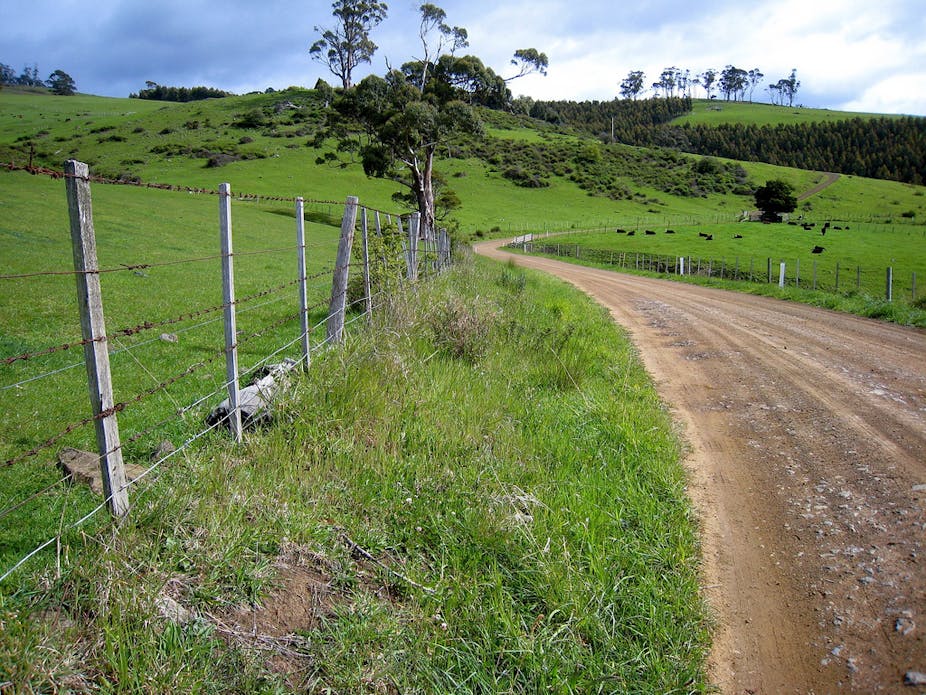
We need to rethink how we provide health services in rural areas. Alan Levine

The recent report of the Senate Inquiry into rural health services gave tantalising glimpses of how the future of rural health services should be. But its central theme is not new. The persistent and consistent message (that it’s hard to get health professionals to work in rural areas because it’s personally and professionally challenging) does little to get the policies rural communities really need to sustainably address health challenges.

But research considering what would make doctors and nurses (and now allied health professionals) work “out there” lumbers on, considering, for the most part, the carrot or the stick. It misses the fundamental point that addressing rural health care isn’t about providing incentives or bonding individuals, but about changing the system.

Town and country

Rural is not simply urban with trees and animals. And not all rural is alike – coastal, regional and extremely remote areas all have different challenges. To varying degrees, there are fewer people, they’re ageing and they’re sparsely spread. And there isn’t enough local work for specialised practitioners to retain their skills, as noted by the Senate Inquiry.

Increasingly, someone who might be regarded as a specialised practitioner in an urban area (such as a doctor who just works on arms) is dramatically different to what specialisation might be considered in a rural context, where even some allied health professions are considered specialities.

A rural diabetes patient might need dietetics, podiatry, exercise advice, prescribing and pain relief. But requiring a clutch of health professionals each with their delineated specialist role to deal with all of this individual’s needs is unrealistic.

A better approach understands that a set of health and social care competencies are needed locally for flexible practice – continuity and security as opposed to platoons of detached fly- or drive-in, fly- or drive-out specialists.

A new way

Focusing on traditional doctors and nurses is outdated and unsuitable due to modern health needs and demographics.

In a Scottish rural community study, we turned service design on its head and let local citizens decide on priorities. We acted as researchers for communities and provided data and evidence on which to base decisions.

Community members were given the current local health-care budget, and all four communities arrived at similar priorities: the ongoing presence of a locally-resident health practitioner; 24/7 access to triage to detect real emergencies; monitoring of vulnerable people to avoid crisis; local community volunteer activities for health improvement and maintenance, led by a paid, knowledgeable (health) leader.

From a choice of existing health roles, community members couldn’t find the practitioner they truly desired. They wanted parts of the skill-set of nurses, doctors and health promotion advisers. The closest they could find were physician assistants, nurse practitioners and paramedics.

Communities found designing the services they needed was the easy step. But getting their innovative models implemented was pretty much impossible. Archaic health-care organisational and financing structures and professional groups’ interests got in the way.

Rethinking old ways

Providing health care for rural communities is different to what happens in cities and trying to impose a one-size-fits-all model isn’t working. Rural health services are part of a complex web, spreading out from the individual, to the local community, to regional hospitals, to the big metropolitan tertiary hospitals.

Different places in the system need different levels and mixes of skills. Good e-health and transport links should enable connections between its parts, allowing people access to the level of specialist treatments they need.

In spite of its awesome wildernesses, Australia is a metro-centric country with a confused and confusing relationship with the countryside. Inequities will not be addressed if we continue trying to provide rural health services by enticing individual professionals to work in places they don’t want to go. Instead, we need to make it easier to implement changes that rural communities themselves know they need.

The Senate Inquiry’s recommendations are good within the current paradigm, but do little to fundamentally change our understanding of how we ensure rural communities are healthy communities.

Sign in to Favourite

Want to follow The Conversation?

Sign up to our free newsletter to get the day's top stories in your inbox each morning, with a special wrap on Saturday.

Spinner
Help us have better conversations — donate

Join the conversation

7 Comments sorted by

  1. Susan Furness

    Senior Lecturer

    This is a really interesting view regarding the provision of health care in rural areas. I particularly like the author's comparison of rural health care to a complex web. I tend to compare the ideal rural health care practitioner to a swiss army knife - plenty of different tools available for different tasks should they be needed. The challenge is "manufacturing" those tools, and knowing whether to include the mini corkscrew or the nail file in the set...asking the community for what they want sounds like a brilliant start.

    report
  2. Comment removed by moderator.

  3. Dennis Alexander

    logged in via LinkedIn

    Medical services follow population growth. It is worth remembering that not all rural or remote centres were always sparsely populated. Rural is not always or necessarily remote, even in Australia. Separating heath care and medical services policy from broader regional, rural, emote and population policy is where part of the problem persists. While not everybody wants to live in cities or even larger, more densely populated, regional metropolitan centres, many people do like to live in proximity…

    Read more
  4. Sue Ieraci

    Public hospital clinician

    "They wanted parts of the skill-set of nurses, doctors and health promotion advisers. The closest they could find were physician assistants, nurse practitioners and paramedics."

    Ironically, the reality is that the few PAs, NPs and paramedics we have are also concentrated in the cities - as are most professions. Task substitution brings no benefit if the same market forces continue to apply.

    The most effective strategies seem to be those that attract people of rural origin into training, complete most of their training in rural areas, and spend their professional lives there.

    report
  5. Dave Mittman, PA

    logged in via Twitter

    I am a PA in the US for many years. Many of my close friends have and still do provide rural care in small towns with their collaborating physicians many miles away. The PAs do all that physicians do and do it well. Those towns would never get a physician, their med school loans alone would prohibit their going to a small town and also now a days, their entering a primary care specialty. The devil is in the details, the laws must allow PAs and NPs to practice to the full extent of their training and not encumber them with silly counter-signatures or other things that would prevent them from being in their own clinics.
    Otherwise it's a win/win.
    Dave Mittman, PA, DFAAPA

    report
    1. Sue Ieraci

      Public hospital clinician

      In reply to Dave Mittman, PA

      Dave - Australia still has small numbers of NPs and very few PAs. Although touted as solutions for rural areas, NPs in particular are concentrated in the cities.

      One of the real issues for any independent practitioner is the risk of professional isolation and access to ongoing education. This has definitely been an issue for many rural GPs (less so for nurses, who tend to work in hospitals).

      You say "The PAs do all that physicians do and do it well." Are you therefore proposing that we get rid of MD training and just train everyone to PA standard? Then there would be city-country equity and no need for "silly counter-signatures."

      report
  6. wilma western

    logged in via email @bigpond.com

    My rural town is within 2hours of Melb and seems well provided with GPs and clinic nurses. However several of these work part time and getting to see the GP can require a significant wait. This situation is tolerable and apart from some delays in ambulance arrival I'd think our area is quite well served. But it was surprising to hear that quite often the only doctor on call could be someone still completing their GP training. A total contrast to this is the system in WA where many medium and tiny settlements rely on the Silver Chain nurses plus flying doctor service or perhaps a helicopter provided by a mining co. Has there been any study of the delivery of care via the Silver Chain?

    report