
In defence of invasive alien species

My cat caught a starling this week. By the time I intervened, the poor bird’s leg was broken, the kitchen floor was strewn with feathers, and I had to make one of those awful decisions. Was I to leave the bird to the satisfaction of my cat; do all I could to keep her alive; or wring her neck and put…

C9zxb549-1354158196
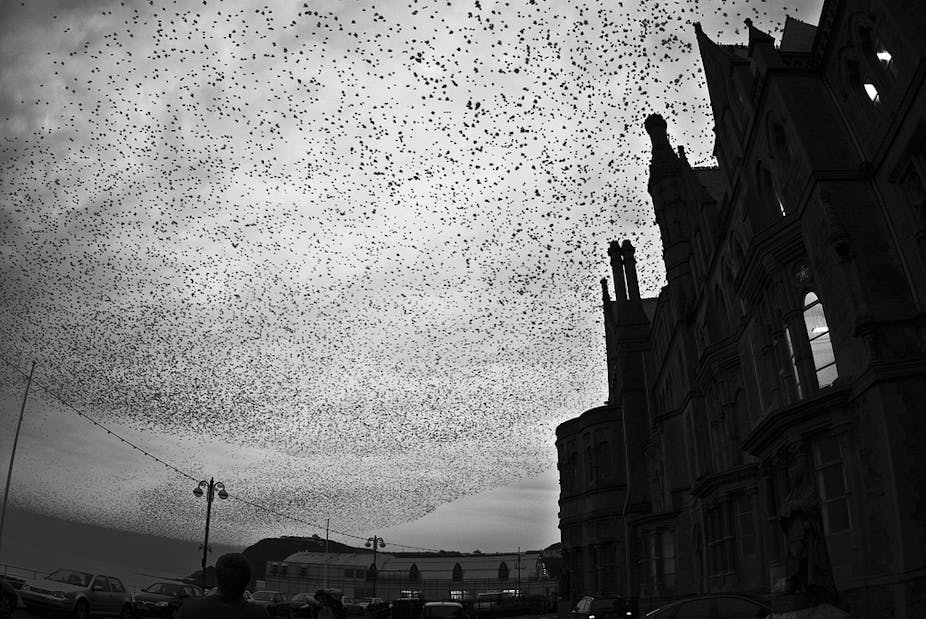
Starlings were introduced to Australia by humans, but does that matter? Simon Evans

My cat caught a starling this week. By the time I intervened, the poor bird’s leg was broken, the kitchen floor was strewn with feathers, and I had to make one of those awful decisions. Was I to leave the bird to the satisfaction of my cat; do all I could to keep her alive; or wring her neck and put her, as they say, out of her misery? I wrung her neck. The toes of her good leg clenched around my finger and she was dead within seconds.

Reading this story, many ecologists will condemn my cat-husbandry – and understandably so. What business do I have, after all, letting an obligate carnivore scamper around on my roof where who-knows-who might end up in her jaws?

For most of these ecologists, however, the evil of this particular incident will be mitigated by the fact that my cat’s victim was a starling, an exotic bird; indeed, in the hectic phrasing of the Western Australian Department of Agriculture, a member of “one of the world’s worst invasive alien species”.

Invasive status is of course not intrinsic to a species. In 2007, the “invasive” starling joined the bottlenose dolphin and the otter in an official list of declining and threatened species on Britain’s Biodiversity Action Plan.

Most ecologists understand the term “invasive” not as a heading under which to categorise a species permanently, but as a way of describing an ecological phenomenon, the process and effect of a species migrating into a new bioregion.

Invasiveness is a question of place, not species. Aidan Jones

The term “invasive species” has additional legitimacy among conservation biologists because it refers not only to a species’ impact on humans but on ecosystems and on non-human species. Some of these will become extinct or will be pressured into behavioural and perhaps genetic change as a result of the invasive species' arrival.

Nonetheless, there is still a profound anthropocentrism lodged in the idea of the invasive species. Australia’s Department of Sustainability, Environment, Water, Population and Communities defines the invasive species as one “occurring, as a result of human activities, beyond its accepted normal distribution and which threatens valued environmental, agricultural or other social resources by the damage it causes.”

The idea that a species becomes invasive because of its impact on “valued” elements of an ecology is all too obviously anthropocentric (it is humans that value the threatened “environmental, agricultural or other social resources”). Indeed, many ecologists attempt to avert the human-interested bias from their talk of species value by investing all constituents of a “pre-invasion” ecology with value.

But just as anthropocentric is the idea that a species introduced to a new environment “as a result of human activities” should belong to a significantly different category from a species introduced to a new environment as a result of non-human activities, such as continent drift, wind or water currents, or via bird droppings.

The history of life on earth is punctuated with such migrations. The reason why every continent on earth is inhabited is because organisms did not conform to their “accepted normal distribution”.

The vegetation on coral atolls gives us a good example of how species migration produces distinctive life forms. Vegetation arrives at the atoll because birds or ocean currents import seeds, not because the plants and the atoll came into existence in the same instant.

Inevitably, newly migrated species will shift an ecology in which they establish themselves. Peter Gaylard

Inevitably, newly migrated species will shift an ecology in which they establish themselves. In some cases these shifts will be insignificant, and in other cases they will entail some species’ extinction. Often, subsequent to an original migration, a migrant species will produce variant offspring. The distinct climate and ecology of the new host environment will advantage some individuals over others so that the variant might flourish and a new variety – perhaps, eventually, a new species – will arise that is peculiar to its bioregion, at least until it, in turn, migrates.

This process of ecological change is intrinsic to the production of biodiversity. Natural selection, the mechanism that allows some individuals to give rise to new varieties, and in turn new species, operates when environmental pressures produce a differential death rate. Some individuals, and varieties, are extinguished, and others prosper.

Species change and species extinction – the casualties attributed by conservation biologists to “invasive species” and that are widely supposed to threaten biodiversity – are also the agents by which biodiversity is produced.

Is there a difference between the seed deposited by the bird in its droppings and a seed introduced into a new environment via, say, human droppings? Is there a difference between a seed that catches in the fur of a migratory bat and a seed that catches in a human traveller’s sock? Clearly the seed itself is the same, regardless of the method by which it is transmitted from place to place. But I want to suggest that the agents of transmission – bird, bat, human – are also the same, or of the same category: they are all animals, they are each, equally, part of nature. (In fact, once we recognise that humans are not separate from nature, the idea of nature itself becomes redundant, or tautological.)

There is no denying that our species’ numerousness and our own migratory activities have meant that human-enabled species migration is currently far more prevalent than species migration enabled by other vectors such as birds, bats, wind, water.

There is no denying that humans are collectively exerting pressures on the world’s ecologies – indeed, on the world ecology – that are accelerating both species extinction and species adaptation beyond the rates known within geological memory.

In their multitude, humans, as Dipesh Chakrabarty has observed, currently constitute a force of nature, something equivalent to a geological force. They are not, however, outside nature.

The species that manage to prosper in part because of human agency are no less natural than the species that are made extinct because of human agency.

MotoWebMistress/Flickr

Sign in to Favourite

Want to follow The Conversation?

Sign up to our free newsletter to get the day's top stories in your inbox each morning, with a special wrap on Saturday.

Help evidence based journalism become the norm and donate

Join the conversation

35 Comments sorted by

  1. Jerry Vanclay

    Dean of Science at Southern Cross University

    ... but what you overlook is that nature is slow and uncertain, and creates wonderful 'oddities' such as Wallace's line, and Christmas Island (dominated by crabs). In contrast humans travel fast and everywhere, carrying common creatures such as rats and cockroaches, contributing to a more homogeneous world. Disregard for invasive alien species will lead to a boring world with less diversity - both ecologically and culturally (think of American fast food).

    report
    1. neral

      logged in via Twitter

      In reply to Jerry Vanclay

      Quite agree: a fox was spotted in my yard for the first time anyone remembers just yesterday--if it eats the resident possums and bandicoots (I guess it would leave the roo alone) then at the very least my little bit of land would be less diverse and lose the benefits of whatever ecological function the lost species were doing; functions the fox doesn't pick up. On the other hand, yes, an invasive species is a generally natural thing and so a good thing, but the pace of change is the nub of the challenge if we humans are the ones causing accelerated change. So in my case, denying the fox a chance to adapt/promote adaptation is probably a good option.

      report
    2. Alexis Harley

      Lecturer, Faculty of Humanities and Social Sciences at La Trobe University

      In reply to Jerry Vanclay

      Thanks for your comment, Jerry. I agree absolutely that the ecological change being brought about by human influence is quicker and more widespread - to a staggering degree - than that brought about by any other factor over recent millennia. We are in a period of mass extinction - or we're certainly heading that way. I grieve as much as any feeling person would at the plight of an individual polar bear drowning at sea because there is less polar ice. I also acknowledge that some other constituents…

      Read more
    3. Les McNamara

      Researcher

      In reply to Jerry Vanclay

      Individuals, communities and governments don't devote their time and money to pest control and biodiversity protection to 'avert human boredom'. Untrue and unkind. And a lot of public money is spent developing more humane killing techniques, and on risky and expensive projects to develop biological controls that don't involve killing.

      For what it's worth, most ecologists don't care about your cat or the starling in your yard. That's your issue. They don't think your cat or the starling is evil. Most ecologists understand speciation - and the epic timescales involved. They understand the welfare implications of their decisions. They also understand that they are favouring some species at the expense of others.

      They just don't subscribe to the belief that we should do nothing now because everything will be fine in a few hundred thousand years.

      report
  2. Les McNamara

    Researcher

    The language may be anthropocentric, but it isn't anthropocentric to value biodiversity, nor to want to manage threats to biodiversity, including 'invasive' species. Many (perhaps most) ecologists and conservation biologists have an ecocentric view. The focus of their work is maintaining ecosystem composition and ecological processes. They typically believe species and ecosystems have intrinsic value, whether or not they have any instrumental value (to people).

    report
  3. Byron Smith

    PhD candidate in Christian Ethics at University of Edinburgh

    "The reason why every continent on earth is inhabited is because organisms did not conform to their “accepted normal distribution”."

    Ah, I thought it had something to do with Pangea.)

    report
    1. Alexis Harley

      Lecturer, Faculty of Humanities and Social Sciences at La Trobe University

      In reply to Byron Smith

      I'm sure you're right that what are now separate land masses were once upon a time contiguous (or more contiguous). All the same, the probably super-continent (or continents) was huge, and would have comprised some very different environments. Unless you think lizards, say, flashed into being in each corner of that land mass, you have to accept that they migrated. Whether they did so pre- or post- the splintering of that supercontinent doesn't alter the fact that they "invaded" different ecologies.

      report
  4. Byron Smith

    PhD candidate in Christian Ethics at University of Edinburgh

    The real issue with anthropogenic ecological changes is neither that they are anthropogenic nor that they are changes. The issue is the pace and scale of change being of such magnitude as to begin to compare with previous mass extinction events in the geological record. For instance, the current rate of ocean acidification is likely unparalleled in 300 million years and previous major acidification events have suppressed biodiversity for tens of millions of years. And ocean acidification is but one…

    Read more
    1. Alexis Harley

      Lecturer, Faculty of Humanities and Social Sciences at La Trobe University

      In reply to Byron Smith

      Thank you for this, Byron. Nowhere do I want to say that mass extinction is unimportant - or in fact anything short of disastrous for the world as we know it.

      report
  5. Robert Merkel

    Lecturer in Software Engineering at Monash University

    This piece is rather unsatisfying, to be honest.

    I strongly disagree with the author, but that's not the problem. It's that this is essentially a philosophical argument over the value of "native" and "invasive" species, which relates more broadly to humanity's relationship with the rest of the natural world. This is not a new debate; in the Antipodean context it has been going on, explicitly, at least since the <A HREF="http://en.wikipedia.org/wiki/Acclimatisation_society">acclimatisation societies</A>.

    But this article is written as if the topic has never been written about before.

    As academics, one of our collective strengths is that we are supposed to place the topic under consideration firmly in the context of past work in the area; it's what we expect our students to do. So why not do so here?

    report
    1. Alexis Harley

      Lecturer, Faculty of Humanities and Social Sciences at La Trobe University

      In reply to Robert Merkel

      Thanks, Robert. Yes, I'm standing on the shoulders of some very big giants here. The most obvious one is Charles Darwin. <i>The Origin of Species</i> is one long explanation of how environmental pressures, and indeed extinctions, foster speciation. There's an interesting tension between Darwin's representation of life as constantly evolving and the systems ecology's understanding of nature as tending towards stability. As I'm sure you know, I'm not the first person to observe that tension (see e…

      Read more
  6. Greg Miles

    Conservation lobbyist

    At last, an environmental good news story. What a relief. To think that I was preparing to be appalled by what foxes are going to do to the wildlife of Tasmania. But now I don't have to worry.

    report
  7. Fred Pribac

    logged in via email @internode.on.net

    Just as your cat is an obligate carnivore "we" can be thought of as "obligate anthropocenes".

    The miraculous thing about humanity is that we have evolved a capacity not only to conceptualize the impacts of what we do now on our future selves but also an expanded sense of self to include other things (including distant descenedants, other species, things like a vista or a mountain or even abstract idea like responsibility).

    With our burgeoning comes transfomation of our environment. When those transformations are irreverisble we can experience visceral emotions.

    No amount of recognition that we are part of the natural process can rid me of that sense of moral culpability and sense of profound loss when I hear that self-serving avoidable actions or simple neglect have caused the extinction of a species or the extirpation of an ecosystem!

    report
  8. Matthew John Bailey

    Ecologist

    Same old boring and very obvious argument from the school of Humanities. How many times has this old chestnut been rolled out like its a brilliant flash of logic. Yes humans are part of nature, I think most ecologists understand that quite well. Clearly humans as vectors today are not what they were a couple of centuries ago or thousand of years ago. The author seems to be arguing for us to accept 'invasive species' and that this will lead to 'diversity' in time through natural selection. I think…

    Read more
  9. John Knowles Stretch

    Arid Rangeland resident

    Cold comfort Alexis, chiefly because you overlook the contribution stability makes to the order prevailing in relatively-undisturbed (natural) environment.

    Perhaps to make the point, I should put my own prejudice aside and compose eulogy to Kalgoorlie's big hole and to the teeming community that that this undoubtably supports today ..and will continue to support, into a distant future:(

    Or, with Western Australia continuing to serve as my 'frame' for response; shift my attention west by a few…

    Read more
  10. Kerryn Herman

    Wildlife Ecologist

    This really over simplifies the issues faced in Australia. I am not prepared to comment on other places in the world as their history of human habitation and their connectivity to other land masses is very different to ours and it is the Australian context in which I have knowledge and experience.

    By the arguments above, we are condemning a large proportion of native flora and fauna to extinction. The issue is time and scale of "invasion" of these species and whether they would have reached Australia…

    Read more
  11. Bernie Masters

    environmental consultant at FIA Technology Pty Ltd, B K Masters and Associates

    Sorry but I don't see the point of this article. At worst, it's an environmentally-themed justification for the worst of our human impacts on the planet (comparable in anthropogenic terms to Pol Pot, Stalin, Adolf Hitler, etc). At best, it............; to be honest, I really don't know how this article broadens our understanding of humanity's place in the natural world or our understanding of the interactions and inter-relatedness between people and nature, biodiversity, evolution or anything else natural.

    report
  12. Mark Carter

    logged in via Facebook

    This is exactly the sort of pseudo-intellectual animal rights inspired nonsense which will be the undoing of the fragile ancient ecology of our country. It's the claim of fake objectivity which really winds me up- as if the only value of the victims of feral species is created in our minds. As though the hollowing out of desert ecologies resulting from cat-induced extinctions is just in our heads: the rapid loss of soil fertility, the plant species left with no dispersal vectors, the native predators…

    Read more
  13. Reuben Wells

    logged in via email @gmail.com

    So:
    Humans are part of nature, not separate from it
    Therefore populations that move via human hosts vs non-human means are still moving "naturally"
    Therefore we shouldn't classify them as "invasive", since they are only part of the time-honoured process of migration of novel species in to new environments, albeit via a new mode of transport.

    All good, but you appear to conclude that inadvertent changes brought on the world by human activity are okay since they are part of our role in the environment…

    Read more
    1. Alexis Harley

      Lecturer, Faculty of Humanities and Social Sciences at La Trobe University

      In reply to Reuben Wells

      Thanks, Reuben. This is a good summary of my argument, but although I do argue that anthropogenic change is "natural", I don't claim (I certainly don't mean to claim) that because it is natural it is good, okay, or should just be allowed to run its course. What I do say is that when pressures have been exerted on environments in the past, they have produced differentiations among populations, which have, in the long range, fostered biological diversity across ecosystems. I'm reluctant to say that…

      Read more
    2. Fred Pribac

      logged in via email @internode.on.net

      In reply to Reuben Wells

      To Alexis,

      your article has encouraged a hot little discussion around some aspects of environmental philosophy that people often take entrenched positions in, without necessarily any more than a gut feel of indignation in support.

      Your reference to percieved conflicts between welfare of invasive species individuals with endemic species individuals goes to the nub of the ethical points that are often glossed over in our urgency to 'fix" another environmental problem. The misery caused by calici…

      Read more
    3. Alexis Harley

      Lecturer, Faculty of Humanities and Social Sciences at La Trobe University

      In reply to Reuben Wells

      To Fred: thanks for reiterating the points about 1080 and calici virus. I agree that we're not very good at making utiliarian judgements, and as a matter of course disproportionately weight our own interests and the interests of those we most care about. I still think it's worth trying to get a sense of how we can minimise suffering, however imperfect our calculations will be, rather than just throwing that effort out and only considering the welfare of the entities we happen to like. Utilitarians…

      Read more
  14. Timothy Train

    logged in via Facebook

    No one is seriously arguing that extinction of species is a good thing. The preservation of species is a value almost universally agreed on.

    However. The view that invasive species or habitat change or whatever can be completely stopped by legislative change and the concerted action of a few ecological groups seems naive at best.

    And the accepted anthropocentric view, that humans and nature are separate, may have influenced our approach to species conservation in ways we are not wholly aware…

    Read more
    1. Matthew John Bailey

      Ecologist

      In reply to Timothy Train

      Timothy completely stopping 'invasive species or habitat change' or eradication is no longer the single focus for a range of players in pest species management though it is achievable in some circumstances. The objective is mostly to mitigate damage.

      There are examples from other cultures (Aboriginal Australia and in PNG) where the 'setting aside ' of natural areas so that humans either rarely, never at all or with controls may enter certain large areas but typically are not allowed to access resources. This is achieved through taboos or strong 'cultural law' if you will. These protected areas serve as biodiversity reservoirs or increase sites. Not going to places or being physically separated from them doesn't necessarily mean disconnection. Our National reserve system plays a similar role. Development does arguab;y occurr in State Forests: many are managed as plantations.

      report
  15. Timothy Train

    logged in via Facebook

    I would also agree (hello Reuben!) that human brain activity is a function of nature as well - which is why I would also like to extend this argument to examples such as, say, genetically modified foods, or just selectively-bred species. Or indeed cities or towns or architecture or other examples produced through human creativity. These are, indeed, positive examples of 'natural change', taking the definition of 'nature' outlined in this article.

    report
  16. Clive A Marks

    logged in via email @attglobal.net

    Alexis

    A good contribution. I hope you have your flak jacket and helmet on today.

    When things are thought to be so blindingly obvious that they are beyond question, we should start to worry. Invasive species are a good demonstration of this. Conservation ecology has yet to deal adequately with the 'ethics' of what many see as self apparent.

    Those who refer to the 'intrinsic value' of native species (or anything else for that matter) have perhaps yet to appreciate that ethics are always…

    Read more
    1. Alexis Harley

      Lecturer, Faculty of Humanities and Social Sciences at La Trobe University

      In reply to Clive A Marks

      Great article (but of course I'd say that). And I'm grateful for your nuanced account of the ethics. My position is this: a species doesn't have intrinsic value (which doesn't mean we don't value it). Its value resides in the benefits it offers to other constituents of an ecosystem. On the other hand, individual animals from within a species do have intrinsic value, in that they value their own life and so have a value unto themselves. This latter value goes as much for members of an indigenous species as an introduced one.

      report
  17. Chris Owens

    Professional

    Just as well our biodiversity is not dependent on those in the Faculty of Humanities. Extinction rates would soar whilst they postulate over the anthropocentrism. Clearly deliberate introduction is not a natural process!

    As others have pointed out, our forebears have, with their naïve acclimatisation societies tried to introduce all manner of “productive and appealing” species from around the globe, much to the detriment of our native wildlife. Since this period our destructive land use and domestic…

    Read more
    1. John Knowles Stretch

      Arid Rangeland resident

      In reply to Chris Owens

      The Humanities and moral responsibility Chris Owens?
      Perhaps an enhanced-appreciation for how species-loss is commonly symptomatic of a degradation ..that impoverishes the potential for landscape to sustain life can more seriously engage their appreciation.
      That, and the appreciation that the diversity that is Humanity ..is expressed particularly through cultural difference and through differences in perception, that are culturally-grounded. Perhaps here; our Mainstream has still to learn the…

      Read more
  18. Matthew John Bailey

    Ecologist

    The 'old hat' with this story is that it doesn't offer anything new or a positive way forward to deal with the ethics. I know myself and others question conservation interventions from multiple viewpoints on almost a daily basis. Clive your article and Alexis's has been largely done before, while its good to stimulate conversation and debate it might be time to articulate some ways forward as well. After all you both seem to agree that 'invasive species' can cause serious ecological problems. Also…

    Read more
    1. Alexis Harley

      Lecturer, Faculty of Humanities and Social Sciences at La Trobe University

      In reply to Matthew John Bailey

      Thank you, Matthew - many interesting points here. You rightly note that I don't offer any answers for how to arrest species extinction and the destabilisation of ecosystems that results, and you also note that "do nothing", when the issues are so pressing, is a course of the most culpable irresponsibility.

      So, an attempt at the beginning of an answer: it is not possible to return this country's ecologies to the way they were before White invasion. There is water where there was not water, desert…

      Read more
    2. Clive A Marks

      logged in via email @attglobal.net

      In reply to Matthew John Bailey

      Thanks for your reply Matthew,

      There are a few very interesting statements in your contribution:

      "Death is 'natural' after all and a fox has no ethical dilemma when it comes to killing its prey nor does a Quoll in my chookhouse."

      and

      "It is possible to kill an animal respectfully which is also ethical and humane. It is possible to manage 'invasive species' with respect."

      Predators have no moral agency and it has been the propensity of humans (who do have moral agency) to believe otherwise…

      Read more
  19. Comment removed by moderator.

  20. Russell Kilbey

    logged in via Facebook

    Why stop at fauna and flora Ms Harley? Surely this erroneous argument could be applied to humans as well? Removing all funding for Indigenous program's is a good idea? Or what about culturally? Deleting Screen Australia and other Arts bodies that help us complete against Invasive cultures?
    This argument is not just old but dangerous as it can used by the ignorant to do nothing.
    There is a paucity of funding for the control of feral species as is.
    Here's my value system.
    Every animal species that becomes extinct belittles the human soul.
    Every Australian animal or plant that disappears erodes our identity as a unique part of the world.
    It's anthropometric and unscientific I know .
    You probably need to look back at our recent history.
    The rabbit plagues of the 20s nearly pushed our pastoral industries toward extinction too.
    As John Warmsley said
    I've got nothing against cats I just can't eat a whole one.

    report
  21. Mike Stevens

    Conservationist (land manager) - private comments, own views

    Dear Alexis Harley, please visit Mt Rothwell Sancturary in Vic, or Mulligans Flat in ACT, or Scotia Sanctuary in NSW, or Arid Recovery in SA...you will see what Australia looked like and the ecosystem services our critters were providing before we brought the ferals in. And the sad thing is that you can only see it functioning in fenced areas. This article does not add value to the urgency and critical nature of the current real issue we face. A very, very frustrating read.

    report