
Media reform could save victims of misinformation … like my grandfather

It is a matter of public record in Australia that my grandfather was a communist spy. That he wasn’t really one doesn’t always matter. Manning Clark, famous Australian historian and my father’s father, is recorded in several major Australian newspapers as having been a secret agent. Manning Clark’s…

K9vbgcmk-1363670331
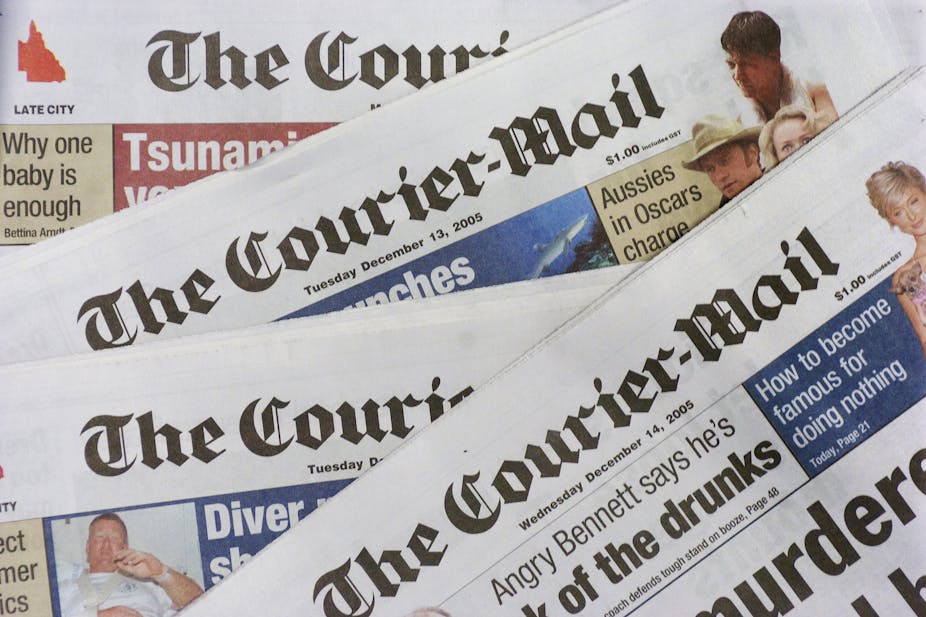
The Courier Mail never retracted a story alleging Manning Clark was a spy, even though the Press Council ruled against them. AAP/Dave Hunt

It is a matter of public record in Australia that my grandfather was a communist spy.

That he wasn’t really one doesn’t always matter. Manning Clark, famous Australian historian and my father’s father, is recorded in several major Australian newspapers as having been a secret agent.

Manning Clark’s family had limited recourse when untruths were published about him.

It was in 1996 that Brisbane’s Courier Mail published an eight-page liftout alleging that Clark, who died in 1991, had been a secret agent working for the Union of Soviet Socialist Republics, and that he had secretly received an Order of Lenin for this work.

The Courier Mail’s report was syndicated across several News Limited papers, and of course went on to receive widespread coverage in Australian and international outlets.

Was it true? The Press Council found, in its Adjudication No. 890:

The newspaper had too little evidence to assert that Prof Clark was awarded the Order of Lenin – rather there is much evidence to the contrary.

That being so, the Press Council finds that The Courier-Mail was not justified in publishing its key assertion and the conclusions which so strongly flowed from it. The newspaper should have taken further steps to check the accuracy of its reports.

While the Courier-Mail devoted much space to people challenging its assertions, the Press Council believes it should have retracted the allegations about which Prof Clark’s supporters complained. That adjudication effectively discredited The Courier Mail’s reportage as not meeting the professional standards expected of journalism.

Of course, The Courier Mail nor any of the parties making the allegations subsequently retracted them, and the Press Council had no power to compel that reparatory action or any other. These wilfully false accusations remain in circulation — not least because News Ltd writers continue to re-air them.

If such a finding were made against an academic, pursuant to a formal grievance heard by our peers, we would expect to face sanctions. The same is true for counsellors, lawyers, sportspeople, and many other professionals in this country.

That the same is not true for journalism in Australia has been manifestly evident in the career trajectories of the journalists involved in making and then sustaining the allegation. In particular, the editor then in charge of The Courier Mail, Chris Mitchell, has gone on to become editor-in-chief at The Australian.

This is why I believe there is a strong logic for endorsing the federal government’s proposed Press Standards Model, which uses media exemptions from privacy laws as leverage for enforceable self-regulation.

To some extent, ad hominem attack is a normal part of the media game. But that does not detract from its abusiveness.

There is no doubt that the profession of journalism has good reasons to fear the consequences of government or other bodies interfering in its ethical self-regulation. But the community at large has equally good reasons to fear the consequences of journalism without ethical checks and balances.

Legally enforceable self-regulation by the profession is the most appropriate response to these twin dangers.

Australian journalists, especially those in the written and printed media, have to date been answerable to few ethical limitations other than the directions of their employers and the law.

There are countries where the profession of journalism is subject to an enforceable ethical framework, though. And there is no clear case that Australia’s democracy is stronger than such countries, or that Australian journalists are less fearful of undue influence.

The legal framework in Iceland, for example, affords journalists and their sources greater protections against proprietors, government, and other stakeholders. But the quid pro quo is enforceable self-regulation. Iceland’s journalists are simply more answerable to their peers for the way they meet standards of professional conduct.

It is worth briefly considering an Australian example from 2011: the case of Eatock v Bolt. This complaint was heard in the Federal Court, which found Andrew Bolt had breached Australia’s Racial Discrimination Act and ordered his publisher to issue retractions and apologies.

In that case, the complainants did not press the case for damages against Bolt; instead they settled on a penalty that would be entirely within the scope of a properly empowered Press Council or equivalent authority. Indeed, it seems that the complainants pursued the case through the court system precisely because that was the only mechanism by which they could enforce redress upon an Australian newspaper.

At what point in Australian public life is a powerful publisher compelled to account for its mistreatment of individuals or groups? Or to withdraw its support from journalists who embark on personal campaigns of victimisation? For those who cannot litigate, the answer to date has been never.

I have no particular wish to hurt Chris Mitchell or his co-conspirators, as hurtful and unfair as their actions have been to my family.

But simply ensuring that the rulings on professional ethics of the Australian Press Council (or some equivalent peer authority) had an enforceable standing would act as a brake on such abuses of power.

Communications minister Stephen Conroy’s policy offers direct succour to citizens and groups who engage with civil society – even if you argue that its details need improvement – because this kind of self-regulation means complaints about victimisation and vilification by journalists will become enforceable.

Join the conversation

30 Comments sorted by

  1. Steve Phillips

    Nurse Practitioner

    "even if you argue that its details need improvement"
    And there lies the biggest problem with Stephen Conroy's legislation. He has made it quite clear there is to be no debate. Full stop. Take it or leave it. The backbone upon which our democracy relies is reasoned and free debate.
    This bill flaunts that. First by attempting to put one person in charge of media regulation and can you imagine what will happen if Tony Abbott is the one to appoint an overseer. Secondly by muzzleing and limiting debate over its' details.
    "within the scope of a properly empowered Press Council or equivalent authority." They will be fateful words if the administration of this plan is choosen by the Govt of the day.
    The criticism is not all from the right although I can bet a few are rubbing their hands together with barely suppressed glee at the prospect of a media "anti-media ballistic missile" of this magnitude. The disent is also from Labor ranks too. Perhaps they see the wring on the wall too.

    report
    1. Gerard Dean

      Managing Director

      In reply to Steve Phillips

      The backbone of our democracy is debate, be it reasoned or un-reasoned.

      A government appointee should not have the power to decide what is reasoned or unreasoned, fair or unfair, accurate or inaccurate or offensive or inoffensive.

      We, the readers should have the freedom to decide what we want to read.

      Gerard Dean

      report
    2. David Rennie

      IT Consultant

      In reply to Gerard Dean

      Gerard,
      I challenged anyone who objected to this legislation to identify anything in it that limits freedom of speech.
      Perhaps you would be able to enlighten us with a reference to the relevant clauses in the bill(s).

      report
    3. Kim Darcy

      Analyst

      In reply to David Rennie

      If it does nothing to limit free speech, then why is it even being presented to the parliament, and why are we talking about it?

      report
    4. David Rennie

      IT Consultant

      In reply to Kim Darcy

      1. The legislation limits the consolidation of the media into a few hands, which would reduce free speech .
      2. The legislation prevents the large media companies bullying the regulatory council by withdrawing funds, again promoting free speech by allowing the Media Council to apply its own standards to the bully boys.
      That's why the legislation is being introduced and that is why the bully boys are opposing it.

      Again quote the legislation to show it is restricting free speech!!. Don't waffle political platitudes.

      report
    5. Alice Kelly

      sole parent

      In reply to Gerard Dean

      I would prefer to read reasoned fact Gerard. You may prefer to read The Australian, or the Daily Telegraph, because they print 50/50 climate change is real/not real. But that is not "balance", nor reasonable by any provable scientific logic. It is opinion. It is minority conservative opinion. I would like to have the freedom to read the truth in this country, with little interference from Ruperts megaphone maccas partisan swill.

      report
    6. Greg Boyles

      Lanscaper and former medical scientist

      In reply to Gerard Dean

      That is part of the problem. The media currently profits from encouraging childish, irrational, unscientific and pointless debate around subjects the readers decide they wish to debate.

      This inevitably leads to a race to the bottom.

      Any media authority should have some power to direct debate in more 'intelligent' directions or even terminate debates should they degenerate into pseudoscience and name calling. Much as moderators currently do on reputable internet forums like The Conversation!

      If that is an infringement on the free speech rights of morons then our society will be intellectually richer for it.

      report
  2. Felix MacNeill

    Environmental Manager

    Thanks Tom - nice to have some calm, sensible, evidence-based discussion to hose down the hysteria of New Limited.

    report
  3. James Jenkin

    EFL Teacher Trainer

    Interesting article - but it's an anecdote.

    There are also plenty of anecdotes of injustices committed by the press in countries with a Government-appointed media regulator.

    report
    1. Michael Shand

      Michael Shand is a Friend of The Conversation.

      Software Tester

      In reply to James Jenkin

      "There are also plenty of anecdotes of injustices committed by the press in countries with a Government-appointed media regulator" - so because it will never be perfect dont even try

      you know who never acheived anything? those that didnt even try

      This doesnt hold for any other topic, take slavery, they legislated against slavery in the US but there is still slavery happening in certain parts of the US and the world...it doesnt then follow that out lawing slavery is a waste of time

      report
  4. Anthony Ervin

    logged in via Facebook

    There is a lot of hype from the media that this legislation is draconian (eg Conroy dressed like Stalin, Kim Jun ... etc). But I cant see how it is going to stop them writing their stories and commenting on issues (albiet in my opinion more often biased towards the Conservative view). If this makes media more accountable for their facts and articles then I'm for it as long as there are guarantees that those administering (and developing) the regulations are Independent and unbiased.

    report
    1. James Jenkin

      EFL Teacher Trainer

      In reply to Anthony Ervin

      Hi Anthony, you're not wrong about the hype. And the Australian today - after hyping the idea the legislation wouldn't get through - suddenly avoids discussing this altogether now it's less certain how the Independents will vote.

      However, why does this bias need to be 'stopped'? We can see through the News agenda, so why can't other people?

      Maybe we should rely less on Government sanitising what we read, and more on our own critical literacy skills. If schools aren't equipping us to do that, it's a problem that needs fixing.

      report
    2. Brent Smith

      logged in via email @live.com.au

      In reply to James Jenkin

      Hi James, personally I think that being held to account by an external body something which will ultimately benefit the profession. Then the issue becomes "who watches the watchers". Not at all comfortable with the speed at which the legislation is being pushed through as it gives little time for people to see through the shrill shrieking from both sides. Disagree with you on with regard as to people seeing through media bias though. It takes time, interest and effort to understand any issue. People in general don't take the time to look behind the headlines in many cases.

      While your point on literacy skills is something that I agree with wholeheartedly I just don't see it making an effect on its own. Besides it would be another 3-8 years before educational changes took any kind of effect.

      report
    3. Mike Swinbourne

      logged in via Facebook

      In reply to James Jenkin

      James

      The reason this bias needs to be 'stopped' (or regulated) is that most of the people who read these newspapers can't see through it - despite your assertion that that can. I mean - there are thousands of Australians who deny the science of climate change for the sole reason that they are told as much by a biased media.

      There is a huge difference between a 'free press' which is free to report on anything, and a 'biased' press which decides what facts they wish to report or to simply print falsehoods, in order to further the ideological agenda of their proprietor.

      Is there really any difference between a media that is forced to report lies and spin to suit the agenda of a government, and a media that is forced to report lies and spin to suit the agenda of a corporation? I would suggest that both are undesirable, and both cannot make any legitimate claim to be 'free'.

      report
    4. Gerard Dean

      Managing Director

      In reply to Mike Swinbourne

      Mr Swinbourne,

      Thanks for finally saying it. You like the proposed media laws because, and I quote, ' ... that most of the people who read these newspapers can't see through it.."

      Of course you can see through the bias, but poor stupid people like myself cannot. And thus, there should be a government appointed watchdog to stop the media saying things that sway my simple mind.

      All media is biased, News Corp is unashamedly conservative,Fairfax is left leaning whereas the ABC and SBS are unashamedly biased to the left. The Conversation is puppet of the left leaning academic world but I, as a conservative, like reading and commenting on it's articles.

      Gerard Dean

      report
    5. David Rennie

      IT Consultant

      In reply to Gerard Dean

      The ABC is firmly centrist with a slight lean to the left.The fact that is such a good source of news leaves the rest of the media to battle for the looney fringes , which the Australian and the Telegraph do remarkably well

      report
    6. Kim Darcy

      Analyst

      In reply to Mike Swinbourne

      "There is a huge difference between a 'free press' which is free to report on anything, and a 'biased' press which decides what facts they wish to report or to simply print falsehoods, in order to further the ideological agenda of their proprietor."
      There is not a scrap of difference. Both your 'free press' and 'biased press' are free to report on anything they wish. Both are free to decide what facts they wish to report. Both are free to report falsehoods, but also pay for any damage caused. Both…

      Read more
    7. Kim Darcy

      Analyst

      In reply to Mike Swinbourne

      "Is there really any difference between a media that is forced to report lies and spin to suit the agenda of a government, and a media that is forced to report lies and spin to suit the agenda of a corporation?"
      Er yes. About 2,895,675 differences in fact. But let's focus on one or two.
      1. A government has access to the security forces, and State instruments of power, including handcuffs and huge guns and bombs.
      2. The government has an endless supply of money.
      3. How can "a/the (not sure which…

      Read more
    8. David Rennie

      IT Consultant

      In reply to Kim Darcy

      There is a vast difference between a monopoly, an oligopoly and a free market. Our press currently resembles an oligoply, I have no problems with the government preventing it becoming a monopoly.

      This legislation makes it easier for the press to be brought to be account for there falsehoods. Without financial independence from the offenders the press council was unable to achieve this in the past.

      The PIMA as described in the legislation has NO power to stop bias. They have no power to interfere in the processes of determining whether undue bias occurred. READ the legislation an stop talking rubbish.

      report
    9. Mike Swinbourne

      logged in via Facebook

      In reply to Gerard Dean

      Gerard - ".....but poor stupid people like myself cannot. And thus, there should be a government appointed watchdog to stop the media saying things that sway my simple mind...."

      Your words, not mine, but for once I agree with you.

      Kim - your point about bias completely misses the point. It is not bias which is the problem, it is the media deliberately misinforming the public. That is and always will be my concern. London may have multiple news sources, but we do not. And that is what this legislation is all about - ensuring diversity in the media. It is not nor has it ever been about censorship or the removal of bias. Perhaps if you actually read the legislation instead of relying on the lies which are being told by some in the press, you would be better informed and able to make a rational judgement about this issue.

      But then - isn't that what we want from a free media - to be properly informed? I know it is what I want.

      report
  5. David Rennie

    IT Consultant

    Having read all the acts under debate I am unable to find anything that allows the government, or the proposed PIMA to restrict freedom of speech other than by:
    1. Funding the media council so that it can not be bullied by large media organisationsand
    2. Restricting the consolidation of media and thus preventing the elimination of opposing voices by the financially affluent.

    Perhaps one of the critics of the legislation could enlighten me as to how this legislation reduces freedom of speech.

    report
    1. Felix MacNeill

      Environmental Manager

      In reply to David Rennie

      Yeah - scary, isn't it? I bet old Joe Stalin is turning in his grave wishing he'd thought of something so fiendish and potent.

      If ever there was evidence that the media could use a little re-balancing and being held to account against basic standards then their response to Conroy's ultra-light regulation was it!

      report
    2. David Rennie

      IT Consultant

      In reply to Felix MacNeill

      Those who abuse their power, can not expect to avoid the consequences. Sow the wind and reap the whirlwind seems appropriate here. The Murdoch press has been blatantly dishonest in their reporting since Labor took office. What response do they expect!.

      report
  6. alexander j watt

    logged in via Twitter

    Media create a story about unrest at the top, caused by bad polling, caused by disgust at the unrest, caused by bad polling, caused by unrest at the top etc etc. leads to toppling of head of govt = best sales of newspapers all year!!!

    report
  7. Kim Darcy

    Analyst

    Tom, having no dog in any fight between your grandfather, the Bolsheviks, and the Murdochs, I'm not quite sure how you thinks would have been better has this legislation existed in 1996? Having only glanced over the issue, it seems that the Courier Mail gave a wide variety of voices and evidence spaces to contribute to a debate with a very high level of public interest.
    One mistake I think you - and many others here - might be making is thinking of journalists as 'professionals', like doctors, solicitors, accountants, quantity surveyors, auditors, and so on. They simply are not. And nor are they writing for academic journals, each of which have their own standards of probity. But if you have been keeping up on the treatment of our Australian histories - dead and still alive - your grandfather was treated with no less respect than an academic historian would be treated in a scholarly journal.
    So, I'm not really sure how legislation would have helped here.

    report
  8. Gerard Dean

    Managing Director

    Manning Clark may have been a victim of misinformation, however I understand that he too may have disseminated mis-information about his travels in Germany prior to WWII.

    Evidently he claimed to have witnessed Krystal Nacht in Germany when the Jewish shop windows were smashed by the Nazi's. The only problem was that his passport stamps indicated he was nowhere near Germany at the time.

    Don't get me wrong, Manning Clark was a gigantic figure in mid 20th Century Australian history, however, like us all, he was human and got things wrong.

    Like the media on all sides, we all get things wrong, but that shouldn't stop us from putting our ideas out there.

    The idea that a government appointed watchdog can make sure the media is 'factual' or 'fair' or 'accurate' or will be able to right all 'wrongs' is ludicrous.

    Gerard Dean

    report
  9. Tom Clark

    Senior Lecturer in Communication at Victoria University

    Thanks to all respondents for your thoughts. Stephen Phillips, I find your comments very reasonable; it strikes me that a common ground between your views and mine might be the line Tony Windsor is running today.

    James, I agree this article includes a large measure of anecdote. On the other hand, the comparisons to other countries with systems of enforceable self-regulation (especially Iceland) are not anecdote. They show such a system can be consistent with substantially higher levels of press…

    Read more
  10. Jacques de Vos Malan

    author

    Really only those people who have not yet been subjected to unfair and even defamatory treatment by the Australian media could object to current attempts to develop something more meaningful than the toothless Australian Press Council.

    How many readers are aware that once you have made a complaint to the Press Council, you are required to give up any further recourse to legal action to be allowed to read their response? That's how far these loud defenders of "freedom of speech" are prepared to go. Where's the Stalinism now?

    report
  11. wilma western

    logged in via email @bigpond.com

    Good article. A pertinent recent example of the sort of journalism that threw away basic journalistic ethics is the Herald-Sun's attack on Simon Overland,then Chief Commissioner of Police. Reports using anonymous sources resulted in Overland's resignation.

    An Office of Police Integrity report revealed the involvement of political advisor Tristan Weston, MP Bill Tilley and the Police Association .Their aim was to facilitate the appointment of their preferred Chief Commissioner. We all know the…

    Read more