
Mining young minds: the challenges of private interests and education

The recent partnership announced between Nucoal Mining and Narara Valley High School in NSW has drawn some divided reactions. The mining company says the aim of the new venture will be to improve the maths skills of students, support the professional development of maths teachers, and better prepare…

X2nv9jsd-1360712458
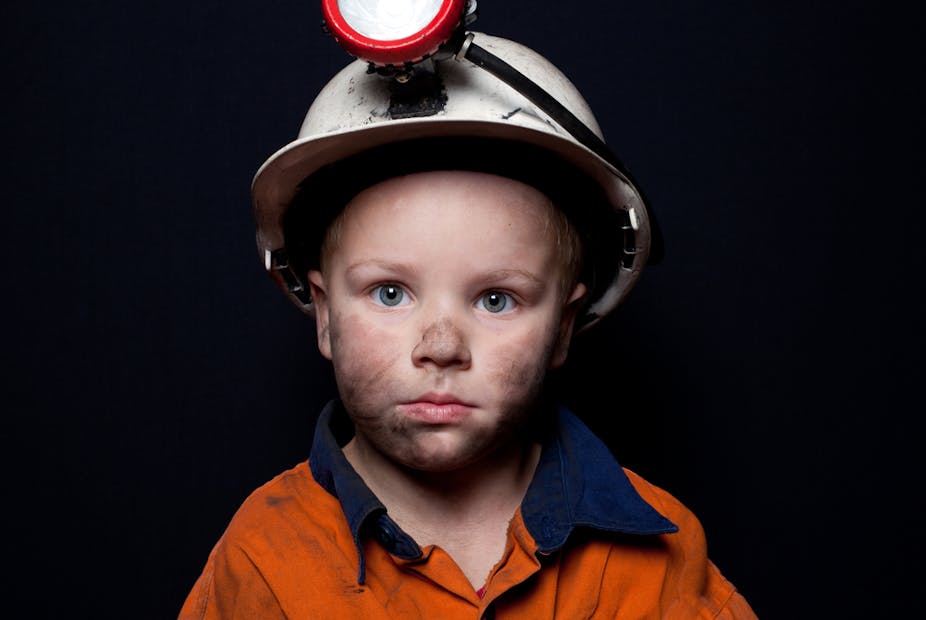
Allowing mining companies to help educate children is not without benefits, but it is problematic. Mining image from www.shutterstock.com

The recent partnership announced between Nucoal Mining and Narara Valley High School in NSW has drawn some divided reactions.

The mining company says the aim of the new venture will be to improve the maths skills of students, support the professional development of maths teachers, and better prepare students to take up careers in mining. And the school gets more money and resources at a time when school funding is tight.

But the teachers’ union is concerned about the company’s influence on the curriculum (think climate change, for example) and on the potential narrowing of students’ post-school ambitions.

Journalists note the company’s connections elsewhere to the Eddie Obeid ICAC inquiry currently underway.

But along with these concerns, the mining company’s move also points to just how much the education system has changed.

Slow change leaves a big mark

There used to be a clear dividing line between state schools and private and Catholic schools. Private and Catholic schools could decide themselves what they taught, who they taught and how they funded their operations. State schools were funded out of the public purse, set up to teach all comers, and with a responsibility to provide a quality general education.

But differences on both sides have been chipped away. Non-state schools are funded generously out of public funds and their data captured on the My School website, and state schools have been encouraged to work more with industry – to seek new sources of funds.

While these changes to funding and curriculum have been underway for some time, is it OK?

First, we have to consider how far companies should be involved with public schools and at what point they step over the line and use them as a marketing mechanism. Does it matter, for example, what they sell?

Nucoal are promising some direct investment (“tens of thousands of dollars”, not, incidentally, a huge amount given the overall cost of schools or the profits of the mining industry) for the price of a little curriculum tweaking and naming rights.

In the past, Coles used schools to drive spending in their supermarkets by donating a tiny fraction of the profits to computers and sports equipment for schools.

Driving past many primary schools, you’ll see the details about the school dwarfed by the real estate advertising that sponsors the sign.

Today these developments tend to pass without notice. Objections arise only if there is a specific concern about sponsors' products – such as the campaigns against McDonald’s at the Melbourne Royal Children’s Hospital (unsuccessful) and campaigns to rid school canteens of commercial soft drinks (often successful).

Curriculum concerns

Curriculum content is probably the most contested area. In academic subjects, central curriculum policies set up frameworks of what all children are expected to learn in common, but with scope for local variation to study what is important to that community.

One of the criticisms by teachers of Australian Curriculum, Assessment and Reporting Authority – ACARA – is that it is reducing this scope for local emphasis in subjects like history.

So including more attention to mining in a community where mining is important is not in itself a problem. But teachers have a legitimate concern if the new commercial sponsorship will reduce their ability to convey scientific knowledge, or to have students critically analyse debates and arguments.

And to what extent should schools be preparing students specifically for particular local industries? Today policies talk of job changes over a lifetime, lifelong learning, globalization, and the need to raise participation in tertiary education.

This suggests a narrow orientation to entry-level training for their first job may not be in students’ interests. But careers teachers in poorer areas also know how the competition for tertiary entry is stacked against their students – and for many getting into a first job and having good connections with local employers matters.

Show us the money

In both the UK and USA there has been a move to encourage companies and philanthropists to sponsor and manage schools (“Academies” in the UK; “Charter Schools” in the USA) with the philosophy they will do this better than local government authorities.

But research suggests some worrying quid pro quos. In the UK, Stephen Ball found companies with construction interests were sponsoring academies and gaining more in funding to build the schools than they had invested to win the contract.

In the USA, a new book by academics Mike Fabricant and Michelle Fine traces a direct relationship between the encouragement of this new non-public investment in public schools and reduction of the total spending per school and student that results from it.

It is understandable, given the lack of action following the Gonski Review, that schools are seeking new sources of funding. But we need to be careful about a downward spiral of responsibility for resourcing schooling, and about whose interests are being served in new funding arrangements.

Sign in to Favourite

Want to follow The Conversation?

Sign up to our free newsletter to get the day's top stories in your inbox each morning, with a special wrap on Saturday.

Spinner
Help us have better conversations — donate

Join the conversation

75 Comments sorted by

  1. Jim KABLE

    teacher

    Simply devious and industry self-serving! Take back from private schools the funding from government and return it to its rightful place in public education! That will solve the problem. And in the meantime check the educational backgrounds of the NUCOAL (and others likewise subverting public education) executives involved in this scandalous "operation". Are any of them from Narara High? Or with their own children at Narara High? Highly unlikely!

    report
    1. Rosie Hayes

      Retired

      In reply to Jim KABLE

      Jim Kable: I agree with your comments. I could never understand why most taxpayers supported their taxes going directly to the wealthiest Private Schools when their own kids could never have attended those schools. Particularly when it is Public Schools who take the kids who need special attention, e.g. kids who hardly speak English and special needs kids. As for private enterprise in schools; I can only see this step limiting kids' outlooks for a career. The mining company's interest is only in their further profits - not in the kids.

      report
    2. Michael Shand

      Michael Shand is a Friend of The Conversation.

      Software Tester

      In reply to Rosie Hayes

      The rich and privilaged in society always feel that they need more privalige, they will always cry about how unfair it is, how bad public schools are - but instead of demanding we fix public schools for everyone they demand that we fund private schools for their benefit exclusively, the irony of it all

      report
    3. Don McArthur

      Retired

      In reply to Jim KABLE

      Governments tend to be poor managers of large bureaucracies and in recent years they have tended to offload these responsibilities to the private sector. The education sector is no exception. Given the current trend I would expect to see a much greater involvement by the private sector, even to the extent of the more wealthy sending their sons and daughters to totally independent (no government involvement) schools on the model of the prep schools in the USA. The contrast in educational opportunities is so vast it's bordering on immoral. Redirecting funding is very short sighted and dangerous. The public education system has to be fixed in order to attract students from the private schools.

      report
    4. Michael Shand

      Michael Shand is a Friend of The Conversation.

      Software Tester

      In reply to Don McArthur

      You support "For-Profit" Schooling? there are some services that shouldnt be privatised like the fire department, the police, national security, education, prisons

      Lets jst look at private prisons cos its the most straight forward example - they make money by keeping people in jail, without citizens in jail they dont make money - so it is not in their best interest to rehabilitate criminals, nor is it in their best interest to release prisoners who have served their time.

      This has lead to large…

      Read more
    5. Don McArthur

      Retired

      In reply to Michael Shand

      Michael, You are missing the point. I am dead against "For-Profit" schooling, and I agree some services should not be privatized. However if you want to live in democracy you have to provide the citizens with a choice. If you are suggesting that the population accept what the authorities offer and chisel that in stone, I submit you create more problems than you fix. One of the problems that you would generate (by removing government funding) is "For profit" schools. Any while I am at it. If you do not take a serious look at how the governments run things you will see much more private enterprise in prisons and fire services and all kinds of utilities.

      report
    6. Felix MacNeill

      Environmental Manager

      In reply to Don McArthur

      Don, that's just not true. Australian government schools still perform very well by world standards, despite tight funding.

      report
    7. Felix MacNeill

      Environmental Manager

      In reply to Don McArthur

      Don, you're getting confused, I think. By not funding private schools nobody is removing choice from anybody - merely making them pay for it.

      report
    8. Robert McDougall

      Small Business Owner

      In reply to Don McArthur

      State Governments have also been progressively offloading their responsibilities onto local government, the costs that is, not the decision making authority (which of course comes from our rates resulting in additional taxation).

      E.g. local councils have to pay for the electricity for all the street lighting, but Western Power continues to insist on having the most expensive (operational) globes installed, the state government puts up the cost of power, then takes 75% of the profits as a "dividend" into general revenue.

      report
    9. Robert McDougall

      Small Business Owner

      In reply to Felix MacNeill

      exactly, everyone can attend a public school. public funding for private schools who are free to discriminate as to whom attends the school is IMO not appropriate, particularly when it deprives public schools of much needed operational income.

      report
    10. Lorna Jarrett

      PhD candidate, science education; Physics teacher

      In reply to Robert McDougall

      When Governments talk about funding "choice" when they fund private schools, they're funding choice for the those with enough money to choose.

      I know plenty of working people, paying tax and funding this "choice" who can't make it for their own kids because even the most modest school fees are beyond their reach.

      report
    11. Jim KABLE

      teacher

      In reply to Rosie Hayes

      Rosie: Thanks for understanding my perspective! I've been giving the idea of changing what we euphemistically call "private" schooling to a more honest appellation - I'm sure someone can do better than me but words like "Apartheid" (pron. correctly as 'apart-hate'), Separatist, Excluding (not "exclusive", note) Vested Interest Institute, Commercial Return Centre? You will get the idea. Unfortunately the connotations of Private have been engineered by the power elites to suggest the best, or special or exclusive - and the image has been taken on board by many who thus spend far too much family money (their "sacrifice" lauded as if admirable ??!!) given to these separatist learning entities - and thus denying their own children access to that money for other family-based travel adventures or opportunities - while being educated with the best of teachers and facilities within a community-based public education - no necessity for selective Business-funds!

      report
    12. Ken Swanson

      Geologist

      In reply to Michael Shand

      No its about economics Michael.
      The cost to educate a child in the public system cost taxpayers $11,000 per year. The cost of keeping a child in the private system is $2,500 per year. So for every kid you force out of the private system, the taxpayers pays $8.500 more per year.
      Fund public schools by all means, but if you kick the private system it will cost taxpayers more.

      report
    13. Ken Swanson

      Geologist

      In reply to Michael Shand

      How much does a privileged family earn in your opinion Michael?
      What is "rich" to you in family income terms?
      I will be fascinated to hear.

      report
  2. Stephen John Ralph

    carer

    Haven't religious-based schools throughout Australia established their franchises with the aim of furthering their "interests".

    As governments run out of money, and it appears that this trend will only continue as running a country becomes more and more expensive, areas such as education, health, infrastructure, will increasingly come under financial stress.

    Pres Obamas says 70,000 bridges need fixing in the "richest" country in the world.

    report
    1. Michael Shand

      Michael Shand is a Friend of The Conversation.

      Software Tester

      In reply to Stephen John Ralph

      Government programs do not run out of money or go broke or any of the above - you either choose to fund them or you choose not to.

      Are the defence department still making a profit?

      Surely if we cant fund public education which is the backbone of any socially democratic country then we cant fund defence either?

      Its not that any country runs out of money, you either raise the revenue needed or you dont - Labour being too soft on business is stripping the country of its revenue

      If we cant "Afford" to fund public education then we all may as well give up on this venture called democracy

      report
    2. Robert McDougall

      Small Business Owner

      In reply to Stephen John Ralph

      the problem isn't so much in expenditure, it is more in the realms of income. Close all the Tax loop holes that can be exploited would go a large way to addressing the shortfall.

      report
  3. Dick McDermott

    Retired

    I worry about the relationships between school principals and individuals serving the interest of their own business. Any funding association between a school and a business has an implied acceptance by the school of the objects and operations of that business. Did the principal in the school named in the article ask all the parents whether they were in favor or just a few? Is there any relationship between the principal and anyone within the business so that there might be seen to be any individual advantage gained from the relationship? There are multiple reasons such relationships between public schools and businesses are very problematic and not to be encouraged. Public money for public schools and enough of it to run a twenty first century school system is what is needed.

    report
    1. Robert McDougall

      Small Business Owner

      In reply to Dick McDermott

      my business supports local public schools by constantly donating to sports activities, excursions etc etc.

      I dont try to influence what they teach or how they teach or insist my business name is plastered all over it. I do it to support the kids and my community.

      report
    2. Robert McDougall

      Small Business Owner

      In reply to Michael Shand

      I am suggesting that the mentality of the executives of mining companies do not tend to inspire confidence in philanthropic intentions.

      As the article states, they are providing the support with the intention of developing the skills that they will need in their employees which is consistent with self interest "motivations" . i.e. they are not doing it for the benefit of the students or the school, they are doing it for their own benefit.

      report
    3. Dick McDermott

      Retired

      In reply to Robert McDougall

      Good for you Robert so I believe then that you would not oppose a new tax on your business so our public schools can have the resources that people like you are already providing

      report
    4. Robert McDougall

      Small Business Owner

      In reply to Dick McDermott

      i'm in retail so theres not much too profit to tax atm (thanks to the high dollar thanks to mining).

      The issue is not the level of taxation, the issue in relation to education is the amount of public funds diverted from providing public education to enrich the private education system.

      My point is the motivation of the executive of the mining companies is not philanthropic but rather self interest.

      report
  4. Lorna Jarrett

    PhD candidate, science education; Physics teacher

    If you'll excuse my pedantry, the recent development of "Academies" applies to England - not the U.K.. Scotland has its own independent education system, and has since long before my granny was sitting in a drafty classroom writing on a slate. "Academy" is what high schools in Scotland have always been called.

    That aside, this is a breathtaking article, and the point about the science of climate change is well-made.

    report
  5. Tony Grant

    Student

    This is just the start of the "new order" in this nation.

    As a member of the ALP I will say the party has been "gutless" in its no-show on addressing the imbalance in our Private Vs Public in education. How many of our ALP representatives have their kids in "public schools"?
    Most but not all sitting ALP "reps" have gone to public schools (Ferguson's are an exception) old Jack and Mary are rolling in their graves (wonderful folk).

    Midnight Oil front-man is no champion for those that need the…

    Read more
  6. Stephen John Ralph

    carer

    Hi Michael

    it would seem that governments DO run out of money.

    Greece, Spain, Portugal appear to have, and exist on loans provided by outside countries and institutions.

    Of course a government can choose to print money, but we have seen the disastrous implications of that throughout the 20th & 21st centuries. This exacerbates hyperinflation - e.g. Zimbabwe

    I still cant believe that America is called the richest nation in the world, and yet owes nearly $17 trillion dollars.

    Is it just me?

    report
    1. Michael Shand

      Michael Shand is a Friend of The Conversation.

      Software Tester

      In reply to Stephen John Ralph

      Sure you can spend more money than you take in - thats bad budgeting, no qualms with that

      But like one of the other commenters has mentioned we have had a race to the bottom in terms of tax rates in australia and accross the world - even though we have larger populations and need to provide more services

      Its not that the government runs out of money or that the government isnt profitable - just raise taxes

      Dont have enough money to provide the most basic service a government should provide…

      Read more
  7. Juan Vesa

    student

    "But the teachers’ union is concerned about the company’s influence on the curriculum (think climate change, for example) "

    just because someone says something doesn't make it true. and i would hope that parents would be taking a keen interest in their child's education enough to be able to encourage their child/ren to critically analyse any information coming from their teachers, biased or not.

    as far as too narrow a curriculum goes, it's high school, isn't it? how specialised does it get in high school?

    report
    1. Kim Darcy

      Analyst

      In reply to Juan Vesa

      "But the teachers’ union is concerned about the company’s influence on the curriculum (think climate change, for example) "
      While I share concerns about outside private industry influences on High Schools, I cannot believe the chutzpah of the NSW Teacher's Federation (or AEU) to express "concerns" over "influences on the curriculum"
      THE main concern about nefarious influences on the NSW curriculum is the influence of the NSW Teacher's Federation! Fancy the government school teacher's unions being…

      Read more
    2. David Zyngier

      Senior Lecturer Faculty of Education at Monash University

      In reply to Kim Darcy

      Kim, the issue of under qualified teacher is not the fault of the AEU or NSW TF!

      Squarely it is the responsibility of States and Federal Education Ministers to attract capable and well educated student teachers.

      It is no surprise that we have a shortage of science and maths teachers - why would someone with an ATAR high enough to enter a science course (85+) and work in a profession that is well respected, well remunerated and a future career structure choose education which is belittled by…

      Read more
    3. Kim Darcy

      Analyst

      In reply to David Zyngier

      "Kim, the issue of under qualified teacher is not the fault of the AEU or NSW TF!"
      And nowhere did I say it was.

      report
    4. Kim Darcy

      Analyst

      In reply to David Zyngier

      David, I agree that our government schools have a serious deficit in teaching Maths and Science. For the sake of those children who do not have the option to transfer out of that system, surely we should be thankful that professionals, who truly do know maths and science are stepping up to fill the gap. If my children were at Narara Valley High School, I'd be very relieved that Mining Academy of Education could help my child in areas where the government was failing.

      report
  8. Bernie Masters

    environmental consultant at FIA Technology Pty Ltd, B K Masters and Associates

    Oh dear, the politically correct, left leaning, pro-ALP education unions are concerned that some reality might be provided to students as a result of mining company financial support to a school. What upsets me is this article. Surely better resourcing of a public school is a good thing provided that the teachers and parents at that school are happy with whatever strings might be attached. For distant commentators to throw barbs from afar at straw men concerns and unproven prejudices of what a mining company may do to a school and its students is fear mongering and unjustified interference.

    report
    1. Robert McDougall

      Small Business Owner

      In reply to Bernie Masters

      i suppose it comes down to the percieved motive. If they donate money without expecting influence, then great, if they expect to get some kickback from it, it is most certainly not "philanthropy"

      report
  9. Stephen John Ralph

    carer

    Hi Juan

    as specialised as it takes to give teenagers not only a "good" education but give them life skills to successfully navigate their way in the world.

    I personally don't think education does anywhere near a good enough job in this respect - neither do parents.

    As I sort of said earlier, no good being a brilliant maths student if you are on anti-depressants, or being bullied in cyber space, or unable to cope with the pressures everyday life throws at you.

    Is attitudes/ramifications/distortions to and of climate change taught in schools these days?

    report
    1. Juan Vesa

      student

      In reply to Stephen John Ralph

      well my point is, in high school kids should be being taught fundamentals of maths/science, and if mining companies want engineers worth the paper their degree is written on they'll be encouraging kids in high school to get a firm understanding of the basics.

      report
  10. Bernie Masters

    environmental consultant at FIA Technology Pty Ltd, B K Masters and Associates

    Thanks for this useful article. There is some evidence to suggest that feral cats came to Australia in the 17th century or earlier as a result of ship wrecks along our coast. It's also worth mentioning that feral cats are considered by some Aboriginal people to be a prized delicacy so maybe one further control option in inland and northern Australia is to employ Aboriginal people as cat trappers.....and they're allowed to keep and eat their successful catches!

    report
  11. Ted Black

    Retired

    Maybe where the money comes from is less important than the motives behind all the educational models we now have? Why does every religion see its mission to get kids young when we had a quite good public system? To teach them religious ethics? Cross that one off.
    Catch them young and teach them tricks? Science? "our variety and take"?
    I think it good to see the local companies giving a bit more back into their own communities so that when the mines are exhausted the kids know how to use a map to find somewhere else to go.

    report
  12. Norman taylor

    worrier

    The basic issue is that the governments are not funding the schools.
    They claim to be running out of money, and then they say that they want to reduce taxes to improve business or some such nonsense.

    When I started working, the top personal tax rate was 97.5% (in England in the 1960s)
    Later when back in Australia, the top personal tax rate was 60% (from memory here)
    The company tax rate was 50%, so some people moved personal income and expenses to their businesses.
    One smart Treasurer reduced the top personal tax rate to 50% to avoid this business - private shifting.
    Since then, we have had a race to the bottom in tax rates, and recently a reduction in tax income --- strange that!

    Stop reducing taxes!
    Fund schools and hospitals properly!
    or I will vote you out.

    report
  13. David Zyngier

    Senior Lecturer Faculty of Education at Monash University

    Its bad enough that proselytisers like ACCESS Miniseries have right of entry into our public schools. This is a system that hardly fosters religious and cultural diversity. Not to mention that it does not honour the central tenet of Australia’s democracy – the separation of church and state.

    We already hear that the Farming Industry group wants access to our school curriculum; what would stop Coca Cola Amatil (makers of cigarettes as well sugar/caffeine drinks and bottled water, McDonalds, Coles/Woolworths actually funding schools to promote their companies and get a tax write-off?

    Public schools must be funded and funded adequately from public funds. We need to put an end to upper middle class welfare where the poorest 2/3s of society on the basic wage of $15 per hour are paying taxes to subsidise the education of children of the mega wealthy earning $1500+ per hour.

    report
    1. Felix MacNeill

      Environmental Manager

      In reply to David Zyngier

      Exactly, David - much like the way those of us without air-conditioning (either through conscience or poverty) are, as the Productivity Commission recently pointed out, subsidising those with the purely private benefit of air-conditioning by more than $300 per annum.

      Funny how we don't hear Tony Abbott stirring up anger about the Great Big Air Conditioner Tax of the Great Big Private School Rort.

      report
    2. Ken Swanson

      Geologist

      In reply to David Zyngier

      David
      Your left wing zealotry and class envy are front and centre as usual.
      You say two thirds of society are on the basic wage of $15 per hour ($15 x 35 hours a week = $525 x 52 weeks = 27,300 per year). You imply that the other third are on $1,500 per hour (1500 x 35 x 52 = 2,730,000 per year) and then further imply that these rich people are a typical profile of private school parents. And so given this, private schools should be defunded and all the subsidies given to the public sector.
      As…

      Read more
    3. John Perry

      Teacher

      In reply to Ken Swanson

      That's a pretty simplistic way of looking at the figures between the cost of public and taxpayer-subsidised "private" schooling, Ken:

      The lack of transparency in private school management leads to potentially corrupt and / or financially costly actions (did you notice that THREE private schools in Melbourne went belly up last year?), for a start.

      The other substantial taxpayer-funded subsidies and grants that private schools receive are never mentioned in the sums that you and other similar commentators provide.

      The long-term cost to society of such a stratified system can be measured in many terms, including economically, and we are subsidising it.

      Strong public systems in other countries are not questioned by the lucky people who benefit from them. They are not having this argument!!

      report
    4. Jim KABLE

      teacher

      In reply to John Perry

      Bravo, John PERRY! Exactly so! Much-vaunted as a land of mates and equality and democracy though this place is - all is undermined by the sense of privilege and divine right fostered beyond the provision for all of state education by what is euphemistically called "private" education. We are becoming what the US is already - an oligarchy - rule of the many by the (private) few for the (private) few - where "private" means secret/hidden/lacking accountability/unfair and so forth!

      report
    5. Ken Swanson

      Geologist

      In reply to John Perry

      One minute opponents of private schools are arguing against taxpayer funding of private schools. Then when that is shown to be a flawed economic argument where the taxpayer will pay even more if private schools are wound back, the real agenda is revealed, ENVY.

      The 3 schools that went out of business last year did not cost the taxpayer any money by going out of business. They will cost the taxpayer this year when all the kids end up in the public system. You should be focused on that cost…

      Read more
    6. John Perry

      Teacher

      In reply to Ken Swanson

      "The 3 schools that went out of business last year did not cost the taxpayer any money by going out of business."

      **gag*** ... WHAT?!?! One of them was given a million dollar bail out from the STATE GOVERNMENT a couple of years before it went under. What happened to that money? What happened to the millions of dollars from government that was obviously being mismanaged?

      Your _theories_ about how much it would cost are all very nice, Ken, but your hypothesis can actually be tested with REAL…

      Read more
    7. John Perry

      Teacher

      In reply to Ken Swanson

      I also have absolutely no idea where you are getting this $2500 figure from. A quick check of MySchool of the Catholic secondary up the road shows a combined expenditure of $8000 per student from federal and state coffers in 2010. It also shows a federal capital expenditure of over $400000. Time to check your figures more assiduously.

      report
    8. Ken Swanson

      Geologist

      In reply to John Perry

      I am talking about annual recurring expenditure John not one off capital contributions like the school halls. Otherwise we are not looking at an apple for apples comparison.

      Read a referenced paper at this web site entitled "Funding Myths" http://www.independentschools.vic.edu.au/

      Having read this summary I find that my figures are out of date. The cost to taxpayers of funding public schools annually is $13,544 per student per year, more than the $11,000 I originally quoted.

      The cost to the taxpayer of funding a Catholic School is $7,395; the cost to the taxpayer of funding an independent school is $6,051 (these are averages, the school for which I serve as a Council member is $2,500 per student per year).

      Therefore the extra cost to taxpayers if children are forced from a Catholic School is $6,149 and for an independent school $7,493.

      The figures vary slightly, but the argument is still as strong, if not even stronger.

      Enjoy

      report
    9. John Perry

      Teacher

      In reply to Ken Swanson

      I have read that bit of propaganda before.

      I'd be interested to know exactly how they come up with the rubbery figures of $1.85 billion per year "saved".

      Maybe they're not willing to take on my challenge detailed above - as you have not, either.

      report
    10. John Perry

      Teacher

      In reply to Ken Swanson

      "I find that my figures are out of date."

      Gee, you think?!? I don't think it's just your figures that are out of date, sadly.

      report
    11. Ken Swanson

      Geologist

      In reply to John Perry

      The taxpayers dollars have gone to educate the 1200 students at the school.

      When the school was open that would have saved the taxpayer $8,991,600 (1200 x $7,493) per year. Money paid by the parents and not by the taxpayer. If all those kids have now found their way into the public system look at the extra cost burden it has created for taxpayers.

      The difference John is that private schools are subject to corporations law and if they transgress then the directors get it in the neck like what is happening at Mowbray.

      If a public school is badly run, no one takes the wrap. No accountability, it just disappears into the big bureaucracy and gets buried, Like Julia's school halls, where one got built at a school that got closed a month later.

      report
    12. John Perry

      Teacher

      In reply to Ken Swanson

      "The taxpayers dollars have gone to educate the 1200 students at the school."

      And into more than a few pockets, evidently.

      I notice from MySchool that there was a capital expenditure of taxpayers' dollars of $4m to Mowbray in 2010 as well. Why they deserved that when public school infrastructure is woefully underfunded is anyone's guess.

      report
  14. Verity Webb

    Marketing Manager

    Regarding the last para here: "But we need to be careful about a downward spiral of responsibility for resourcing schooling, and about whose interests are being served in new funding arrangements" - there is no doubt in my mind: the interests of politicians will triumph - always.
    I read this, and the article on the pervasiveness of corruption in Australia and the various comments from Conversation readers, and concluded that politicians of all persuasions at state and federal levels of government are doing an admirable job of avoiding responsibility through privatisation, avoiding scrutiny through FOI and privacy legislation and avoiding decision-making by allocating scarce resources to 'feasibility studies.'
    They also seem to be fairly good at keeping Public Sector Department Heads and advisors well protected from public scrutiny and anything approaching rigorous performance appraisal.

    More than happy to be proven wrong as soon as possible.

    report
    1. Felix MacNeill

      Environmental Manager

      In reply to Verity Webb

      Verity, re the Australian public sector, you could try the recent OECD report indicating that Australia has one of the better public sectors in the world.

      I know it's always fun to throw stones, but it might be worth finding out a bit more about your target first.

      report
  15. Andrew Smith

    Education Consultant at Australian & International Education Centre

    Curious, have never heard any or many complaints about privatisation of public sector education resources in TAFE or university?

    For example taking in significant or high fees for internatinal students, and in the case of many universities an ASX listed university preparation pathway provider having on campus monopoly?

    report
    1. Dick McDermott

      Retired

      In reply to Andrew Smith

      Andrew you must be joking, no complaints about privatisation of TAFE , please do some research. The whole TAFE sector has been casualised to prevent protest. You take away tenure and you remove complaints and this is exactly what the Liberal Government is attempting to do now in the school sector through what it calls Local Schools Local Decisions and by putting only those principals that are compliant in charge of schools, and this of cause takes us back to our original conversation - the cross pollination of public education and business

      report
    2. Andrew Smith

      Education Consultant at Australian & International Education Centre

      In reply to Dick McDermott

      I meant the international sector, which may have underpinned a lot of domestic growth (which I know has been hit in recent years), but understand your point.

      Worked at a university many years ago where future advancement from temp to permanent(ish) centred round not being a union member (though most permanent managers probably were), keeping your mouth shit and having a mortgage. This tended to ensure discipline.....

      report
  16. Dick McDermott

    Retired

    It's sad that none of the conversationalists have zeroed on the potential conflict of interest possible on the part of a school principal and individual within a business be it mining or not.
    Now that principals are cherry picked according to their acceptance by the bureaucracy and not promoted on seniority and experience, the possibility of a senior bureaucrat, possibly soon to leave the system and enter business ( and with the Liberal Government's rationalisation of NSW DEC this is escalating) has enormous power in selecting a principal who may return favors. There should be absolutely no way this should be allowed to happen yet I see no checks and balances to prevent it occurring. The more the line is blurred between business and a public education system the more likely this is to occur if it hasn't already.

    report
  17. George Naumovski

    Online Political Activist

    Educate them to what, supporting the “slave & master” rule, worshiping the business elites and vote LNP!

    The mining industry wants cheap slave labour, not skilled, educated people! All that is needed is 1 leader for the hundred of slaves!

    report
  18. Suzy Gneist

    logged in via Facebook

    Why don't the mining companies just pay more tax to government so they can then use this money to fund a better public education system and teacher's salaries - to make the 'investment' look like it's a charitable concern for education by mining interests just doesn't ring true.
    If they have more money to invest in the public, why are they so against funding the government programs through their taxes?
    It's all about power and control...

    report
    1. Kim Darcy

      Analyst

      In reply to Suzy Gneist

      "It's all about power and control".
      You betcha. Wresting power and control away from corrupt, inefficient, and incompetent government. Face it, 50% of parents take their kids away from government controlled schools.
      "Why don't the mining companies just pay more tax to government so they can then use this money to fund a better public education system and teacher's salaries."
      Why would they do that, when they are much more likely to achieve their aims by doing it themselves? Why don't YOU write the government checks every time you want to achieve something in your life?

      report
    2. Suzy Gneist

      logged in via Facebook

      In reply to Kim Darcy

      your point being?
      i don't have any objections to paying tax - I do object to it not being spend on collective aims and to support social values because, as I see it, that's the point of it. as stated by someone else, government isn't a business, it's a collective social investment.

      report
  19. Alexander Rosser

    Philosopher

    Too much carping and insufficient compliments on this thread.

    Most schools have identical curricula and attempt to turn out identical little sausauges. We need more schools (and teachers) with individuality who can pass on their own strengths and passions to their students.

    report
  20. Michael Leonard Furtado

    Dr at University of Queensland

    Well critiqued, Lyn! And its a pity that so many here have reverted to the tired old cliches about public versus private education, as if the horse hasn't bolted yonks ago on this account and the stable door firmly shut. The only point in being retrospective is to learn from our mistakes.

    Thus, if Catholic schools, which were the main beneficiaries of state-aid under the Whitlam-Karmel reforms (and without which the ALP would hardly have healed the Split and been transported to power) had been…

    Read more
  21. Peter Farrell

    teaching-principal at Zeerust Primary School

    All extra money either applied for, or provided by governments, comes with ideological baggage. Think of it as tagged money. In some ways, this is more transparent than some government funding we apply for.

    I'm sure the school would have thought long and hard about this and they have. Go to this link and listen to the principal of the speak about what their intentions and expectations are:

    http://www.nararavaly-h.schools.nsw.edu.au/news/andrew-eastcott-on-the-abc

    report
  22. margaret moir

    old lady

    How about just paying adequate taxes and we taxpayer via our governments will have the money to better fund our schools and improve their maths. I'm thinking this is just an exercise to improve their image. How often do we hear of the philanthropy while minimising tax obligations. It would be interesting to hear just how much the taxpayer subsidies business.

    report
    1. Jim KABLE

      teacher

      In reply to margaret moir

      Was it just yesterday where I read in one of the week-end newspapers that this country is quite literally wasting some $16 billion and counting on weapons of mass destruction from the US - in this case some breed of fighter 'plane locking us into further US military compatibility - the profits - heading into the coffers of "private" US shareholders - and thereby robbing from this nation the birth-right of its children of proper public education funding.

      report
    2. Stephen John Ralph

      carer

      In reply to Jim KABLE

      Hi Jim

      I hope you're wrong...... I think these manufacturers come up with new designs every year in order to encourage countries to buy the stuff....bit like Microsoft, Apple HP etc.

      Planned obsolescence is what its called.

      I mean surely last year's planes are good enough for us...........

      report