

WHAT IS AUSTRALIA FOR? Australia is no longer small, remote or isolated. It’s time to ask What Is Australia For?, and to acknowledge the wealth of resources we have beyond mining. Over the next two weeks The Conversation, in conjunction with Griffith REVIEW, is publishing a series of provocations. Our authors are asking the big questions to encourage a robust national discussion about a new Australian identity that reflects our national, regional and global roles.
Historian Graeme Davison asked if Australia was the first suburban nation. He knew the scientific answer didn’t matter. We were, whatever the carbon date, among the most enthusiastic of peoples to embrace the suburban promise. Despite the mythic outback imagery that Australia has vigorously exported and exploited, the record shows we like suburbs more than any other way of living. We enjoy living together more than we care to admit – but not too closely. The suburb struck the perfect balance between collective security and individual possibility. The great quilt of this human accord hugs the continental coastline. Sea change and tree change means no change, really – more suburbia, only in new places.
In Ireland, where I now live, I relate these mysterious truths to the large group of undergraduate students taking my urban geography subject. The course’s popularity has little to do with me. I suspect that a lot of the students in the crowded lecture theatre are boning up on Ireland’s favourite current emigrant destination. Many of these young people will journey as their forebears did to a distant continent, where they will probably prosper and improve themselves.
But unlike their earlier predecessors they will embrace a land and lifestyle that is not so strange and which looks rather like their Irish way of life, only with nicer weather, poorer beer and better job prospects. Many who stay on will stumble through party years in backpacker neighbourhoods, towards a suburban settlement of some description. That end point is probably already filed away in their consciousness. Television and the net have already joined their minds to the Australian psyche and its predilection for settlement over surprise. They can’t wait to come to a new land they already know. How different to my own ancestor, Martin Gleeson, who made the epic voyage from the small rural town of Gowran in Kilkenny to the moonscape of Ballarat in the early 1850s.
As comforting as this new cinemascoped world might be, it speaks also of a narrowing of vision and ambition in an age when humanity will need every ounce of its resources to confront and survive the storms that are about to break upon us. The German-American political theorist Hannah Arendt spent a lot of time considering our capacity for malfeasance and self-harm, most notably the Holocaust. Nonetheless, she believed that we are “in a most miraculous and mysterious way … endowed with the gift of performing miracles”.
In the near future we will need to recover and redeploy this gift as never before, for unprecedented peril lies in our path. We have almost certainly condemned ourselves to a dangerous climate change regime. Most of our resource stocks are in free fall, and their collapse will escalate the scale and intensity of war and morbid migration. Through globalisation and “financialisation” the capitalist system has developed a large and lethal underbelly. Much of humanity languishes in the fetid, violent slums that have grown convulsively in the developing world in the past 50 years.
The age of endangerment is also the urban epoch. Most humans now live in cities or towns: we have redefined ourselves as homo urbanis. This has brought our long love affair with the city to a new height. The affair will only intensify. By 2050 it is expected that three out of every four people will live in an urban setting. Australia got there early, settling in suburbia before most other nations.
The urban age defines what some scientists call the Anthropocene – an epoch in which human ambition dominated, reshaped and injured the planetary natural order. We now face the consequences of unbridled species ambition, in a set of global perils that may end the Anthropocene and the project of endless material expansion that defined it. Cities, the new human homelands, will carry us through this transition and into what the British scientist and environmentalist James Lovelock describes as “The Next World” – an era much less propitious to human flourishing.
The scale and complexity of threat opens radically before us, just as the human imagination is closing down. The stalling of species ambition is captured in the universal urban lifestyle that has hypnotised our collective mind’s eye. We now view human possibility solely through the lens of the market economy. Consumptive suburban and city landscapes franchise and confine the human conversation about development and self-realisation.
It is a model of urbanism dependent upon resource and human exploitation, largely in the developing world. The earth could never afford the model’s universal extension, which in any case is prevented by its need for subordinate regions – repositories of resources and depositories for waste and failure. No amount of technical refinement will resolve this contradiction. The “green city” of Western progressive intention is a rushed sketch of something that will never be built. The desired urban model is opposed to, but also dependent upon, the shifting, boiling hinterlands that constitute the alternative and larger human reality – what the American urban theorist Mike Davis calls the “planet of slums”.
The sociologist Michael Pusey talks about the withering of the Australian political imagination since the rise of economic rationalism in the late 1970s. Elsewhere politicians like Margaret Thatcher proclaimed the TINA mantra – apparently “there is no alternative” to a society based on economic reason. This withered imagination was not always the case and indeed it misuses the idea of reason, which is meant to liberate human thought, not bind it. Through the eighteenth-century Enlightenment, Western thinking was opened to a contest of new and often starkly opposed possibilities based on different values and interpretations, insights and priorities. These played out roughly and spectacularly in the rapidly growing, often festering cities of the modern industrial era. This drove urbanisation, the greatest material project of innovation and improvement in our species’ history. But we live now in the sharp light of its manifest limits and contradictions. It was riveted to the cause of industrial capitalism; alternative models could not compete or were swept aside.
The contemporary path of “development” is urbanisation with visceral not imaginative intent, concerned with filling the belly, not the mind or the heart. The early moderns broke with the heavenly city, wanting the good life now. The grounding of human ambition opened the cause of human philosophy and social imagination, as the “good city” was debated and experimented with. Reduction of that cause to a city which embodied the accumulative impulse of the market was the ultimate contradiction of modernity, a journey of human liberation that created its own new bonds of thought and possibility. The great stirring of human doubt that we know as the Enlightenment was eventually anaesthetised by the ever grander claims of reason and certitude. The German sociologist Ulrich Beck now considers modernity to have been overshadowed by “excessive reason” and the death of imagination. Human sensibility is “no longer defined by religion, tradition or the superior power of nature but has even lost its faith in the redemptive powers of utopias”.
Within its Western heartlands the enlightening contest of ideas has dimmed in recent decades. Politics has narrowed on the liberal-democratic consensus and a constricted sense of liberty – freedom to do things (consume, develop), not freedom from things (poverty, environmental harm, alienation). Economics has been redefined from the pursuit of human welfare to the rule of profit and accumulation. It has also promulgated the idea that free markets define democracy, and thus the prospects for human freedom and fulfilment.
Discussion about the environment rests on the narrow assumption that ecological crisis must be fixed through “adjustments” to the status quo, not profound social or economic change. Despite the agonies that attended its birth, Australia’s carbon tax is a child of the system, not its antithesis. It reinforces the authority of technocratic and econocratic thinking, which holds that solving the crisis means perfecting rather than usurping markets. The philosopher Slavoj Žižek, in Living in the End Times, speaks of a central paradox in human sensibility: a will to “normalise” endangerment that strengthens as the precipice of catastrophe is approached. The political humdrum around climate and resource “challenges” seems to bear out his claim.
Consensus is normally taken to be a good thing, but we can have too much of it. Commentators of various ideological persuasions have detected in our public life a lack of “imaginative argument”, of deep debate about alternative futures. Australia’s government lacks a guiding vision, or is at least very poor at communicating one, it is said; its Opposition is opportunistic, not led by coherent values. Paul Keating argues that the Labor Party has not presented (or more pointedly, sold) its “story” to the Australian people. This presumes there is a story to be told, a vision to behold, apart from the daily reproduction of a settled and consumptive suburban lifestyle, or its newest sibling, the urban village. By contrast, the conservative side of politics seems less troubled by the missing big picture – it’s not so keen on galleries, anyway.
There is ever more criticism about the oppressive consensus that has narrowed the Western outlook to the point where we seem locked into the structures and habits that are exposing us all to harm: economic crisis, environmental degradation, terror and insecurity. The British sociologist John Urry believes that the escape hatch to new structures and ways of living is through a reopened human imagination, through a new contest of ideas about our basic values and priorities. If the project of closure continues we risk, as Ulrich Beck points out, a confluence of crisis and incompetence that will “justify an authoritarian state”. This would be a horrid twisting of our miraculous capacity for healing and improvement. We could survive the crises we have generated, but our greatest social creation, democracy, might perish in the process.
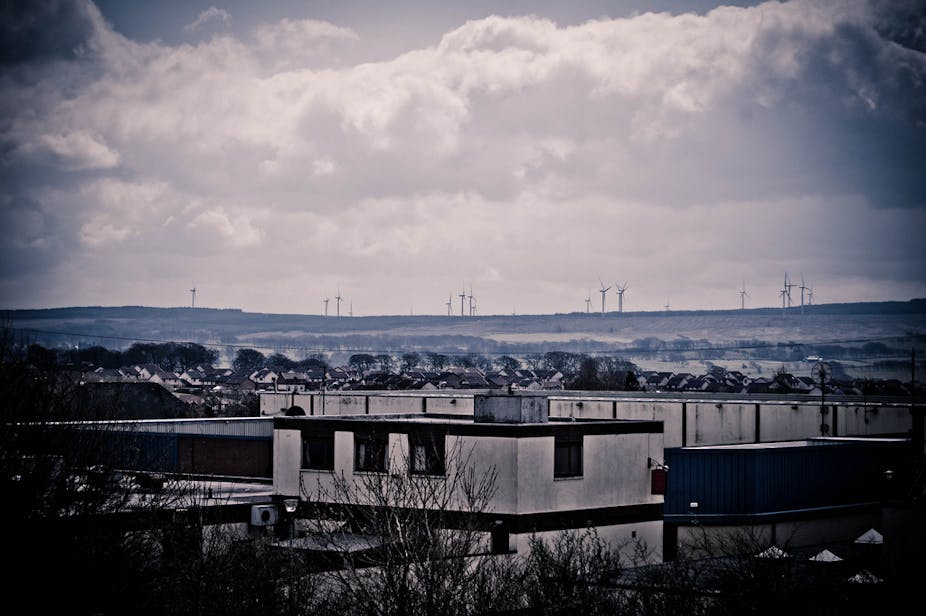
Tonight I’m an expat Australian feeling homesick for the wrong reasons. This is not yearning for a comfortably different past. The Maynooth streets I make my way along feel a lot like the suburban Melbourne I grew up in, especially its wintriest days. The familiarity of the thing makes you yearn for family and friends in an especially poignant way. Surely, however, this blankets the special possibilities for miraculous thought that Australia might offer an endangered, cynical world? In the past we opened up sharp arguments about egalitarianism and fair treatment, before we seemed to tire of our successes. This lethargy looks lethal when set against the dangers breaking upon us. Salvation from self-harm will necessitate new creativity, and a profound questioning of verities and interests. To liberate this energy Australia will have to set aside the scorn for free thinking it has lately cultivated.
In the 1890s, in the midst of a plague of droughts, recession and systemic failures, Australians drew bold diagrams of possibilities for their continent and the world. Our forebears were not as transfixed by the task of making and remaking everyday life as we imagine. They had no Tesco or Harvey Norman, and for most the daily grind was just that. But many of them still made time and space for the larger work of imagination.
In The Legend of the Nineties (1954), the critic Vance Palmer wrote that people of the time had “some vision of the just and perfect State at the back of their minds”. Everyday life was hard yakka, but “it was the prospect of writing, on a virgin page, a new chapter in the history of humanity that touched their feelings and quickened their imaginations”. This is not to sanctify. They missed much, including the miraculous history of the Indigenous peoples of their land. The historian Bill Gammage observes, in his book of the same name, that the pre-settlement Aboriginal order managed “the biggest estate on earth”. “A few Europeans recognised this … but for most it was beyond imagining.” (Emphasis added.) The Indigenous peoples survived the imposition of a brutal new world upon them, the theft and despoliation of the estate they had managed for millennia.
We are walking backwards into a Next World of natural despoliation, and probably much violence and dispossession. It is nearly here. To have any hope of forestalling and managing its most destructive possibilities we must acknowledge and ponder its arrival. Our resources may have run down, our imagination may be ebbing low, but the human capacity for “performing miracles” that Hannah Arendt identified remains our last resort – and our greatest. The scale of endangerment is dire but we haven’t yet deployed our miraculous powers. And we will not do so until we give free play again to the imaginative energies we possess, which must first be directed at clearing out the sclerotic consensus of liberal democracy, to restore liberty, the central discovery and legacy of modernity. For Arendt, “the miracle of freedom resides in the ability to make new beginnings”.
In the groundhog daze of globalising suburbia, the idea of a new beginning sounds infernally remote. Beneath my wind-whipped hood I wonder what Australia might have to offer. The British social theorist Erik Swyngedouw thinks we must end the fiction of neo-liberalism, with its fantasies of sustainable growth. Surprisingly, this requires “an urgent need for different stories and fictions that can be mobilized for realization”. Songlines for a new world?
The bitter cold here always makes me think of my homeland, its extremities of heat, and the desert peoples who thrived in that hotter estate. I’m a suburban kid from Melbourne and – regrettably, if predictably – I know almost nothing about them. But I suspect their “stories and fictions” might be a good place to start in seeking a new Australian imagination. They changed and managed their land. We changed and mismanaged ours – and theirs. The original Australians survived with culture in the new world we thrust upon them. This is worth contemplating with humility and openness as we drift inexorably into the storms of change. We have a great testimony of human survival that is sung, danced and wept all around us. There will be a way out of, or at least beyond, this crisis. Australians should be the first to assert that this is not beyond imagining.
Read more provocations at The Conversation and at Griffith REVIEW.