Online open education: yes, this is the game changer

Mass Open Online Courseware (MOOCs) is less than a year old but it is already clear this will be the game changer in higher education worldwide. Right now it is reverberating through Australian universities like a tectonic shock. The new paradigm, first developed in late 2011 by Sebastian Thrun and…

Qkjmkzqr-1342757385
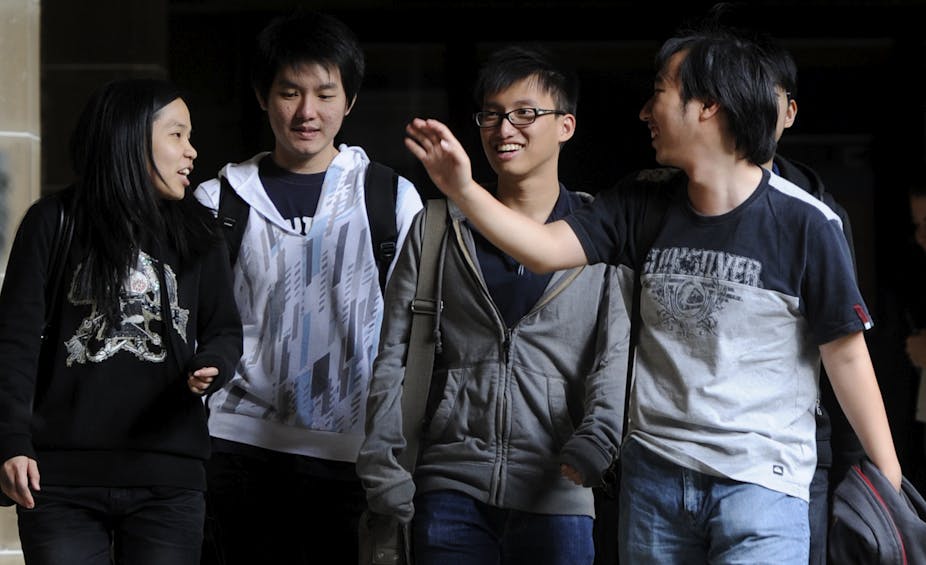
The rise of open online courses will affect almost every part of higher education, including the international student market in Australia. AAP Image/Julian Smith

Mass Open Online Courseware (MOOCs) is less than a year old but it is already clear this will be the game changer in higher education worldwide. Right now it is reverberating through Australian universities like a tectonic shock.

The new paradigm, first developed in late 2011 by Sebastian Thrun and Peter Norvig at Stanford University, now based in Silicon Valley, will be as disruptive to conventional delivery in higher education as the internet has been for book publishers, newspapers, and the retail giants.

Just the beginning

Thrun’s first course in artificial intelligence quickly enrolled 160,000 students. His crucial innovation was not free courseware, which was ten years old, but online grading in multiple choice format and certification at the end of the program.

Students weren’t able to be credited in conventional degrees but could receive a “Statement of Accomplishment” that carried the Stanford brand. It was not a substitute for Stanford degrees but a new kind of prestige credential adapted to the internet.

The course involved student-to-student tutorial discussions, work groups and support systems. In the MOOC format, queries can be routed through FAQs and students can assess each other. It’s free, dirt cheap to run, rigorous in standard and brings you the world experts.

Physics from Higgs or Hawking beats the local science teacher any day. Especially if you don’t have one.

Thrun’s company Udacity now has more than 20 staff pumping out courseware. Two Stanford colleagues have created the parallel company Coursera which is building global enrolments in over 50 programs, using name professors from Stanford, Princeton, Berkeley, Michigan and Pennsylvania. Harvard and MIT have formed a partnership under the name “edX”.

The economics of disruption

The MOOC paradigm disrupts normal higher education for reasons that are inherent in the economics of internet-provided goods. Firstly, it is disruptive because open access knowledge is a “public good” that is non-rivalrous and non-excludable.

As the late Elinor Ostrom said in her 2009 Nobel Prize lecture:

“Public goods are both non-excludable (impossible to keep those who have not paid for a good from consuming it) and non-rivalrous (whatever individual A consumes does not limit the consumption by others).”

It’s a good description of the web as a whole. But prestige higher education provided free of charge has another feature that looks more like a market. When competing for free hits from the public, MOOCs from household name Ivy League universities have a decided edge over Snake Gully College. It’s not just an advantage, it’s complete domination.

Open courseware has the same logic as the winner-take-all markets in celebrity actors or top movies or music. A tiny handful of producers and products dominate the global market, overwhelmingly. After all, there is only one Elvis, and only one Harvard.

How does “free” make money?

Can universities make money out of MOOCs? As with Google, the free service creates a global public, which can become the platform for advertising, and for commercial services such as advanced assessment and grading, employment placement, individualised counselling and publishing. edX and others might also place a low cost pay-wall in front of their advanced programs. It would be risky, but still far cheaper than conventional higher education delivery.

And if employers agree the contents of MOOCs look attractive, the alternate credential represented by MOOCs will generate employability benefits as well. “Graduates” could entice employers with half a dozen prestige MOOCs on their CVs, in place of a three-year degree in business or computing.

Adding or replacing?

The MOOC model has the potential to disrupt conventional Australian university education in two ways—as a substitute, and as a supplement.

MOOCs’ full power as a substitute is yet to be tested. The orthodox degrees provided by leading global universities (which means the American Ivy League and a few others) will retain their social and cultural capital and career forming benefits.

Worldwide promotion of the brand via MOOCs will enhance the value of those conventional degrees. The internet is effective in building status. The question is what happens to other universities; especially given that employer take-up of MOOCs is unknown.

The international and domestic market

It is likely that Australia’s role in international education will be affected. The rapid growth of the Asian middle classes means that overall demand for foreign education will continue to grow. Some students will still enrol in English-speaking countries because of the benefits of immersion in the language, cultural knowledge and life-skills. Australia will still be competing with other English-speaking countries there.

No doubt, though, some international students will decide that free Harvard or Stanford MOOCs on their CVs are a more cost-effective proposition than spending $40,000 or more per year for three or four years in Australia.

There will be less disruption of first-degree domestic enrolments. The HECS-HELP income continent loans system lowers financial barriers, and many students like the onsite experience where they can meet each other. But some will opt for MOOCs if the “Statements of Accomplishment” work with employers.

The effects might be greater among lifelong learners, those seeking skill-upgrading, a change of direction or just interesting courses. Many will find attractive not just MOOC contents but the flexibility offered by online learning.

A changing role

If lectures, tutorials and assessment become more global, like textbooks did in the twentieth century, then Australian universities will have to reinvent themselves. It is likely they will step up their role in brokering work experience during degrees and become more serious about vocational and career counselling at the point of departure, possibly moving into employment placement at scale.

We can expect a multiplication of support services and facets of the extra-curricular student experience, and in some institutions, a more pronounced emphasis on graduate research programs where intensive teaching will remain essential.

Some universities will use MOOCs to slash their personnel costs, though academic capacity is the weak spot in many institutions, and Australian universities need research outputs to hold up their heads in the global market.

MOOCs put unprecedented pressure on the teaching/research nexus. Perhaps teaching-focused academics will be pared back and more research-only positions created. The main onsite work in the future could be research not teaching.

Global influence

But there will be a nagging question to deal with, one that was always implicit but was never faced: “What is an Australian degree and what does this mean in terms of course contents?” Some Go8 universities may float their own MOOCs but they will be hard-pressed to win in that game.

They will cut little ice against Stanford and Cambridge et al in the Atlantic countries. They might become major players if they adopt a strong Asia-orientation and market hard in the region. The Australian National University (ANU) with its massive concentration of expertise on China, Japan, Indonesia and other Asian countries, is the institution currently best placed to follow that path.

No doubt most Australian universities will develop a blend of local and global contents. But they will find themselves continuously pulled towards the global side of the equation, which will compel both the university producers and student consumers. In this we see the mixed benefits that globalisation always brings, and the combined economic character of MOOCs as both public good and winner-take-all market.

In that respect MOOCs are like the internet itself, they represent a tremendous worldwide democratisation of knowledge, bringing, as British poet Matthew Arnold put it, “the best which has been thought and said” to every corner of the planet.

There is another side to that coin, of course. As Arnold’s high Victorian educational mission always implied, MOOCs could enforce an unprecedented level of global sameness in higher education. MOOCs mean the homogenisation (and in this case the Americanisation) of knowledge, learning and culture.

These certainly are interesting times.

Join the conversation

36 Comments sorted by

  1. Shane Hopkinson

    logged in via Facebook

    Hi

    Yes MOOCs are certainly interesting but they weren't invented by Stanford or any other Ivy League institution in 2008.

    "The term MOOC was coined in 2008 by Dave Cormier, Manager of Web Communication and Innovations at the University of Prince Edward Island, and Senior Research Fellow Bryan Alexander of the National Institute for Technology in Liberal Education in response to an open online course designed and led by George Siemens, associate director, Technology Enhanced Knowledge Research Institute at Athabasca University and Stephen Downes, Senior Researcher at The National Research Council (Canada). " (wikipedia)

    Now of course the big fee-charging institutions have discovered it its the "new" big thing.

    report
    1. Robert Nelson

      Associate Director Student Experience at Monash University

      In reply to Shane Hopkinson

      That's interesting. One of the new aspects of the MOOC phenomenon that Simon describes is the techo-evangelism of its professors. In his own witness-giving on TED, Peter Norvig does not mention retention; but he does inadvertently acknowledge the massive attrition by confessing—while still bragging—that 20,000 students completed all the assignments. Alas, he said a little earlier in the presentation that 160,000 began. So by my maths, 20,000 out of 160,000 is one eighth (12.5%) retention. What do we say about the seven eighths? That they don't matter much because they've contributed as advertising fodder to the vanity of an ivy league establishment? That's 140,000 people walking around somewhere in the world with a feeling of inadequacy. It strikes me as educationally irresponsible to put such shameless global ambitions above any scruples over people's experience. It is not a great paradigm for the universities of the world to emulate.

      report
    2. Peter Hewson

      Citizen

      In reply to Robert Nelson

      Robert, I think that you are making an invalid assumption. You see the enrollment as being a measure of keeness with a high level of emotional investment. I see it more as curiousity: people who simply saw a new way of learning and took a look (as I did). I didn't continue with my course for different reasons but I don't feel inadequate. I'm sure I'll 'investigate' several other courses and maybe settle on one or more.

      The internet, essentailly, offers the approach of a trade fair: I might pick up several brochures but not buy any products or perhaps settle on one.

      On the numbers the retention rate may be only 12.5% but that is still twenty thousand completions.......more than the student load of a lot of universities for their entire offering of courses..

      report
    3. Robert Nelson

      Associate Director Student Experience at Monash University

      In reply to Peter Hewson

      That's possibly true; but I don't think that your suggestion makes me feel any happier about the ethical proposition. Sure, everyone will have different reasons for discontinuing; and some will be curiosity-driven or tentative or toe-in-the-water enrolments, more like sampling, of little significance in terms of commitment. But although some will be as cavalier with their educational window-shopping as you sound, I cannot imagine that all of the 140,000 non-completers have a good feeling about…

      Read more
  2. Gavin Moodie

    Principal Policy Adviser

    This article and its several predecessors making the same argument (eg Barber, 2012; Bush and Hunt, 2011; Chubb and Moe, 2012: A17; Draycott, no date; Drucker, 1997; Schwartz, no date; Tanner, 2011; Wesley, 2012; Wildavsky, Kelly and Carey, 2011; Young, 2012) fail to consider how students learn. Forget the economics for a while, even tho they are not as simple as is claimed here.

    How do students learn on line and how is this different from conventional distance education or even self directed…

    Read more
    1. David Glance

      Director, Centre for Software Practice at University of Western Australia

      In reply to Gavin Moodie

      Hi Gavin,

      I recommend that *everyone* who is interested in this area actually takes one of the courses and experiences it for themselves. That way you would actually know the difference between what people are doing now and what they tried to do before. I have just completed (along with 45,000 others) an introductory course in Sociology. It was every bit as interactive as any that either I have taught or have attended in person.

      Also, there is an assumption in your response that dependent learners would actually get any more support if they were to take courses on campus. My experience of that is that is, in most cases, a stretch of an assumption. People who fail to attend lectures, don't submit work, etc are generally not followed up .

      report
    2. Gavin Moodie

      Principal Policy Adviser

      In reply to David Glance

      A contrary view is put by Hieronymi (2012). Her position is debated extensively in posts on that piece. I found this comment informative:

      'Judging from my brief experience on Coursera, the silent are still with us in the online environment. A few hundred, out a few tens of thousands enrolled, participated in the online discussions, some very ineffectively. There were actually participants who thought that talking about the readings was bad, wrong, cheating, took their oxygen, and so on and so forth, the usual crap.'
      Fred Bauder, 17 August 2012

      Hieronymi, Pamela (20120) Don't confuse technology with college teaching, Chronicle of Higher Education, 13 August, retrieved 17 August 2012 from

      http://chronicle.com/article/Dont-Confuse-Technology-With/133551/?cid=at&utm_source=at&utm_medium=en

      report
    3. Andrew Smith

      Education Consultant at Australian & International Education Centre

      In reply to Gavin Moodie

      One variable in Australia's case is paying fees for university while pre baby boomer generations are and will be seeing higher outgoings for housing etc. with unclear employment outcomes from many courses

      Will students pay (in advance or later via HECS) for an expensive on campus degree experience, or choose off campus that is free or more economic, and allows employment flexibility (to pay future bills)?

      Further, working professionals may find flexibility of online is preferable to attending lectures etc. on campus.

      Advances in digital will challenge traditional on campus study (with more smaller and more nimble teaching and research institutes), while also transforming organisational structures, management and "silos" at universities i.e. hierarchies become flattened, as will perceived status.....

      report
  3. Comment removed by moderator.

  4. Comment removed by moderator.

  5. Comment removed by moderator.

  6. Comment removed by moderator.

  7. Comment removed by moderator.

  8. Comment removed by moderator.

  9. Comment removed by moderator.

  10. Comment removed by moderator.

  11. Comment removed by moderator.

  12. Comment removed by moderator.

  13. Comment removed by moderator.

  14. Gavriil Michas

    logged in via LinkedIn

    Practically speaking, it won’t bother me at all to have an honor grade for free from MIT in solid state chemistry, in order to refresh my knowledge in basic concepts in material science taxonomy for my job. Not bad at all. I am in.

    report
  15. Andrew Page

    Professor, Psychology, UWA

    Isaac Asimov wrote a clever short story called "Profession" in 1957 (http://en.wikipedia.org/wiki/Profession_%28short_story%29) which anticipated the delivery of mass education (albeit by tapes) but he highlighted the need for an evolving society to educate and foster different and creative educational solutions for those who will advance science and civilisation. Taking Asimov's idea seriously it behooves universities not just to emphasise graduate research programs BECAUSE intensive teaching remains essential, but to ensure that intensive graduate education is delivered in novel and unique ways that advance science and civilisaton in ways that are not achievable otherwise. To put it another way; a lecture by Higgs or Hawking may well beat a local science teacher, but does this replace the value imparted by being supervised for a PhD in physics at research-intensive universities elsewhere?

    report
  16. Dhugal Fletcher

    Critical Thinker

    IT industry certifications have been running in this format for 10-15 years now. How to make money from it? Charge for examinations. The information is free, the course content is openly available - you just have to take the time and effort to work for it. And pay when you want to pass the exam.. Examination is at testing centres that place you in a room by yourself with the testing computer. Otherwise exam results are highly suspect.

    I think all theory certifications should be available in this format to open up the system for as many people as possible. Then Universities can get back to being centres of learning and research instead of cranking through vocational undergraduates.

    report
  17. Gavin Moodie

    Principal Policy Adviser

    MOOCs' very high attrition rates surely undermine the claim that they will change higher education radically. Distance education programs also used to suffer from very high attrition, and this is why they are mostly restricted to mature age students - those with the maturity and self discipline to study without the close monitoring of face to face education.

    report
  18. Peter Cao

    Other

    Sebastian Thrun had partialy left Stanford Computer Science department because he is in debt to Stanford people with his involvment into Stanford student May Zhou’s death, he is not innocent in an unsuccessful plotted murder on me either and I have been cursed by powers from Sebastian Thrun’s side for many years. Sebastian Thrun dare not deny to the public his involvment into such fascism crimes till today and I am still waiting to see why he dare not

    report
  19. Peter Cao

    Other

    Sebastian Thrun and Google's Eric Schmidt mentioned here had lost their credibility when they got invovled into fascism crimes which had endangered human lives
    -------------------------------------------------------
    There is actually a war between fascism and anti-fascism, at this stage, fascism still prevails in our lives, Eric Schmidt, Sebastian Thrun and Gabriele Scheler are just front figures we could see in this fascism circle, there is a whole pack of fascists behind them

    Eric, as we can…

    Read more
  20. Peter Cao

    Other

    This is the case which lead to a series of fascism crimes. The criminal suspect of this case, Gabriele Scheler, was sheltered by someone in name of Stanford Computer Science department after Scheler committed such campus atrocity crimes and lied to police, and also terrorize/extort authorities, which was highlighted by the killing of this innocent Stanford student May Zhou as well as an unsuccessful murder on me. Several faculties from Stanford Computer Science department had involved into such fascism…

    Read more
  21. Peter Cao

    Other

    Here is a real problem at this stage: who is the officer RRR who's responsible for May Zhou's case? RRR's suicide theory in May Zhou's case remain unbelieveable until he/she clarify my concerns directly with me, as a victim of being threatened by those fascists with May Zhou's case.

    On 2012/02/21 StanfordDaily article "virtual-learning" [http://www.stanforddaily.com/2012/02/21/virtual-learning/] in Comments part regarding to a murder case about a Stanford student May Zhou with which Eric Schmidt…

    Read more
  22. Peter Cao

    Other

    There are malicious officers who had underhandedly made up numerous accusations against me at authorities in order to curse me, conspire me, and to terrorize others from ruling against those fasicts criminals. But they have hided their identity, testimony and evidence against me from my eyes.

    I want to point out that, any conclusion/decision in regard to any case related to me, without my knowledge of who makes such conclusion/decision, and without showing me all of evidence and testimony they…

    Read more
  23. Peter Cao

    Other

    I bet both VVV and RRR understand that bringing complications into my life would add credits to those fascism criminals, and that's the trick they have played for years

    I am living in cloud of conspiracies for years without an end, conspired to my life by certain malicious officers in the judicial system, particularly officer VVV who's responsible for Gabriele Scheler's case; with VVV and officer RRR, who insist that May Zhou's death was suicide or accident but not a murder, hided their identity…

    Read more
  24. Peter Cao

    Other

    Someone (e.g. Sebastian Thrun, Thrun's boss in Stanford Computer Science Department professor Emeritus AAA, big donor CCC and more, etc.) from inside of this department had made Stanford Computer Science department play a big role in such series of fascism crimes which is highlighted by the killing of an innocent Stanford student May Zhou as well as an unsuccessful plotted murder on me.

    But would anyone from Stanford Computer Science department be willing to live under its shadow of such fascism crimes? or would anyone from this department give moral or spiritual support to such fascists who's misbehavior had caused cold-blooded killing of an innocent student from their own school of Stanford? Can anyone take place of these fascists to clarify their legal responsibilities and face legal consequences of their fascism crimes?

    For sake of their own fame, Stanford Computer Science department has the responsibility to go after those fascists to make them pay for their crimes

    report
  25. Peter Cao

    Other

    Starting from Gabriele Scheler's atrocity crime on Stanford campus, there came a war between fascism and anti-fascism; and at this stage, fascism still prevails in our lives; Eric Schmidt, Sebastian Thrun and Gabriele Scheler are just front figures we could see in this fascism circle, there is a whole pack of fascists behind them.

    Gabriele Scheler's campus atrocity on me, by which Sebastian Thrun and Eric Schmidt started a series of fascism crimes, is a simple case with clear evidence and with…

    Read more
  26. Peter Cao

    Other

    For Sebastian Thrun’s side, you don't want to threaten another person's life with the death of student from your own school. You don't want to terrorize your school boss with the killing of student from your own school. That's absolutely unforgivable. You never feel regret of what your side had done, and that make it even more unforgivable of you

    report
  27. Torn Halves

    logged in via Facebook

    Just want to highlight a likely political significance of these developments: the further erosion of the pillars of what was once known as civil society. Local universities were important pillars of civil society. The trend has been for these to weaken and get swallowed up by an omnivorous economy turning everything into business. MOOCs fit the trend.

    report
  28. Chris Bigum

    Adjunct at Griffith University

    Nice piece Simon. If these not so wee beasties (MOOCs) are game changers then continuing to read the game using our rear-view mirror glasses will be largely a waste of time, e.g. the silly debates about what is better, using chalk or overhead projectors etc. etc. etc. The sameness of debates/research in ed. tech. leaves us poorly prepared for what is going on.

    What is going on?

    1. Lots of experiments in doing HE differently. Some of the folk doing them understand or perhaps believe the Internet…

    Read more