So many of the products we see around us defy common sense. I’m not talking about the “What do vegans eat at Christmas?” craziness of the Tofurky. Or even the unrealistic-fear-of-germs obsessiveness of the antibacterial chopping board.
Rather, I’m talking about the flashiest manifestations of attention-grabbing consumerism. Designer label clothes, heavy bling, flashy cars and chunky Swiss watches. These products embody what the early economist Thorstein Veblen labelled “Conspicuous Consumption” – products whose main value is to signal the owner’s wealth and status.
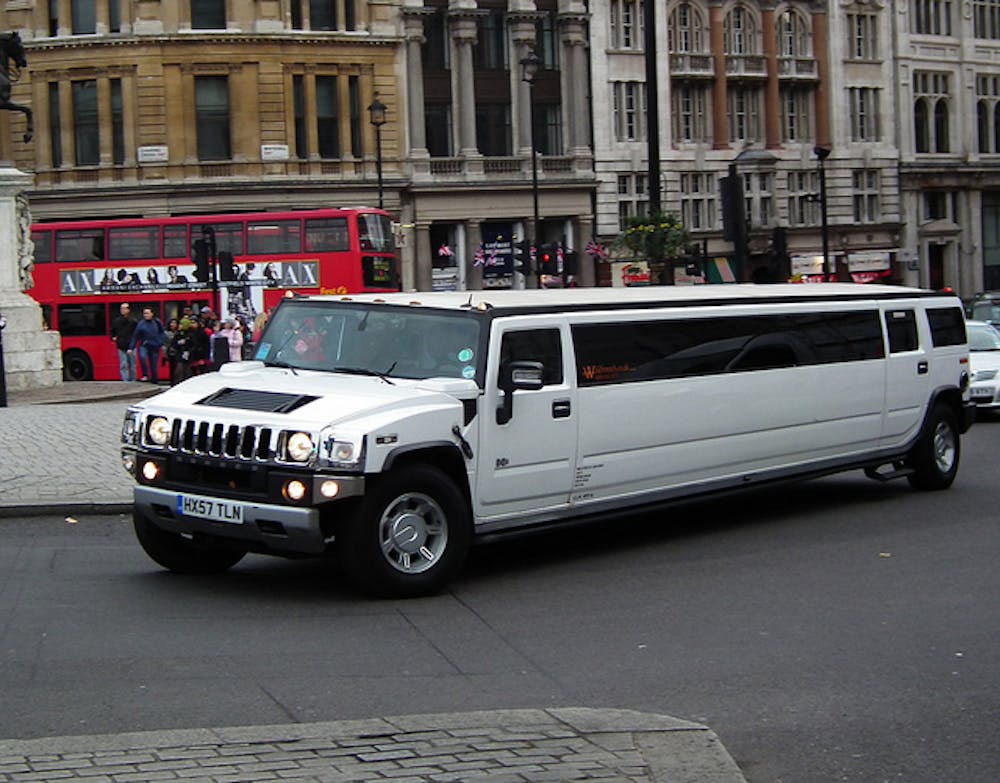
Evolutionary psychologists have lately grown animated about the similarities between conspicuous consumption and the flashy status and mating signals used by other animals. Geoffrey Miller devoted much of his 2009 book Spent: Sex, Evolution and Consumer Behaviour to the ways we signal via our consumption patterns.
Miller asks:
Why would the world’s most intelligent primate buy a Hummer H1 Alpha sport- utility vehicle for $139,771? It is not a practical mode of transport. It seats only four, needs fifty- one feet in which to turn around, burns a gallon of gas every ten miles, dawdles from 0 to 60 mph in 13.5 seconds, and has poor reliability, according to Consumer Reports. Yet, some people have felt the need to buy it— as the Hummer ads say, “Need is a very subjective word.”
The answer, according to Miller, is that apart from the starkest necessities, most of the products we buy are purchased to signal our status, intelligence and personality traits. Our need to do so evolved long before the products themselves existed, and the best brands and marketing campaigns (think Apple, BMW and Rolex) tap into these evolved needs.
Today we ornament ourselves with goods and services more to make an impression on other people’s minds than to enjoy owning a chunk of matter—a fact that renders “materialism” a profoundly misleading term for much of consumption. Many products are signals first and material objects second.
Conspicuous consumption is one of the many areas of research in which evolution and economics collide. And recently Jason Collins, who runs the amazing Evolving Economics site, posted a working paper Sexual Selection, Conspicuous Consumption and Economic Growth in which he explores the how an evolved tendency to signal via conspicuous consumption might contribute to economic growth.
Collins models the relatively simple situation in which men signal their quality as potential mates to women via conspicuous consumption. As he explains on his own blog:
To engage in conspicuous consumption takes effort by the men – whether in the form of art, humour or entering the labour force to acquire resources to consume conspicuously. As the prevalence of males who conspicuously consume increases, the total level of these activities also increases. The increased participation in productive activities results in a scale effect, whereby the greater number of people involved in creative and productive activities results in increased technological progress, which underlies economic growth.
I’m not well equipped to dissect the modelling, but I find the idea profoundly interesting. Of course signalling via conspicuous consumption isn’t confined to single men. I’m not the only one who thought the entire Sex and the City franchise was little more than an elaborate exercise in product placement.
But evolutionary biology is replete with models of flashy males signalling to choosy females, and it provides an excellent place to start. Those models show, and decades of data confirms, that sexual selection can drive the evolution of outlandishly flashy and expensive traits like the tail of the Lyrebird.
It’s entertaining to think that economic growth and innovation might owe just as much to showing off as it does to the earnest attempts of consumers to obtain the bare necessities of life.
What is the most bizarre product you’ve ever encountered, and could it be a signal? Comment below or tweet @Brooks_Rob #mostbizarreproduct
Peter Ormonde
Peter Ormonde is a Friend of The Conversation.
Farmer
I live surrounded by bower birds. Everything blue must be nailed down. Thank god they have not started producing blue hummers! I must not give them ideas.
The extravagant display of wealth is apparently very effective for having a happy life - that is if a happy life is defined as hanging around with someone who is impressed by trinkets and baubles; whose idea of a productive day is spent shopping for shoes and handbags.. Trophy cars, trophy house, trophy wife and trophy kids.... sounds just lovely.
Plumbing new depths in shallow.
carolyn fisher
life traveller
Love your last line Peter! Fabulous.
I actually find conspicuous consumption distasteful. I am most definitely not attracted to men who pursue and use it. Yuck!
Fred Pribac
logged in via email @internode.on.net
It also raises the question: how do eco-nerds like us (who prefer to whittle their thongs out of driftwood rather than buy an austentacious pair made from petrochemicals) fit in to this model of natural selection by conspicuous consumption?
Peter Ormonde
Peter Ormonde is a Friend of The Conversation.
Farmer
Depends on one's whittling prowess Fred.... I do a nice line in red cedar clogs are that proven chick-magnets. Like moths to a flame boyo.
Fred Pribac
logged in via email @internode.on.net
Hmmm ... sounds nice ... care to swap for some hand sewn hessian shorts ... or maybe a cookie tin and 2x4 banjo ?
Rob Brooks
Rob Brooks is a Friend of The Conversation.
Professor of Evolutionary Ecology; Director, Evolution & Ecology Research Centre at University of New South Wales
You guys are showing off now. Conspicuous bartering and recycling is so very hip these days.
Fred Pribac
logged in via email @internode.on.net
Drats! Discovered! Puts on dark glasses and slips quietly out the door.
Peter Ormonde
Peter Ormonde is a Friend of The Conversation.
Farmer
What's your shoe size Rob?
Margo Saunders
Public Health Policy Researcher
It all makes perfect sense to me, given what I've read about the evolutionary reasons that women are attracted to the males who have the most resources. What I don't understand, however -- especially given the success of commercial marketers in understanding and capitalising on differences in what men and women want, and why -- is why gender differences have not been recognised as equally important in social marketing.
Dale Bloom
Analyst
I am quite cross with Rob Brooks.
Hasn't he ever seen some of the hair styles, clothes and accessories worn by women, all sending out a signal of "look at me, look at me.".
And hasn't he ever noticed that if he asks a woman for a date dressed in the cheapest clothes, he will be met with silence and a blank look.
So I am cross because he hasn't been to the optometrist when he should, and probably, he has never asked a woman for a date.
Peter Ormonde
Peter Ormonde is a Friend of The Conversation.
Farmer
Dale ... see this is where you're going wrong....
Real men - your alpha males like Rob - don't have to ask.
Dale Bloom
Analyst
Yes, I can imagine a man dressed in 10 year old clothes from Lifeline, approaching a woman and asking her if she would like to accompany him to the zoo, or to the public library, or for a walk through the park, or anywhere money was not involved, and of course she would leap to the chance.
“But evolutionary biology is replete with models of flashy males signalling to choosy females, and it provides an excellent place to start.”
This would be correct, with so many choosy females choosing to marry upwards, which basically means men have to earn more and more money in time to satisfy women, so they will agree to mate, reproduce and continue the human species.
Peter Ormonde
Peter Ormonde is a Friend of The Conversation.
Farmer
Clothes maketh the bloke, Monsieur B.
But the odd flash of kindness, gentle wit and intelligence can overwhelm the defences of even the most material girl... I'm told.... and even overcome the fashionably challenged appearance bestowed by poverty.
But of course if you are just sitting around in a Zegna suit and $400 Egyptian cotton shirt waiting for a woman who makes her life decisions based on wardrobes and cufflinks, then good luck to you... hmmm nice socks, let's get married and breed ....but don't expect happiness - yours or hers.
If it was only clothes that were the issue Dale, a Lowes catalogue would see you sorted. But I'm not sure it's as simple as that. Might need a slightly less shallow approach.
Dale Bloom
Analyst
Well I have always thought Women’s Studies should contain subjects such as :
“How to find a husband”
“How to maintain your figure after marriage”
“How to run a family on a reduced budget”
“How to want much less and appreciate much more”
Peter Ormonde
Peter Ormonde is a Friend of The Conversation.
Farmer
My Women's Study course outline would look more like this:
How to spot a potential husband and where to hide.
How to maintain your figure by staying single and avoiding the whole child business.
How to make regular on-line donations to the Smith Family and the Salvo's for folks with families.
How to be happy in oneself and keep one's own feet warm in bed.
Dennis Alexander
logged in via LinkedIn
Not sure about most of the premisses since Rod's article.
There is more than a little debate about whether women dress for men or for the competition (mainly other women) to scare them off. There was also a time when the Darwinian imperative for women was perceived as "mate strength and marry wealth" (cuckolding as genetic strategy). For males, "breed with youth and make love with agreeable company" was both genetic and social strategy - note that agreeable company does not preclude women or beauty, but neither does it require it.
Boys, toys and evolution, ahhh plus ca change ...
Dale Bloom
Analyst
So perhaps Women's Study courses should be run to reduce the population. Unfortunately, we have a rapidly expanding population due to immigration.
Perhaps Women's Study courses should have subjects such as:
How to be unattractive to men.
How to demonise men, husbands and fathers whenever possible.
How to reduce birth numbers, while increasing the population at the same time.
Peter Ormonde
Peter Ormonde is a Friend of The Conversation.
Farmer
Congratulations on the award for the book Mr B.
I suppose that means the A in that Alpha male descriptor has just jumped a few more point sizes and you are besieged by swooning undergrads dangling from the ceiling.
Ah the daily grind of modern academic life.
Well done. I'll get myself a copy brought in to the Wollibuddha word shop (Open 10-4 Tues, Weds and 9-12 Sats) but because of the racy title it will be covered in brown paper. I kid you not. Arlene has her standards to maintain.
Rob Brooks
Rob Brooks is a Friend of The Conversation.
Professor of Evolutionary Ecology; Director, Evolution & Ecology Research Centre at University of New South Wales
Thank you Peter! Warm praise from a great satirist.
If I'd had my way, NewSouth would have been compelled to distribute the book shrink-wrapped lest the gratuitous discussions of sex, evolution and short-chain carbohydrates fall into idle adolescent hands.
Yoron Hamber
Thinking
Not really, only by the st***id Rob :)
The rest of us make do without Alpha Hummers.
And we seem to find women too?
Yoron Hamber
Thinking
Don't get me wrong though. There's probably a lot of truth in that we give of social signals by our choice of labels dress etc, and the article was highly entertaining. You should make a new article after getting in that list of 'bizarre products' :)
Alison Moore
Senior Lecturer in Modern European History, University of Western Sydney
The thing is, the bower bird did not BUY any of his stuff....
I really don't see what evidence there is for any kind of consumerism in a ony economy as "evolved". It is massively overreaching the explanatory potential of evolution biology to make such claims.
By this definition, humans who are non-materialistic would be what....less reproductively fit?
Peter Ormonde
Peter Ormonde is a Friend of The Conversation.
Farmer
There is a difference between being non-materialistic and being poor. There is - must be - an element of choice in being non-materialistic. Poverty leaves no choice and a hard life. For men this is often alone. So yes, poor people in our society - men on the margins at least - .yes less reproductively fit I think.
As a life-long non-materialist - by choice, I think there must be a solid basis of rejection of materialist consumerism - once experienced... been there, done that, didn't fill me with happiness. But for poor people it all looks pretty good. Like Dickens' kids at the window pane.